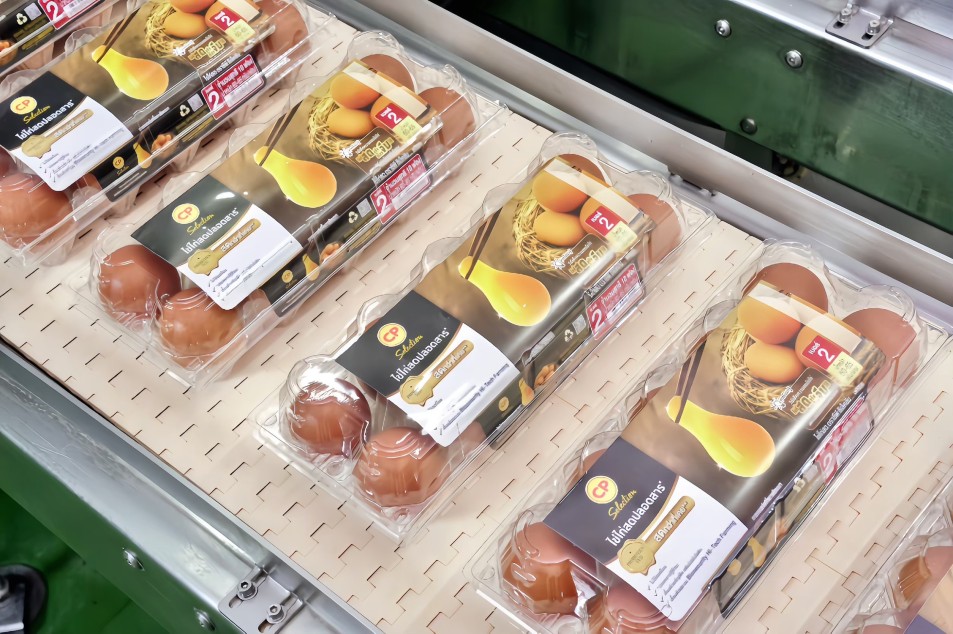
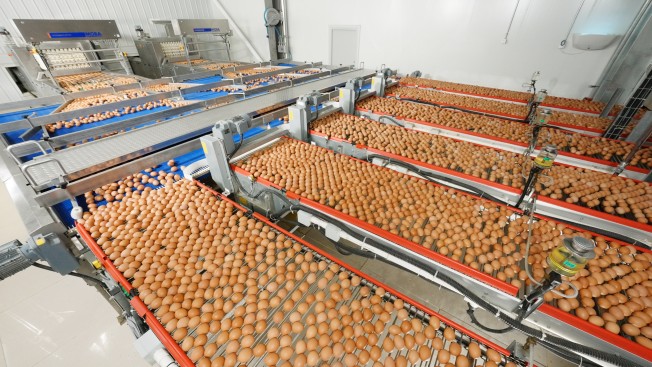
Integrating innovation and clean energy into food production is not only about technology or cost reduction—it strengthens Thailand’s long-term food security. The Chanthaburi Egg Complex of Charoen Pokphand Foods Public Company Limited (CP Foods) exemplifies this approach, combining the Waste-to-Value concept, renewable energy, and smart energy management to produce food efficiently while protecting the environment.
Somkid Wannalukkhee, Head of CP Foods’ Layer Business, said the company is committed to sustainable growth based on social and environmental responsibility. The complex applies the Waste-to-Value approach by converting chicken manure into electricity for on-site use, improving energy efficiency and reducing dependence on external power.
CP Foods has developed a biogas system that generates electricity for farm operations and egg grading, complemented by solar panels and an Energy Management System (EMS) to optimize energy use 24 hours a day. As a result, the facility has become Thailand’s first egg farm to operate on 100% renewable energy (RE100) without relying on the national grid. The project saves 18 million baht annually and reduces emissions by 1,598 tons of CO₂ equivalent per year, supporting CP Foods’ Net-Zero 2050 goal.
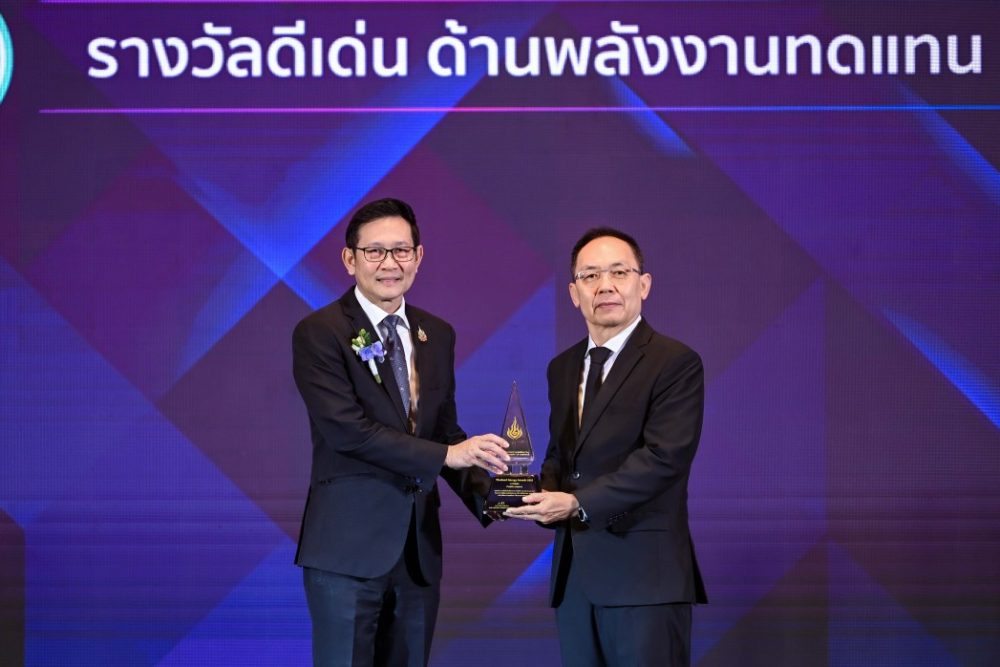
The achievement earned the complex the Thailand Energy Awards 2025 from the Ministry of Energy, with Mr. Somkid receiving the award from Minister Auttapol Rerkpiboon, highlighting the private sector’s role in advancing clean energy in food production.
“Renewable energy is a key pathway for CP Foods to cut energy use and emissions. This award confirms the Chanthaburi Egg Complex as a model for the agro-industrial sector and a milestone in environmentally friendly food production,” Mr. Somkid said.
Previously, the farm represented Thailand at the ASEAN Best Practices for Renewable Energy Awards, reflecting how innovation can transform food production while creating sustainable value for society and the environment.