
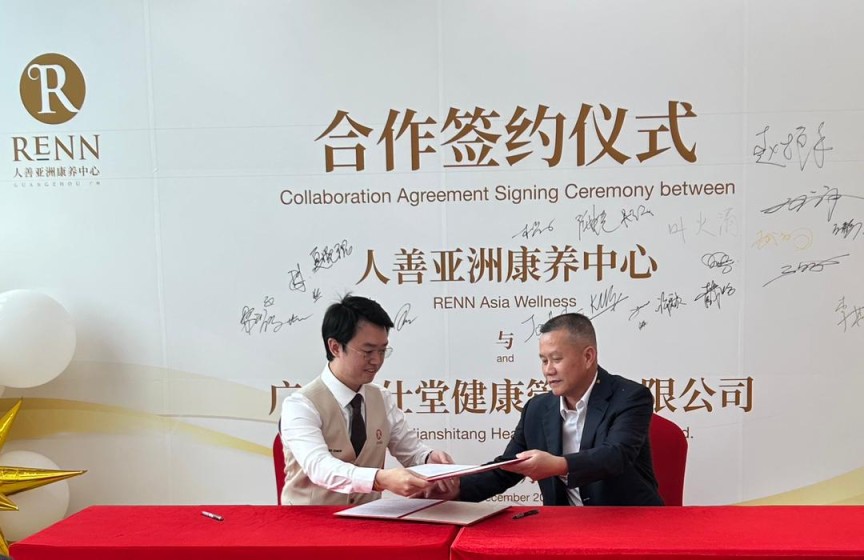
First Malaysia-China Nutritional & Functional Medicine (NFM) collaboration

GUANGZHOU, Monday, 22 December 2025 – RENN Asia Wellness, a home-grown brand focussing on Nutritional and Functional Medicine (NFM), is pioneering Malaysia-China cooperation in this field with the opening of a centre here last Friday, 19 December, attended by representatives from both countries.
Kuala Lumpur-based RENN Asia will extend its expertise to China in collaboration with Jian Shi Tang (JST) of Guangzhou to operate a first-of-its-kind wellness centre at the prestigious Leatop Plaza in Tianhe District of Guangzhou and adopting its Malaysian-developed NFM clinical framework.
Under a collaboration agreement signed on Friday between RENN Asia founder and CEO Jonathan Chew and JST founder Zhang Chu Guang, RENN Asia will provide JST with clinical expertise, programme design, and operational protocols.
The ceremony was witnessed by Prof. Dato’ Sri Steve Yap, President of the Association of Nutritional and Functional Medicine Practitioners Malaysia (ANFMP), leading Guangzhou academicians, the local medical fraternity and invited guests from the Malaysian community in Guangzhou.
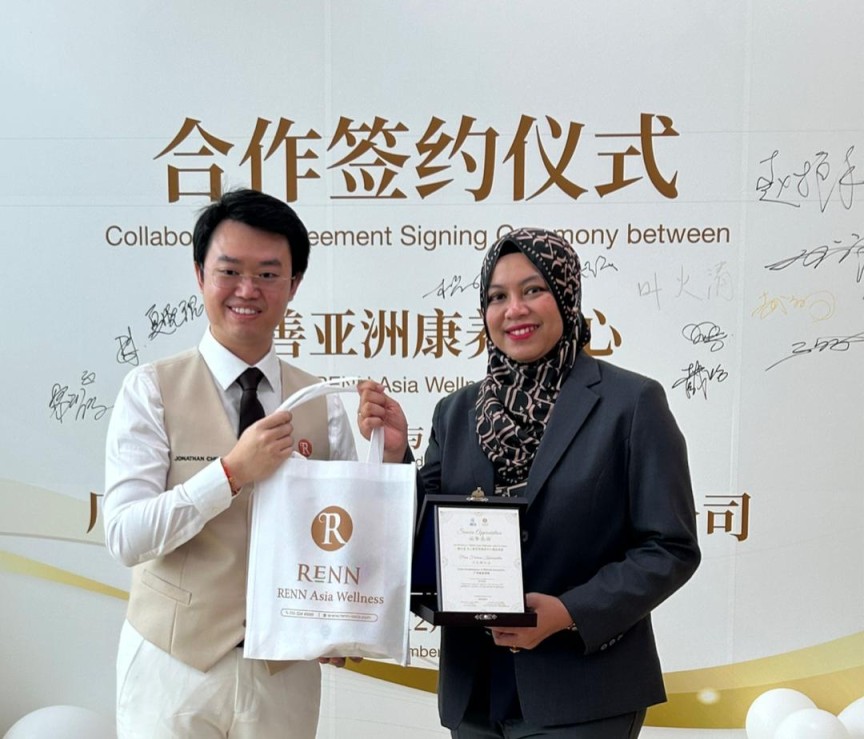
Trade Commissioner of Matrade Guangzhou, Puan Farhana Kamaruddin, attended the ceremony and reception as a supportive guest to reflect Malaysia’s commitment to strengthening cooperation in the health and wellness sector.
This collaboration places Malaysia among the first in the region to export a full chronic-disease management model to China, starting with diabetes care.
China is grappling with one of the world’s largest diabetes epidemics, estimated at more than 140 million adults. Rising complications and healthcare expenditures have accelerated the search for preventive and functional medicine solutions capable of reducing long-term disease progression.
Despite strong national efforts, persistent gaps remain in preventive and functional care models, particularly those that integrate nutrition, root-cause investigation, lifestyle medicine, personalised diagnostics, and long-term monitoring. The introduction of a Malaysian-developed NFM framework is seen as a strategic complement to China’s evolving healthcare reforms.
The Malaysian-led NFM initiative offers a structured, root-cause focused alternative. Rather than merely managing symptoms, NFM emphasises personalised assessment, lifestyle and nutrition intervention, metabolic optimisation and preventive care. By doing so, it aims to stabilise or even reverse elements of metabolic dysfunction, a critically needed tool in China’s fight against chronic disease.
Chew said the presence of Prof Dato’ Sri Steve Yap as the doyen of NFM in Malaysia has reinforced the professional and scientific credibility of the NFM framework and signalled confidence that it could be scaled up regionally.
To this, Yap added: “One of the world’s largest healthcare markets is now adopting a homegrown Malaysian NFM framework. This is a significant milestone for Malaysia as it shows Malaysians could export its know-how and solutions to benefit other countries.”
RENN Asia will supply not only the NFM protocols and programme design but also experienced Malaysian practitioners as advisers for the initial launch phase. This approach ensures that the first centre accurately reflects the rigorous standards and holistic philosophy developed in Malaysia through years of clinical experience.
“Bringing a Malaysian-refined NFM framework into China shows that we can be a provider of practical healthcare solutions to other nations,” Chew said.
“Our role is not only to export knowledge, but to support JST in building a system that can sustainably transform community health outcomes in Guangzhou and eventually across China,” he added.
For JST, the partnership represents a strategic opportunity to lead the transformation of chronic disease management in Guangzhou.
“For JST, we see tremendous potential in RENN Asia’s NFM framework. Its emphasis on personalised assessment and root-cause intervention aligns with the future direction of healthcare in China,” said JST lead medical practitioner Dr Dai Qi Ming.
“Starting with diabetes, we aim to demonstrate measurable improvements in client health and quality of life,” he added.
Both organisations plan to scale the partnership to other chronic conditions once the diabetes programme demonstrates stable outcomes. Future expansion areas include cardiovascular disease, liver and metabolic disorders, hormonal imbalances, and allergy-related conditions — all of which contribute significantly to China’s rising chronic disease burden.
The joint initiative aims to generate long-term impact by reducing avoidable complications, lowering treatment costs, and improving clients’ independence and quality of life. Through this collaboration, Malaysia’s contribution extends beyond clinical expertise to knowledge export, professional capacity building, and regional health innovation.