
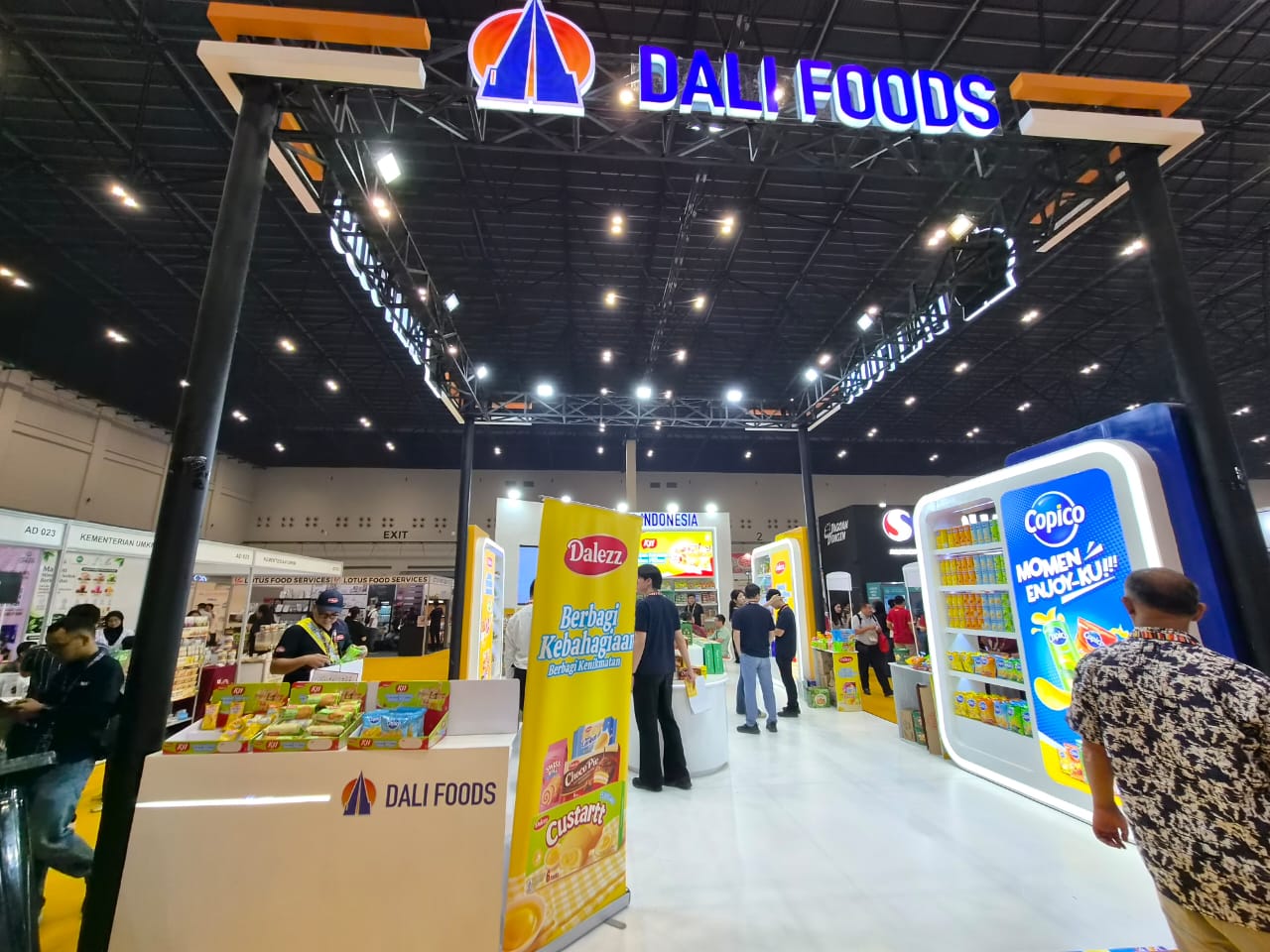
Dali Foods, one of China’s major food and drink manufacturers, is deepening its presence in Southeast Asia through a local manufacturing strategy. Rather than relying on a single production hub to supply multiple markets across the region, the company is establishing manufacturing capabilities within individual countries.
In Indonesia, the company has established PT DALI FOODS INDONESIA in West Java, integrating production, sales and research, while in Thailand it is building a manufacturing plant on a 75 rai of land at the S Angthong Industrial Estate. The company has also obtained land in Malaysia for a future manufacturing facility. More broadly, Dali Foods is developing its own production bases across five core overseas markets: Indonesia, Thailand, Vietnam, Saudi Arabia and Egypt.
This approach distinguishes Dali Foods from companies that centralise regional production in one market and export across neighbouring countries. For Dali Foods, local manufacturing forms part of a broader strategy to operate each country as a distinct market, rather than treating Southeast Asia as a single, relatively homogeneous region. Its approach reflects the view that differences in consumer preferences, retail structures, culture and business environments require individual market strategies.
Dali Foods’ localisation strategy extends beyond manufacturing. According to an article published by Chinese state-run media CCTV.com, the company adapts its go-to-market approach to local retail structures, prioritising traditional community and street-side stores in Indonesia while working more closely with chain retailers in Thailand. The company also conducts research into local customs, festivals, eating habits and flavour preferences to inform product development. Localisation extends to its workforce: more than 95% of employees in its Indonesian operation are local.
The significance of the manufacturing strategy therefore extends beyond producing closer to consumers. By establishing factories within individual markets, Dali Foods aims to localise production, product development, distribution and supply chains around the requirements of each country, while retaining control over manufacturing standards and quality. This gives the company greater scope to adapt products and routes to market as local consumer needs evolve.
Dali Foods’ core categories, including pastries, biscuits and puffed snacks, are familiar and widely consumed formats that can provide an accessible entry point into Southeast Asian markets. In Indonesia, Dali Foods’ portfolio includes Dalezz K11 bakery products and filled cakes, Dalezz Custartt soft cream-filled sponge cakes, Copico potato crisps and Hokira biscuits. The company will also be selling non-alcoholic drinks where it has a strong portfolio in China comprising plant-based drinks, functional and energy drinks, herbal beverages and other ready-to-drink products.