
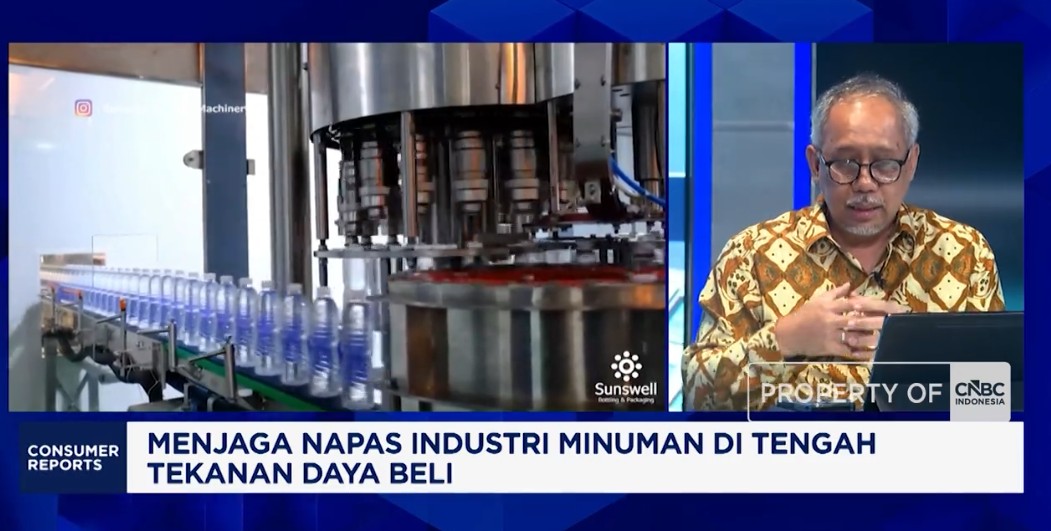
The Indonesian non-alcoholic beverage industry is navigating a complex landscape of modest growth, shifting consumer habits and underutilized capacity. In a recent interview with CNBC Indonesia, Triyono Prijosoesilo, Chairman of the Soft Drink Industry Association (ASRIM), provided a candid assessment of the sector’s current state and future prospects.
Performance in 2025
The industry’s performance in 2025 was far from encouraging. While headline growth stood at 1.18%, full-year sales volume actually contracted by 0.5%. This decline underscores the persistent weakness in consumer demand, reflecting both economic pressures and evolving lifestyle choices.
Early 2026: A Temporary Lift
The first quarter of 2026 brought a slight rebound, with growth reaching 2%. This improvement, however, was largely cyclical. The Eid (Lebaran) season, which traditionally accounts for 30–40% of annual beverage sales, provided a significant boost. Yet, the recovery was uneven across categories. Packaged water recorded growth of 2.4%, while other segments—tea, juice, milk, and coffee—continued to decline.
Shifts in consumer behaviour
Triyono highlighted a clear trend of “down-trading” among consumers. With purchasing power under pressure, households are prioritizing essentials, particularly affordable bottled water. Middle and lower-middle class consumers, who form the backbone of the industry, are increasingly sensitive to price, choosing cheaper options over premium or flavored beverages.
Utilization and profitability pressures
Industry utilization currently stands at 49.8%, a figure that reflects underutilization rather than overcapacity. The sector peaked in 2023, following the post-COVID rebound, but demand has since weakened. Low utilization directly impacts profitability, yet companies are constrained from raising prices due to fragile consumer spending power. As a result, firms are focusing on efficiency, automation, and cost control to sustain operations.
Strategic Opportunities Ahead
Despite these challenges, opportunities are emerging. Companies are experimenting with segmentation strategies, targeting niche growth areas such as low-sugar and sugar-free products. While these categories are not yet dominant, they represent promising “pockets of growth.” Reformulation—reducing sugar content and using substitutes—also helps lower production costs, aligning with shifting consumer preferences.
Triyono noted that while traditional sweetened beverages still dominate, there is a gradual shift toward functional drinks and healthier options. This change signals a more progressive consumer mindset, opening the door for innovation and long-term growth.
The Indonesian non-alcoholic beverage market is at a pivotal moment. Cyclical boosts like Eid provide short-term relief, but structural challenges—weak purchasing power, lifestyle changes, and underutilized capacity—continue to weigh heavily. Yet, the industry’s resilience lies in its ability to adapt: through efficiency, reformulation, and tapping into emerging demand for healthier, functional beverages.