- Experts call for mandatory early non-invasive screening of Iron Deficiency Anaemia (IDA) for children aged one to five as IDA impacts brain development
- Addressing IDA critical to protect Malaysia’s future workforce and plug potential RM10.8 billion loss to GDP
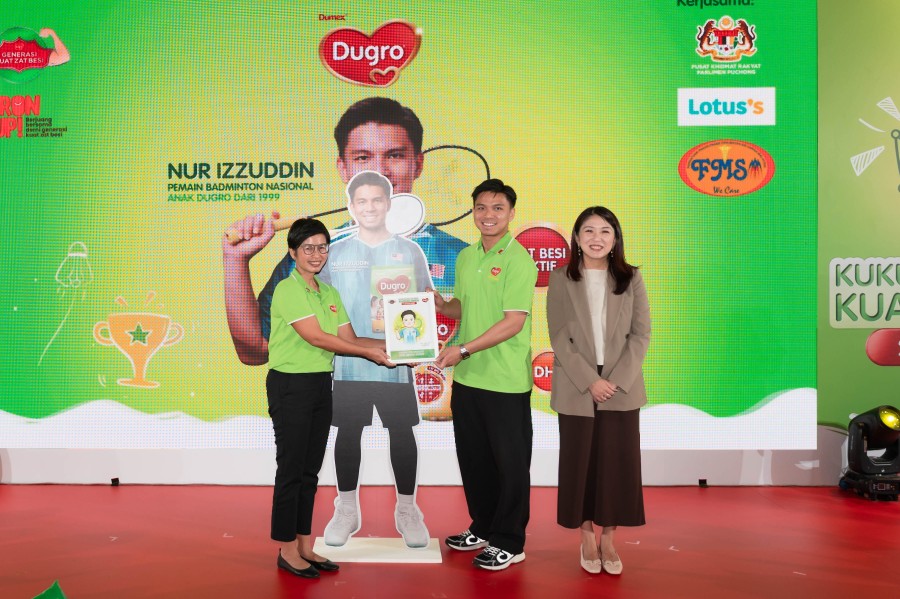
- A Dumex Dugro child since 1999, national men’s double shuttler, Nur Izzuddin Rumsani, joins the Iron Strong Generation movement to combat IDA in Malaysia as brand ambassador
PUTRAJAYA, 18 JUNE 2026 — Malaysia must urgently shift from awareness toward early detection and intervention in addressing childhood Iron Deficiency Anaemia (IDA), with stronger calls for mandatory non-invasive screening for children emerging from policymakers, healthcare professionals and researchers today.
The call was made at Arena Generasi Kuat Zat Besi that was organized as part of Dumex Dugro’s fourth installation of the Iron Strong Generation initiative. The event brought together voices from both the public and private sector to address a silent health issue that puts 1 in 3 Malaysian children at risk of IDA. A condition that often shows no visible symptoms but can have lasting consequences on brain development, learning ability and overall growth, experts at the event emphasized that the impact extends far beyond individual health.
Against this backdrop, the event also saw the unveiling of national men’s double shuttler Nur Izzuddin Rumsani as Dumex Dugro’s brand ambassador. A Dumex Dugro child since 1999, Izzuddin said that he would be lending his voice to raise awareness among Malaysian families. “When I found out about the impact of IDA on brain development, it really opened my eyes as a father. What stood out to me about Dumex Dugro’s Iron Strong Generation initiative is that they are going beyond awareness by making screening more accessible and helping parents understand this issue. That’s why I’m proud to be part of this mission, to encourage more families to take that first step, because early action can make a big difference in our children’s future.”
Beyond awareness, the discussion quickly turned to the scale and urgency of the issue at a national level. The panel discussion organized at the event titled “Iron Strong Kids, Stronger Economy – Protecting Malaysia’s Future Workforce & Productivity,” highlighted need for systemic intervention.
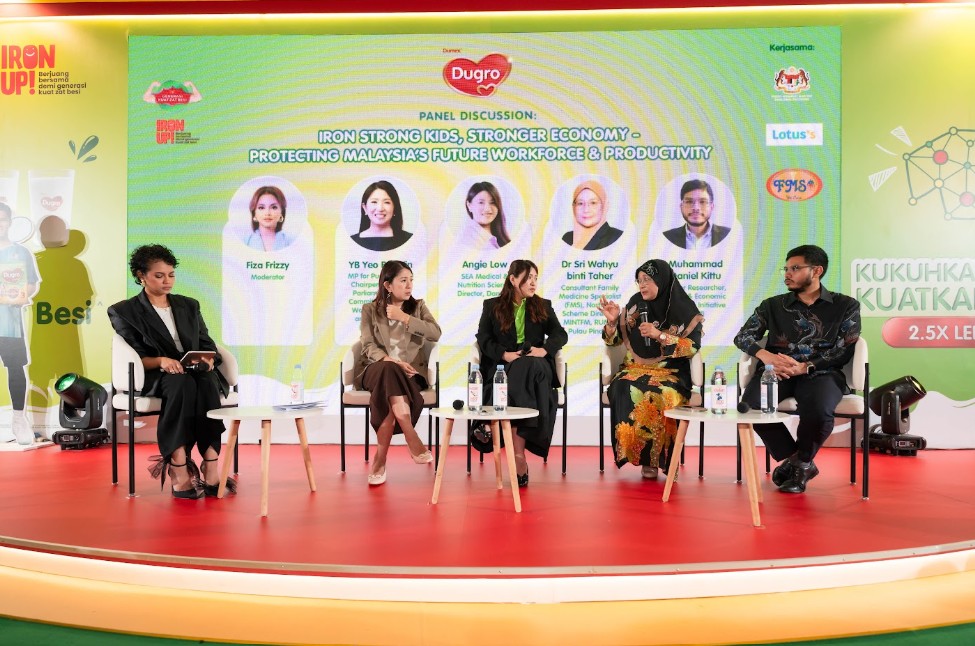
Muhammad Daniel Kittu, Senior Researcher at the Social and Economic Research Initiative (SERI), explained the broader economic implications of IDA. “When you scale the issue across our population, productivity losses linked to childhood IDA could be costing Malaysia approximately RM10.8 billion, or 0.6% of GDP annually, based on 2022’s numbers applying a conservative assumption. This underscores its implications on the country’s long-term economic competitiveness, but it also suggests a significant generational investment opportunity that Malaysia is missing out on when we do not address IDA.”

Building on that, YB Yeo Bee Yin, Member of Parliament for Puchong and Chairperson of the Parliamentary Special Select Committee on Women, Children and Community Development, shared that this figure should inform national budget conversations, and that the government should prioritise healthcare policies to address IDA early. “The way I see it, investment in mandatory non-invasive IDA screening for children is one of the highest-return interventions in public health. Every child deserves the opportunity to thrive and reach their full potential. They will one day be contributing to our nation’s workforce and development.”
From a medical perspective, Dr Sri Wahyu Taher, Consultant Family Medicine Specialist, emphasised the challenges in detecting the condition. “Around 90% of children with IDA show no clear symptoms. By the time signs appear, the deficiency may already be more advanced, and in many cases, the signs are non-specific such as tiredness, poor appetite, slower development and occasional pale skin. This is why early, routine screening is so critical. It is equally important to devise nutritional strategies for our children when curbing IDA.”
Meanwhile, Angie Low, Medical & Nutritional Science Director, Danone Southeast Asia, highlighted the scientific findings on IDA. “90% of the child’s brain develops by age 5. Evidence shows that IDA can have long-lasting and potentially irreversible effects on brain development if not addressed early. Children without IDA have been shown to score, on average, up to 13 IQ points higher than those with iron deficiency. Our latest findings also show that adequate iron supports about 2.5X stronger thinking and learning.”ok
Yee Pek Kuan, Marketing Director, Danone Malaysia & Singapore, said “Over the past four years, our focus has been on closing the gap between awareness and action by investing in science-backed solutions, scaling access to screening, and making IDA easier for parents to act on. What today’s discussion shows is that this cannot be driven by one organization alone. When industry, policymakers, healthcare professionals, researchers, media, and parents move in the same direction, that’s when real progress becomes possible. We will keep building that bridge, turning science into accessible solutions and reaching families earlier, while partnerships with icons like Izzuddin help us connect more meaningfully with Malaysians.”
Arena Generasi Kuat Besi is held, in partnership with retail Lotus’s, at IOI City Mall Putrajaya until 21 June, where families with children can benefit from free, non-invasive iron deficiency anaemia (IDA) screenings, growth assessments, engaging games and activities, as well as exclusive promotions on Dumex Dugro products. Continuing the momentum, the Iron Strong Generation movement will extend to five roadshows in selected Lotus’s stores nationwide from July to November 2026.
Get your child screened for IDA at the Dumex Dugro website today –https://www.dugro.com.my/en/ida/ironscreening.html
- Danone Specialized Nutrition Malaysia is committed to complying with the Code of Ethics for the Marketing of Infant Foods and Related Products set by the Ministry of Health Malaysia. As such, we seek our media partners’ cooperation to observe the following:
- No mentions of Infant Formula (IF) and Follow-up Formula (FO) in the article
- Any representation of infants/babies, either in the photograph, drawings, sketches, visual, graphic or any electronic form, or of infant body parts such as hands, feet and faces, or any likeness of infants/babies to an average person cannot be used to accompany the article.
- Pictures of IF&FO pack shots, IF&FO brand logos, baby holding feeding bottle, feeding bottle, mother bottle-feeding an infant, teat and/ or pacifier cannot be used to accompany the article.
- Only photos of young children above 3 years old are allowed in the article, with a clear depiction that the children are above 3 years old.
- The article cannot compare milk products to breast milk, challenge the supremacy of breast milk, or compete in any way with breast milk.
- As an infant milk manufacturer, Danone Specialized Nutrition’s company name cannot be associated with any infant feeding topics in media articles. Examples of infant feeding topics are colic, regurgitation, complementary or weaning foods and breast milk.
- Milk formula for children above 12 months must be referred to as “Growing Up Milk (GUM)”
Definitions:
- Infant Formula (IF): an alternative to breast milk when mothers are not able to breastfeed.
- Follow-up Formula (FO): for babies over 6 months as part of a mixed weaning diet, up to 36 months.
- Infants/babies: a person aged 0 to 12 months.
- Gross Domestic Product (GDP): It is the total market value of all final goods and services produced within a country’s borders during a specific period.