Home Blog Page 1159

From India with love: Cadbury Five Star arrives in Southeast Asia

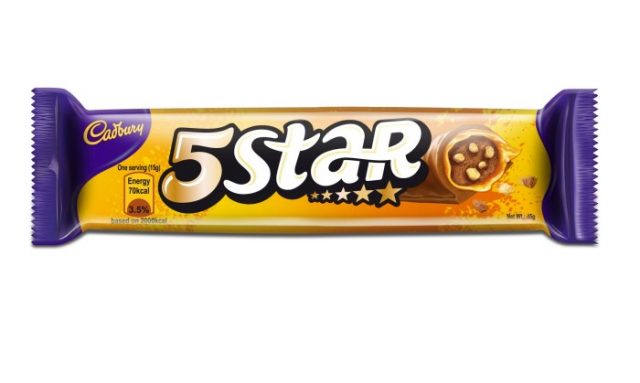
Cadbury Five Star, the new caramel chew bar, has been officially launched in Malaysia. Five Star was first introduced in India in 1969. It comes with layered chocolate, caramel and nougat.
According to Mondelez International  Inc. category director for chocolate in Southeast Asia, Ben Summons, “Chewy caramel bar is very popular worldwide, but it is not very big in Malaysia.” The company also disclosed its chocolate market share in Malaysia at 22% in 2015, making Mondelez the market share leader in chocolate.
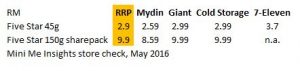
The following pricing data and product availability comes from Malaysiafoodie.com

Cadbury 5 Star comes in three snacking options:
‒      45g bar (RRP RM2.90)
‒      150g (10 bar x 15g) sharepack (RRP RM9.90)
‒      15g bar (RRP RM1.00)

Five price

“The first two options are available at all major hypermarket, supermarket and convenience retail stores, while the last option is available at provision retail stores nationwide from May 2016 onwards.”

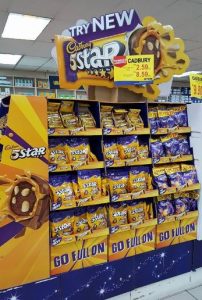
Image taken at Mydin, May 2016
Malaysia and the Philippines are the first two countries in Southeast Asia for the launch of Cadbury Five Star.
The interesting thing about Cadbury 5 Star for the Malaysia market is the size of the individual bar. It is a much bigger 15g for the Malaysia market versus 10.5g for India. The 10.5g Cadbury 5 Star was really tiny when I first saw it in India in 2015. The smaller pack size is designed to suit the buying power of local consumers in India.
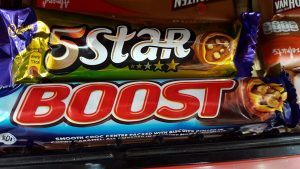
The other observation is Cadbury 5 Star comes with a better price point compared to Cadbury Boost in the same caramel chew bar category. The made-in-Australia Boost is priced at RM 4.70 (60g), while the made-in-India Cadbury 5 Star is priced at RM 3.60 (45g). On a per unit basis, Boost is actually slightly cheaper (RM 7.8/KG) compared with 5 Star (RM 8/KG).
5star boost

China gets its first hemp seed drink Sutiwa

Hemp-infused drink has been in the market in the US for several years now. Hemp appears in energy drink, water, vodka, beer, milk and wine.  Hemp seeds are th

e seed of the Cannabis Sativa plant. In the US, it is legal to sell the product as it does not have the same levels of tetrahydrocannabinol (THC) as marijuana does. Hemp seed is eaten for its essential fatty acid, protein and fibre content. With the perfect ratio of fatty acids, hemp seeds also help fight anxiety and stress, said Dr Oz.

China is the second biggest producer of hemp seeds in the world after France. The country is also the top exporter of hemp paper and textiles. In China, hemp seed is known as huo ma ren (火麻仁). In traditional Chinese medicine (TCM), huo ma ren helps moistens the intestines and unblocks the bowels.

Sutiwa – China’s first relaxing drink 

Sutiwa3

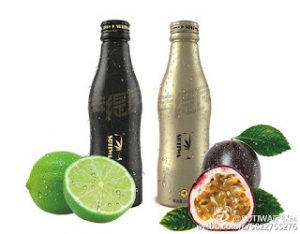
A local company Han Yi Sheng Wu Biosciences (HYBT) has recently launched Sutiwa (萨缇瓦) hemp seed-based functional drink at D.Park Beijing House on 9 April 2016. The drink is lauded as China’s first relaxing drink. It contains hemp seed extracts, γ-Aminobutyric acid, α-Linolenic acid and vitamin B. There are two flavours to choose from passionfruit and lime. A pack of four costs RMB 112 (USD 17.2). The manufacture is Foshan Shanshui Zibao Xiongdi Beverage (佛山市三水孖宝兄弟饮料有限公) is located in Foshan in southern China’s Guangdong province. The shelf life is 365 days. Each bottle weights 245ml. 

sutiwa4

The marketing message is aimed at urban professionals helping them to relax their mind and aiding their sleep.

sutiwa

The relaxation marketing message ensures Sutiwa stands out in the crowded functional drink market. Sleep deprivation is a major problem in China. People are maximising their time following a hard day at work or study. Energy drinks such as Red Bull are focusing on mental alertness. However, there is hardly a drink to help with relaxation and sleeping. As such, Sutiwa fills a crucial gap in the market.

Tesco, Woolworths ditching cheap no-brand private labels, GCH Retail moving in right direction

From thetimes.co.uk

In the UK, Tesco has ditched its ‘Everyday Value’ discount brand in favour of seven fictitious British-sounding farm names, while in Australia, Woolworths abandoned its 33-year-old ‘Homebrand’ generic brand for the new ‘Essentials’.

100 % of original
Essentials

Supermarket chains are letting go of their iconic private label brands to address perception of inferior quality. Both ‘Everyday Value’ and ‘Homebrand’ essentially conveys the no-frills image but with the improving economy and consumers upgrading to better quality products, it is now the time to revisit their private label strategies to improve the quality image.

Competes with Aldi 

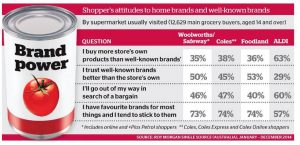
Both chains are competing with the German discounter Aldi. Woolworths claims the introduction of Essentials is to fight the perception that consumers can get better quality at Aldi. The problem with Tesco and Woolworths is the use of ‘no-name’ private label strategy featuring plain packaging to infer low price. In contrast, Aldi’s low-price private label mimics nationally branded products through the use of brand names. The Aldi approach gives it the advantage of brand and price. Aldi’s strategy has proven to be superior. The 2014 Roy Morgan survey in Australia revealed Aldi shoppers were willing to buy more store’s own products than well-known brands.

Roy morgan home brand
Roy Morgan from The Leader.com.au

GCH Retail mimics national brand names

Market garden

In Malaysia, the mimicking brand name approaching is being adopted by GCH Retail. The retailer that operates Giant and Cold Storage has introduced exclusively imported products under brand names such as Sun Harvest, Papa Alfredo and Vita Pet. As the quality of private label improves to be on par with national branded alternatives, the once ‘cheap and nasty’ private label perception will change. That is the time when retailers need to rethink their ‘no-name’ private label strategy.

When herbal tea meets Angry Birds

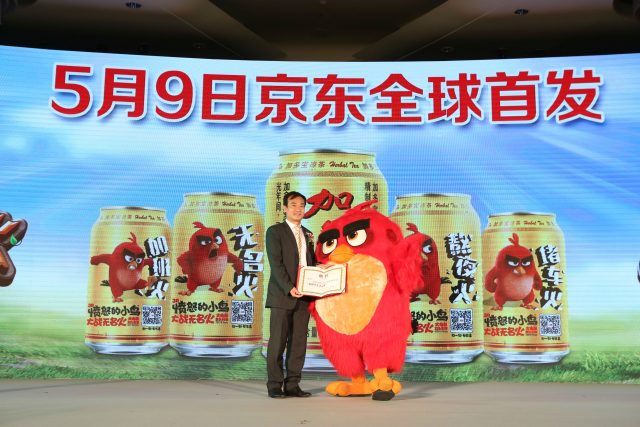
JDB partners with Angry Birds. Appointing Red as the World's No Internal Body Heat Ambassador

What would you do when you feel you are as angry as Angry Bird? Drink Jia Duo Bao (JDB) herbal tea!

Herbal tea to relieve anger & stress
Anger management and stress relieving through drinking herbal tea has become a new marketing message for JDB to attract a generation of young consumers who are into things that are lovely and cute or ‘mai meng’ (卖萌).

angry bird

On 9 May 2016, JDB will launch four limited-edition Angry Birds JDB collections on JD.com. The four designs features four types of internal heat caused by staying up late (熬夜),  working over time (加班), stuck in the traffic jam (堵车) or angry at something without an apparent reason (无名). All these feelings will result in the accumulation of internal body heat and this can be doused off by drinking JDB herbal tea.

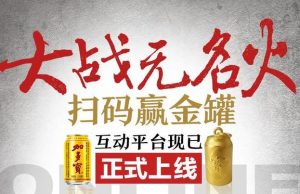
Combating ‘Wu Ming Huo’ 大战无名火

wuming huo

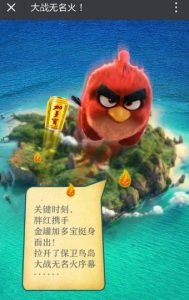
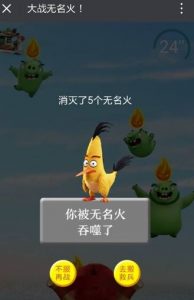
Users can participate in a game on WeChat to douse anger caused by being angry at something or someone without an apparent reason (无名火).

WuminghuoProtecting the islands from 无名火 (Wu Ming Huo) using Jia Duo Bao herbal tea as a weapon.

Protecting

Dousing off the 无名火 (Wu Ming Huo) represented by the angry pigs using Jia Duo Bao herbal tea

Wuminghuo 3

The author has eliminated five ‘Wu Ming Huo

Eliminated

Herbal tea is big business in China

JDB sold RMB 22 billion worth of herbal tea in 2015, while Wong Lo Kat was reported to have achieve sales of approximately RMB 23 billion. Dali Foods posted herbal tea sales of RMB 2.6 billion in 2015. The estimated combines sales of the three herbal tea behemoths stood at RMB 47.6 billion in 2015 or USD 7.3 billion.


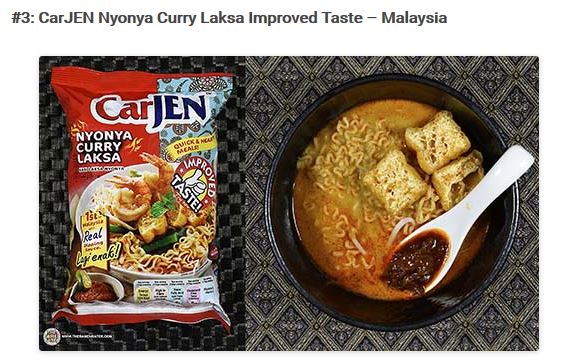
Carjen Nyonya Curry Laska [Improved Taste] No 3 best instant noodle in pack category

Carjen Food Nyonya Curry Laksa [Improved Taste] is now the world’s third best instant noodle in the pack category, according to The Ramen Rater’s latest 2016 top ten list. In the latest edition, Singapore’s Prima Taste Laksa Wholegrain La Mian has finally toppled MyKuala to secure the top spot.Carjen Food’s J.J. Snek Mi is also on the 7th spot in The Ramen Rater’s Top Ten Instant Noodle Snacks of all time 2016 Edition.

Interestingly, the Carjen Nyonya Curry Laksa, the Carjen Otentiq and one more brand from another company took part in the Malaysia edition of the Product of the Year (POY) 2016/17. With the new accolade, we will be seeing Carjen gaining a lot more shelf space and more publicity going forward.

Rio cocktail fourth quarter 2015 sales disappoint, turns manly with 8% ABV drink

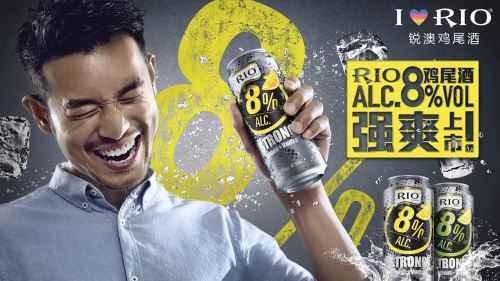
Rio 8% ABV for men

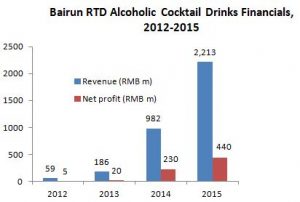
The ready-to-drink (RTD) alcoholic cocktail beverage (预调鸡尾酒) division of Shanghai Bairun Investment Holding Group Co., Ltd.  (百润股份), best known for the Rio brand, reported strong sales for the whole of 2015, up 125% over the same period a year ago.

Bairun overall
Compiled by Mini Me Insights from company information

Rio sales deteriorate

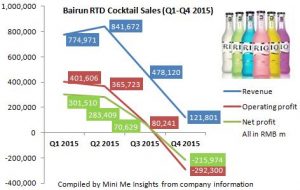
However, the spectacular rise of Rio is overshadowed by the deteriorating second half sales in 2015. The latter half of 2015 accounted for a mere 27% of total sales, compared with 52% during the same period a year ago. The decline is thus not attributed to seasonal factor.  The new financial data from Bairun has confirmed the fast-growing alcoholic cocktail segment, which is seen as a saviour for the alcoholic industry reeling from the anti-extravagance crackdown, is no longer as popular as before. Distributors and retailers are now aggressively trying to clear their stock as fast as possible even at a loss as alcoholic cocktail has a short shelf life unlike wine and spirits.

Bairun RTD sales Q1-Q4 2015

The company spent considerably on sales and marketing in the second half of 2015 to boost sales. The share of sales and marketing out of revenue reached a high of around 250% in the final three months of 2015 as sales collapsed.

End of a fad?

Taki kim
Taki endorsed by South Korean heartthrob Kim Soo-hyun

Has the alcoholic cocktail party ended? Fads come and go quickly in China. An examples of boom and bust is the kvass drink. In all cases, the early bird gets the worms but both early and late comers are burned once the trend ends. One sure sign of the sudden boom in the rise of copycats resulting in over capacity. In 2014, Blackcow Food pinned its hope on alcoholic cocktail (Taki) to diversify away from soy-based products. This plan has since ended in failure and resulted in the company incurring a lost of RMB79.77 million for 2015 after it decided to terminate the alcoholic cocktail beverage business. Even the baijiu maker Jiangsu Yanghe Brewery has scrapped its plans to launch alcoholic cocktail.

Rio goes for manliness

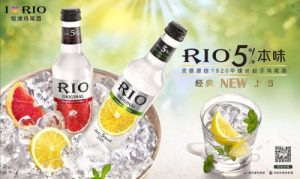
Rio 5% ABV for both sexes

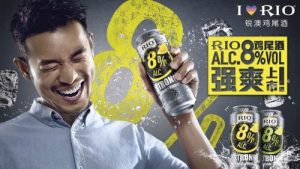
Rio 8% ABV for men
Rio 8% ABV for men
Rio 8% ABV for men

For Bairun, Rio is aimed at young consumers especially females who want something sweeter and low in alcohol. Now, the company is trying to arrest the sales decline by reaching out to consumers who prefer something stronger. The new Rio 5% ABV comes in glass packaging with screw cap, while the new Rio 8% ABV is in can. Both were launched in April 2016. The existing Rio in glass has an ABV of 3.8%, while the one in can has an ABV of 3%. The 5% ABV Rio is targeted at both sexes, while the 8% ABV Rio is aimed at men and the beer market.

Competes with AK-47

AK-47 brand spokesperson is Zheng Kai

The new 8% ABV is also an attempt to compete with AK-47, which has been claimed to be a ‘Men’s Cocktail’ with both the 5% and 8% ABV variants. AK-47 is produced by Douglas (Qingdao) Wines Co., Ltd, a partner of the UK-based Scotch whisky maker Douglas Laing & Co., Ltd.

As men are the biggest consumer of alcohol cocktail, the move by Rio to widen the appeal with men may rejuvenate the category but for the moment, investors of Shanghai Bairun shares are licking their wounds.

Shanghai Bairun share price as of 20 April 2016, down 71% from its high of RMB 87.15 per share on 22 May 2015

Slowdown in Tesco Stores (Malaysia) revenue, focusing on two growth drivers

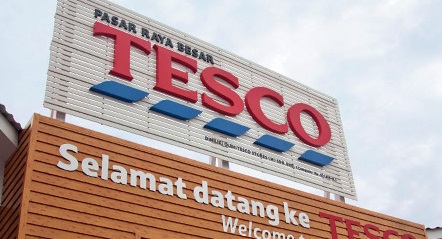
UK-based Tesco has returned to profit for the financial year ending 27 February 2016 with a pre-tax profit of GBP 162 million compared with a pre-tax loss of GBP 6.4 billion a year ago.Closer to home, Tesco Stores (Malaysia) Sdn Bhd reported a second consecutive decline in revenue, albeit with a small dent, down 0.55%. The phase of rapid growth has ended in 2012/13. Since then, the hypermarket chain has been focusing on e-commerce (Tesco Online) and smaller store format (Tesco Pernama Ekspres) as its key growth engines. Tesco Online was launched in April 2013,
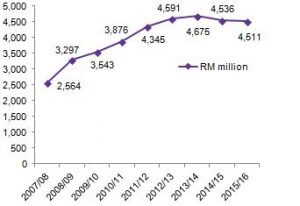
Tesco malaysia revenue
Tesco Stores (Malaysia) Sdn Bhd revenue for the year ending February. Revenue excluding VAT. Compiled by Mini Me Insights based on company information

Smaller store format

Tesco pernama Shah Alam
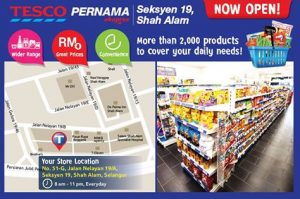
Now opened in Shah Alam in April 2016. Images from Tesco Malaysia Facebook.

As consumer interest in convenience store/minimartket shopping grows, Tesco opened its first three Tesco Pernama Ekspres outlets in February 2015. The store opens from 8am to 11pm. Each store sells around 2,000 daily necessities including household needs, groceries and fresh produce. It is not still not known if the Tesco Pernama Ekspres is able to generate the footfall and sales to counter the might of other convenience store and minimarket chains. Tesco Express in China was not very successful but Tesco Lotus Express in Thailand is growing strong as a minimarket.
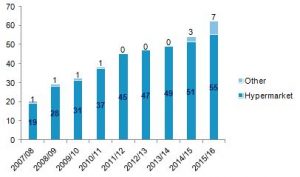
Tesco outlet
Tesco Stores (Malaysia) Sdn Bhd outlet by format. Other in 2014/15 and 2015/16 is estimated. Compiled by Mini Me Insights based on company information and estimation

For the big-box retail retail format, it is struggling amidst slowdown in consumer spending following the implementation of the GST in April 2015, the growing popularity of e-commerce and the decline in the number of shopping trip.
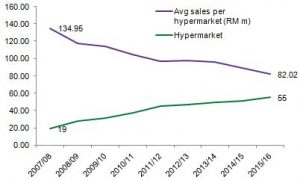
Tesco average sales per hypermarket
Assuming all revenue is attributed to hypermarket. Compiled by Mini Me Insights based on company information and estimation

Tesco is unable to generate more revenue per store even though the number of hypermarket has increased by 36 outlets over the period of eight years. This comes as the company is opening smaller stores as it moves into smaller towns and cities in Peninsular Malaysia. The 55th outlet in Lukut, Negeri Sembilan covers an area of 4,000 square metres with an extra 6,000 square metres for 34 tenants.
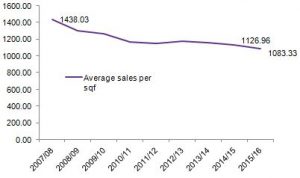
Tesco square feet
Tesco Stores (M) overall revenue (RM) divided by total group space (sqf). Compiled by Mini Me Insights from company information.

Downsizing existing stores to improve shopping experience

Not only is the company reducing the size of its outlets outside of the Klang Valley where the new outlet within IOI City Mall boosts an area of only 4,000 square metres, it is a looking at smaller stores to maximise the tenancy income and consumer experience. According to The Edge Daily on 1 April 2016, Tesco Stores (M) CEO Paul Ritchie said it will downsize existing six outlets starting with the Cheras store to give shoppers the ‘best shopping experience.’

Transstuidio mini
Mini Trans Studios in Transmart Carrefour, Balikpapan

The same is happening in Indonesia. To attract more footfall, Transmart Carrefour is adding Mini Trans Studios, an indoor theme park, in its outlets. Three more Transmart Carrefour will join the existing four Transmart Carrefour in Jakarta, Balikpapan and Tangerang with Mini Trans Studios.

E-Commerce and home delivery
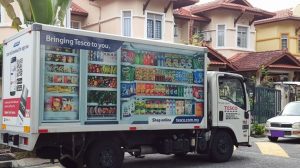
Tesco delivery
Tesco online in action. Photo by Mini Me Insights

Tesco is spearheading online grocery shopping and has the biggest scale among its competitors, which includes HappyFresh, Redtick and Presto. However, fulfillment is a key challenge. From technical error where ‘no slot is available’ to out of stock, usually large items, Tesco needs to up the game if it wants to gain the trust of consumers.

VSS for HQ staff

It was reported by The New Straits Times on 1 April 2016,  Tesco is offering voluntary separation scheme (VSS) to its staff at the head office as part of a major transformation. Tesco Stores (M)’s contribution to group sales has been on a steady decline due to the currency factor. Is Tesco Stores (M) up for sale? Aeon Co was reportedly showing keen interest in the company but this would eliminate choices for consumers as Aeon already bought over Carrefour and renamed it Aeon Big.
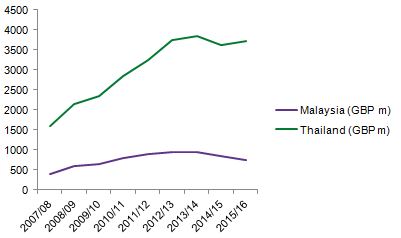
Revenue in GBP million of the Thai and Malaysian operations of Tesco

Fresh food the way forward to capitalise on the need of time poor consumers

Fresh food, which offers high margin, is the way forward in the Malaysian retailing scene. As consumers become increasingly busy not helped by the monstrous traffic jam, the time available for shopping has become increasingly limited. Tesco does operate until 11pm but the fresh food choices are limited.

NSK malaysia
NSK Trade City – Image by the author

NSK Trade City is the place for urbanites to go for fresh produce. It is opened 24 hours a day and the fresh food section is like a wet market but the selections are even larger than the wet market. One can get everything from fresh leafy vegetables to a wide range of exotic seafood including Pacific saury there. Consumers can be seen buying fresh produce in the wee hours of the night for self consumption or for their businesses.

China’s Yonghui Superstores success in China is all down to having the best fresh food offering. Fresh food accounts for over 40% of the floor space. The attraction of Yonghui boils down to two key issues the dwindling number of wet markets and heightened food safety issues. Singapore-listed Dairy Farms owns a 19.9% stake in Yonghui. The key challenge for Tesco is to improve its fresh produce offering and improve its e-commerce fulfillment going forward.

Update in September 2016

According to media report at the end of August 2016, Tesco Malaysia is downsizing its headcount by 600 workers as a move to stem losses. The company let go 130 staff under a voluntary separation scheme in early 2016.

First of its kind Es Doger ready-to-drink beverage

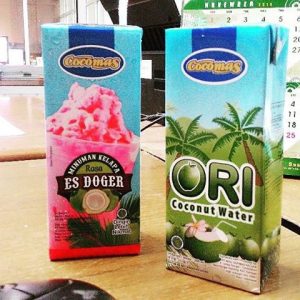
The coconut-based food manufacturer PT Cocomas Indonesia, which also makes Ori coconut water, has recently unveiled an interesting coconut milk-based beverage – Minuman Kelapa Rasa Es Doger or Es Doger Flavoured Coconut Drink, the first of its kind in Indonesia. According to Wikipedia, Es Doger is an “Indonesian coconut milk-based shaved ice beverage with pinkish color often served as a dessert. It is a specialty of Bandung, West Java.”

Es doger masak tv
Es doger ori
Image from Rizki Syuryadi Instagram

The new Es Doger is treated with Ultra High Temperature (UHT) and comes in a convenient ready-to-drink Tetra Pak format. Coconut milk is a key ingredient in Es Doger. With the new RTD Es Doger, consumers can enjoy Es Doger on the go.

The company targets to sell 150,000 cartons per month in 2016 with the target rising to 200,000 cartons per month in 2017. Es Doger Cocomas is manufactured at the company’s factory in Riau.

We are seeing companies drawing inspiration from local treats. But what is more important is the  shift from coconut water to coconut milk-based drink in line with what is happening in the European and North American markets where coconut milk serves as a dairy-free alternative and a source of protein.

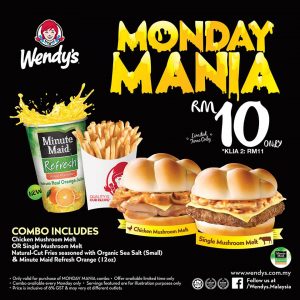
Minute Maid Refresh serving in Wendy’s & Burger King

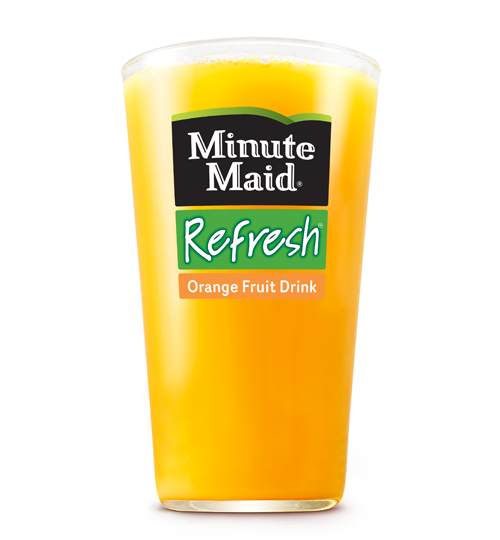
Minute Maid Refresh has made its appearance in the foodservice channel in Malaysia and Singapore.  What exactly is Minute Maid Refresh and how different it is from the normal Minute Maid?

Minute Maid Wendy

The difference lies in the fact that Minute Maid Refresh is actually an orange juice drink whereas Minute Maid is 100% pure orange juice.

BK Minute
Burger King Singapore
McD SG
McDonald’s Singapore

So where can you get Minute Maid Refresh? It is available at Burger King in Malaysia and Singapore and Wendy’s in Malaysia. For 100% orange juice lovers, McDonald’s is still the place for you.

FamilyMart enters into a competitive Malaysian convenience store market

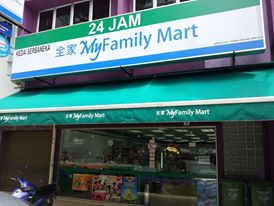
QL Resources, Malaysia’s biggest surimi manufacturer and the largest fishball range manufacturer in the country, announced on 11 April 2016 that it had signed an area franchise agreement with the Japanese convenience store chain FamilyMart Co., Ltd. to open FamilyMart stores in Malaysia. The agreement will last for 20 years.

FamilyMart MY
Image taken by the author in 2013 in Maluri, Cheras

The plan is to open the first FamilyMart in Malaysia by December 2016. Previously, the author spotted several copycat FamilyMart stores in the Klang Valley area in 2013. The stores have now being rebranded under a different name and logo.

The reason for QL to venture into the retail business is for the company to expand its ‘existing food manufacturing and distribution businesses.’ Plainly speaking, QL is looking for new ways to sell its fish balls and other surimi-based products and the best way to sell it is through convenience stores.

Fresh food sustaining SSSG of 7-Eleven Indonesia

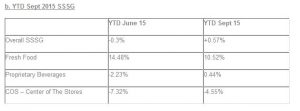
Fresh food products including sandwiches, hot food and chilled food  command a high profit margin and is a generator of growth for convenience stores. This is the reason why convenience stores are pushing for higher sales of fresh food. Take the example of PT Modern Internasional, the franchise holder of 7-Eleven in Indonesia. The company had 244 SKUs of fresh food as of the end of the third quarter of 2015. Fresh food same store sales growth (SSSG) led the way with a 10.52% growth in the first nine months of 2015 compared with an overall SSSG of only 0.57%. The overall SSSG was impacted by the ban of beer sales, which started in early 2015.

PT Modern fresh
PT Modern Internasional – same store sales growth (SSSG)

Indonesian convenience store goers are increasingly shifting to healthier food. Sales of fresh food mainly chilled food (such as Rice Bowl, Sandwich, Salad and Nasi Tenggo), up 31-41%, and bakery, up 11-15%, continued to grow offsetting the slowdown in hot food fried items.

QL leverages strength in food manufacturing
 

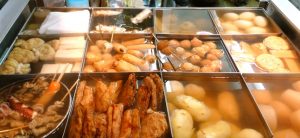
Oden
Image from Dreamers.id

For QL, convenience store is a good platform to sell its surimi-based products as well as poultry products. According to QL group corporate development director Chia Lik Khai in an interview with Focus Malaysia (Issue 176, 16-22 April 2016), the company plans to offer ready-to-eat foods such as bento or fried chicken. However, it needs to ensure Malaysians accept the idea of eating fresh food in convenience stores. 7-Eleven Malaysia has tried very hard but is still unable to compete with the ubiquitous 24-hour Mamak eateries in terms of freshness and price. As a result, 7-Eleven is focusing on fried food including fish ball and microwaveable food supplied by CP.

Good time to grab some real estates

With depressed rental due to the oversupply of commercial units, it now is a good time for QL to enter into leases for prime real estates for its new FamilyMart stores. There are a lot of condominiums coming up in the Klang Valley and most of them have commercial lots, mostly unoccupied. The footfall can be low in these places due to poor occupancy. There are also new shopping malls with six more coming up in the Klang Valley in 2016 including MyTown Shopping Centre.

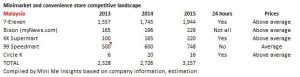
Competitive landscape

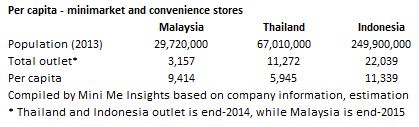
The per capita penetration of minimarket and convenience store is still low in Malaysia compared with neighbouring Thailand. The low per capita is often used as a justification to gauge future growth potential. This is indeed the case as consumers increasingly shift to proximity shopping for top-up shopping. The big-box retailers are struggling, not only in China but also increasingly in Southeast Asia, thanks to the growth of e-commerce and shifting consumer habits for smaller stores due to the busy lifestyle, the rise of singletons and the lack of transport (migrant workers in the case of Malaysia).

In Malaysia, 7-Eleven has the biggest share in terms of the number of stores at 62%, followed by 99 Speedmart, which is essentially a small supermarket selling mainly household products including diapers. 99 Speedmart is popular with housewives, migrant workers and lower-income consumers.  Circle K lauded itself as a halal convenience store but is few in numbers. Bison (myNews.com) has recently listed on the stock exchange and is now flush with cash for expansion.

Minimarket competitive landscape

The key thing is what type of demographics would FamilyMart target and this will determine the sort of products and services it will offer. To win, FamilyMart would need to stand above the rest with interesting store concept that is young and trendy. The key message is it is time to bring back the fun in convenience store shopping.

HOT NEWS

Pizza Hut Launches the World’s First “Premium Nine Cheese Pizza” Menu...

0
Tuesday 25 July 2023 -  Pizza Hut 1150, a global brand operated by PH Capital, introduces the world's first "Premium Nine Cheese Pizza Menu"...

MUST READ

Glide into the Year of the Snake with Carlsberg’s ArtistEdition Festive...

0
Brewing Prosperity Together with family and friends this CNY with #BestWithCarlsberg moments SHAH ALAM, 30 December 2024 – Carlsberg invites consumers to bask in the...