Home Blog Page 1163

Mini Me Insights plagiarised by popular newsletter !

It has come to my notice lately that my blog piece on Calpis has been plagiarised by a renown Singapore-based industry newsletter. The newsletter has ‘cut and pasted’ a lot of my texts without even bother to reshuffle the sentences. In that article, I used some of the information from Nikkei Asian Review, which I have clearly sourced and attributed to the Japanese news agency. However, this is not an excuse to plagiarise my original analysis.

After several email exchanges with the editor of the newsletter, all I got was the final acknowledgement that ‘some’ of the information comes from my blog:

According to MiniMe Insights, a popular blog compiled through latest storecheck data, in Malaysia, Calpis is using the taglines “First ever cultured milk brand in Japan”, “since 1919″,”fat free” and “good for the tummy” as cues to promote the new 500ml and 1 litre Calpis”

Hey, aren’t the sentences taken direct from my original blog post?


Here are other examples of plagiarism:

Click here for the URL

The statement “…. will appeal to female consumers looking for permissible indulgence” was not mentioned by the company spokesperson. It was yours truly who said it.

To the newsletter, please redeem yourself by stop practicing plagiarism.

To all readers and users, you need to acknowledge the blog – Mini Me Insights – whenever you use data from this site and don’t plagiarise.

Zott cheese, yoghurt now in Malaysia

Zott, the European dairy company founded in Mertingen, Germany, is making its presence felt in Malaysia. Its cheese and yoghurt are distributed locally by Caldbeck Macgregor (M) Sdn Bhd, the same company in charge of distributing President, Lactel and Emborg and other dairy brands.

Sophisticated sounding labels heping Giant gains private label sales traction

Consumer confidence in Malaysia hit a 10-year low in Q3 2015, according to a Nielsen study. To save money, 51% said they are switching to cheaper grocery brands. Private label or grocery brands are in a good position to capitalise on the frugal spending environment. Consumers want cheaper prices but they are not willing to sacrifice on quality. Branded private label marketed as exclusive products sold under a distinctive brand name, not the generic in-house label, is a strategy adopted by CGH Retail to improve private label penetration to reap higher margins.

GCH Retail, the operator of Giant, Cold Storage and Guardian, is currently pursuing the twin strategy of in-house brand under the Giant label and First Choice labels and branded private labels such as Papa Alfredo (olive oil and spaghetti/sauce) and Southdale Farm (cheese and butter) sold as exclusive products.

The branded private label brands of GCH Retail are unique because they are marketed as exclusively imported products. Being imported also carries the message of better quality.

Hidden in the fine print is the message the product is exclusively imported and distributed by GCH Retail (Malaysia) Sdn Bhd made under the commission of Hong Kong-based DFI Brands Limited. As most consumers are not aware GCH Retail is the operator of Giant and Cold Storage, most people will not be associating the branded private label as a grocery brand thinking it is just a new product on the market.

Here is a list of branded in-house products by GCH Retail in Malaysia.

In the extra virgin olive oil category, the GCH’s Papa Alfredo is the cheapest compared to the other Italian extra virgin olive oil brands – Colavita, Bertolli and Filippo. Allegro, which slight matches the price of Papa Alfredo, is imported from Tunisia, a less well known source for extra virgin olive oil.

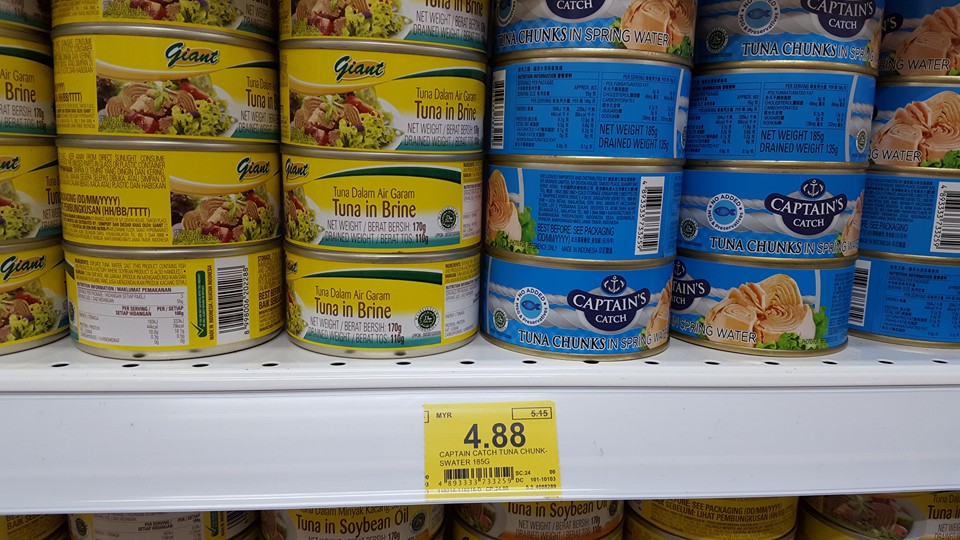
In the canned tuna in spring water category, the Giant in-house brand is the cheapest, while the exclusively imported brand Captain’s Catch competes with its branded equivalent and therefore fetches a higher than the Giant brand. Both Giant and Captain’s Catch are imported from Indonesia.

In the kitchen towel category, GCH Retail has three brands Giant, First Choice and Feather Soft. Feather Soft, which is imported from China, comparably priced with its branded equivalent Royal Gold and Premier.


The branded in-house products enjoy strategic in-store placement. There is no mentioning in the in-store materials that these products are GCH’s private label range.


With consumers tightening their purse, GCH’s unique private label strategy might work due to the combination of value and quality (imported) perception. The use of unique sounding brand names also means consumers who are wary about private label are more willing to give them a try.

Packaged canned drinks migrating to slim packs

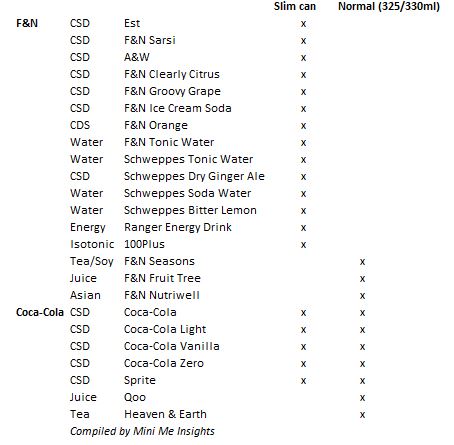
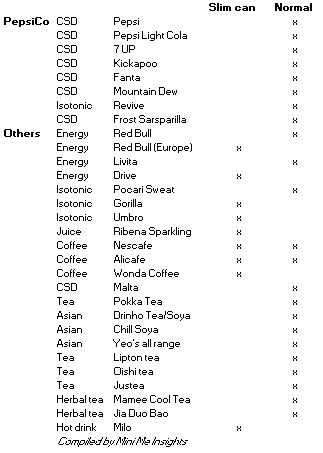
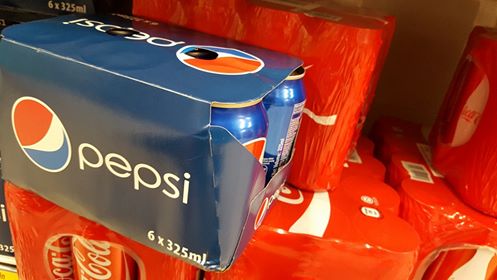
One of the interesting conversations heard during Chinese New Year gathering is how slim all the carbonated drink cans have become. F&N started the trend by changing 100Plus into the slim can, followed by Coca-Coca Malaysia. PepsiCo/Permanis is still opting for the normal can.

Cost savings is the key reason why F&N is switching to slim can. F&N Holdings Sdn Bhd CEO Lim Yew Hoe said the company could save about RM 5 for every 1,000 cans produced. The material is also more lightweight. For those who depend on collecting used beverage cans, they now need to collect at least 70+ slim cans to get 1kg. Previously, it was 60 normal cans for 1kg.

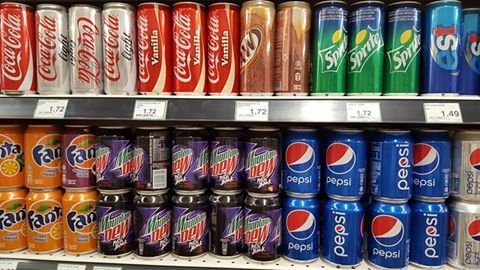
Here is a summary of the packaging used by the different packaged drinks in Malaysia.


Images of multipacks:


Yunnan coffee crafted to carry refinement of Chinese culture

From sourcing coffee beans for its coffee products to finally exploiting its exotic taste, Nescafe has turned Yunnan into another a new source for exotic coffee. The province in southwest China is home to 99% of China’s coffee output. The area planted with coffee crop is set to expand to over 167,000 hectares by 2020 from about 125,000 hectares with demand currently outstripping supply.

Tea has always been associated with Chinese culture. Now, Yunnan coffee is marketed as carrying “all the refinement of Chinese culture”, something unheard few years ago when China’s coffee industry was just starting out.

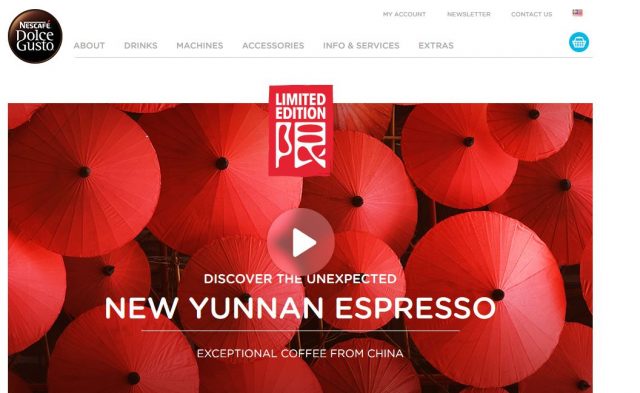
The Yunnan Espresso for Dolce Gusto marks Nescafe’s effort to continue to bring international coffee taste to Malaysian consumers from Mountain Wash, a caffeine free premium coffee from Vietnam launched in 2015 and now with Yunnan Espresso.

The new coffee capsule is made from 100% arabica beans and is retailed for RM 29.90.

Arla launches cream cheese in Malaysia, a look at Arla activities in the Philippines & Indonesia

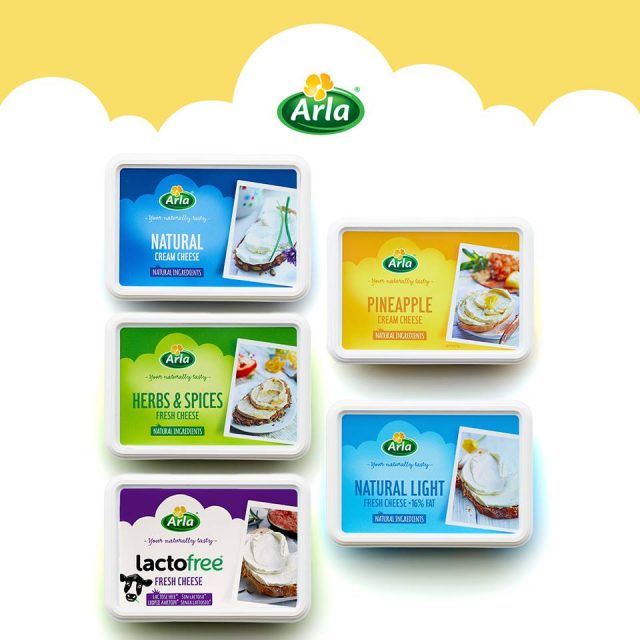
The Danish dairy producer Arla recently launched its range of cream cheese and fresh cheese in Malaysia including the Lactofree Fresh Cheese.

Image taken by the author at Cold Storage

Arla, which has its Business Unit Asia in Kuala Lumpur to oversee China and Southeast Asia, entered the Philippines market in October 2015 with Lactose Free Full Cream UHT Milk, the first in the market, Natural Cheese Slices, Cream Cheese and other dairy products.

Arla has even set up a Facebook page for the Philippines market with 16,628 people who liked the page as of 6 February 2016. The official Facebook page shows Arla is devoting resources to grow the Philippines market. As a contrast, Malaysia seems not getting the marketing dollar. The most likely reason is the growth of the middle class in the Philippines, a country with a population of about 100 million, is making the country an irresistible market for Arla to tap into the premiumisation trend in the dairy sector. Malaysia is a more matured market with wider varieties of imported dairy products. It make sense to focus on the Philippines market with potential to achieve leadership position in the imported cheese segment.

Cheese section in an SM Supermarket in Manila – image taken by the author in January 2016

The images above were taken at Robinsons Supermarket in January 2016 illustrating how Arla is providing recipe idea for its cheese products in store.

Price

The price for Arla Pineapple Cream Cheese is the same in both Malaysia and the Philippines quoted at RM 8.30 at Cold Storage or PHP 95.00 at SM Supermarket.

Indonesia – focusing on kids and affordability

Image taken by the author in November 2015

In Indonesia, Arla is focusing on Kids Sticks through the minimarket channel. The strategy is to sell the Arla Kids Sticks in individual stick for an affordable price of IDR 5,500 (USD 0.40). The key for the Indonesia market is to start em young and making cheese a healthy snack.

Bruschette Maretti parent brings Motto to compete in wafer segment

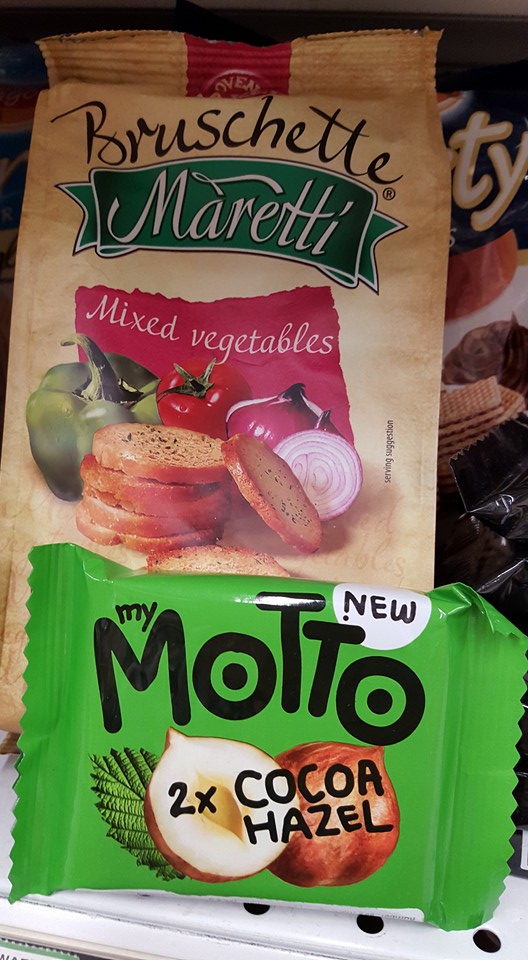
My Motto wafer is now available in Malaysia. The product is introduced by the same company that brought us Bruschette Maretti baked bread circles – Ital Food. Ital Food is a Bulgarian company, a subsidiary of Ficosota Sintez, a producer of home and personal care products, dairy food and snack food in Bulgaria.


Bruschette Maretti was launched in Malaysia in 2014 and is distributed by Delfi Marketing Sdn Bhd. The unique taste of Bruschette Maretti has turned it into a hit. The pack size is small and is good for consumers looking for portion control. As the oven baked snack is made from bread and vegetables (tomato, olives and oregano), it gives the impression that it is good for you.

CNY promotion at Cold Storage

Motto is competing with in the coated water segment, fiercely contested by Munchy’s, Loaker, Cadbury (Zip), Kit Kat and Jack n Jill (Cloud 9) as well as the new entrant Richeese from Indonesia. So competition is really intense and the key for Motto is to go for the convenience channel to tap the on-the-go eating occasion.

FMCG companies cashing in on halalnisation

Malaysia is on the course towards ‘halalnisation’. The term ‘halalnisation’ was coined by Ooi Kok Hin in an article in The Malaysian Insider. Why halalnisation? According to Ooi in his latest article citing the 2015 poll by Merdeka Centre, 60% of Malays consider themselves Muslims first, 27% as Malaysians first and only 6% see themselves as Malays first. The result is the same as the 2006 poll where 61% of Malays saw themselves as Muslims first.

Changing demographics also favour the Malay-Muslim population. Chinese has the lowest birth rate, while Malay has the highest, according to the Department of Statistics.

Department of Statistics of Malaysia

Falling birth rate means the share of Chinese and Indian populations will decline. By 2040 Malays would account for nearly 60% of the population, this is up from 54.5%. This is only a projection but with more Chinese delaying marriage or preferring to have a small family due to financial constraint, the size of the Malay population may increase further.

Stratfor from Malaysia Department of Statistics projection, 2012

This lead to a situation where the consumer landscape will be broadly led by the Malay-Muslim population. If we take into account religion with the majority of Malays identifying themselves as Muslim first then products catering to their religious lifestyle will be in high demand.

MNCs have started to embrace the hijab trend. Sunsilk has been very successful after it shifted its strategy to focus on catering to the needs of hijab wearers.

Japan’s Uniqlo has a new range of hijab wear for Muslim women in Malaysia.

Local non-Muslim entrepreneurs are gung ho on to flash their halal credential to reach out to the majority Malay-Muslim consumers due to their sheer size. Malaysia’s first halal-certified airline, Rayani Air, was set up by non-Muslims.

The country’s biggest child enrichment chain Smart Reader, founded by non-Muslims, have branched out to include Smart Reader Kids Islamic.

NSK is another example of how the Chinese-owned supermarket chain is doing to woo Muslims consumers by segregating non-halal and halal section and having different trolley for halal and non-halal purchases.
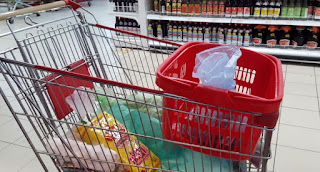
Red basket is to be used exclusive in the non-halal section for non-halal product. Image by the author

The local halal industry is dominated by non-Muslim businesses as they realised halal certification is not only serves as a door to local Muslim consumers but also to the global Muslim markets. Foreign companies are setting up production bases in Malaysia to turn the country into their halal-export hub as the local halal certification is globally recognised.

Increasingly, companies will focus their new product innovation to cater to consumers that form the biggest population and this will mean either launching a new line for Muslim consumers eg Hong Kong’s Lee Kum Kee with the new Mahsuri sauce or Mamee Bev Cool Tea to broaden the appeal of herbal tea to include Malay consumers.

Changing demographic (more Malay population) and the strong Muslim identity (more Malay identifying themselves as Muslims) will further deepen ‘halalnisation’ in Malaysia. This trend is reinforced by more services and products that are friendly to Muslim consumers going forward.

60% of Malays consider themselves as Muslims first – See more at: http://www.themalaysianinsider.com/sideviews/article/rise-and-rise-of-muslim-politics-ooi-kok-hin#sthash.FyrZPPhW.dpuf

Malays saw themselves as Muslims first

60% of Malays consider themselves as Muslims first – See more at: http://www.themalaysianinsider.com/sideviews/article/rise-and-rise-of-muslim-politics-ooi-kok-hin#sthash.FyrZPPhW.dpuf


Huiyuan turns to crowd funding with interactive juice pack that inspires creativity

Huiyuan, China’s biggest pure juice company, has created something extraordinary with its juice packaging. The interactive pack comes with stickers. Children can put the sticker on the juice packaging and colour the packaging. However, these products are only available through crowd funding (众筹) on JD Finance as part of the “Inspire Children’s Boundless Imagination” program. The goal is to not only to give the best nutrition to children aged 3-6 but also to encourage them to think creatively. The fund raised will be used to produce more innovative products for children.

For more information see: http://www.ifooday.cn/news/food/20160126/10979.html (In Mandarin)

Brands drawing inspiration from what consumers are doing with their food

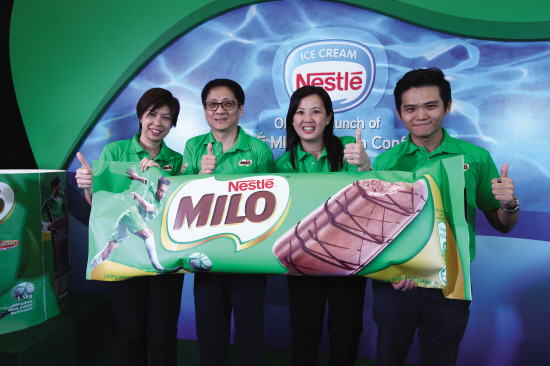
New Nestle Milo Ice Cream Stick

The new Nestle Milo frozen confection, recently launched in Malaysia, is according to the Swiss food and beverage giant inspired by the “do-it-yourself Milo ice-cream from the childhood days.”Brands are increasingly drawing inspiration from what consumers are doing with their food. Companies do not need to go very far to search for inspiration. All they need to do is see what ordinary Malaysians are doing with their food. In Indonesia, the new Indomie instant noodle with milk is a good example of how a company borrows ideas from consumers to create something that is being practiced at home.

In the UK, Watch Me Think is a market research company focusing on “using videos taken by people at the place and in the moment of use” to understand how consumers consume the product in their home.

Sometimes street food culture is also a great source for new product inspiration. I have talked about how martabak or sweet pancake vendors in Indonesia are innovating by adding Nutella, Oreo and Kit Kat.

We can learn a lot by peering into the world of how consumers actually consume their food. Innovation can be as easy as producing something that matches what is being practiced already but with more added value and greater convenient.

HOT NEWS

Ajinomoto Indonesia promotes healthy eating with Masako Rasa Gurih Pas that...

0
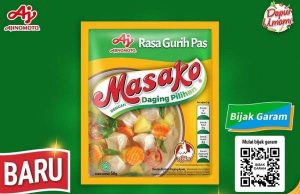
PT Ajinomoto Indonesia has launched Masako Rasa Gurih Pas, which a new seasoning that is lower in sodium. The company created this product to promote...

MUST READ

Instant coffee brands at c-stores in China, Thailand, Philippines

1
Instant coffee is popular in Asia. It is commonly sold in individual sachet in convenience stores, a store format that is currently booming in...