Home Blog Page 1187

Plant-based protein drink is a new growth engine
Sales of plant-based protein drink such as soy, almond and coconut is rising in the US, Europe and in China as consumers look for non-dairy alternatives. Consumers are replacing their diet with dairy-free products primarily as a reaction to heath warnings about consuming too many dairy. Other factors include lactose intolerance and cow’s milk allergy.

In the UK, almond milk sales grew to 92 million litres in 2013, up 155% from 36mn litres in 2011. As a comparison, sales of regular milk grew just 3% over the same period.

In the US, refrigerated plant-based beverage registered the second highest CAGR of 16% between 2011 and 2013, while refrigerated organic milk and milk saw a respective 5% and -1% CAGR, according to Nielsen.

Source: WhiteWave Food presentation – Nielsen data

According to Mintel, products with ‘high protein’ claims (over 10g/20% of RDA) accounted for 28% of food and drink launches between August 2012 and July 2013.

In China, plant-based protein food (植物蛋白食品) is a growth segment. US-based WhiteWave Foods entered into a joint venture with China’s Mengniu in July 2014 to “access the Chinese market, one of the world’s largest consumer markets with a rapidly growing, multi-billion dollar nutritious products segment.”

According to WhiteWave, the market for soy milk, almond milk, walnut milk and coconut milk in China is worth more than USD 2 billion.

WhiteWave Foods Barclays Back to School Conference Presentation September 4, 2014

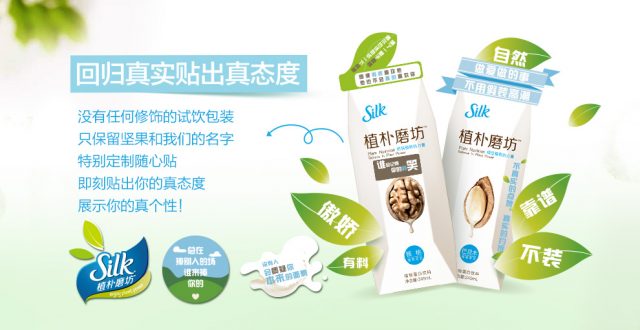
The joint venture launched their new Silk products – almond and walnut at the end of 2014.


In China, Nestle’s Yinlu (银鹭) is the market leader in peanut milk, Hebei Yangyuan Zhihui (河北养元智汇) in walnut milk (market share: 80%), Yeshu Group in coconut milk Chengde LoLo in almond milk (market share: 90%). Sales of almond milk and walnut milk is concentrated in the northern region, while coconut milk is primarily in the southern region. Yangyuan’s Six Walnut drink is positioned as a drink for the brain, while newcomer Silk positioned itself as a US-origin natural drink.

In view of the growing popularity of plant-based protein drink, what would be the implication for Southeast Asia, particularly Malaysia? We will discuss this in the next edition.
Summary of Bain and Kantar’s Chinese Shoppers: Evolving Behaviors in Challenging Environment

This is an excellent report from Bain and Kantar. Below is the verbatim summary of the report. Copyright belongs to Bain & Company and Kantar Worldpanel.

Chinese Shoppers: Evolving Behaviors in Challenging Environment
Bain & Company, Inc. | Kantar Worldpanel

Key points:

1.) Penetration continued to be the key indicator of market share, ahead of purchase frequency and repurchase rate.
– The leading brand’s penetration is two to 10 times higher than the penetration of the average 20 brands in their category.
– The winners successfully adapt to actual shopper behaviors, and focus on
driving penetration.

2.) The shopper base for all brands remains a “leaky bucket,” as we found that the majority of shoppers left the brands we studied after two years. The percentage of shoppers who leave is lower in loyalty categories, such as milk, but the leaky bucket pattern exists there as well. In order to compensate for losses, brands need to recruit shoppers continuously.
– Chinese shoppers demonstrate very low engagement with brands for most categories we studied
low-frequency shoppers represent a substantial portion of the shopper base and
revenue share
. Eg. 80% of Head & Shoulders shoppers purchase the shampoo no more than
twice a year, yet they represent 55% of the product’s total sales.
– 46% of shoppers who purchased Xufuji candies in 2011 left in 2012, while more than
one-third of its 2012 revenue came from newly recruited shoppers. This pattern continues every year: Almost 70% of Xufuji’s 2011 shoppers had left by 2013.

3.) Growth must come primarily from share gain. And penetration change is the most important way to achieve share change. In this section, we share more details about how marketers can accomplish this.

– competition extends far beyond their target segments.
each brand was actually competing with a broader set of competitors, despite its functional focus. Although brands normally claim that they have clear target-shopper segmentations, in reality the segmentation is not clear cut.
– Each brand actually competes with every other brand
Growth must come primarily from share gain. And penetration change is the most important way to achieve share change.

The steady path for brands to earn consideration and penetration requires investment in three key assets:
A.) Memory structure (marketers need to remind them about their brands when
they go shopping)
B.) Product portfolio (Simplify and rationalize your product portfolio)
C.) In-store assets (Brands must achieve perfect in-store activation at the point of sale)

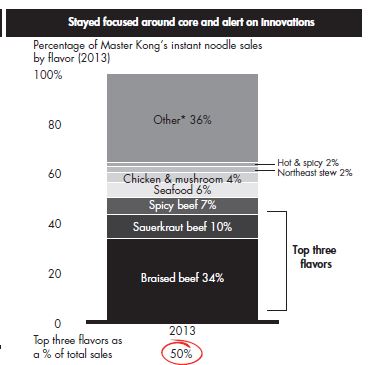
Now we know Master Kong’s top three flavours are braised beef, sauerkraut beef and spicy beef – all beef!


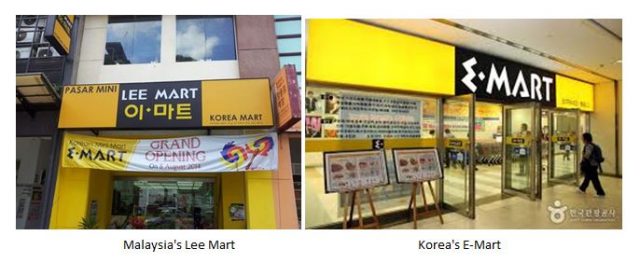
Am I seeing double – E-Mart entering Malaysia?

Am I seeing double? It seems South Korea’s largest retailer E-Mart (이마트) has entered Malaysia but look closely, the Malaysian version is not E-Mart but Lee Mart. In Korean, 이 as translated into English as Lee but pronounced as E. The colour scheme is exactly the same as the Korean retailer

Lee Mart is brazen with the wholesale adoption of the E-Mart branding. The so-called Lotte Mart in Malaysia, no connection what so ever with Lotte Mart in Korea, is more conservative. What these examples show is there is a sizable Korean community in Malaysia, making the country a logical expansion market for South Korean retailers but first they need to safeguard their brands locally.

Key criteria for stock picking

Readers would have noticed, apart from blogging about FMCG trends, I am also using blogging to discover companies that are worth investing. Here is a summary of some of my few successful picks so far. Do bear in my I have also paid a huge price for ignoring these criteria many times, yes many times. This post serves as a wake up call to me to always adhere to these criteria when picking stocks.

Due to reassessment of the risks involved, I have decided to divest Power Root.


Holy cow: Power Root 2Q FYE 2015 results not good!

Power Root announced its Q2 FYE 2015 results on 25 November 2014. Since the company changed its financial year to March from February, the latest financial result is not comparable. However, if you look at the % breakdown relative to revenue, you will discover the company is actually not doing well.

The absence of other income and higher other operating expenses contributed to a contraction in net profit margin to 5.16% in Q2 FYE 2015 compared with Q2 FYE 2014 of 13.49%. Marketing expenses come under “other operating expenses”. This shows the company had to spend more to stand out in the competitive instant coffee market.

If you look at the actual numbers, all the marketing efforts have contributed to higher revenue but this has not been translated into bottom line growth.

Performance for the 12 months ending March 2015 is likely to see a boost in other income as the company has recently announced the disposal of property worth RM 2.4 million. However, how much more assets can the company dispose to boost its bottom line.

Overseas share of revenue is rising. The expansion in the MENA region may be one of the factors for the need for higher marketing spending.

Assuming second half EPS is 3 cent, full year at 7.7 cent, the current valuation will be 20x PE based on the current price of RM 1.55 as of 9.08am on 26 November 2014.

Unique Sensodyne POS marketing for sensitive teeth

Sensodyne, the GSK sensitive teeth toothpaste brand, has a unique marketing campaign in Malaysia. We all know ice cream causes painful experience for people with sensitive teeth and Sensodyne is there to help you. One way to hone in this message is to place ads in the ice cream aisles. Clever!

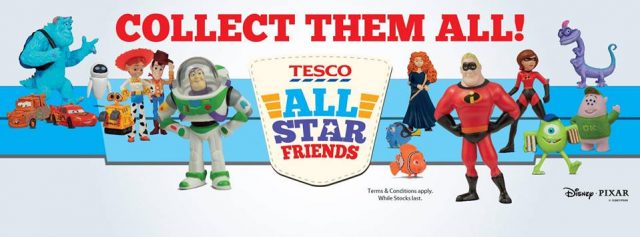
Tesco Malaysia not hitting the right note with latest All Stars promotion

Tesco Malaysia is back with the new All Star Friends. However, the second edition of the campaign is rather disappointing.

Old requirement:

Get 1 sticker with every RM50 spend in a single receipt. Get extra stickers with selected sponsors’ products. A total of 10 stickers are needed to redeem a figurine. RM 500 per figurine but if you buy selected sponsors’ products, you will receive an extra sticker.

New requirement:
Get 1 sticker with every RM 30 spent in a single receipt. Get extra sticker with purchase of sponsored products worth RM 30. A total of 20 stickers are needed to redeem a figurine. That’s RM 600 per figurine, RM 100 more than the old requirement. Moreover, to get the extra sticker, you have to buy RM 30 worth of sponsored products.

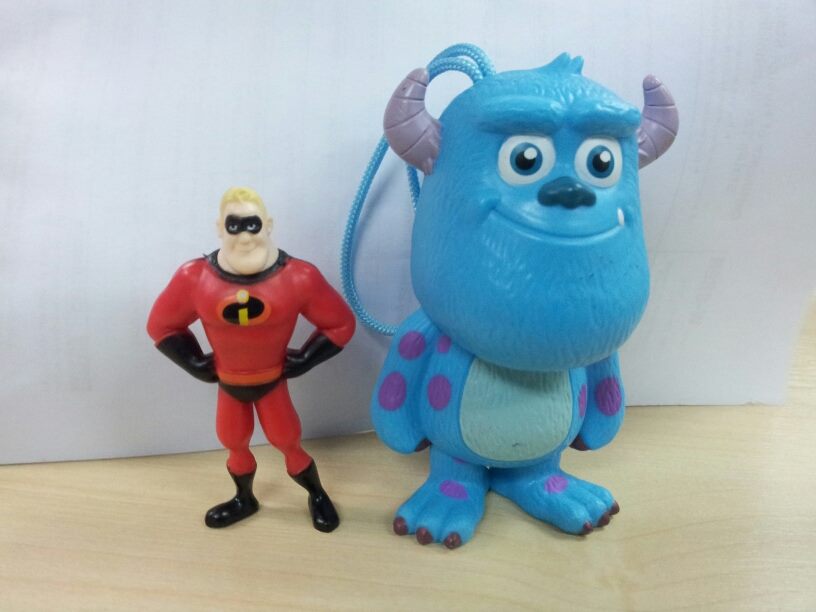
The most disappointing part is the figurine is now much smaller than the old one.

Look how small the new figurine (left) has become

According to Tesco  – Last year (2013), we reached more than one million customers and sold out 700,000 figurines,” Tesco Malaysia chief executive officer Georg Fischer said.

I am sure this time round, not many figurines will be sold. Last time, I myself could easily redeem 5 figurines but now I have only redeemed 1 so far and are not planning to redeem more.

Malaysia slowly moving towards becoming a D.I.Y. nation

The dreaded acronym D.I.Y.

In the not so distant future, say in 10-15 years time, Malaysians will have to D.I.Y. everything including simple task like painting to more complicated roof leaking repair. The reason is the old sifu (master of the trade) who are currently in their 40-50s are expected to retire. Who will be replacing them? The young generation has no interest in getting their hands dirty.

The market will eventually be dominated by a handful of local tradesmen who are skilled (some not skilled) who will ask for a very high price to do small repair work. To avoid paying for their service, ordinary Malaysians will have to learn everything from Youtube. By then, D.I.Y. store will flourish like what is happening in Western countries. Malaysia will eventually move from a nation seeking help from the experts to a nation who D.I.Y. everything.

That’s my prediction.

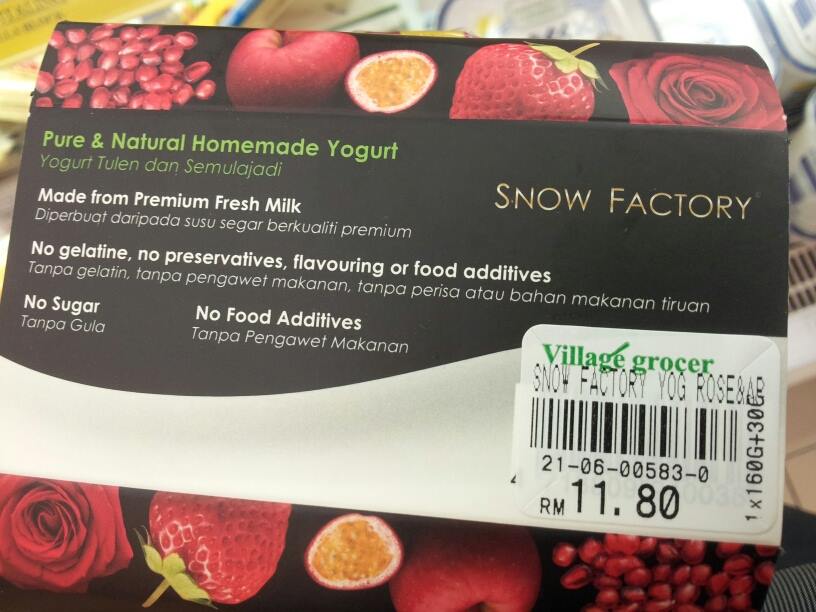
Snow Factory Pure & Natural Homemade Yogurt debut

Taiwan’s Snow Factory has made available its Pure & Natural Homemade Yogurt with confiture topping at Village Grocer. To tell the truth, this is the first time I have come across Snow Factory, which styled itself as the first premium yogurt brand in Taiwan. According to the website, they have an outlet at Pavillion.

Here are some photos of the product.

Fallacy of consumer behaviour survey – example of RTD tea

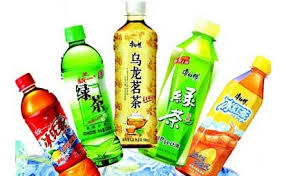
A recent survey by the China Association for Quality (中国质量协会) has found a vast majority of consumers 75.6% randomly pick any ready-to-drink (RTD) tea when they buy RTD tea. Only less than one-fourth (24.4%) stick to a certain brand. The survey shows RTD tea consumers in China have very low brand loyalty.

 
Consumer survey on RTD tea drink in China

However, if you look at the Nielsen data in Tingyi’s annual report, you will notice the RTD tea brand landscape is not fragmented as suggested by the consumer survey.  In fact, most consumers tend to go for the two leading brands – Master Kong (Tingyi Holdings) and Uni-President (Player A).

The fact that 75.6% of consumers randomly pick their RTD tea shows these consumers are fence sitters. Other key factors are at play including taste, packaging and price that determine whether consumers will pick up a Master Kong or a Uni-President RTD tea. The survey should focus on these factors instead.

RTD tea market share – value (%)


HOT NEWS

Lactel Eveil now in Vietnam

0
Lactel Eveil is now in Vietnam. Lactel is the number one brand of UHT milk in France and entered Vietnam in 2012. Made in...

MUST READ

AIA Invites Malaysians to ‘Rethink Healthy’ with Inspiring Photo Exhibition

0
Kuala Lumpur, 6 September 2024 – AIA Malaysia invites everyone to embrace a new perspective on health through its “Rethink Healthy: Through the Lens...

New Nestle Musang King