Tea is often used as a drink to prevent fat from being absorbed into the body. Catechins commonly found in green tea helps to boost your body’s ability to metabolise lipids (fat), thus promoting weight loss. Another ingredient that assists with weight loss is bitter gourd, which stimulates the liver to secrete bile acids to metabolise fat in the body.
“Oil slashing tea”
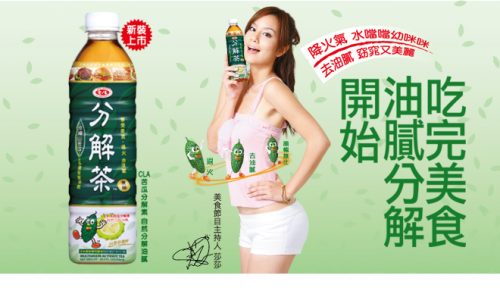
In Taiwan, 油切茶 (you qie cha), literally known as “oil slashing tea” is popularly consumed to block oil from being absorbed, allowing consumers to continue eating the food that they like. There are many products in the market and one of it is the tea product made from Okinawa bitter gourd by AGV Products Corp (愛之味股份有限公司). Most of these functional beverages are aimed at young females who like to indulge in food but also want to keep the body slim.
AGV Products Corp RTD tea made with bitter gourd from Okinawa, Japan. Image above.
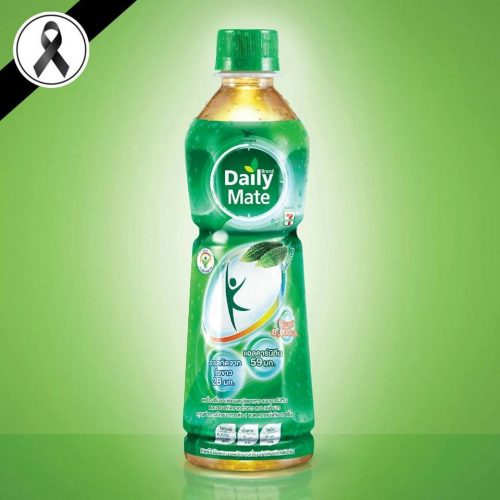
Daily Mate Healthy Tea with bitter gourd
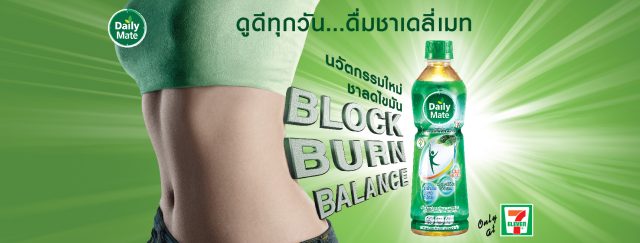
At the end of 2016, Uni-President (Thailand) introduced the Daily Mate Healthy Tea to provide a guilt-free experience to consumers who are fond of eating food with high calories and fat. This unsweetened green tea is made from bitter gourd, white kidney bean extract and L-Carnitine.
Inhibit the digestion of in-take carbohydrate by blocking starch, so that body has more time to excrete starch out before starch is digested into sugar and become unnecessary body fat with White Kidney Bean Extract
Increase efficiency of burning fat with L-Carnitine, Green Tea and Balsam Pear Extract
Enhance by balancing body, improving digestive system with Fiber
Daily Mate Healthy Tea has received the Healthier Choice certification from the Nutrition Promotion Foundation. It is available in a 400ml PET bottle.
The new Daily Mate Healthy Tea taps into the nutritional benefit of bitter gourd. The marketing message is the same as other “oil blocking tea” in Taiwan and that is it is okay to indulge in food but the ill effect can be moderated from drinking functional tea drink.
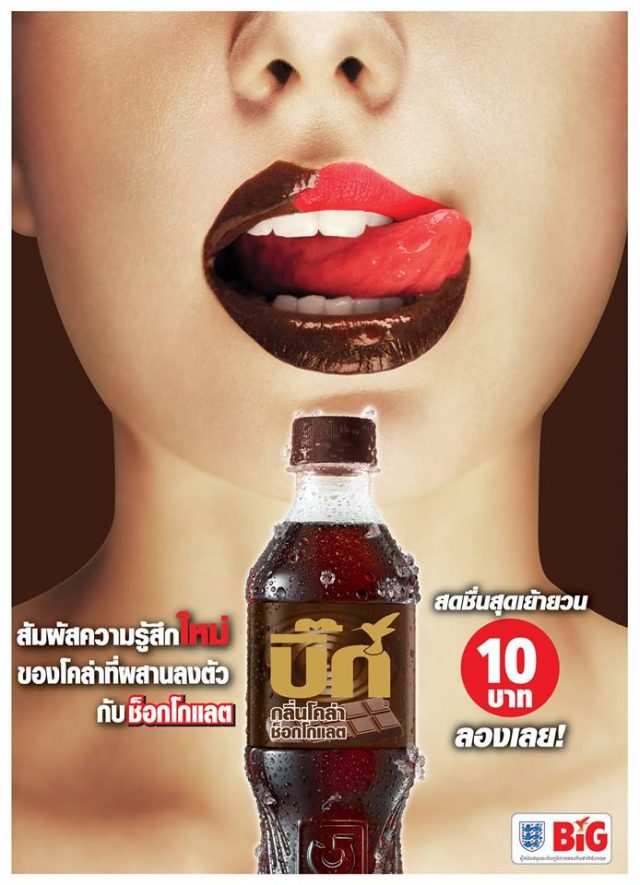
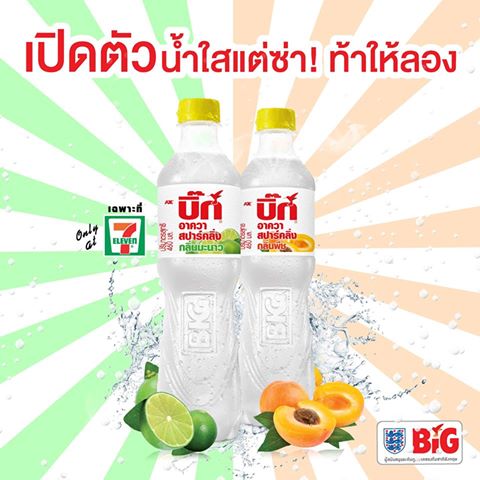
Ajethai, the maker of Big Cola in Thailand, has added new carbonated soft drinks. The first is the chocolate flavoured carbonated soft drink and the other two are flavoured sparkling water in lime and peach flavours.
The new products are a continuation of the company’s innovation in the flavoured carbonated soft drinks category. In the past, Ajethai has added coconut, salak and other flavours to its carbonated soft drinks to add excitement to the Big Cola brand. The latest chocolate flavoured carbonated soft drink has brought flavour innovation to a whole new level.
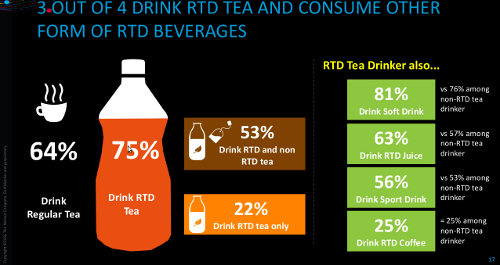
Nielsen has produced some interesting data on RTD tea consumers in Indonesia. According to a report by MIX Marcomm, the marketing communications magazine, Nielsen data shows 75% of consumers drink RTD tea, which is higher than those who drink regular tea (64%). This shows there is potentially a much bigger growth opportunities for RTD tea since the market for regular tea has already become saturated.
RTD tea consumers do not just drink RTD tea only (22%), over half (53%) also drink RTD tea and non-RTD tea. This shows the RTD tea category has attracted regular tea consumers who are turning to RTD tea for its convenience.
Another set of data shows how marketers can target RTD tea drinkers for other complementary beverages. The top drink that RTD tea drinker also consumed is soft drink (81%), followed by RTD juice (63%) and sport drink (56%). Interestingly, only 25% of RTD tea consumers also drink RTD coffee, which indicates tea drinkers remain loyal to tea.
RTD tea drinkers have higher income levels
Nielsen data also shows among RTD tea consumers, 31% come from the upper class as opposed to 26% form the upper class for non-RTD tea consumers.
RTD tea drinkers have younger profile
Over half (52%) of the RTD tea consumers are from the 10-29 age group as opposed to 56% coming from the 30 and above age group for non-RTD tea drinkers. This makes RTD tea consumers having a young profile and this is supported by the Nielsen data showing 22% of RTD tea consumers are students. For non-RTD tea consumers, 22% are housewives. Blue collars account for the biggest consumers for both categories – RTD tea (22%) and non-RTD tea (24%).
Improved consumption frequency of RTD tea
Consumers are drinking more RTD tea. The Nielsen data shows 65% of consumers drink RTD at least once a month in 2017, up 15 percentage points from 51% in 2007. Within 10 years, the frequency of drinking RTD tea at least once a week has also improved by 6 percentage points to 36% (2017) from 30% (2007).
Pucuk Harum top in adspend
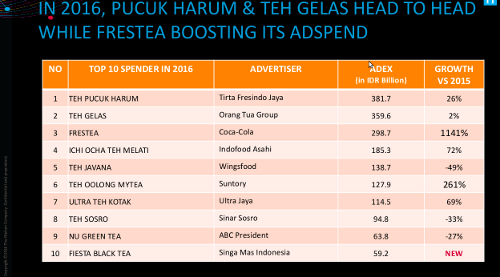
In another article by MIX Marcomm, Pucuk Harum (Tirta Fresindo Jaya) had the top adspend in RTD tea in Indonesia in 2016 citing Nielsen data. Coca-Cola’s Frestea posted the strongest ADEX growth in 2016, up 1,141% year-on-year. The overall adspend in the RTD tea category in 2016 stood at IDR 2.69 trillion, up 11% year-on-year. The highest growth in ADEX was in 2011, an increase of 78%.
KitKat in Thailand is celebrating Valentine’s Day with a special packaging where consumers can match the words to express their love.
In China, marketing using word matching on packaging has reached a point where it has delivered unintended results.
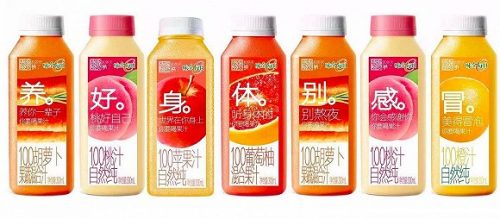
At the end of 2016, Wei Quan (味全), a Taiwanese food and drinks company, launched a word matching packaging in China for its Everyday C (每日C) range of 100% juice. There were a total of 38 different Chinese characters on the bottles.
The brand intended to deliver positive statement like “Protect your health well to prevent it from catching a cold” as shown in the picture above.
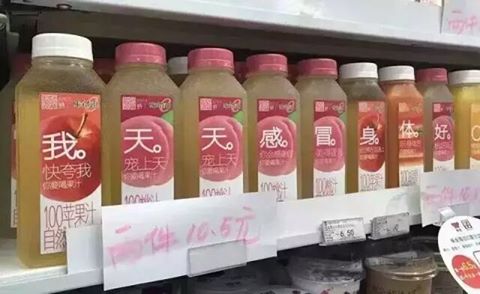
However, the 38 characters have opened up many ways for consumers to ingeniously change it to sentences that are funny. The following example shows how the words changed into something witty like “It is good for the health to have a cold everyday.”
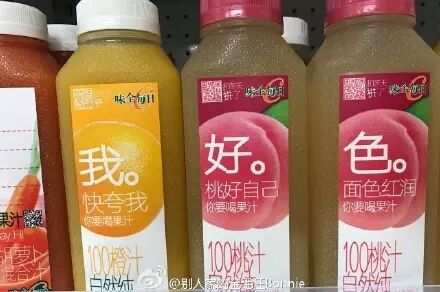
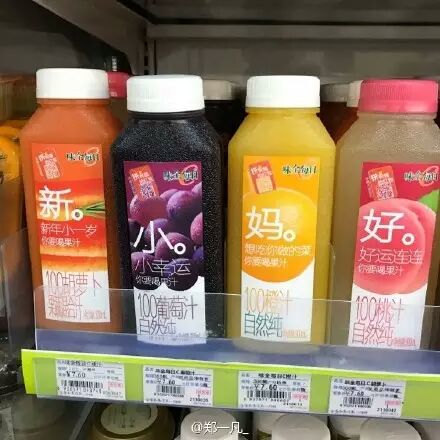
Some consumers even re-arranged the bottles on the shelf to form words like “I am horny” (我好色) or “Good day to my new stepmom” (新小妈好).
The move has unleashed the creatively in young consumers who took the chance to express their thoughts by forming new words with the bottles on the shelf. Such marketing turned viral and improved brand awareness and also sales.
Each year, when the weather turns cold, sales of chilled juice will fall to its lowest level particularly in December. However, the latest marketing has reversed this trend with sales in December 2016 reversing to a positive 7% month-on-month growth compared with November 2016.
In a sense, the marketing by Weiquan has worked even though it exposes the brand to a degree of embarrassment. At the end of the day, the word matching marketing has given young consumers a platform to engage with the brand and turned in viral.
KitKat Chocolatorycreations now available in supermarket
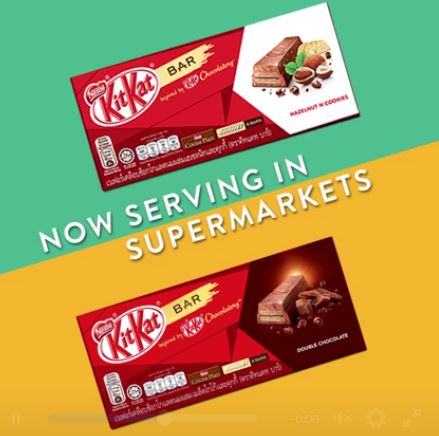
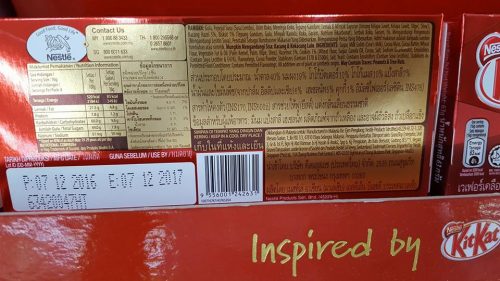
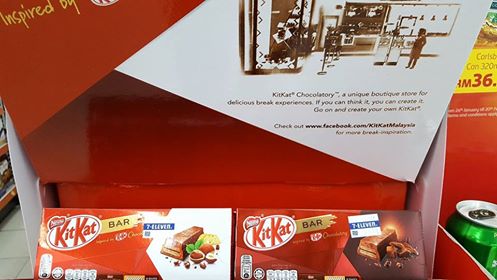
In Malaysia, Nestle has just introduced KitKat Bar inspired by KitKat Chocolatory. The bars come in two flavours – Hazelnut & Cookies and Double Chocolate and are 8 fingers long. The key word for KitKat Bar word is “richer break,” which is an extension from Kitkat Chocolatory‘s “create a break.” Without having to visit KitKat Chocolatory, consumers can now enjoy special chocolate wafers inspired by KitKat Chocolatory to experience the premium taste.
Here is the official description:
KitKat Chocolatory presents… A richer break! Filled with delicious inclusions like hazelnuts, cookies and lots and lots of chocolate.
Enjoy it now, keep some for later, indulge alone or share it with others. The enjoyment is 8 fingers long so when you want more, you can have more. Because it’s available in supermarkets near you!
From January 2017 to March 2017, KitKat Bar will be sold at a promotion price of RM 6.90 and can be bought at leading supermarkets, hypermarkets, minimarkets and convenience stores as well as online at 11street. Other KitKat Chocolatory creations such as Oolong Tea, Abundance of Mandarin and Pineapple Tarts can be bought on 11street.
KitKat Bar will also be made available in Thailand and Singapore.
KitKat Chocolatory stores create buzz
Image from KitKat Malaysia Facebook site
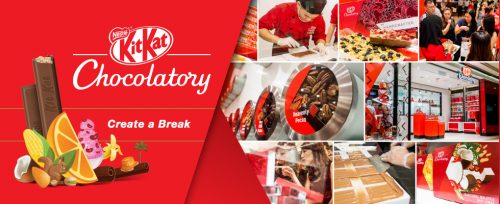
The KitKat Chocolatory store allows consumers to create their own premium KitKat chocolate wafer bars. The permanent KitKat stores are in Melbourne (opened on 2 October 2016), Kuala Lumpur and Japan.
In Japan, the first Chocolatory opened in January 2014 and the eight stores are located within major department stores. The Ginza outlet in Tokyo is the first standalone outlet in Japan and was opened on 2 February 2017.
In London, the KitKat Chocolatory in Westfield was in the form of a pop-up store and was opened for 5 weeks from September 2016. In Malaysia, the KitKat Chocolatory has its permanent location in MidValley.
Image above from Nestle Japan
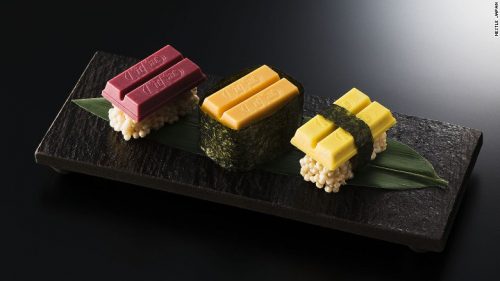
The Kitkat Chocolatory has created worldwide excitement with many interesting creations including the latest KitKat sushi bars as well as Malaysia’s very own KitKat Nasi Lemak.
What Mini Me thinks
The introduction of the new KitKat Bar inspired by KitKat Chocolatory in physical retail stores marks the full cycle of the KitKat Chocolatory project. It also demonstrates how new product lines can be inspired from KitKat Chocolatory to create buzz and excitement for the brand in the grocery retail environment.
Image taken from 7-Eleven Philippines Facebook account
Singapore 7-Eleven replacing frozen-thaw with fresh-chilled meals
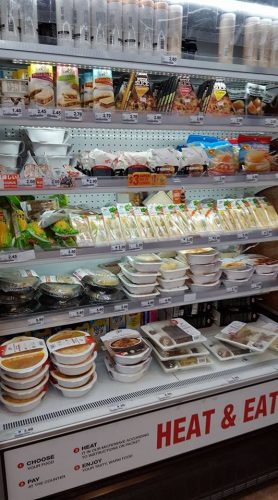
Convenience stores in the Southeast Asian region are upgrading their ready-to-eat meals to an all new level. In Singapore, 7-Eleven is replacing its current frozen-thaw meals with fresh-chilled, ready-to-eat meals by the first quarter of 2017, according to a news report by The Straits Times on 10 November 2016. The frozen-thaw meals have a shelf life of five days compared with fresh-chilled meals with a shelf life of two days. The latter are made with fresher ingredients.
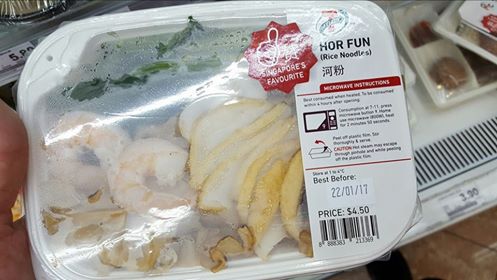
Hor Fun (rice noodle). Image above was captured by the author in January 2017
The fresh-chilled meals also come in transparent packaging so that the quality can be seen.
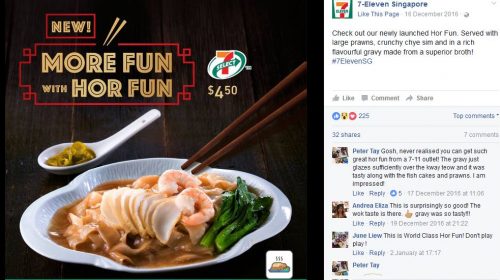
The Hor Fun (rice noodle), launched in December 2016, received positive reviews from consumers. Apart from Hor Fun, 7-Eleven has made available another local delight – Nasi Lemak. The Hor Fun is selling at SGD 4.50, while the Nasi Lemak is priced at SGD 3.90.
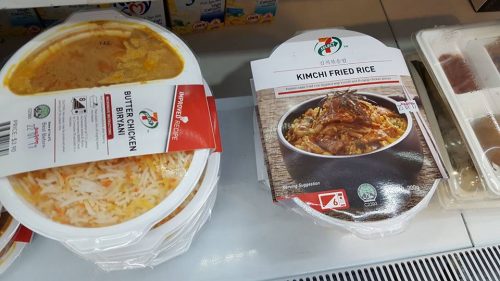
Kimchi Fried Rice and Butter Chicken Biryani at 7-Eleven Singapore. Image above was captured by the author
The other ready meals include Braised Duck Rice, Kimchi Fried Rice, Butter Chicken Biryani etc. According to Steven Lye, chief operating officer for 7-Eleven Singapore, customers can expect over 40 different flavours in 2017.
7-Eleven Philippines brings back Chef Creations
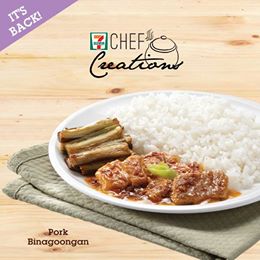
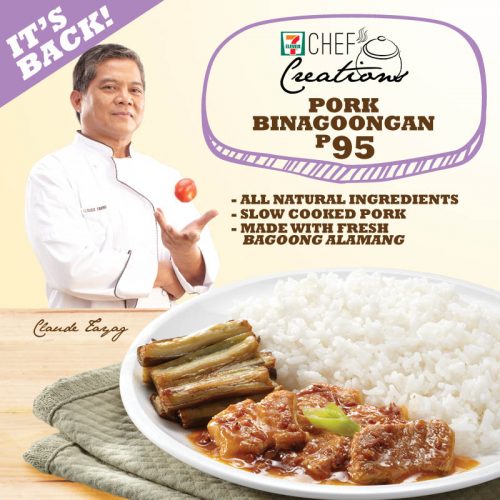
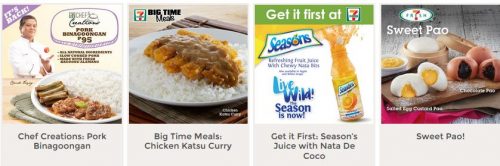
In the Philippines, 7-Eleven has brought back Chef Creations, a premium rice meal line first introduced in May 2014 comprising pulled pork with adobo dip, pork sinigang sa kamias and pakbet with bagnet. The line was created with Chef Claude Tayag. In 2015, two new dishes were added to the Chef Creations line including Pork Binagoongan and Bistek Tagalog, both selling at PHP 95. The reintroduced Chef Creations Pork Binagoongan in early 2017 still comes with the same price of PHP 95.
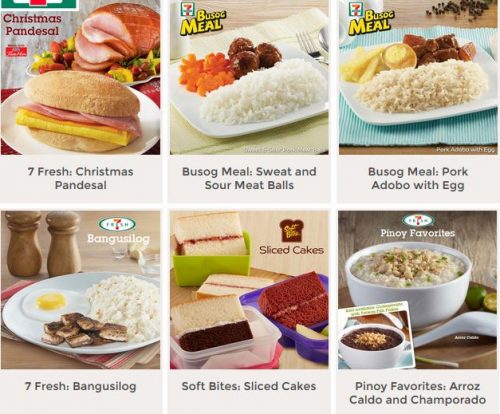
In November 2016, 7-Eleven Philippines made available the Bangusilog meal featuring home-cooked taste of fried boneless bangus with a side of egg and garlic rice (PHP 65). The interesting thing about this meal is it uses Unilever’s Knorr as seen on the packaging. This is an example of how brands can collaborate with convenience stores in ready meals.
Here are the latest foods at 7-Eleven Philippines:
FamilyMart introduced Chinese New Year creations
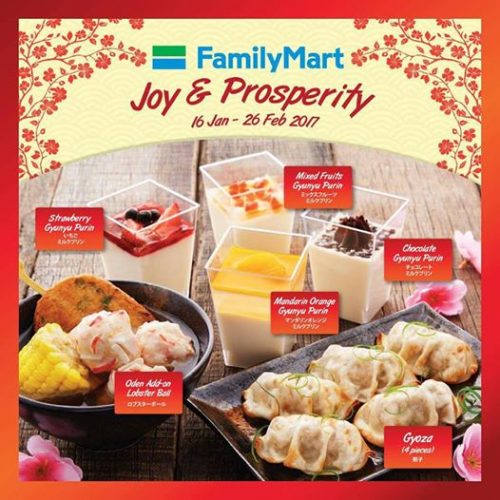
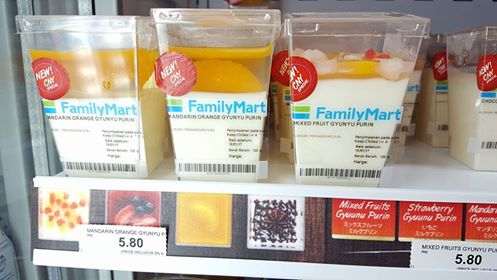
In Malaysia, FamilyMart introduced special food items for Chinese New Year 2017 to spread the festive cheers to consumers. They included Gyoza, Mandarin Orange Gyunyu Purin, Mixed Fruits Gyunyu Purin, Chocolate Gyunyu Purin, Strawberry Gyunyu Purin and Oden Add-on Lobster Ball. There were also seasonal special Smooshie Mandarines, Lychee and Goji Berries.
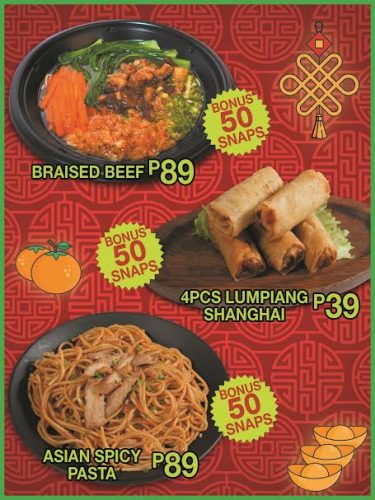
In the Philippines, the Japanese convenience store chain was offering Braised Beef and Lumpiang Shanghai to celebrate the Lunar New Year.
What Mini Me thinks
Ready meal is a key thrust in the transformation of convenience store in the region to meet consumer demand for quality and convenience. The pressing need for innovation in food opens up opportunities for partnership with service providers such as Unilever (Knorr) and other companies.
With so many products in the supermarket, choosing the right product that is healthy can be a challenge. Marketers have come up with the concept of grocery store tour. A registered dietitian will walk the aisles of a local supermarket teaching you how to select healthy foods. The goal for most programs is helping consumers to the get the most nutrition for their food dollars. Eating healthy does not have to be expensive.
Such program is becoming common in developed markets. Here is an example of a course run by A Little Nutrition in Canada’s Winnipeg. A Little Nutrition uses real food to manage weight and wellness.
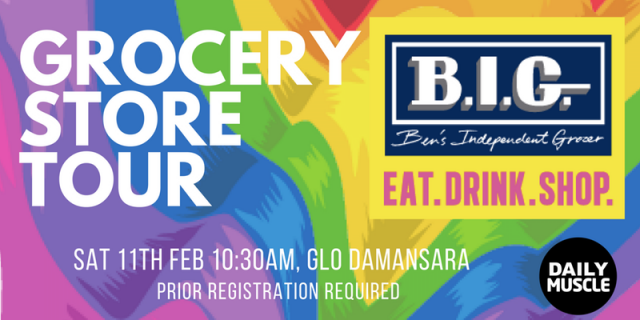
Here in Malaysia, grocery store tour remains something of a novelty. DailyMuscle, which offers group personal training classes and outdoor bootcamp with outlets in Glomac Damansara and Bangsar, is organising a Grocery Store Tour at Ben’s Independent Grocer at Glo Damansara on 11 February 2017. You can register here. Participation in the first round of the tour is free.
What Mini Me thinks
Grocery store tour is a win-win for all. For ordinary consumers, they now get the chance to receive expert advise on what food to buy and avoid to maintain a healthy lifestyle. For grocery store owners, it the opportunity to demonstrate how their store can cater to the needs of health-conscious consumers by highlighting the wide selection of healthy foods offered. For fitness/wellness service providers, it reinforces their expertise as authority in the field and provides a value-added offering to customers.
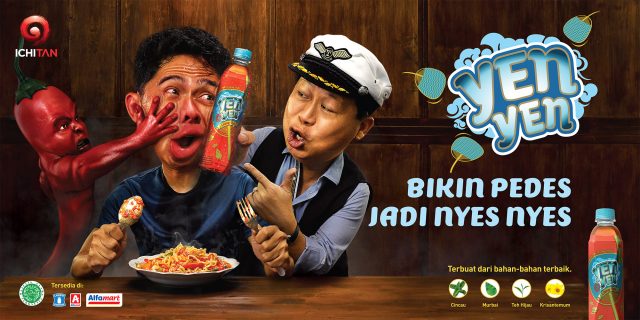
Thailand’s Ichitan Group Public Company Limited officially launched its Yen Yen herbal tea in Indonesia on 1 February 2017. The event was attended by Ichitan Founder and CEO Mr Tan Passakornnatee. In actual fact, this herbal tea was already available in Indonesia since mid-2016.
Local production of Yen Yen planned
The most important announcement is the intention of PT Ichi Tan Indonesia to produce Yen Yen locally to feature the local halal certificate.
Still no local manufacturing of Ichitan RTD tea?
Ichitan introduced its flagship Ichitan RTD tea in Indonesia in 2015 and announced plans to build a local manufacturing plant probably within one or two years, said Tan on 24 November 2015. However as of today, the plan seems to have stalled or still in the land acquisition phase.
Losses mounting
Rising marketing expenditure in Indonesia has resulted in the company experiencing a THB 34.3 million loss of investment in its joint venture in Indonesia for the first nine months of 2016, widening from a loss of THB 13.6 million for the first three months of 2016.
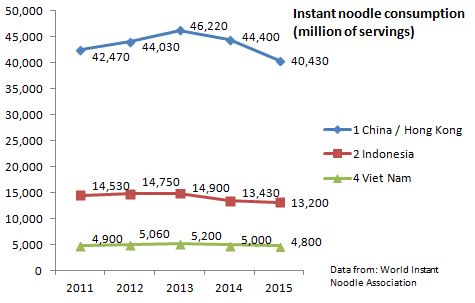
According to the World Instant Noodles Association (WINA), sales of instant noodles in China/Hong Kong and Indonesia, the world’s top two markets, are on a decline.
To arrest the decline, instant noodle companies are coming up with new strategies to reinvent the category.
Premium instant noodle new growth spot
In Indonesia, instant noodle is staple and is a cheap hot meal for the masses. The introduction of Mayora Indah’s Bakmi Mewah with real meat pieces at the end of 2015 and Indofood CBP’s Indomie Real Meal in 2016 has created a new premium category and a new growth engine for the instant noodle market.
Mayora expects 40% growth for Bakmi Mewah in 2017
Sales of Bakmi Mewah are expected to continue to remain strong. Vienno Monintja, the marketing director of Mayora Indah told the local business daily Kontan that the company expects Bakmi Mewah could achieve sales growth of 40% in 2017 compared with 2016. According to Vienno, the key trend is consumers want convenience but also would like to enjoy the taste of restaurant.
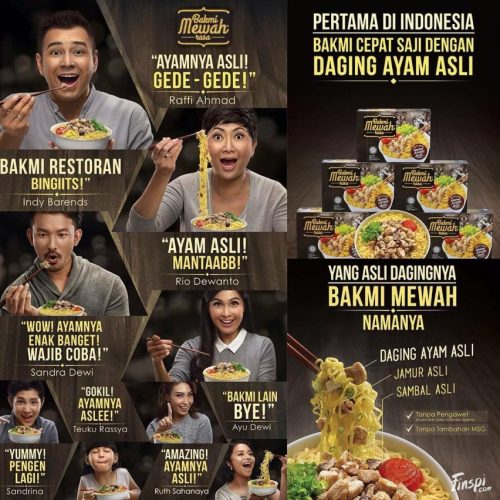
Apart from being the first instant noodle with real meat pieces, Bakmi Mewah’s marketing also plays a key role in popularising the product. Its initial marketing effort focuses on getting the endorsement from well-known celebrities including Raffi Ahmad and Indy Barends.
The brand also sponsored the inaugural Usmai Ismail Awards 2016. The event saw celebrities who are influencers themselves sampling the noodle and giving good reviews. Social media in the form of user generated content is important in spreading the word.
Competition moves towards culinary creation
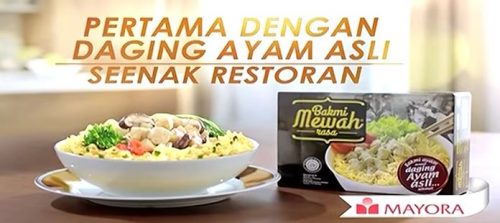
Image above is Bakmi Mewah’s latest TV commercial in January 2017
The new focus for Bakmi Mewah is elevating the noodle to something that one can get in a restaurant but can still enjoy in the comfort of one’s home.
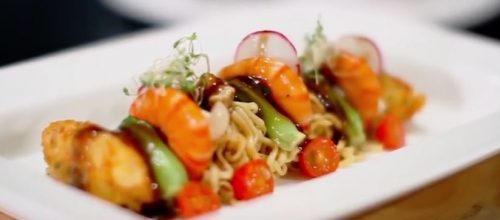
The brand has partnered with Chef Chandra Yudasswara from Chefs Table where he created new sumptuous dishes using Bakmi Mewah. The partnership with chef Chandra and the positioning of the premium instant noodle as having a taste on par with restaurant serve to change consumer perception of instant noodle from a cheap pack of noodle to a gourmet meal.
Indomie searching for the unique mie
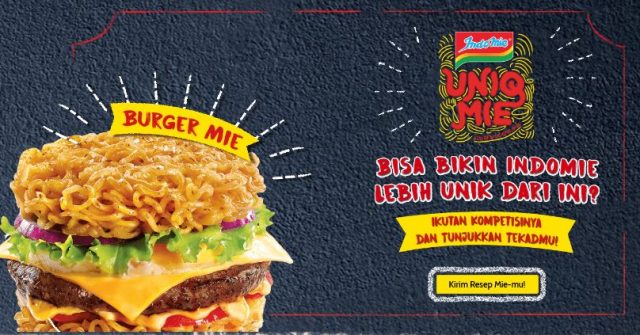
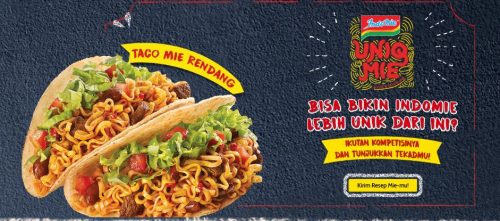
Mayora Indah’s competitor Indofood has just launched a new contest entitled #IndomieUniqmie. The contest is to create the most unique dish using Indomie instant noodle. It started on 23 January 2017 and will end on 23 April 2017. The competition was launched to celebrate the 45th anniversary of the birth of Indomie in Indonesia. Among the unique Indomie examples are Taco Indomie Rendang, Siomay Indomie and Burger Indomie.
Opportunities in foodservice
Instant noodles have already become part of the food commonly served by street hawkers in Indonesia. Recent initiatives by Indofood and Mayora Indah show they are upgrading instant noodles to become a gourmet food, something that is in line with the times. This means growing the usage of instant noodle in foodservice.
One of the reasons for having the IndomieUniqmie contest is to turn the creations into inspiration for people who wanted to become culinary entrepreneurs, said Julia Atma, general manager of marketing – noodle division PT Indofood CBP Sukses Makmur.
The choice of Nicky Tirta as the face of IndomieUniqmie contest befits the essence of the contest. Nicky himself is an actor and a passionate cook who hosted cooking shows.
Indomie Burrito in Los Angeles
Photo above comes from the Los Angeles Times
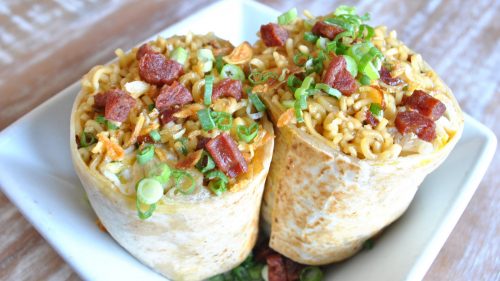
Instant noodle-based dish can become a hit like what Komodo in Los Angeles has done. The Indonesian-born chef named Erwin Tjahyadi who owns a popular food truck and chain of restaurants in the city has created the burrito stuffed with Indomie Goreng, steak, eggs and scallions turning it into the ultimate fusion food.
Thai President Foods selling ramen
In Thailand, Thai President Foods, the country’s biggest instant noodle maker, has formed a joint venture with Japan’s ramen noodle chain Kourakuen in June 2016 to operate Kourakuen ramen shops in Thailand. Thai President Foods will produce the raw noodles, while the Japanese partner will be in charge of handling the retail business.
What Mini Me thinks
It is all about elevating consumer experience with instant noodle to an all new level. The unique instant noodle creations could spark renewed interest in the category and expand its usage further down the foodservice chain.
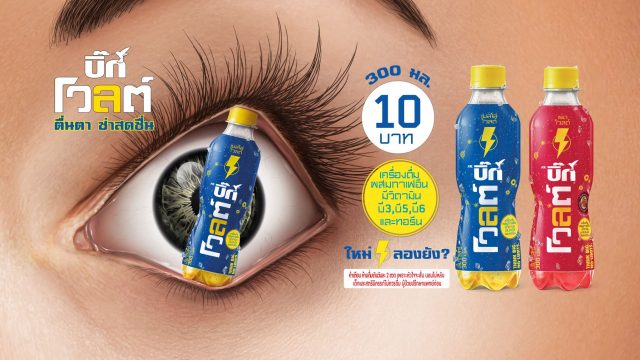
The energy drink market in Thailand has welcomed the entry of Big Volt from Ajethai Co., Ltd. at the end of November 2016. The launching of the new product comes on the backdrop of the slow single-digit growth of the overall energy drink market.
Category growing 1-2%
Thailand’s energy drink market is valued at THB 20 billion and has been growing at an average of 1-2% for the past few years. The president of the country’s biggest energy drink company Osotspa, Wannipa Bhakdibutr, expects the company’s top selling M-150 to grow in tandem with GDP growth in 2017. As for Thailand’s GDP growth, the country’s finance ministry has upgraded the forecast to 3.6% on 1 February 2017 from the previous estimate of 3.4%, which means the energy drink market in 2017 is likely to grow at a low single-digit.
As a comparison, Carabao’s domestic sales in 2015 expanded by 2.2% year-on-year to THB 5.5 billion, up from a 0.88% growth in 2014.
Market dominated by four players
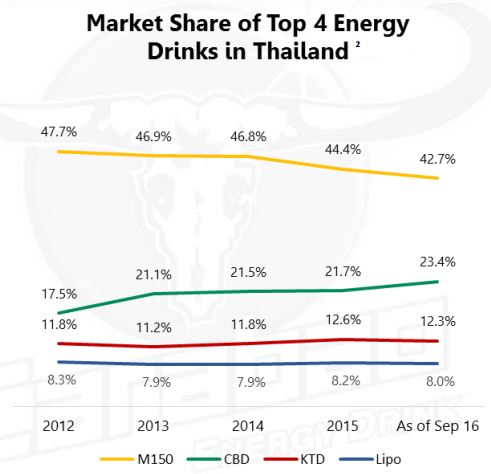
Estimated market share of Thai energy drink market”, Nielsen Energy Drink Market Report, September 2016 from Carabao 3Q, 2016 presentation (image above)
Carabao and TC Pharmaceutical Industries (Kratingdaeng) are eating into the market share of Osotspa. The combined share of the top four companies in 2015 stood at 86.9%, according to Nielsen data. This shows the degree in which the energy drink is concentrated in the hands of four major players.
Two flavours
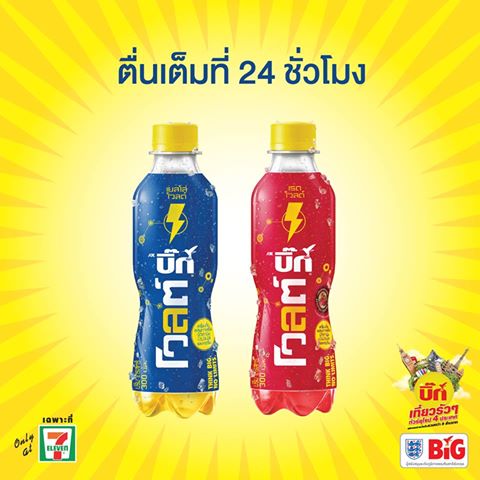
The new Big Volt comes in two flavours – Strawberry and Tropical. The drink contains taurine, caffeine and vitamin B-3,5 and 6 and sells in a 300ml PET bottle. The use of plastic bottle provides a key differentiation for Big Volt as its competitors normally use glass or can. The price for Big Volt at 7-Eleven is THB 10.
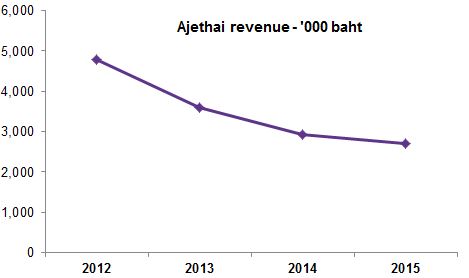
Ajethai sales sliding
Data above comes from btgpactual.com
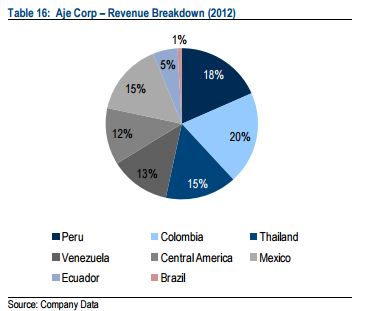
Ajethai’s focus on energy drink comes amidst continue decline in revenue. The company first started operation in Thailand in 2006 with sales in 2007 surging 448% to USD 73 million. Sales value in 2011 improved 5.1% to EUR 127 million, according to Ajecorp B.V. USD 300 million bond document. Thailand was the third biggest market for Aje in 2012, accounting for 15% of revenue.
Since 2012, sales have been falling. During the first half of 2013, sales volume contracted 17.7%. The company attributed the decline to strong local competition.
Data above comes from the Department of Business Development
What Mini Me thinks
It will be an uphill fight for Big Volt to help reverse the performance of Ajethai in the near future as the overall energy drink market is struggling and is forecast to grow at a low single-digit.
Traditionally, energy drink is aimed at working class male. Broadening the consumer base for the drink to include females appears to be a strategy for Big Volt with a focus on the attractive packaging, taste and lifestyle. This strategy may help to improve usage among female consumers.
As the Official Experience Partner for the tour in Singapore, Klook will be introducing
concert ticket bundles with local hotels and experiences.
The partnership...
PepsiCo Thailand has unveiled two new limited-edition Lay's Stax flavours perfect for the holiday season: Corn Cheese and Smoked Salmon Pizza. Consumers are encouraged...