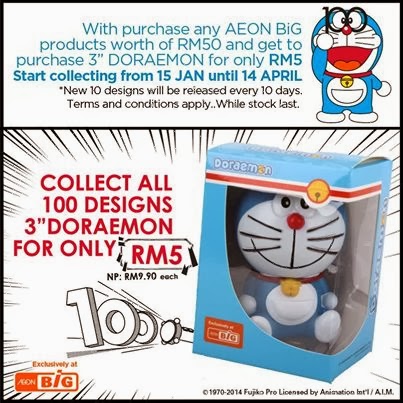
Aeon Big, formerly Carrefour, has become the latest hypermarket chain to jump into the bandwagon of collectibles. The promotion was launched in conjunction with the 100 Doraemon Secret Gadgets Expo in KL from 14 December 2013 to 23 March 2014
According to the company:
These 3″ Doraemon figurine are for sale at the price of:
RM5 each with purchase of any AEON BiG products worth RM50
RM9.90 each without purchase any AEON BiG products
New 10 designs will be released every 10 days!
However, shoppers are venting their frustrations over lack of stock on the Aeon Big FB page.
Even after official announcement that all stores had been restocked, it seemed some customers still failed to get hold of the figurine.
The key lesson from this is make sure the stock level is adequate and the staff in each store should be adequately informed on when the new stocks will arrive.
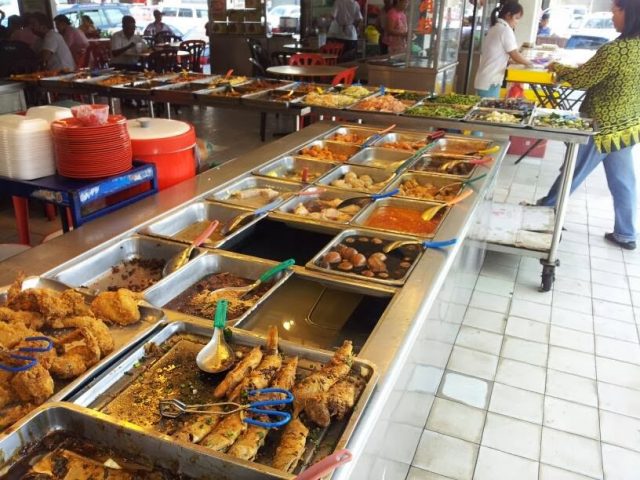
Mixed rice or chap fan (杂饭) or economy rice has been a staple for Malaysians. For Malays, it is known as nasi campur. Mixed rice is similar to the all-you-can-eat buffet in Chinese restaurants or in food courts in the West but here each dish is counted individually. In Malaysia, the economy rice stalls are usually located in hawker centres and food courts and typically serve at least 10 different dishes with rice as the staple.
Lately, independent mixed rice specialty outlets have become increasingly popular in the Klang Valley, a region comprising Kuala Lumpur and its suburbs, and adjoining cities and towns in the state of Selangor. Instead of sharing the space with other hawker stalls, the shop has only one stall serving exclusively mixed rice. The bigger space means the operator is able to offer more dish varieties. To attract more customers, soup and Chinese tea are usually free.
Leong Kee Restaurant
Chan Home Recipe
In Jalan Wawasan or Wawasan Road in the Bandar Baru Ampang area in Selangor, two new independent mixed rice specialty outlets have appeared, adding more competition to the three established mixed rice stalls in hawker centers. The hawker center is a format where the owner sells drinks and leases the stalls to other hawkers in the morning and afternoon to sell food such as noodles and rice dishes. At night, some of the outlets are turned into restaurants.
The mushrooming of the independent mixed rice outlet can be explained by the growing eating out trend. At-home cooking can take up considerable time. To save time, consumers choose to eat out. Mixed rice shops offer wide varieties of dishes at reasonable price ranging from RM 4-6, an important consideration given the escalating cost of living in Malaysia.
What would the future look like for independent mixed rice outlets?
There is a possibility of upgrading these family-run outlets into modern chain stores similar to the Chinese-style fast food chains in China. The key triggers for the change will be rising expectation on food hygiene, quality and comfort but at the moment, Malaysian consumers still focus on value.
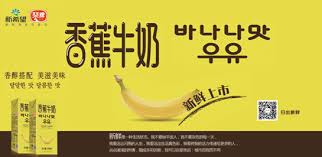
Banana-flavoured milk, South Korea’s unofficial national beverage, has seen huge success in China in the past few years. The two key beneficiaries of the banana-flavoured milk craze are flavour companies and dairy firms.
Why Chinese consumers suddenly developed a taste for the banana flavour?
Chinese consumers are no stranger to eating banana. The fruit is prized for its high nutritional content and is known to cure constipation. Even in freezing Harbin where the average temperature during winter falls to -24 degrees Celsius, it is still possible to buy banana from open air vendors. China is also one of the major producers of banana with output in 2012 rising 3% to 9.3mn tonnes, while demand rose 3% to nearly 10mn tonnes.
Binggrae banana-flavoured milk
The key trigger for the banana craze has to be the Korean wave or hallyu. South Korea’s Binggrae, the maker of the famous banana-flavoured milk (바나나 우유), reported a surge in dairy exports (including banana-flavoured milk) in 2012 to KRW 14bn from KRW 3.9bn in 2011, thanks partly to Chinese sales of banana-flavoured milk.
The Korean pop culture is very much alive in China. A new generation of Chinese consumers have been brought up consuming Korean popular culture and has developed a rather positive image of Korea. The hallyu phenomenon has a strong spillover effect on cosmetics, food and beverages boosting the profits of South Korean companies such as AmorePacific and Orion, the maker of Choco Pie.
Banana-flavoured milk has the attributes of being fun and energetic, making children, young consumers and females strong captive markets for the product.
Building on the banana flavour is the strong consumption of RTD flavoured milk in China. The country together with India, Thailand, the Philippines and Malaysia consume 47% of the world’s flavoured milk, according to Tetra Pak. But China is the largest market consuming 4.2 billion litres in 2012 (25% market share), followed in the second position by the US with 2.3 billion litres (14%), according to Tetra Pak.
The banana-milk flavoured trend seems to be going strong as evidenced by new launches in the flavoured milk category, higher price positioning (premium organic banana-flavoured milk) and flavour extension into ice cream, biscuit, candy and other food categories. The lasting impact of the banana-flavoured milk trend will be the growing acceptance of the banana flavour by consumers in China.
When I was in Bali in October 2011, I saw a group of Taiwanese tourists eagerly laying their hands on some white coffee in a local supermarket. I assumed they were thinking about Malaysia’s very own Ipoh white coffee, which had become something of a novelty in Chinese-speaking markets in China, Hong Kong and Taiwan. The tourists might be thinking what they had bought was Ipoh white coffee but in fact, it was the Indonesian white coffee.
White coffee revolutionises Malaysia’s coffee scene. The same product, albeit produced using a different processing technique, is taking the Indonesian coffee market by storm. To an outsider, both coffees look rather similar but behold, they are two different beasts.
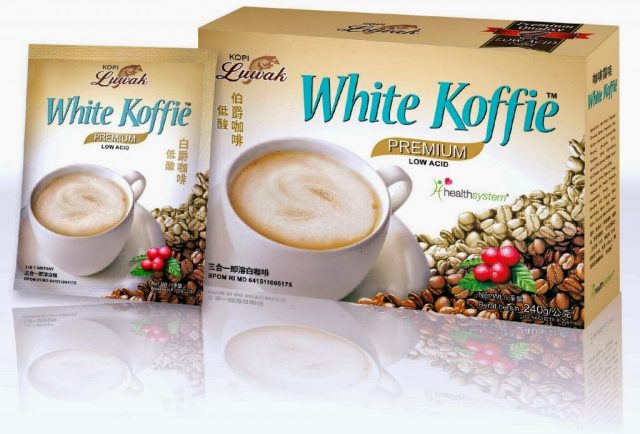
Malaysia’s Ipoh white coffee is a coffee bean roasting technique that uses margarine to give the coffee an aromatic smell. The Indonesian white coffee, on the other hand, are coffee beans processed through the cold drying technique. This method freezes the coffee beans to a temperature of -40 degrees Celsius to reduce the acid level until 80%. The coffee beans are then roasted and blended with sugar and non-dairy creamer.
The marketing of the two white coffees takes a different route. In Malaysia, Ipoh white coffee is marketed around tradition. The traditional message is reinforced in the packaging design by depicting the drink served in traditional cup and saucer like the good old days in the coffee shops or kopitiam.
For the Malay market in Malaysia where the Ipoh white coffee traditional does not resonate well, the same theme but with a different twist is presented in one of the OldTown TV ads. The advertisement shows Malay consumers sharing their good old memories while drinking white coffee. The theme of the advertisement is to “relive the aroma of your good times with OldTown White Coffee.”
In Indonesia, white coffee is positioned as a healthy lifestyle drink for young urban dwellers. The key selling point is the coffee is low in acid and therefore gentler on the stomach than regular coffee. Plus, the coffee is low in caffeine, making it a drink that can be consumed more often.
The ABC Coffee ad in 2013 takes the health positioning further by claiming the coffee has 0% cholesterol but retains 100% of the taste.
Both white coffees variants are available in Indonesia and Malaysia. The Indonesian white coffee has only started making inroad into the Malaysian market using the health platform through Kopiko L.A. Coffee, which claims to be a coffee with low acid. To avoid confusing Malaysian consumers, the Kopiko L.A. Coffee does not market itself as a white coffee.
In Indonesia, the Ipoh white coffee continues to be sold for its unique taste. Malaysia’s Ipoh white coffee enjoyed the first mover advantage in Indonesia but is gradually losing out to homegrown white coffee. With the Indonesian white coffee becoming a trend and consumers growing accustomed to its taste, it will becoming increasingly hard for Ipoh white coffee to compete with its Indonesian counterpart due to the lack of consumer education and marketing. However, it is still not too late for Ipoh white coffee makers to strike back because they still have a strong presence on store shelves in the modern retail channels in Indonesia.
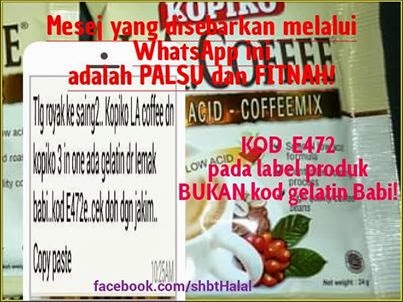
"The message spread through WhatsApp is false and is a slander" - Sahabat Halal
Inbisco Marketing & Sales Sdn Bhd, the distributor of Kopiko L.A. White Coffee, published a one-page advertisement on The Sun newspaper on 10 February 2014 clarifying that the coffee is halal. The company was responding to rumours or ‘slanders’ as the company puts it to “discredits its products through false allegations across all media channels.” According to Inbisco, which distributes Indonesia’s PT Mayora Indah’s products, the E472e emulsifier has been verified of plant origin and is halal certified by the Indonesian Council of Ulama (MUI), recognised by Malaysia’s halal certifying body JAKIM.
Sahabat Halal, a Facebook community in Malaysia aiming to increase the awareness about halal among its members, has given a good explanation to discredit the rumour on the ‘non-halal’ status involving the E code. The site also asked its members to stop circulating the rumour in the social media. Sahabat Halal, established on Facebook on 11 June 2013, represents a new wave of grassroots halal rights group in Malaysia. Its missions are to educate consumers about halal and uncover companies illegally using the halal certification. Sahabat Halal, which has its official site at http://sahabathalal.com/ also serves to clarify and verify the halal status of products. One example shows Sahabat Halal carifying that Tabasco has been certified halal since 16 June 2012.
The sensitivity surrounding halal is understandable as some irresponsible companies have illegally used the halal logo or have not applied halal on their products. The growing sensitivity is also a reflection of the heightened awareness about halal among Muslim consumers in Malaysia.
The implication of the halal-before-you-eat problem is that F&B companies need to do more halal-related PR to regain the confidence of Muslim consumers. This is particularly true for companies that depend on the Malay consumers such as The Chicken Rice Shop, which serves halal Hailam chicken rice. Chinese consumers rarely go to The Chicken Rice Shop because they can get even better chicken rice from the Chinese chicken rice stalls. Doubts about the halal status of The Chicken Rice Shop surfaced in 2013 but was later verified by Jakim that The Chicken Rice Shop was indeed halal. Despite the reassurance from Jakim, it is near impossible to stop users to continue to spread such rumours on the internet, which points again to the need by companies to engage the social media community more actively.
The OldTown coffee chain may not feel the heat yet but there will soon be a new Ah Huat coffee shop coming its way. The latest stock filling by Power Root (M) Sdn Bhd revealed the listed company has subscribed to a 20% stake in Ah Huat International Sdn Bhd (AHISB) with an investment of RM 400,000. The company has also licensed the “Ah Huat White Coffee” trademark rights to AHISB. For Power Root, it will only start to enjoy the fruits of this agreement in the sixth year when it will get 1.5% of gross sales from all outlets in the form of royalty fee. Three individuals own an 80% stake in AHISB.
AHISB is engaged in the business operations of restaurants, food and beverage outlets and or food kiosks.
The Ah Huat white coffee outlets will help to further the success of the Ah Huat franchise, which is well known among the Chinese community in Malaysia. Power Root will earn money by selling its coffee to the chain, which is what OldTown has been doing.
There has been quite a few coffee chains that have taken advantage of the OldTown concept such as Hailam Kopitiam, KillineyKopitiam and Kluang Station but these are purely F&B outlets. PappaRich is another breed of its own, thanks to its polished image. The largest is OldTown with 227 stores at the end of September 2013, of which 202 were located in Malaysia and the rest overseas.
For a kopitiam, it needs to be certified halal to attract people from all walks of life. OldTown only earned the halal status from JAKIM quite late in mid-2013. Moreover, the name has to be less Chinese but Ah Huat seems very Chinese, which may restrict its appeal to just non-Muslim consumers. Perhaps this is what Power Root has in mind.
Power Root has been successful in its marketing to the Malay segment through Tongkat Ali and Alicafe before coming up with the Ah Huat idea for the Chinese segment. So, the Ah Huat White Coffee outlet does not need to have a universal appeal after all.
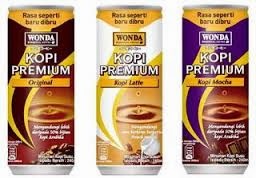
Asahi Group Holdings launched the first RTD coffee drink Wonda Permium Coffee in Malaysia in December 2013 in cooperation with Permanis, its local unit since acquired in 2011. The roll out was accompanied by an innovative five-senses campaign including 5D advertising and pop-up ad in the local daily New Straits Times (NST) over five consecutive days in January 2014. The campaign evoked sight, smell, taste, touch and hearing including a newspaper edition with the smell of coffee.
Despite the impressive campaign concept, the choice of NST seems to be a mistake. The circulation of NST has been trailing behind the The Star and The Sun, a free newspaper, for years. Readers are abandoning NST as well as The Star as both dailies are seen as mouthpieces for the ruling government. The more sophisticated urban readers are now seeking ‘better’ coverage from the alternative media. For print media, The Sun, owned by Berjaya Group, is a better platform as it is available for pickup at convenience stores and at office buildings with a readership (ie. office workers) that is more likely to drink coffee.
By the way, where is the Facebook site and social media/internet marketing for Wonda?
In addition, the poor choice of the packaging design does make Wonda look rather invisible on store shelf. It is a pity that the drink has got the taste right, not too sweet with no bad aftertaste but suffers from bad packaging design. Asahi has great designs for its canned coffee for the Japanese market but why settle for a mediocre design for the Malaysian market?
Moreover, the TVC for the Malaysian market focuses on giving white-collar office workers the much needed energy lift, an all too common product positioning. The drink claims to contain more than 50% Arabica coffee beans and tastes like just brewed. Perhaps a much stronger focus on the higher Arabica bean content will give the drink a stronger premium positioning with good taste, quality ingredient at a fraction of the price.
In terms of pricing, Wonda is in the mid-level, sharing the same price as the Nescafe 240ml canned RTD Original Milk Coffee/Black Roast/Mocha/Latte. It is very clear that Wonda is competing with market leader Nescafe. We will see if Asahi is successful in getting coffee drinkers shift to the new Wonda.
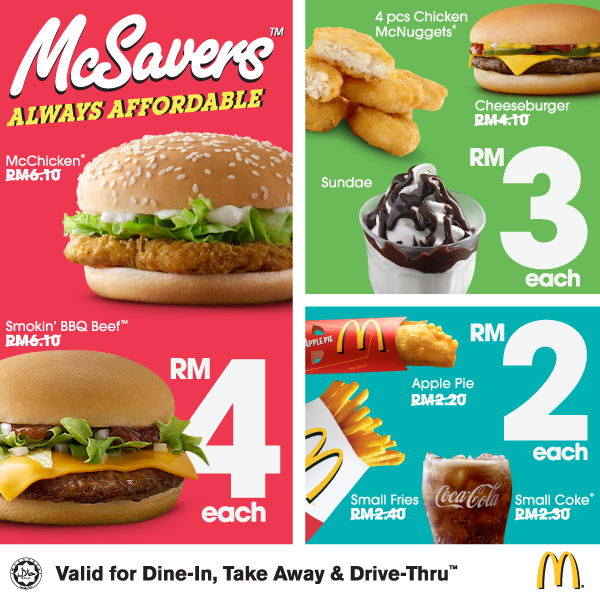
In Malaysia, McDonald’s has introduced the latest McSavers deal. As a price champion, the McSavers deal makes the fast food chain the place to go for cash-strapped diners at a time when the prices of everything seems to be going up. McSavers is available from 11am – 4am daily except breakfast, subject to 6% government tax.
McDonald’s has always been ahead of other players in the market in making its meals really affordable, first with the McValue Lunch and then with the McValue Dinner. Now, it is ahead of KFC Value Treats. I would expect KFC to take away the Pepsi drink to lower the price.
At the height of the global financial crisis in 2008, McDonald’s introduced a similar McSavers deal in Malaysia, offering ala carte products at roughly the same price. RM 4 for a Fillet-O-Fish and Spicy Chicken Wrap and RM 3 for a Beefburger and Chicken Porridge.
It begs to question is the timing of the launch of McSaver a useful barometer of the state of the country’s economic health?
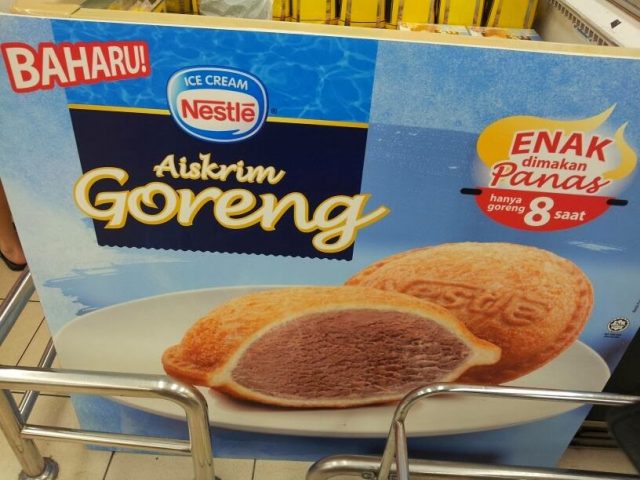
Nestle Fried Ice Cream has just been launched in Malaysia. The ice cream is deep fried for eight seconds at a temperature of 180 degrees Celsius. After that it is ready to be served. The promotional price is RM 9.90 for a pack with six pieces. There are two flavours – chocolate and vanilla.
According to Wikipedia, deep ice cream “is a dessert made from a breaded scoop of ice cream that is quickly deep-fried creating a warm, crispy shell around the still-cold ice cream.” The dessert has been around since the late 1800s. In Malaysia, such treat has been making round in the country for a number of years either made at home using available ingredients or served at catering establishments.
However, there has never been a packaged option in retail stores that comes together with the outer bread layer. It can be a hassle making the outer layer from bread and crumbs but this does give one a say on the ice cream that goes inside – Wall’s, Nestle, Magnolia or even Häagen-Dazs. With the conveniently-prepared Nestle Fried Ice Cream, lazy bumps like me will only have one choice for the ice cream, that is Nestle.
The downside of this product is one has to literally practice to make the perfect fried ice cream. According to a netizen known as finch!
“Its nice. But its quite hard to goreng [fry] for 8 secs and make the crust crispy. goreng longer and the ice cream inside will melt. so uhm.. have to practice more.”
Fellow blogger Diarymama has a similar problem keeping the ice cream from melting despite frying it for just eight second as told in the instruction. Obviously, Nestle still has lots of work to do to ensure the ice cream doesn’t melt so soon.
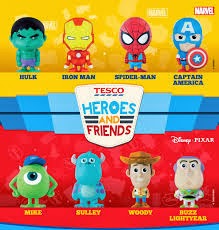
Face with growing competition, retailers are turning to the fast food chain’s tried and tested trick of toy giveaways. Tesco Stores (Malaysia) came out with the Heroes and Friends promotion in October 2013, a truly novel marketing by a hypermarket chain in the country. As part of the promotion, eight iconic Disney Pixar’s classic figures and Marvel’s super heroes were up for grab. Yours truly managed to collect three out of the eight figurines including Mike, Sulley and Hulk.
Malaysian shoppers, young and old alike, can be crazy about collectibles. If Tesco were to include minions from the Despicable Me franchise, it is highly likely that the minions will fly off the shelves in no time. The store may be ransacked too. There was a mad rush for McDonald’s Despicable Me minions mainly by adults in Malaysia in July 2013, leaving kids with no minions to pay with. Rather similar scenes were repeated in Singapore in June 2013 with long queues at McDonald’s for Hello Kitty toys.
Mad rush in Penang
Long queue in Singapore
The Tesco promotion ran from 29 October 2013 to 26 January 2014 but all the collectibles were gone before the promotion ended, an indication of the success of the Heroes and Friends promotion.
The Indonesian minimart chain Alfamart is hoping to reap the same success with a similar program in Indonesia. The only difference is the addition of two more characters in the Alfamart Super Heroes and Friends campaign.
Alfamart Super Heroes and Friends
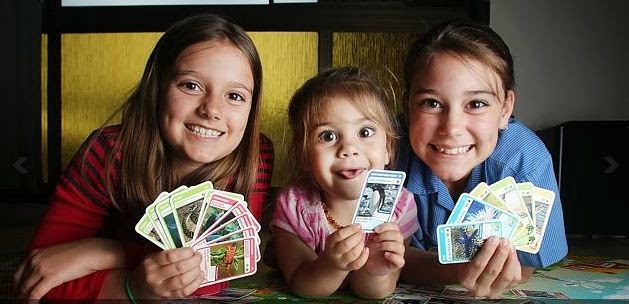
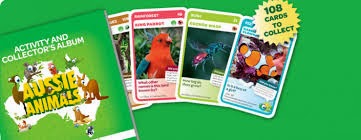
In Australia, Woolworths has seen huge success with its children-focused Aussie Animals collectable cards and albums in 2013 (two waves after the first one ran out of stock). Analysts even credited the Aussie Animals trading card promotion for helping to raise Wooldworths’ group sales for the second quarter ending 5 January 2014, reaching AUD 16.16 billion, up 5.9% year-on-year, higher than the 4.9% growth achieved in the same period a year ago.
For Woolworths, “this is the first time we’ve run a collectables program and we are overwhelmed by its success. Our customers have responded so positively to the program and it’s been great to see so many kids learning about our precious Australian wildlife in a fun and engaging way.”
The potential of the collectables program has just been awaken in the Asia Pacific region. Unlike grocery points, collectables are limited in nature and are able to generate huge excitement within a short span of time. Pretty soon, more of such programs will make their rounds across the region. The real challenge is to find collectables that can appeal to local shoppers.
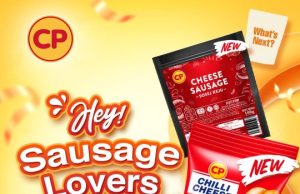
CP Malaysia is bringing beloved Thai 7-Eleven snacks to Malaysia. Try the new CP Sausage Rolls (Classic, Cheese, Chilli Cheese) at selected 7-Eleven and...