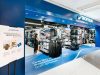
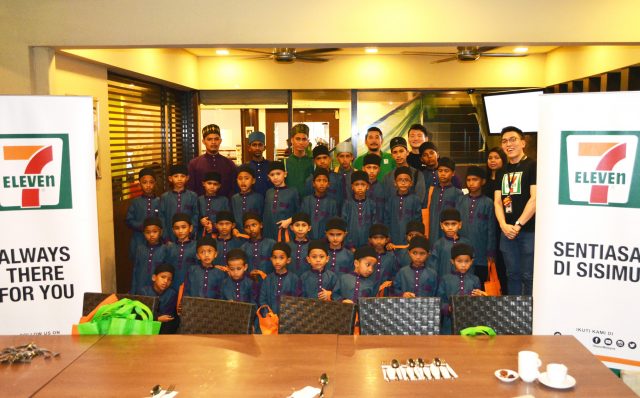
Lee (centre, in green) with the children and caretakers of Pusat Jagaan Lambaian Kasih and volunteers from 7-Eleven Malaysia and NGOHub Asia.
Kuala Lumpur, 20 June 2018 – In conjunction with Hari Raya, 7-Eleven Malaysia, the nation’s favourite convenience store chain recently spread festive joy to a group of 35 orphans from Pusat Jagaan Lambaian Kasih. Alongside its startup NGOHub Asia, they brought the orphans to a garment retail store in Pudu to buy them a new set of Raya clothing to be worn for the upcoming Hari Raya celebration.
The volunteers coordinated the shopping session by dividing the children into groups. Each group then took turns to try out their choices for Raya clothing. With full excitement, the children picked out their preferred garbs and among top picks are the jubah, a loose-fitting traditional robe and Baju Melayu, a two-piece Malay traditional outfit that comes with a long-sleeved top and a pair of trousers. They also tried on casual shirts and slacks for a more contemporary spin on Raya fashion.
The day was then concluded with an appetizing feast to break fast at Rasa Utara, a Malaysian restaurant that specializes in Northern Malaysian cuisine located at Berjaya Times Square. The large spread consisted of Malay-style chicken in tomato sauce, fried vermicelli with bean sprouts, mixed vegetables, local fruits, refreshments such as teh tarik and rose-flavoured syrup, among many others. 7-Eleven Malaysia also distributed goodie bags that contain a variety of plush toys and stationaries to further bring happiness to the children.
Ronan Lee, 7-Eleven Malaysia General Marketing Manager said, “With Hari Raya just around the corner, we wanted to do something special for the children by gifting them brand new Raya outfits to usher in the festive spirit and enhance their mood of enjoying the holiday season. It is essential to spread positivity to the children at this time, as doing so would help remind them of the joy and meaningfulness of celebrating the festivity. We at 7-Eleven Malaysia strongly believe in uplifting the lives of those who need us, and knowing the the positive impact we make encourages us to continue our endeavours of being Always There For You.”
About 7-Eleven Malaysia
7-Eleven Malaysia Holdings Berhad through its subsidiary 7-Eleven Malaysia Sdn. Bhd. is the owner and operator of 7-Eleven stores in Malaysia. Incorporated on 4 June 1984, 7-Eleven Malaysia has made its mark in the retailing scene and has been a prominent icon for over 33 years. 7-Eleven Malaysia is the pioneer and largest 24-hour standalone convenience store operator in Malaysia with over 2,235 outlets nationwide and serves more than 900,000 customers daily. 7-Eleven stores can be found across bustling commercial districts to serene suburban residential compounds throughout Malaysia, from petrol stations and LRT stations to shopping malls and medical institutions. 7-Eleven is Always There For You.
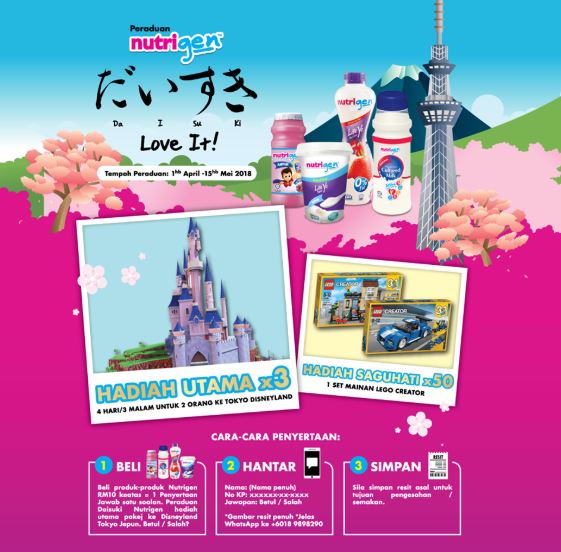
Mamee DyDo Distribution Sdn Bhd is injecting the Nutrigen brand with a stronger Japanese element with the launch of the だいすき (Daisuki or Love It) Nutrigen campaign.
The Daisuki Nutrigen contest was held from 1 April 2018 to 15 May 2018 offering three grand prizes comprising a trip for two to Disneyland Tokyo Japan.
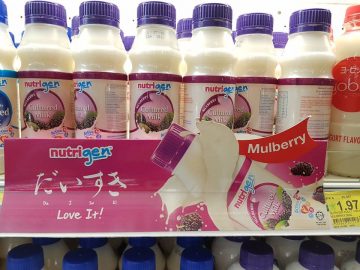
Nutrigen mulberry flavour
As part of the Daisuki approach, Nutrigen cultured milk has been added with a new mulberry flavour, which joins the existing less sugar and original variants.
New Nutrigen Mulberry flavour. Photo Credit: Minimeinsights.com
In May 2018, Mamee DyDo launched Yobick. The introduction of Yobick and the Daisuki move is seen as part of the company’s push to rebuild its portfolio to concentrate on higher-quality products for a healthier lifestyle.
Performance dragged down by Cheers
Mamee DyDo Distribution, which is 51% owned by the Japanese firm, has failed to perform to expectation, dragged down mainly by the declining sale of its Cheers carbonated beverages in line with the overall fall in carbonated beverage sales in Malaysia. As a result, DyDo has to post “an impairment loss of ¥269 million in its consolidated financial results for the fiscal year ended January 2018 for goodwill arising from our acquisition of Mamee DyDo Distribution shares,” according to a notice issued by DyDo on 2 March 2018.
The future plan is to discontinue Cheers brand of carbonated soft drinks and to “accelerate availability of new, high-quality products that accord with consumers’ growing preference for healthy lifestyles,” the notice says.
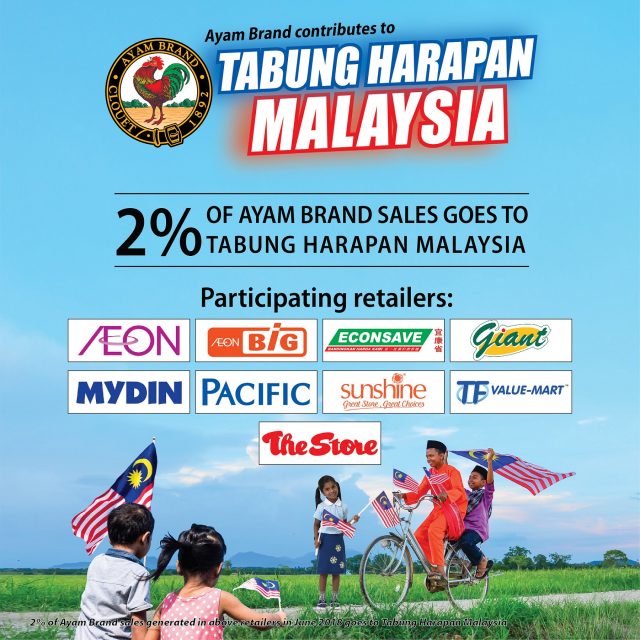
Will contribute 2% of June 2018 Sales from Participating Retailers
SHAH ALAM, June 18, 2018 – There is hope when everyone plays their part. Ayam Brand™, the 126-year-old canned healthy and convenient canned food favourite of Malaysians will be contributing 2% from the brand’s total sales in June 2018 from participating retailers to Tabung Harapan Malaysia in support of Malaysia’s fiscal health.
Participating retailer chains include AEON Retail, AEON BiG, Econsave, GIANT Hypermarket, Mydin Hypermarket, Pacific Hypermarket, Sunshine Square, TF Value-Mart and The Store.
The initiative encourages consumers to participate and contribute towards Tabung Harapan at no additional costs to them as the contribution will come from their regular purchase of Ayam Brand products.
“Ayam Brand™ is pleased to join other Malaysians in contributing to the publicly funded Tabung Harapan to support the on-going cause in supporting the nation’s financial situation while promoting patriotism among Malaysians. Tabung Harapan’s need is urgent, and the timing is perfect as Ramadan and Raya is the time for giving,” said Mr Nathan Deverre, Ayam Brand™ Malaysia’s Strategic Marketing Advisor.
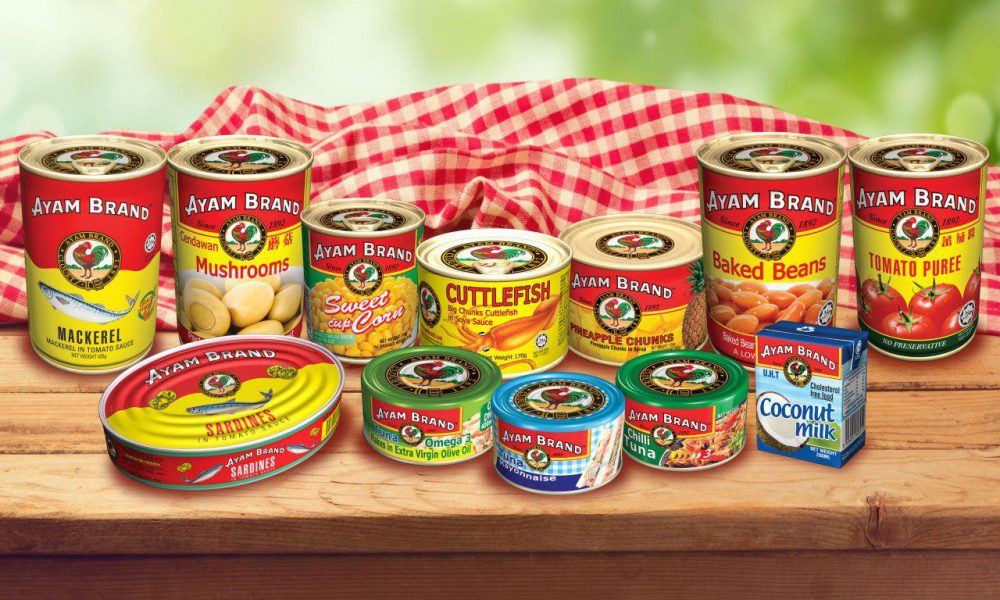
Among the top-selling items for Ayam Brand during this season is their Coconut Milk, Sardines in Tomato Sauce, Tuna products, Pineapple Chunks and Sweet Corn. All Ayam Brand products are preservative-free and MSG-free, and certified Halal.
In Malaysia, the brand has been active in Corporate Social Responsibility initiatives and in donating during natural disasters such as floods and earthquakes for many decades.
“Ayam Brand has been a part of Malaysian life for 126 years. It is natural for us to step up when there is a need. We are happy to support Malaysia,” Nathan said in closing.
Ayam Brand, a household name in Malaysia and Asia for 126 years, is famed for its wide range of quality and healthy canned food that are preservative free and contain no added MSG. Ayam Brand products are manufactured in state-of-the-art facilities that meet the highest international standards with worldwide-recognized certifications (HACCP, ISO 9001) and are certified ‘Halal’. For the past four consecutive years from 2013 to 2016, Ayam Brand has been ranked in the Top 10 as Malaysia’s most chosen FMCG brands, according to Kantar Worldpanel’s Brand Footprint Study.
For more information on Ayam Brand, please visit www.ayambrand.com.my or join facebook :Ayam Brand-World of Recipes
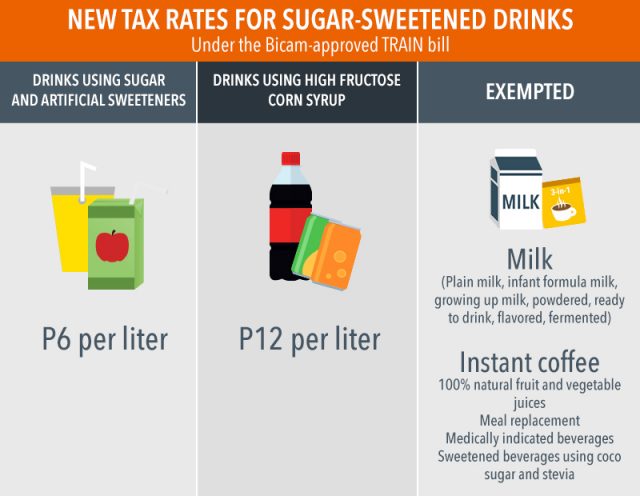
The excise tax on sugar-sweetened beverages under the Tax Reform for Acceleration and Inclusion (TRAIN) has been implemented for nearly half a year already. We take stock on how the tax has impacted the Philippines food and beverage industry.
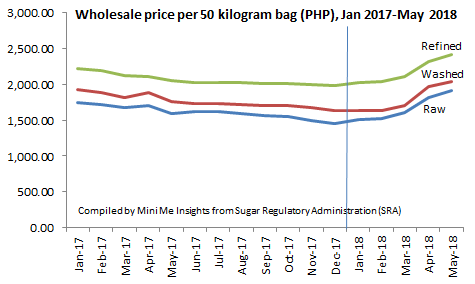
Wholesale sugar prices increased
First, we look at sugar, the main raw material used in sweetened drinks. Data from the Sugar Regulatory Administration (SRA) shows the wholesale sugar prices in capital Manila have risen by as much as 19-27% between January 2018 and May 2018.
To mitigate the strong rise in sugar prices, the Philippine government has on 11 June 2018 approved the importation of around 200,000 metric tons of sugar.
Beverage companies are substituting high fructose corn syrup (HFCS) with sugar to avail a lower tax rate. The tax rate on drinks with HFCS stands at PHP 12 per litre, doubling that of those using normal sugar at PHP 6 per litre.
The shift towards sugar has generated a surge in demand for sugar for manufacturing purposes. The price hike is also compounded by the inability of local production to fill rising need as sugar production is forecast to have a shortfall of around 160,000 to 200,000 metric tons in 2018, said Department of Agriculture (DA) secretary Emmanuel Piñol.
The hike in price is impacting both beverage companies as well as confectionery players. The Philippine Confectionery Biscuits and Snack Association (PCBSA) on 4 June 2018 said they wanted to import sugar as the cost of domestic sugar is 200% more than imported sugar.
Coca-Cola Philippines was reported to have lowered the production of its Coca-Cola Original Taste product citing “market availability issues,” reported Business Mirror on 18 June 2018. Due to lack of sugar supply, the beverage company is prioritising the production of specific SKUs to ensure uninterrupted supply. Fast food is impacted with some premises stopped providing customers with the classic Coke.
First quarter performance
The first quarter 2018 report cards of the major beverages companies clearly reflect the impact of the TRAIN law. Price hike was the main strategy to bolster sales revenue at the expense of volume.
Zest-O first quarter sales down double digit
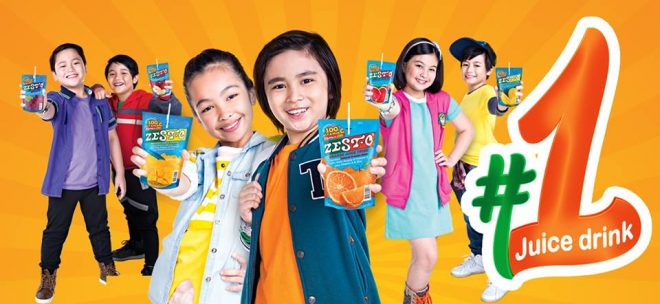
Zest-O Corp, known for its juice drinks and fruit soda, said in June 2018 that it might close some factories in the Philippines citing the tax on sugar-sweetened beverages (SSB), the wage hike proposal and rising sugar cost. Zest-O Chairman Alfredo Yao said the company experienced a double digit losses in its first quarter 2018 sales.
Tang sales down single digit
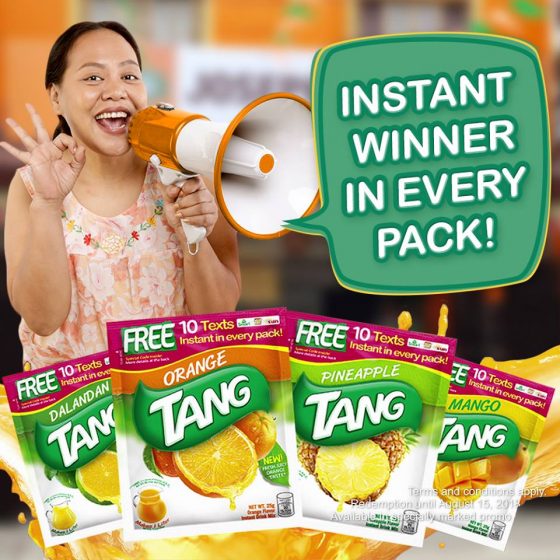
Mondelez’s Tang powder drink sales in the first quarter of 2018 fell by single digit, said Mondelez Philippines head of corporate and government affairs Shanahan Chua. The company hopes sales would catch up once consumers adjust to the higher prices.
To boost sales, Tang has launched the mobile campaign and added more flavours to engage with consumers. The mobile campaign provides consumers with 10 free SMS with every pack purchased.
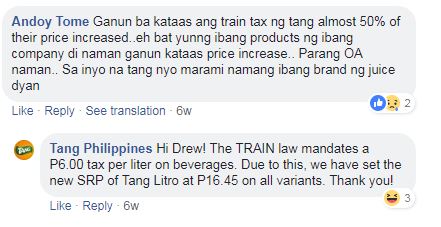
Tang has a lot of explanation to do as consumers are not pleased with the strong increase in price.
Cobra energy drinks sales volume down double digit
Cobra energy drink sales volume fell 18% year-on-year during the first quarter of 2018. The price hike of PHP 2 per 240ml returnable glass bottle has resulted in an increase in revenue despite lower volume.
Macay instituted huge price hike as remedial action
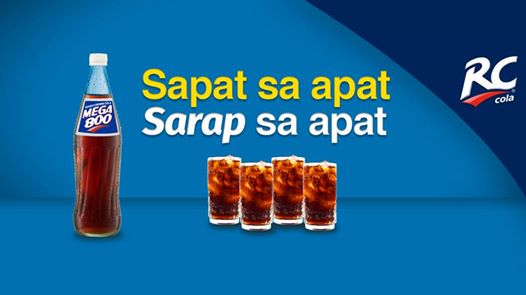
RC Cola Mega 800 enough for 4 glasses
Macay Holdings, which is engaged in the bottling and distribution of RC Cola, reported an 8.8% rise in sales revenue in the first quarter of 2018 as the company implemented a “huge price increase” to cover the excise tax. Sales volume, however, fell and impacted bottom line with net profit after tax dipped 61% year-on-year.
Macay expects the Philippines’ sweetened beverage industry will mirror experience in other countries that have implemented sugar taxes where the industry started to recover the following year.
Pepsi-Cola posts single-digit revenue growth
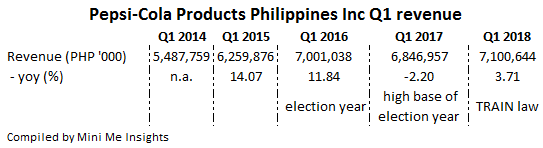
Pepsi-Cola Products Philippines, the bottler and distributor of PepsiCo beverages and snacks, reported a 3.7% year-on-year increase in net sales for the first three months of 2018.
However, the company posted a net loss of PHP 140 million for the first quarter of 2018 due to the impact of the “volume deleverage and higher cost of goods,” a clear sign that volume was impacted.
Coca-Cola volume fell
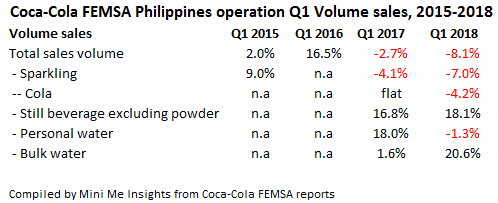
The Philippines operation of Coca-Cola FEMSA, S.A.B. de C.V saw further decline in volume sales in the first quarter of 2018, down 8.1% with sparkling falling 7% compared with the same period a year ago. Q1 2016 performance was due to the election year and Q1 2017 because of the high base a year ago.Q1 2018 revenue rose 18.5% year-on-year “driven by average price per unit case increase as an adjustment to the excise tax, partially offset by a volume decline.”
C2 RTD tea suffers the same fate
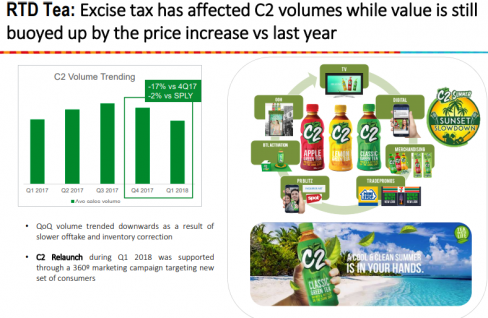
URC’s C2 was relaunched in the first quarter of 2018 to target a new set of consumers as Q1 2018 sales volume fell 2% or down 17% versus Q4 2018.
Conclusion
So far, there is less incentive for beverage manufacturers to lower their sugar content as there is no tax exemption on beverages with a sugar content below a certain threshold.
The SBS tax is applied on a per volume basis. Companies can reduce their sugar but since they can pass on rising cost to consumers to maintain value growth, most are keeping the sugar content intact or replace HFCS with sugar to reduce the tax rate.
The TRAIN law provides tax exemption to beverages sweetened purely with stevia or coconut sap sugar. However, local companies are still not embracing these natural sweeteners due to cost and taste factor.
The Healthier Choice logo has worked wonders in encouraging companies to reduce their sugar levels in Singapore, Thailand and Malaysia. There should be a similar program in the Philippines to get the industry moving towards sugar reduction.
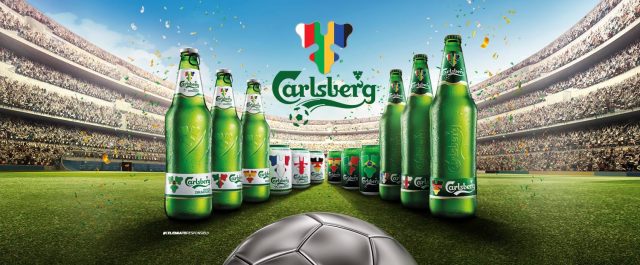
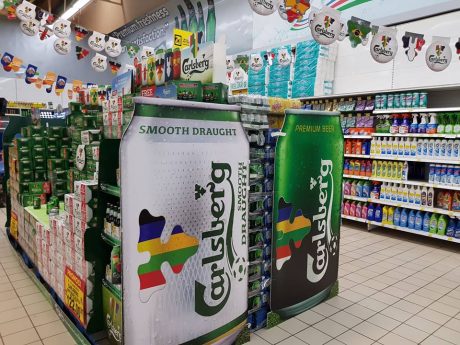
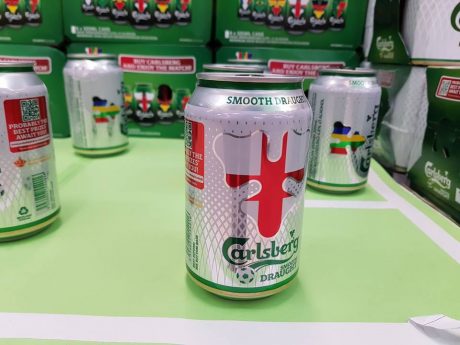
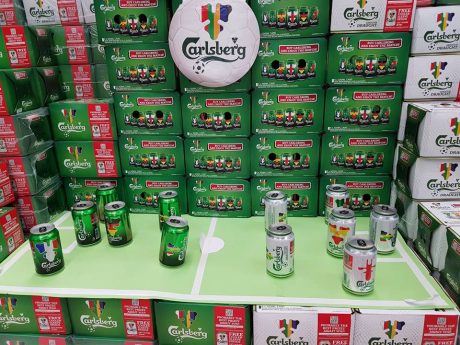
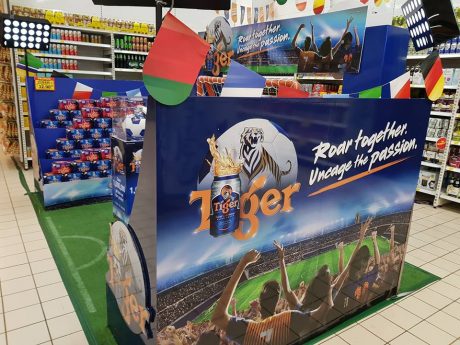
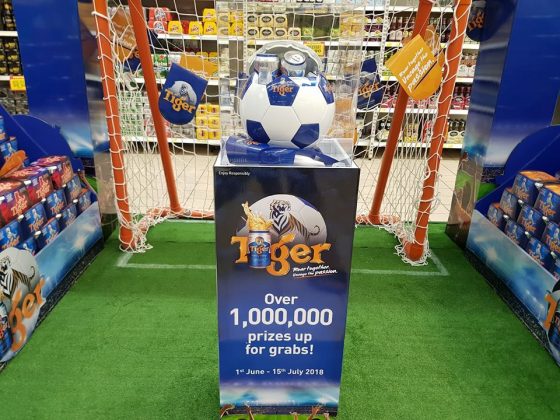
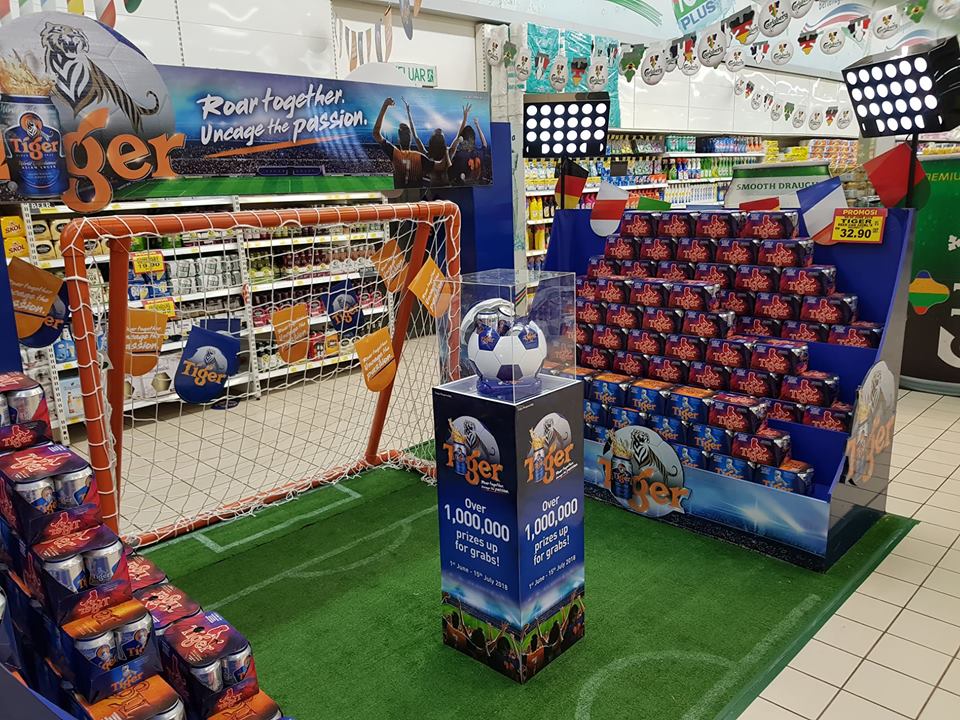
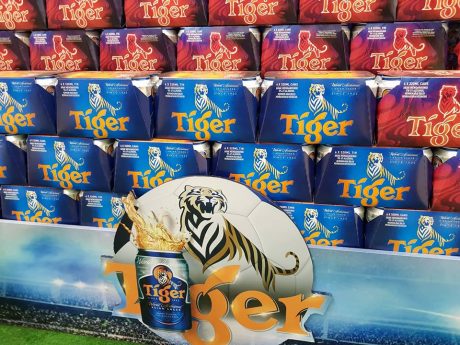
The 2018 FIFA World Cup has commenced. Retail point-of-sale (POS) display is important to whet consumer appetite for the product. Here we have a few examples from Carlsberg and Heineken and their POS displays in Malaysian grocery outlets.
Carlsberg – Probably the Best Football Party
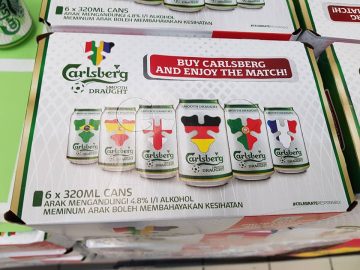
Carlsberg Malaysia is offering limited edition football cans and bottles featuring the flags of selected countries (England, France, Germany, Brazil, Spain and Portugal) in the hop leaf design.
Heineken Malaysia’s Tiger Beer is hosting Roar with Tiger: Football Viewing Parties at selected venues in Malaysia. There is also a chance to win limited edition football merchandise. Download the TigerMY app to collect points and redeem exclusive football memorabilia.
A number of homegrown Malaysian companies have been sold to foreign major corporations and private equity firms in recent years. Japan’s Asahi, which acquired Permanis in 2011, bought Etika Diaries Sdn Bhd in 2014. At the end of 2017, the Dutch coffee house Jacobs Douwe Egberts made the offer to buy OldTown and the shares of OldTown were finally delisted from Bursa Malaysia on 4 April 2018.
CVC buys Munchy
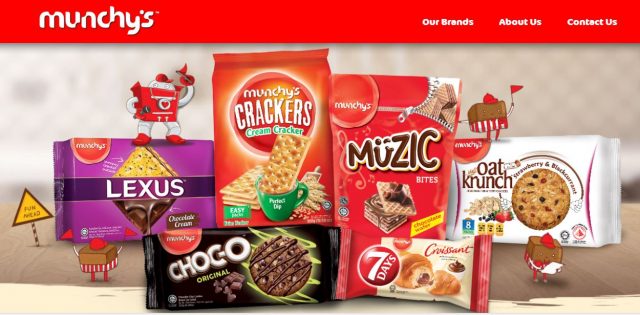
On 12 June 2018, CVC Capital Partners Asia Fund IV announced it had acquired a 100% stake in Munchy Food Industries Sdn Bhd (MFI) and its Malaysian subsidiary Munchworld Marketing Sdn Bhd. According to the press release, Munchy’s had a 21.5% share of Peninsular Malaysia’s RM1.044 billion biscuit market in 2017, data from Nielsen shows.
The value of the deal was worth USD 250 million or RM 998 million, Bloomberg news reported citing informed sources.
Global network
Mr LK Tan, co-founder of MFI, describes the deal as having the potential to turn Munchy into a “global powerhouse” with CVC on board. Over the past 25 years, Munchy has grown into the second largest biscuit player in Malaysia and exports to around 50 countries.
Tan added “CVC’s vision for the brand aligned extremely well with our identity. Their global network and experience will be invaluable in growing the Munchy’s brand into a global name – with new markets, new technology and new innovations”
Munchy was 70% owned by its founders and 30% by TAP Crunch Sdn Bhd, a joint venture between the civil servant pension fund KWAP and PE firm Tremendous Asia Partners Group, which acquired the 30% stake in Munchy in 2014.
Potential share listing for Munchy down the road
With CVC on board, there is a high chance CVC will want to exit at a high price and this would involve floating Munchy on the share exchange.
QSR, 30%-owned by CVC, floating it shares in November 2018
CVC’s other investment in Malaysia is a 24% stake in QSR Brands (M) Holdings Sdn Bhd, which operates KFC restaurants in Malaysia, Singapore, Cambodia and Brunei, as well as Pizza Hut restaurants in Malaysia and Singapore. CVC acquired the stake in 2011. Now, the plan is for QSR to list its shares on Bursa Malaysia in November 2018 to raise RM 2 billion.
Financial information
In the 12 months to December 2015, MFI revenue stood at RM 283.68 million with a net profit of RM 41.34 million, reported The Edge. Revenue rose to RM 300 million in 2016 and the company expected a 30-40% rise in revenue in 2017 over 2016 citing rising demand for 7Days Croissant and other products, reported The Star.
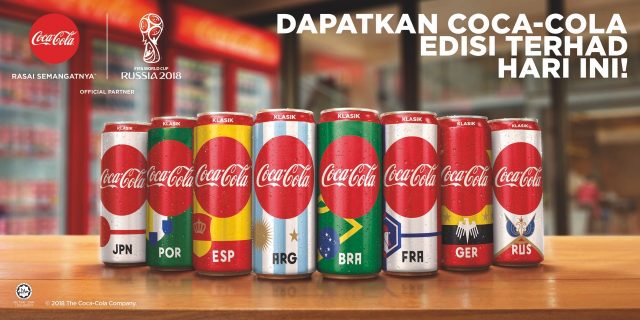
As Malaysians get ready to watch the 2018 FIFA World Cup Russia™, Coca-Cola – an official sponsor of the event – has a lineup of activities and items to bring the excitement beyond the TV screen, including limited edition packaging featuring country colors of popular teams and the host country.
Available from now while stocks last the collection of eight designs features Russia, Brazil, Argentina, Spain, France, Germany, Portugal and Japan.
Football fans stocking up on refreshing Coca-Cola beverages to enjoy during the matches also have a chance to win a variety of official Coca-Cola 2018 FIFA World Cup Russia™ merchandise from various retailers as well as special offers throughout this period and even win a trip to Russia to watch a match live!
The Coca-Cola truck and roving teams will travel to 87 locations around Malaysia to add to the excitement with games, screenings and other on-ground activities. The rovers will be visiting selected retail outlets, McDonald’s restaurants, GSC cinemas and the ever popular mamak shops.
“Coca-Cola is one of the longest-standing corporate partners of FIFA with a history dating back to 1950. Many Malaysians are passionate about football so we want to bring the excitement of every FIFA World Cup close to them,” said Ahmed Yehia, Country Manager for Malaysia-Singapore-Brunei, The Coca-Cola Company.
The Coca-Cola Company is one of the longest-standing corporate partners of FIFA, with a formal association since 1974 and an official sponsorship of FIFA World Cup™ that began in 1978. Coca-Cola has had stadium advertising at every FIFA World Cup™ since 1950.
FIFA and The Coca-Cola Company extended their long-time partnership to until 2030. The renewed commitment by Coca-Cola in the non-alcoholic beverages category includes cash and in-kind products and services in support of the broad spectrum of FIFA-organized events around the globe, including the FIFA World Cup, FIFA Women’s World Cup, FIFA U-20 World Cup, FIFA U-17 World Cup, FIFA Beach Soccer World Cup, FIFA Club World Cup, FIFA Interactive World Cup, FIFA U-20 Women’s World Cup, FIFA U-17 Women’s World Cup, FIFA Futsal World Cup, and the FIFA Confederations Cup.
Coca-Cola also continues to sponsor the closely watched FIFA/Coca-Cola World Ranking for men’s national teams and FIFA Women’s World Ranking.
The Coca-Cola Company in Malaysia
In addition to Coca-Cola, one of the world’s most valuable brands, the Coca-Cola system in Malaysia manufactures, markets and distributes over 80 products including sparkling beverages (Fanta, Sprite, A&W, Schweppes), low and zero-calorie sparkling beverages (Coca-Cola Light, Coca-Cola Zero Sugar, Coca-Cola Stevia, Sprite Zero), juice drinks (Minute Maid Pulpy), teas (Heaven and Earth), isotonic (Aquarius) and water (Dasani).
Coca-Cola has invested over RM1 billion in Malaysia since 2010, creating more than 800 jobs and touching over 75,000 customers directly with a total reach of over 200,000 customers across Peninsula Malaysia and East Malaysia. Through its programmes and partnerships Coca-Cola Malaysia aims to make a lasting positive difference in the local community.
From recycling through partnerships with the Malaysian Nature Society, Global Environment Centre, Reef Check, MareCet, Waste Management Association of Malaysia and Universiti Putra Malaysia; and working on water projects with Muslim Aid Malaysia and Raleigh International to provide access to clean water for more than 23,000 villagers in rural Sabah, to economically empowering women through the Coca-Cola KU entrepreneurship programmes – Coca-Cola is committed to building sustainable communities in Malaysia.
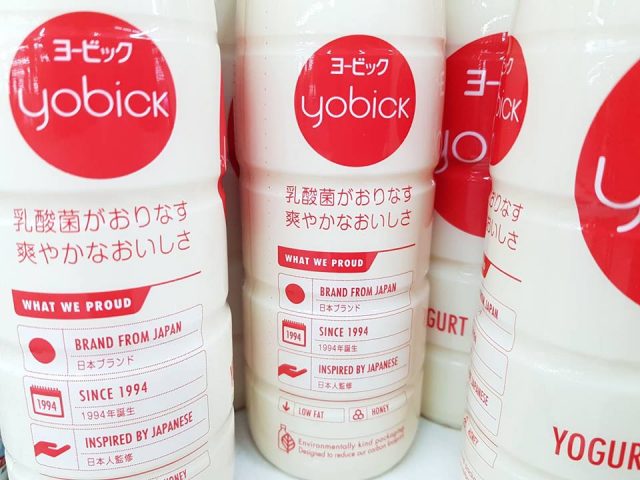
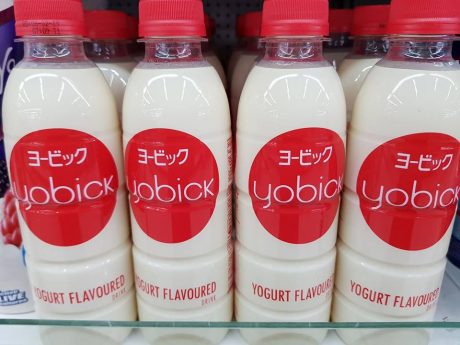
The joint venture between Mamee Double-Decker (M) Sdn Bhd and Japan’s DyDo Group Holdings has unveiled Yobick, a yoghurt-flavoured drink that was launched in Malaysia in May 2018.
Yobick is described by the Japanese company as “a new, high-quality product for the Malaysian market modeled on similar offerings in Japan.” The product was first launched in China in 2017. Mini Me Insights first saw it at SIAL China 2017 held in Shanghai in May 2017.
Photo Credit: Minimeinsights.com
The new yogurt-flavoured drink represents part of DyDo’s effort to rebuild its product portfolio in Malaysia.
Ambient yogurt-flavoured drink
Yobick is an ambient yogurt-flavoured drink, which means it does not need to be refrigerated. The drink is made in Thailand by Toyo Seikan (Thailand) Co., Ltd. and is distributed in Malaysia by DyDo Mamee Distribution Sdn Bhd and distributed in Hong Kong by Jagger International Co., Ltd. Yobick comes with the Malaysian halal certification.
Key ingredients
Yobick’s main ingredients are water, sugar, skim milk powder, non dairy creamer, contains acidity regulator, soybean polysaccharide and flavouring. It contains pasteurised yogurt powder (whey, streptococcus thermophilus and lactobacillus Bulgaricus), honey and inulin as well as colour (E150a).
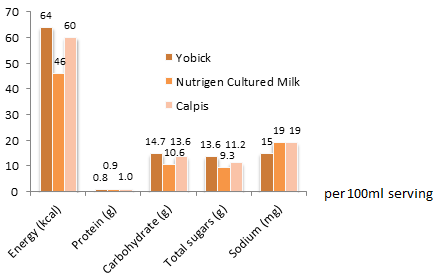
Below is how Yobick stacked up against Mamee’s Nutrigen cultured milk, which needs to be chilled, and rival Calpis, an ambient cultured milk drink from Etika, a unit of Japan’s Asahi.
Yobick taps into made-in-Japan, aims at Calpis
Like Calpis, Yobick taps into the Japanese heritage and is marketing it as a leading brand from Japan. Below is a similar Japanese-centered approach taken by rival Calpis to promote its Fibre range.
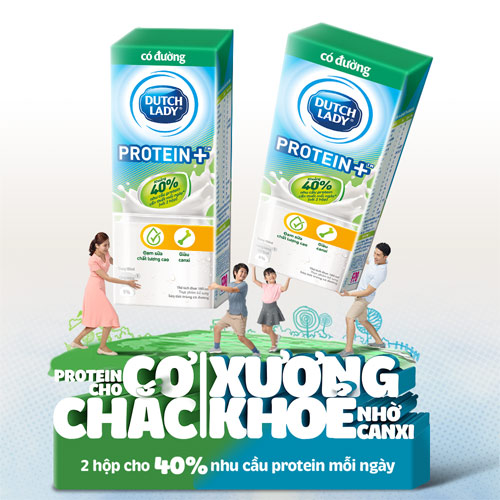
From the fascination with calcium, the Vietnamese dairy industry is shifting its focus towards protein. In April 2018, Dutch Lady, a unit of FrieslandCampina, unveiled Dutch Lady Protein+, which is said to have the highest protein content in the local market.
The new product has 4.1g of protein per 100ml.
According to the press release, “a recommended serving of two packs of Dutch Lady Protein+ a day helps supply not only 14.8 grams of protein, equivalent to about 40% of the Reference Nutrient Intake (RNI) in Vietnam, but also 464mg of calcium for children at the age of 6 or 7.”
SEANUTS study shows serious protein deficiency
The South East Asian Nutrition Survey (SEANUTS) carried out by FrieslandCampina in coordination with the Vietnam National Institute of Nutrition under the Ministry of Health revealed 40% of urban children aged between 6 months and 11 years fail to meet the minimal standard of protein consumption recommended by the RNI. The figure is as high as 70% in rural areas.
The lack of protein might result in the shortage of weight and height due to the underdevelopment of the bones and muscles.
The new Dutch Lady product comes in packs of 180ml.
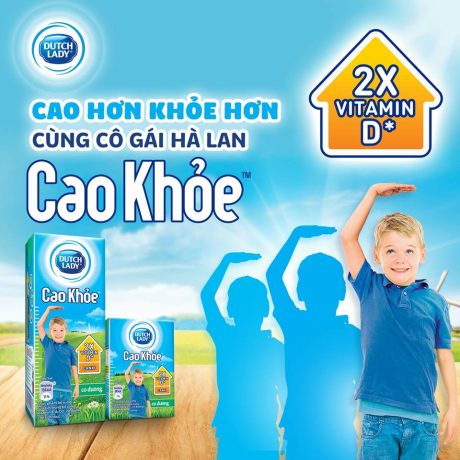
Dutch Lady existing UHT range includes Dutch Lady Cao Khỏe with vitamin D to support calcium absorption to grow taller and Dutch Lady Active 20+ with calcium, protein, phosphorous and vitamins B2 and B12 for bone and general health. Protein is not part of the narrative of Dutch Lady Active 20+. The emphasis on protein in the new Dutch Lady Protein+ could herald something significant in the protein space in the near future.
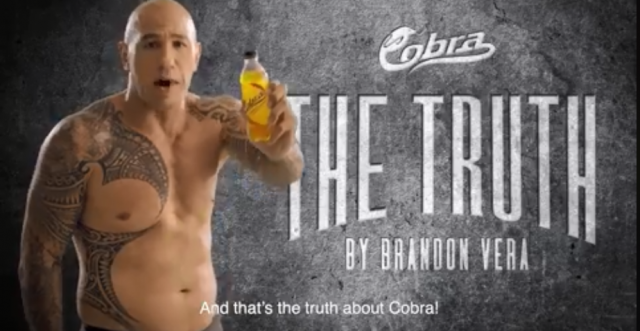
The Cobra energy drink from LT Group’s unit Asia Brewery has recently launched a series of commercials about the truth about Cobra.
The commercials star Brandon Michael Vera, a Filipino-American mixed martial artist, debunking the myths of Cobra as high in sugar and caffeine.
Millennials are often misunderstood
Millennials, born after 1980s, are often misunderstood and are blamed for everything bad. The millennials serve as a reference to Cobra energy drink, often seen as laden with sugar and caffeine.
In The Truth Series Episode 1: Selfie Generation, the millennials aren’t the ones that are taking selfies all the time. In fact, Brandon goes to show, the older generations have been taking selfies using other devices for as long as one could remember. People claim Cobra is all sugar. In fact, Cobra is filled with vitamin B complex, inositol, ginseng and taurine.
In the second episode, Brandon advises the audience not to quick to judge millennials as they aren’t the ones always on their phone. It is the same with Cobra, some people claim it has higher caffeine than coffee. The truth is there is even more caffeine in other coffee brands than Cobra.
The energy drink is seeing an overall contraction in 2017 and has been stagnated for years. Cobra, which commands over 70% share of the market, is the bellwether of the industry. The volume sale of Cobra in 2017 fell 3% from the same period a year ago, according to the latest LT Group annual report 2017. Competition from the carbonated soft drinks market has been cited by Cobra as the reason for its poor sales.
The sugar tax, which took effect on 1 January 2018, has also taken a toll on energy drink. Cobra volume sales in the first three months of 2018 fell 18% year-on-year. The focus now is on growing value, which means either passing higher cost to consumers, which Cobra did with a PHP 2 hike per 240ml returnable glass bottle, or premiumise the category.
The truth about Cobra is seen as a move to downplay sugar and caffeine and reinforce the benefits of energy drink simply beyond as a wake-me up drink to something more functional and good for you.
Thai functional beverage maker Sappe has launched "Beauti Shot Stix” as Thailand's first concentrated shot in Korean style of drinking stick pack, according to...
 Q1 2018 revenue rose 18.5% year-on-year “driven by average price per unit case increase as an adjustment to the excise tax, partially offset by a volume decline.”