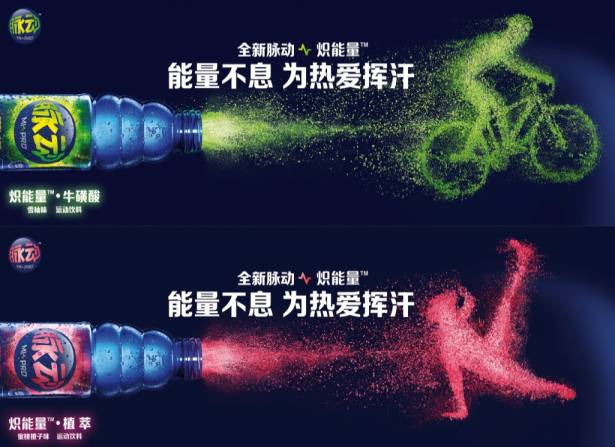
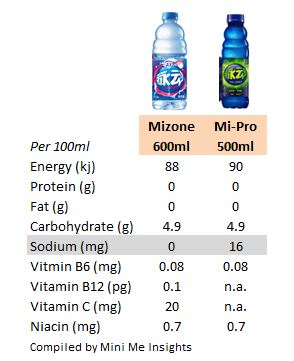
Danone has introduced a new Mizone with taurine and green tea plus ginseng extract in China in March 2017. The new range is known as 炽能量 (chi neng liang) or literally translated as “burning energy”. On the packaging, it is called Mi-Pro.
Two variants
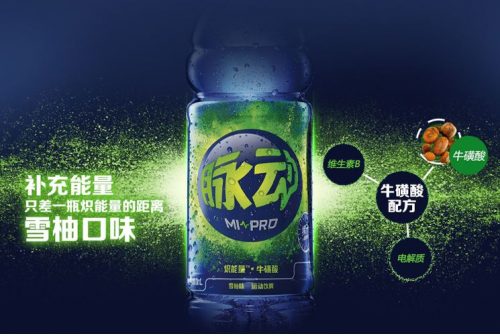
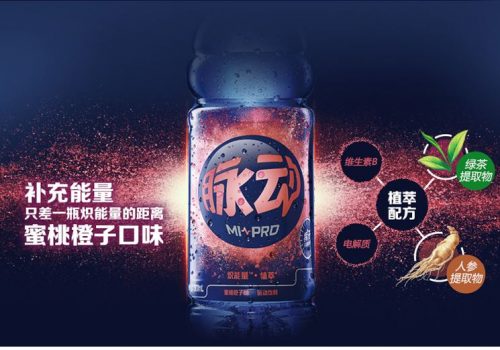
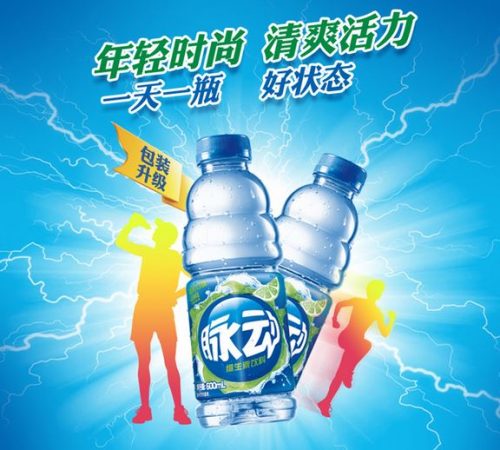
The range comprises two variants – pomelo (雪柚) (image above) and orange peach (蜜桃橙子) (image below). The pomelo flavour contains taurine, while the orange peach flavour comes with ginseng and green tea extracts.
Now with added sodium
Unlike the existing Mizone range, which is free from sodium, the new 500ml Mi-Pro in PET bottle comes with sodium with a content of 16mg per 100ml. The addition of sodium is seen as a deliberate move to narrow the focus on two groups of consumers – those with an active lifestyle and those who engage in sporting activities. The underlying theme for Mi-Pro is the drink is good for those who sweat.
The addition of taurine, green tea extract and ginseng extract in Mi-Pro also means Mizone has crossed into the energy drink category.
Mizone gets a new flavour and packaging
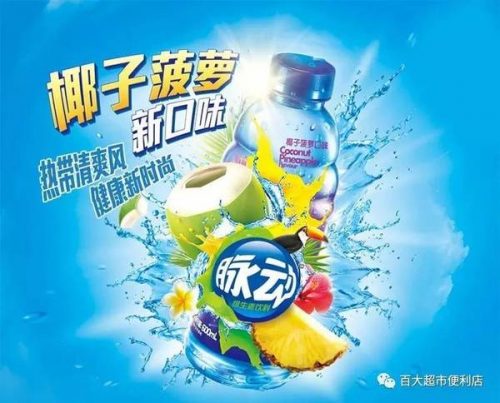
The existing Mizone range has been given a slight makeover to the brand logo. In addition to the new logo, the range has also been added with the pineapple and coconut flavour, which was introduced in March 2017.
New Mizone with pineapple and coconut flavour. Image above from the web
This is how the old Mizone packaging looks like.
Mizone sales fell
Mizone experienced its first sales decline in 2016 due to destocking as heated competition sees consumers migrating to other beverages.
Danone CEO Emmanuel Faber speaking about Q4 2015 results hinted the strong growth of Mizone in China had come to an end.
In China, as you know, we have hit the point where the secular growth of Mizone of about 20%, 30% growth over the last several years has now come to an end. That’s the end of the phase one story of Mizone in China after seven, eight years of very high growth.
A year later during the Q4 2016 result announcement, he stated that Mizone was currently in a transition period.
Just one word on China where we continue the transition of Mizone and we are focusing on two things, the first one which is to protect our market share in an environment that is more and more competitive and the second one is to protect the profitability of these brand.
What Mini Me thinks
In China, we are seeing the same shift that is happening in Indonesia with the introduction of Mizone Activ in mid-2016. See the post here. To stay relevant, Mizone is moving beyond a broad positioning from a lifestyle drink to something more niche that targets special need occasion such as sports. The year 2017 will continue to be a transition period for Mizone in China as the brand is facing massive headwinds.
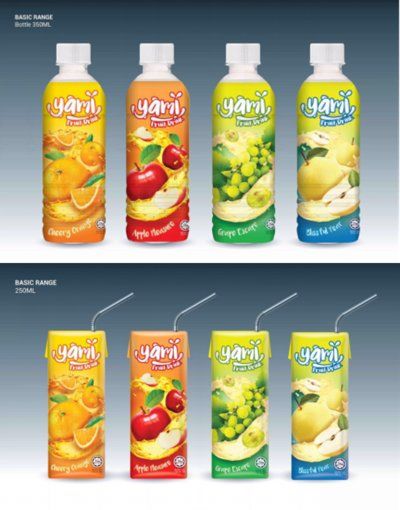
China Huiyuan Juice Group has announced in a press release on 13 April 2017 it would launch its first fruit juice beverage product in Malaysia in May 2017 under the YAMI brand. The largest juice producer in China first made public news of a plan to set up a local 50-50 joint venture with a subsidiary of Singapore’s Yeo Hiap Seng Limited in March 2016. The joint venture was officially set up in January 2017.
YAMI has up to 10% juice content
According to the press release, “Huiyuan and Yeo Hiap Seng will launch their first beverage product under the “YAMI” brand. With the content of juice up to 10%, the beverage will have apple, pear, orange and white grape flavors, available in 250 ml Tetra Pak packages and 350 ml bottles.”
Functional juice beverage in the pipeline
The joint venture will also introduce another functional juice beverage that comes “with the addition of iron, calcium, dietary fiber and collagen and other nutrients, which will be available in four flavors – orange, red grape, mango and grapefruit.”
Taking advantage of Malaysia’ strong halal certification
As mentioned in the earlier post, Huiyuan’s joint venture in Malaysia leverages on the country’s “perfect local halal product regulations.” With Jakim’s internationally recognised halal logo, Huiyuan can export its locally-manufactured juice products to the international market particularly in ASEAN. The press release also mentions the preferential tariffs, which make investing in the country worthwhile.
YAMI’s halal certification is registered under Yeo Hiap Seng (Malaysia) Bhd (Shah Alam) and will expire on 31 January 2019.
Myanmar and Cambodia next
Malaysia and Singapore represent the first two markets. Huiyuan and Yeo Hiap Seng will expand the business to Cambodia and Myanmar in the future. The Indochina market presents green pasture for food and beverage companies.
What Mini Me thinks
YAMI taps into the strong distribution network of Yeo Hiap Seng in Malaysia as well as in Singapore. With the local halal logo, it helps to improve product assurance among the largely Muslim population. Ultimately, it is taste and marketing that matter.
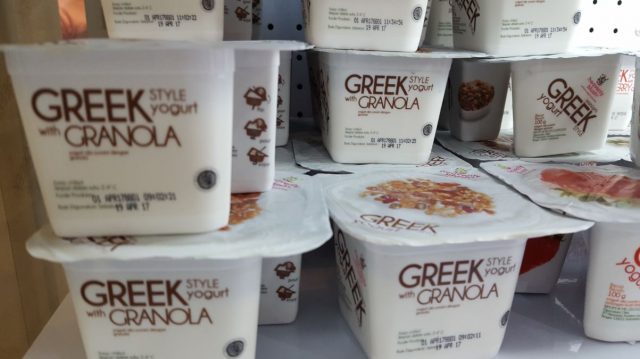
PT Heavenly Nutrition Indonesia, famous for its Heavenly Blush yoghurt, has showcased its Greek yoghurt with granola at FHI 2017 (Food and Hotel Indonesia). The premium Heavenly Blush Greek yoghurt was first introduced in 2015. Now it comes with granola and is available at selected retail outlets.
Granola
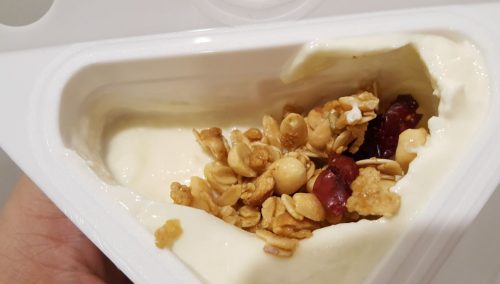
The Heavenly Blush yoghurt with granola (100g) is the first of its kind made by an Indonesian dairy company. The granola comprises peanut, dried cranberry, cashew, corn flake, oat and raisin.
Heavenly Nutrition Indonesia also plans to introduce Greek yoghurt in bucket for the foodservice or HoReCa channel.
In Malaysia, Greek yoghurt is available in large packaging size and is marketed as an alternative to coconut milk (santan) in cooking.
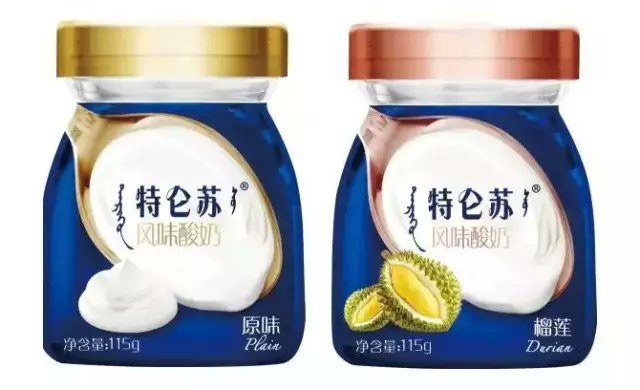
The Chinese dairy company Mengniu has recently unveiled the new Deluxe Milk (特仑苏) spoonable yoghurt in China. This also marks the brand extension of Deluxe Milk from high-end UHT liquid milk to the spoonable yoghurt segment.
The 115g Deluxe spoonable yoghurt comes in two variants – plain and durian. The high quality milk is sourced from China and the yogurt contains the Streptococcus thermophilus strain CNCM I-2980. The durian comes from the D24 variant (苏丹王榴莲) from Malaysia.
What Mini Me thinks
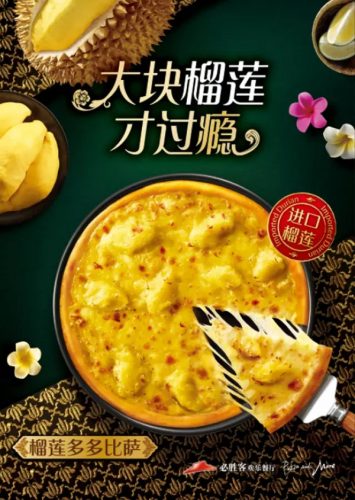
Pizza Hut durian pizza made from imported durian. Image above from the web
In China, consumers are already eating yogurt and pizza added with durian as a topping. What is significant about the new Deluxe spoonable yoghurt with durian flavour is that durian can potentially become a new flavour for packaged yoghurt going forward.
Coca-Cola Malaysia unveils new designs in one of the biggest changes in brand’s 130-year history
And introduces NEW AND IMPROVED Coca-Cola Zero Sugar
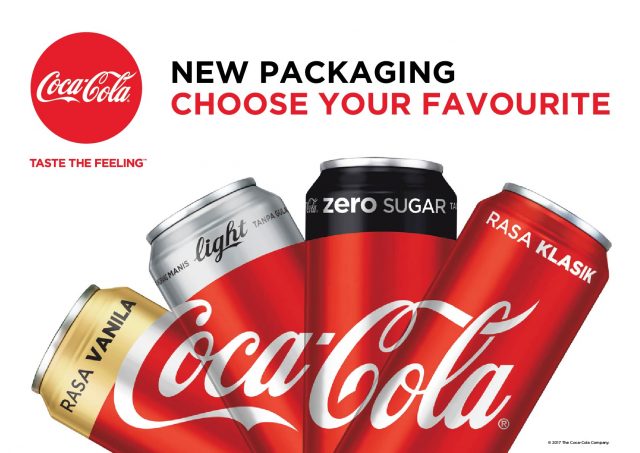
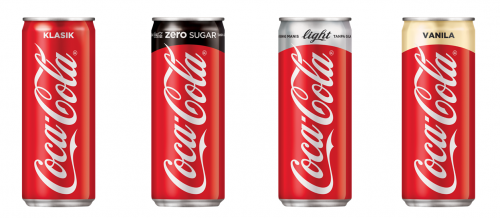
19 April 2017, MALAYSIA – Coca-Cola today announced significant changes; firstly the introduction of a new design across all of its Coke range in Malaysia, where for the first time ever, the entire Coke range will be marketed under one brand – Coca-Cola. The change will mean that all of Coca-Cola’s varieties including Coca-Cola Classic, Coca-Cola Zero, Coca-Cola Light and Vanilla Coke, will be unified under the one design using the iconic Red Disc. Consumers will soon see the new One Brand design on everything – from cans and bottles to billboards and television ads.
Second, the company launched Coca-Cola Zero Sugar, a new and improved sugar-free Coca-Cola, which will replace Coca-Cola Zero. The new recipe tastes even more like the original Coca-Cola, but without sugar. Coca-Cola Malaysia will support the Coca-Cola Zero Sugar launch with a marketing campaign that encourages more people to try and choose the zero sugar option.
New One Brand Packaging Design
Tish Condeno, Marketing Director for Coca-Cola Malaysia, said that one of the reasons behind the new design and the global One Brand strategy was the brand’s iconic colour – Coca-Cola red.
“Over the years with the launch of Coke Light and other varieties like Coke Zero we have drifted away from ‘Coca-Cola red’. It’s our signature colour that is synonymous with great taste and refreshment,” said Condeno.
“We realised we were in danger of losing our iconic colour in a sea of other colours like silver and black, and we knew we needed to reclaim it as an icon of our brand.
“That’s one of the primary ideas behind the new design and the global One Brand strategy,” she said.
From May, Coca-Cola’s four colas will be marketed under the Coca-Cola master brand instead of being marketed as separate products, to allow Coca-Cola Zero, Coca-Cola Light and Coca-Cola Vanilla to benefit from the closer association with Coca-Cola Classic. The company will also feature all Coca-Cola variants in its advertising, to make clear to more people the full choice offered.
From this month, Coke’s range of beverages will feature the ‘rising’ red disc and a splash of their signature colours our consumers know so well – black for Zero, silver for Light and yellow for Vanilla.
“The unification of the brands through this design marks the first time in our 130-year history that the iconic Coca-Cola visual identity has been shared across products in such a prominent way,” added Condeno.
The launch of the One Brand strategy also reinforces Coca-Cola’s commitment to encourage more choice for consumers with the company committed to ensuring all of the varieties feature prominently in advertising, including its low and no sugar varieties.
“As consumers’ tastes evolve so does our portfolio of beverages. We believe one of the best ways we can support the growth of low and no sugar varieties of Coca-Cola is for them to sit under our iconic Coca-Cola red so all our Coke products share the limelight” said Condeno.
“Under One Brand you will no longer see distinct brand campaigns for each of the variants. Rather, all advertising will feature the Coca-Cola products equally enabling consumers to an informed choice on the Coca-Cola that suits their taste, lifestyle and diet,” she said.
The New and Improved Coca-Cola Zero Sugar
Coca-Cola Malaysia has also launched a new and improved sugar-free variant, Coca-Cola Zero Sugar to encourage more people to taste and choose a no sugar option. The new recipe, which will replace Coca-Cola Zero, tastes even more like the original Coca-Cola (Coca-Cola Classic), but without sugar.
Condeno said, “We know that many people love the taste of the original Coca-Cola. We also know that some of them want to reduce their sugar intake but have been reluctant to try a no sugar option because they don’t think they taste as good as the original. That’s why we are excited to unveil the new Coca-Cola Zero Sugar, which matches the taste of the original Coca-Cola, but without the sugar.”
As well as the improved taste and the new name – Coca-Cola Zero Sugar, packaging in line with the company’s ‘One Brand’ marketing strategy will make it even clearer to consumers that the drink is sugar-free.
The new packaging and the new Coca-Cola Zero Sugar will be available in-store from May onwards.
About Coca-Cola Malaysia
In addition to Coca-Cola, one of the world’s most valuable brands, the Coca-Cola system in Malaysia manufactures, markets and distributes over 40 products including sparkling beverages (Fanta, Sprite, A&W, Schweppes), zero-calorie sparkling beverages (Coke Light, Coca-Cola Zero Sugar, Sprite Zero), juice drinks (Minute Maid Pulpy, Qoo), isotonic drinks (Aquarius), teas (Heaven and Earth), coffee (Georgia) and waters (Dasani, glacéau vitaminwater). Coca-Cola has been refreshing Malaysians for more than 80 years and is committed to making a lasting, positive difference in the local community.
For more information about Coca-Cola Malaysia visit: www.coca-cola.com.my
With hundreds of brands and companies competing to differentiate themselves, corporations have been branching out to new and unconventional ways to make themselves known. This was evident at the recent April Fool’s holiday where brands would ‘prank’ their target audience to garner attention.
While certain brands would prefer to maintain their white shining armor, brands such as Ikea, Google and many others have ventured into dangerous waters (of unhappy consumers and journalists) and successfully conveyed their desired message. But was it worth the risk?
Screenshot of Ikea Singapore’s April Fool’s Prank
Yes, it was worth the risk
First and foremost, put yourself in editors and journalists’ point of view and imagine this. Aside from the tight editorial deadlines, readers to please, stakeholders to support and advertiser relations to maintain, members of media receive hundreds of emails a day, filled with press releases, event invitations and many others.
Within the ‘haystack’ of email pitches, editors are tasked to pick out ‘needles’ which stood out and relevant to their publication/audience (on a daily basis!). While relevancy might not be a hard thing to achieve, making your story stand out is another story. Nowadays, editors would most likely choose not to publish news that is relevant to their audience because there are so many other more interesting and relevant materials.
An interview conducted by a Buzzsumo contributor asked various editors and journalist what were some of their pet peeves that makes them delete an email pitch:
Anthony Ha – TechCrunch
Pitches that are impossible to understand because they consist primarily of buzzwords, or that obscure the actual news in a long introduction stretching to connect the company to news that’s more exciting. Also, there seems to be an uptick in “we’ve given the exclusive to another publication but we’ll let you publish 30 minutes later” pitches, and I HATE those.
Caitlin Kelly – NY Times
99.9% of the emails I get are useless! That’s a pretty damning statistic, I’d say.
Generic — you have clearly sent this email to 100s of other writers. I’m not there for that.
Boring. No news or not enough news to make this appealing to any editor I know.
Not enough detail.
No color…just bland, boring PR talk.
No context; why now, why me, why this matters today and not 6 months from now…?
NO understanding that the only way to get my attention is to HELP me.
Throwing random emails at me is deeply annoying, rude and sucks up my time. No freelancer has extra time to re-focus their attention on your need for a hit by wading through yet another crappy email (see numbers 1-5.) The PR people who are truly helpful and will get their client’s mention are those who ask me what I need and help me get it, fast.
The only way to really work with me….and NO one bothers. Get to know me! Ask for a few minutes of my time, let’s schedule them, and then find out the various markets I’m currently pitching to; the kinds of stories I need and let’s see if there is a fit. I am appalled by how lazy PR people are and completely fed up with the BS they keep sending me.
I need ideas, every single day. I do need pitches! But not random stuff.
The article was published since 2014, however the issues mentioned still persists today. So how do we get their attention? There are many ways to execute this, but today I would like to share a case study of how a brand can utilize an unconventional media initiative in conjunction with a conventional ‘holiday’.
Creating Unconventional Content for Conventional Holidays
It all began late 2016, when members of media took notice of Amazon’s increase in hiring and warehouses being set up in Singapore. Online consumers were ecstatic when TechCrunch reported that the Seattle company is set to enter SEA with a Singapore launch in Q1 2017. By the end of March 2017, consumers were disappointed as TechCrunch published a follow up article on 22 March that Amazon had to delay its launch into Singapore.
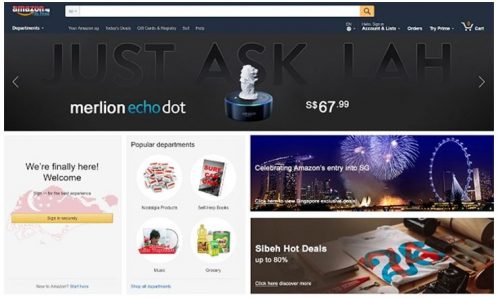
Added with hype built up by media across Southeast Asia (SEA), this became a perfect stage for an Amazon-Themed April Fool’s prank. iPrice, a Southeast Asian price comparison website took this up with an ‘exclusive announcement’ that Amazon was entering the region. Though there was almost no truth in the announcement, various media picked up the news due to the timeliness of the announcement.
Rationale for the initiative
More than just a standard April Fool’s prank, the initiative was coherent with their company’s mission statement:
To bring a greater level of transparency, convenience and trust to the e-commerce market in Southeast Asia by making it easy for shoppers to compare prices, discover products and get the best deals from thousands of online shops.
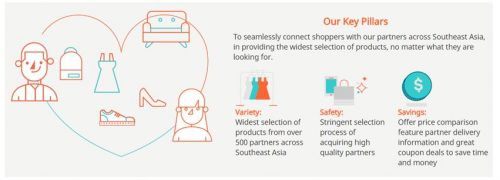
And their Key Pillars:
To seamlessly connect shoppers with our partners across Southeast Asia, in providing the widest selection of products in the most secure and cost efficient manner possible.
Screenshot of iPrice Group’s Key Pillars
With the mission statement and key pillars as the foundation of the initiative, key messages (though indirect in the initial announcement) the price comparison website aimed to convey was:
iPrice welcomes the entry of Amazon into the region as it would positively benefit the ecommerce industry in Singapore and the rest of the region
Aim of the initiative was not to deceive audiences but rather a creative visualization of Amazon in Southeast Asia and April Fool’s day was the most suitable holiday for us to share this visualization.
To position iPrice Group as a forward thinking, innovative, creative and fun startup.
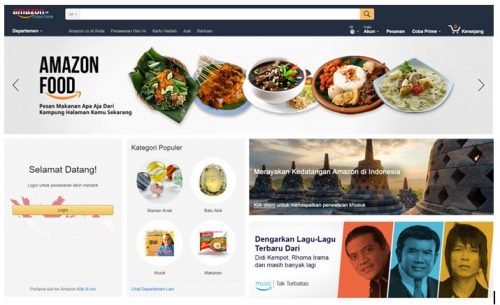
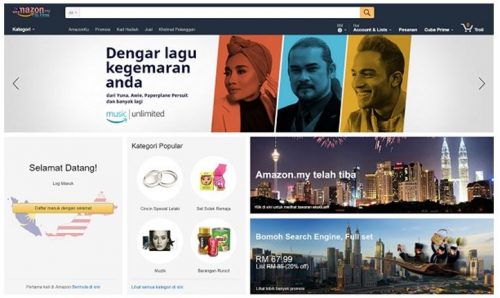
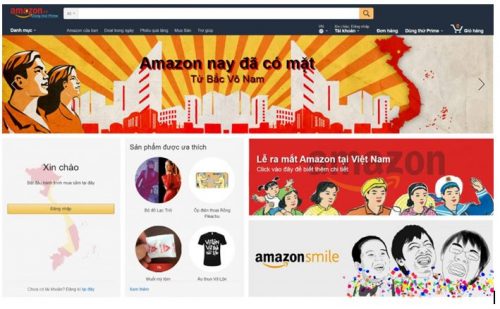
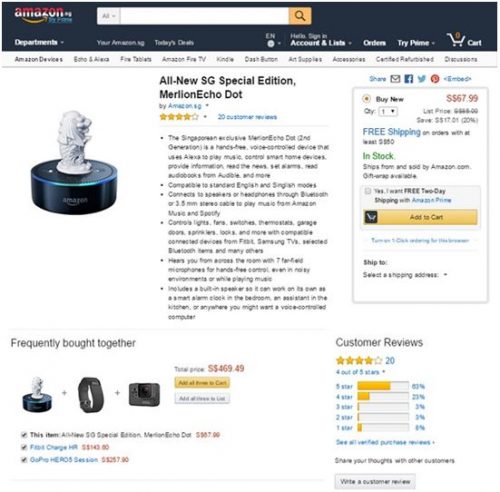
With localized content and humor, iPrice created the following screenshots and disseminated it to members of media. Click here to view their press announcements: Malaysia, Singapore, Indonesia, Vietnam, Thailand and The Philippines.
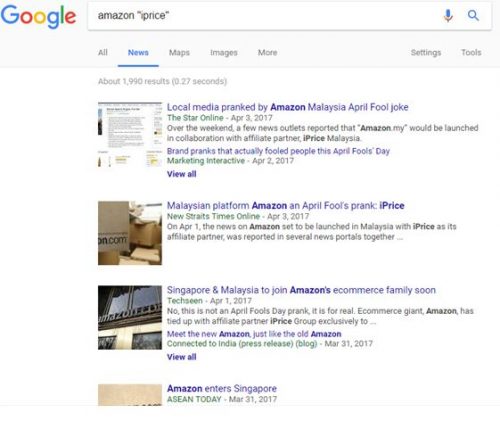
A screenshot of Google News Search Result (searched on 10th April 2017)
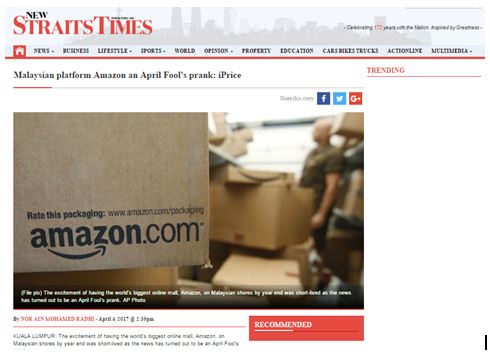
Not to mention that the initiative garnered the attention of The Star and New Straits Times where they interviewed a spokesperson from iPrice for a follow up story.
Screenshot of New Straits Times article on iPrice’s April Fool’s Initiative
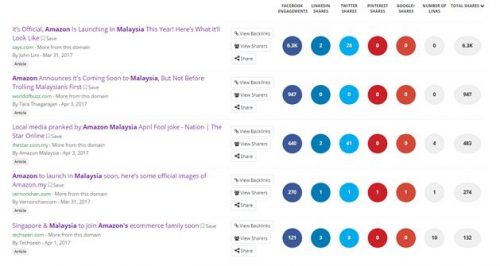
Using Buzzsumo’s Content Research, the April Fool’s initiative garnered more than 8.3k social media shares just within 4 days in Malaysia. In the following days, the e-commerce received thousands more social media engagements across social media channels such as Facebook, Twitter and LinkedIn across the region.
Search result of “amazon Malaysia”
Conclusion
An important key learning was that relevancy and creativity is fuel to virality. Brands and agencies who has tried to create viral content that isn’t endearing has never been successful. As seen in the screenshot and press announcements, iPrice was able to garner a large span of attention within a short period of time as they created content which mattered to consumers.
Timeliness and context was an important factor as well. However, this was not without risks. Certain groups of consumers and members of media was not satisfied with the ‘fake news’ produced by iPrice. A key learning from this was to never send such materials to publications who does not have a history of covering lifestyle topics, April Fool’s content or non-serious content.
Most importantly, above all else, companies who are looking to create ‘out of the box’ content must first question themselves how this can help achieve their internal goals and communicate their desired message to a wider range of audience. Once all these boxes are checked and when your company is willing to take a risk, go for it and you might be surprised what you could achieve.
Like what you see? Have a better case study to show how an ‘out of the box’ media initiative can be successful? Share with me in the comments!
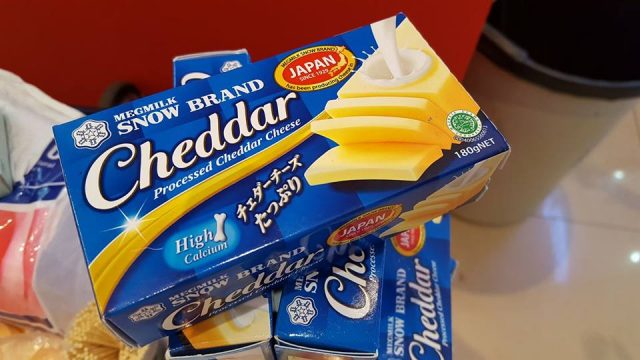
Japan’s Megmilk Snow Brand plans to export its Megmilk Snow Brand Processed Cheddar Cheese to Malaysia, said Yoshinari Furukawa, international department, international business group at Megmilk Snow Brand Co., Ltd. speaking to the author at FHI 2017 (Food and Hotel Indonesia). The company, the number one cheese manufacturer in Japan, is in the process of applying approval from the Malaysian authorities to export its cheese.
The Megmilk Snow Brand Processed Cheddar Cheese (180g) has a shelf life of 12 months. The storage condition is to be kept refrigerated at 0°C to 10°C. It can be used for topping, filling, mixing and snacking. The company plans to expand its Japanese premium taste cheese into other Asian countries.
The cheese is manufactured in Indonesia by PT Megmilk Snow Brand Indonesia, a joint venture with local Rodamas Group.
Growing market share in retail cheese market
Megmilk Snow Brand claims its market share in the Indonesian retail cheese market is growing rapidly, rising from just 2.9% in 2014 to 11.3% in 2015 and subsequently to 18.1%, according to research data from Nielsen. The key growth factors are growing application of cheese and distribution.
The company’s latest product is the MEGcheddar Slice launched in the fourth quarter of 2016.
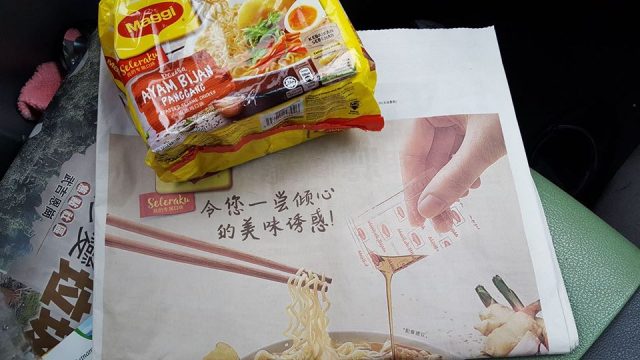
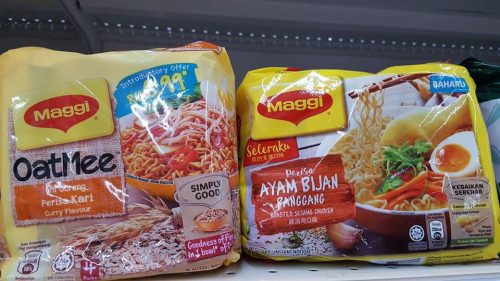
Nestle has added a new variant to its Maggi instant noodle in Malaysia. The aroma from the sesame oil is the focus of the new Maggi Roasted Sesame Chicken.
A lot of North Asian instant noodles such as those from Nissin and Doll use sesame oil for flavouring. The use of sesame oil in instant noodle reflects the popularity of sesame oil in the local culinary practices in North Asia including China, Hong Kong, Taiwan and Japan. In Malaysia, sesame oil is mainly used in Chinese cooking.
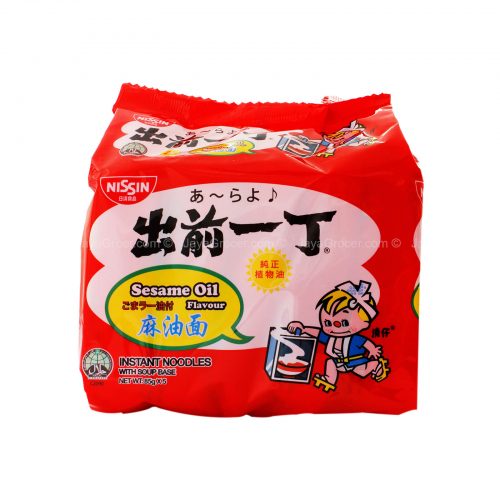
Image above: Nissin Instant Noodles with Sesame Oil Flavour Soup Base
When it comes to the ingredients, Maggi Roasted Sesame Chicken contains real chicken essence made from chicken that has been boiled over a long period. The noodle is also springier and thicker.
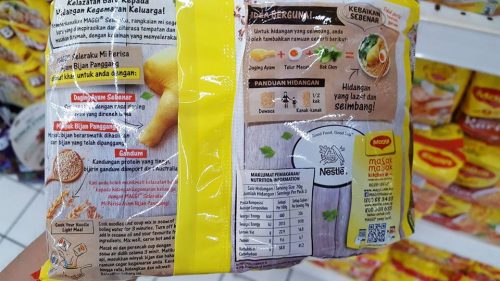
The back of the packaging has description about the ingredients and serving suggestion to make the meal more nutritious by adding egg, chicken and vegetable.
The promotional price is RM 4.79 (USD 1.1) for a bag containing 5 packs each weighing 70g.
Maggi OatMee (on the right) was the previous innovation. The noodle is made from oat has an acquired taste and does not have a mass market appeal. Unlike Maggi OatMee, the Maggi Roasted Sesame Chicken tastes more like the usual Maggi instant noodle, making it more acceptable by consumers. Price wise, the Maggi Roasted Sesame Chicken falls within the price range of the other Maggi 2-minute instant noodle.
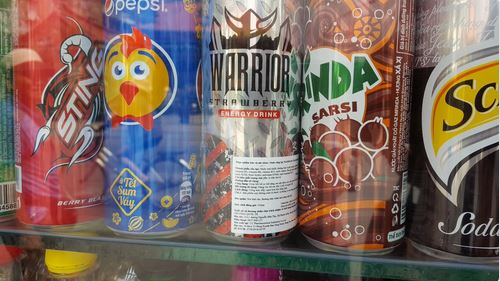
Image of Warrior selling in Vietnam taken by the author in March 2017
Launched in Malaysia
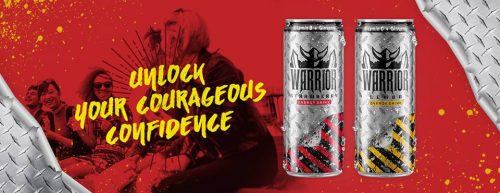
T.C. Pharmaceutical Industries Co., Ltd. has recently launched the Warrior sparkling energy drink in Malaysia on 31 March 2017 through Allexcel. The launch in Malaysia is part of a plan to roll out the sparkling energy drink in Southeast Asia.
Allexcel has rights for Malaysia, Singapore and Brunei. Jate Samathivathanachai, Director of Strategy & Investments, Allexcel Trading Sdn. Bhd. said in an interview with the author that the company will seek those markets [Malaysia, Singapore and Brunei] out slowly.
Vietnam is the first market for Warrior
T.C. Pharmaceutical Industries, the brand owner, is getting Warrior into the rest of Indochina. Vietnam is the first market for the Warrior sparkling energy drink. In Vietnam, the company distributes the product through the general trade (GT) first before moving into the modern trade (MT), said Pornsak Sermwitwatwong, Senior Manager, Business Development T.C. Pharmaceutical Industries Bangkok, Thailand.
It is therefore not surprising to find that the major convenience store chains like Circle K as well as the modern supermarkets like Co.Op and Giant are still not carrying Warrior in their stores. The author only saw Warrior selling by roadside vendors when visiting Ho Chi Minh City in March 2017.
Available in all channels in Malaysia
In Malaysia, the company has made available Warrior concurrently in the modern trade and general trade, explained Pornsak. He added that the Warrior sparkling energy drink is now in all the Indochina countries including in Myanmar and Cambodia.
Pioneer in new sparkling energy drink category
Pornsak also said that the Warrior sparkling energy drink is not competing against the regular energy drink like Carabao. Instead, it operates in the new sparkling energy segment, which makes it a pioneer in the sparkling energy category in the region.
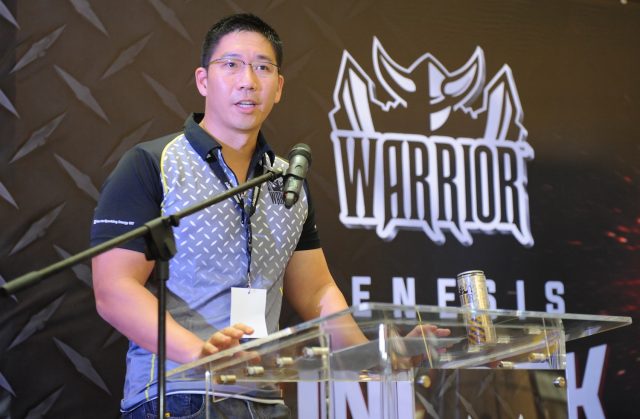
Jate Samathivathanachai, Director of Strategy & Investments, Allexcel Trading Sdn. Bhd. sharing the story behind the dynamic brand, and officially launching Warrior Sparkling Energy Drink in Malaysia at Sunway Pyramid
During the launch of the Warrior energy drink at Sunway Pyramid on 31 March 2017, the author had a chance to speak to Jate Samathivathanachai, Director of Strategy & Investments at Allexcel, about the new product and the company’s strategies.
Warrior is not just for millennials
According to Jate, the Warrior energy drink is targeting at 18- to 25-year-olds, also known as the millennial generation. However, he is happy if others drink it because he believes everyone needs energy.
Confidence booster
He cited travel, school, job, friends and social media as some of the things that keep people busy. Warrior is a drink that helps consumers achieve what they want to achieve not only the physical aspect but also mental as well.
The ingredients in the drink help people feel reinvigorated and give them a sense of confidence to ace whatever they need to ace. Whether it is a job interview, asking a girl out, learning a new language or making a decision, the Warrior energy drink gives consumers the confidence to do that, said Jate.
Complements each other
When asked if Warrior will cannabalise share in the existing Red Bull segment, Jate said Red Bull and Warrior complement each other. He cited the example of consumers who do not like fizzy drink can still continue to drink Red Bull.
Not launching sugar free variant anytime soon
Allexcel does not have plans to launch a sugar free energy drink at the moment. The company will see how the new Warrior energy drink performs in the market. At some point, if the company reckons there is a need for sugar free, the company will definitely consider that. Jate feels that to be honest, sugar free or less sugar does not do that well in Malaysia as Malaysians generally have a sweet tooth.
Developing a new category
Allexcel is trying to develop a new category and that is the sparkling energy drink segment. Looking at the broader picture, Warrior competes with a few adjacent categories including carbonated soft drinks but he believes Warrior is a little better than carbonated soft drinks. This is because the drink contains vitamins and ginseng, which makes Warrior having a better value proposition than carbonated soft drinks and tastes great as well.
No plans to have PET packaging for Warrior
When asked if Allexcel has plans to introduce Warrior in PET bottle, Jate said they will go with the can at this point. Warrior’s design is metallic, cool and sharp and if they put it into a bottle, you will not have the same effect.
The inner warrior
The logo is chosen to represent the inner warrior in a person. According to Jate, everyone has an innate warrior and the energy drink aims to help people to bring that out and fight for anything that they want to achieve.
On natural energy drink
Allexcel is definitely considering the natural energy drink segment but at this point the company will go with what they have. The Warrior energy drink has real lemon juice. Jate said the natural ingredients part is definitely on the table but will stick with Warrior to see how it goes.
To roll Warrior out in Southeast Asia
Image of Warrior selling in Vietnam above was taken by the author in March 2017
Vietnam is Warrior’s first market. Warrior will definitely roll out in Southeast Asia. Allexcel has rights for Malaysia, Singapore and Brunei. The company will seek those out slowly. T.C. Pharmaceutical Industries, the brand owner, will slowly try to get Warrior into the rest of Indochina.
Low per capita consumption but with potential
Malaysia has a very low per capita consumption of energy drink at 1.3 litres per year, said Jate citing Canadean data. The per capita consumption in Vietnam is three to four times larger than Malaysia, which shows there is still a large potential in Malaysia.
The key task is to education consumers a little bit more as Malaysian consumers are not 100% clear on the value proposition of energy drinks and what the ingredients do. The company will need to educate consumers on the ingredients and what they can do to them from a physical and psychological aspects. Red Bull has been in Malaysia since 1991.
The key consumer segments
Allexcel uses different SKUs for different segments. The original gold can is for frequent drinkers who need the power. The 25% less sugar is for the more health conscious and people who like it less sweet, targeting the youths and the white collars.
Differences between Red Bull and Red Bull (Product of Europe)
According to Jate, Red Bull (Product of Europe) is the same brand but with a different positioning and slightly different SKU. They are more lifestyle as they have the F1 and the air race. Red Bull is happy to coexist with them as they sort of have the same owners. Red Bull (Product of Europe) is premium and lifestyle focus. Consumers can drink Red Bull on a frequent basis but if they go to party and look good, they can drink Red Bull (Product of Europe), said Jate.
Red Bull, Red Bull (Product of Europe) have different marketing focus
Red Bull (Product of Europe) is more into extreme sports. On the other hand, Red Bull’s marketing activities are more localised, focusing on futsal, which is big for the brand, as well as other local activities like street basketball. Red Bull does local events because Red Bull Malaysia caters to the local population and will leave extreme sports to Red Bull (Product of Europe).
Red Bull to grow e-sports
E-sports is one of the huge initiatives of Red Bull in Malaysia and it was the first time the company had this event in the country in 2016. Jate said the company had a very successful season one. He said Red Bull makes gamers better gamers because they are playing games for seven hours at a time and they need the mental endurance. So Red Bull is an enabling tool for them to become better gamers.
Red Bull has the portal with game related news and lifestyle as well as a tournament hub. The company organised three different tournaments in 2016 including FIFA, Counter-Strike: Global Offensive (CS:GO) and Dota 2. The esport initiative serves as a platform for Malaysian games to compete with each other to get better and this would probably elevate their play to the international level.
Marketing plans for Warrior
Warrior is only three months old. The main task is to get the word out there through roadshows to get people understand what Warrior is about and to get them to taste the drink.
The roadshow will make its way down to Johor Baru from April 29 to 30 and Penang from May 20 to 21.
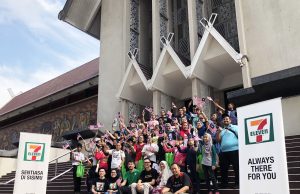
Kuala Lumpur, 6 September 2018 – In the morning of Malaysia’s 61st National Day, 7-Eleven Malaysia took the opportunity to celebrate the nation’s significant...