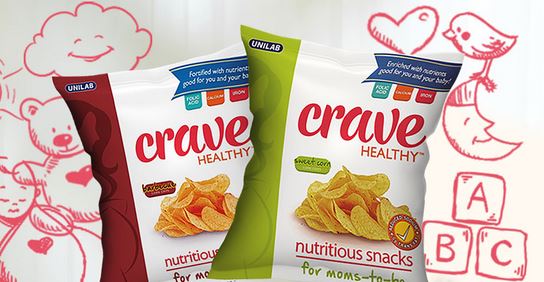
Unilab, the manufacturer of prescription and consumer health products in the Philippines, is addressing nutrition deficit in pregnant mothers and meeting their craving needs with the new Crave Healthy.
First fortified snack product for pregnant women
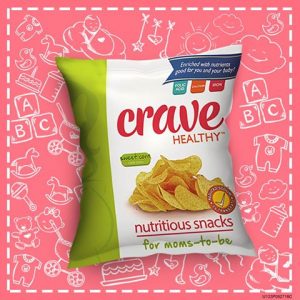
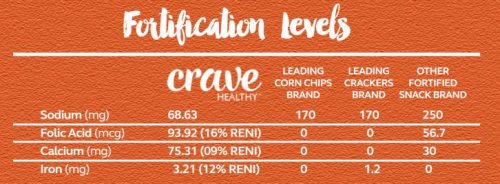
Crave Healthy is a corn chip. The company claims it is the ‘first snack product in the Philippines that’s specially developed by doctors and nutritionists for pregnant women.’ It contains iron, calcium and folic acid and is low in sodium.
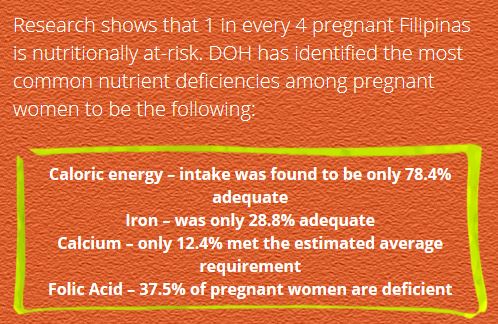
According to Unilab, the real reason for coming up with such a product is 1 out of 4 pregnant Filipinos are not getting the right nutrients.
Unilab is taking a big leap into the healthy snacking segment with Crave Healthy for pregnant mothers. Food for mothers-to-be usually comes in the form of home prepared food that is burst with nutrition.
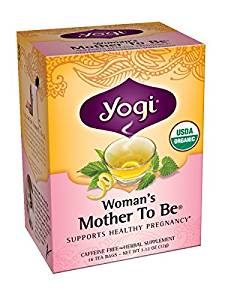
Few packaged goods company will have the desire to introduce packaged food specially for pregnant mothers because this would put themselves in a difficult situation ethically. Even if they do so, it usually comes in products that are seen less decadent like Yogi tea.
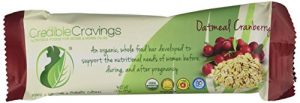
Even if the food is to satisfy the cravings of mothers-to-be, it will be in the form of a healthy snack bar like CredibleCravings probiotic perinatal food bar fueled by probiotic GanedenBC30. The range includes Chocolate, Lemon Ginger Greens and Oatmeal Cranberry. The bars are made from natural ingredients including organic fruits and veggies and sprouted seeds.
Almost none is in the from of chips, which are seen as bad for health and could affect the health of unborn babies. Perhaps the fortified appeal of Unilab’s Crave Healthy is enough to assure pregnant mothers in the Philippines about its safety to warrant a small bite to satisfy their craving.
These days, if you try to get yourself a can of RTD coffee at 7-Eleven Malaysia, you will be greeted with the Wonda Coffee song. The song goes like this “Wonda coffee, enjoy a can of Wonda coffee today.” This is push marketing at point of sale (POS).
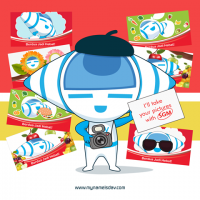
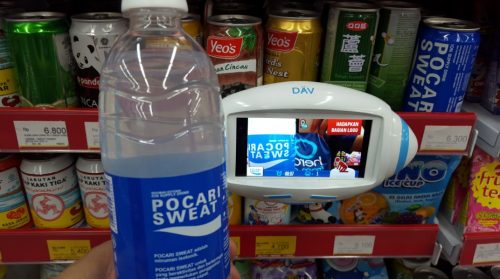
In Indonesia, the interactive marketing at POS comes in the form of DAV, also known as the world’s first measurable, one-on-one interactive media placement. DAV (Digital Avatar) devices are available at Alfamart, Alfamidi and Lawson. As of 19 Oct 2016, the number of interactions has reached 1,646,844. The DAV device first appeared on 14 August 2015.
DAV in action with SGM Eksplor milk powder in 2016.
https://www.youtube.com/watch?v=qq1_6jedFjg
These two forms of interactions at POS have made shopping at convenience stores more fun. However, more creative content is needed to sustain consumer interest in order to be sustainable in the long run as consumers have a short attention span.
Product recalled on Saturday but most people only aware on Sunday
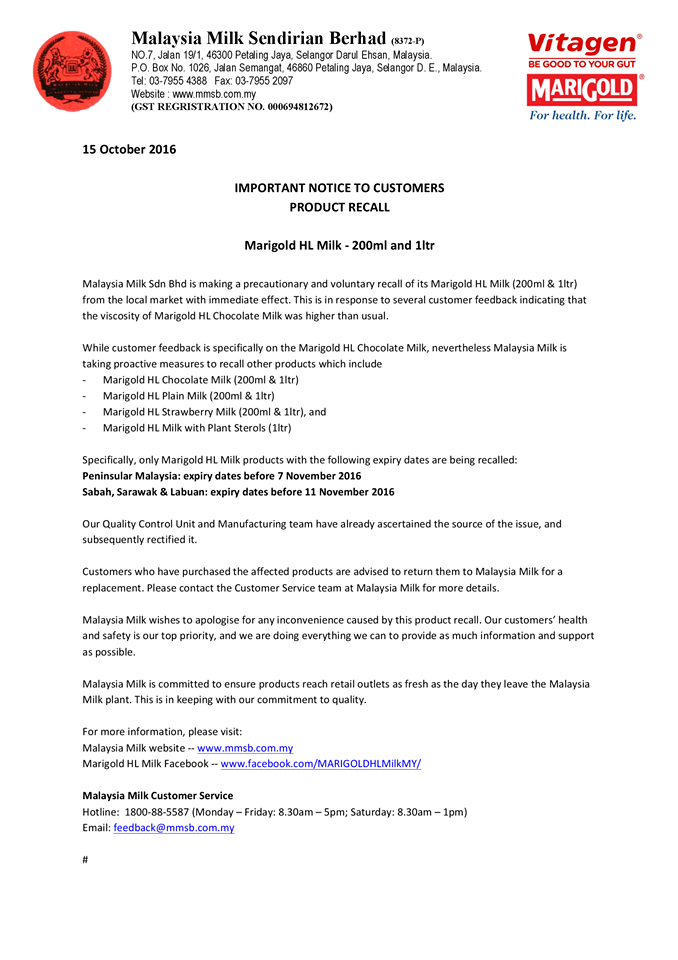
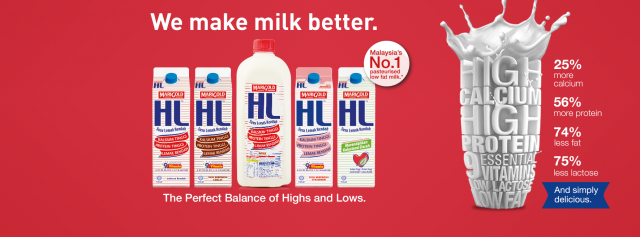
Malaysia Milk Sdn Bhd announced the recall of Marigold HL Milk (200ml and 1L) from the Malaysia market with immediate effect on 15 November 2016 (Saturday). However, most of the customers only became aware on Sunday. The hotline was closed on Sunday. It only operates Monday to Friday (8.30am to 5pm) and Saturday (8.30am to 1pm).
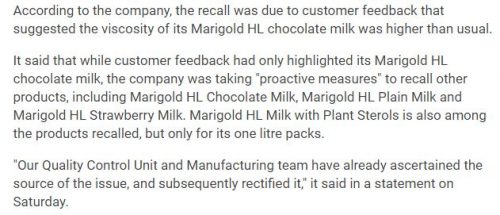
The company found issue with the chocolate milk but the recall also included other plain milk as a precautionary move.
Higher-than-usual viscosity but nobody understands
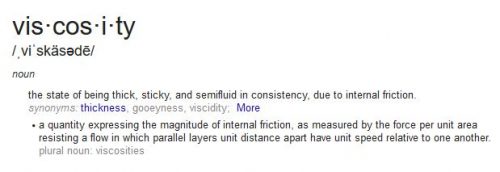
The product recall was in response to “several customer feedback indicating the viscosity of Marigold HL Milk was higher than usual.” The explanation unfortunately is not relevant and does not resonate with ordinary Malaysians. They do not know what is “viscosity.” Google search does not help either.
Essentially, nobody except those inside the dairy industry, knows exactly what has happened to Marigold HL Milk. Based on the messages left by consumers on Marigold HL Milk Facebook page, they were unclear about the effect of this issue on their health. Bryan Ng asked if it would be fatal, while Ng inquired about the side effects.
Delayed response
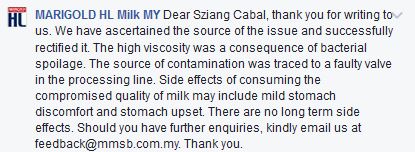
Both Ng and Bryan posted the queries near midnight on 16 October (Sunday). Malaysia Milk only made public its reply at around 6pm the following day on Monday (17 October).
Most of the official replies to the customer Facebook queries that can be publicly seen were made on Monday at around 6-7pm.
Bacterial spoilage as the real reason – 17 October
The real reason, according to Malaysia Milk, is bacterial spoilage, which causes high viscosity. Unfortunately, this was not explained in the official statement dated 15 October 2016 even though it says the team has ‘ascertained’ the issue. The company should have done more to improve transparency by issuing another press statement on 17 October 2016 to explain about the bacterial spoilage.
Mass media repeating the official line
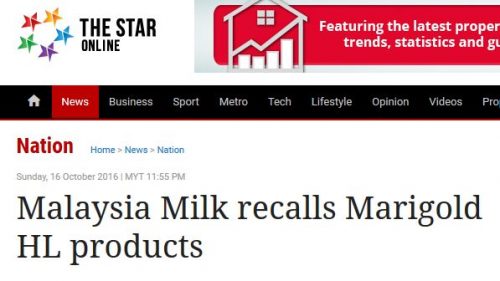
The first reaction by the mass media including The Star, Sinar Harian, Sin Chew Jit Poh and New Straits Times on 16 October 2016 was to repeat the official statement about high viscosity and the recall.
Mentioning only high viscosity – 16 October Sunday 11.55pm
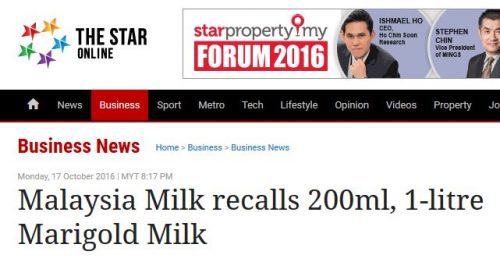
Confirmed about the bacterial contamination – 17 October Monday 8.17pm
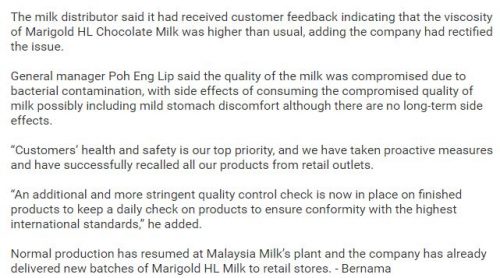
The official reason, bacterial contamination, was only reported the next day by Bernama, The Malay Mail Online, The Star (Bernama article), Singapore’s Straits Times, Singapore’s Channel 8 News and The Borneo Post (Bernama article) citing Malaysia Milk General Manager Poh Eng Lip that “the quality of the milk was compromised due to bacterial contamination, with side effects of consuming the compromised quality of milk possibly including mild stomach discomfort although there are no long-term side effects.”
Consumers confused about the expiry date
Most of the messages on the Marigold HL Milk Facebook page were about which products with their expiry date that were entitled for replacement. According to the official statement, only Marigold HL Milk with the following expiry dates are being recalled:
1.) Peninsular Malaysia: Expiry dates before 7 November 2016
2.) Sabah and Sarawak: Expiry dates before 11 November 2016
On-the-ground look on the 2nd day of the recall
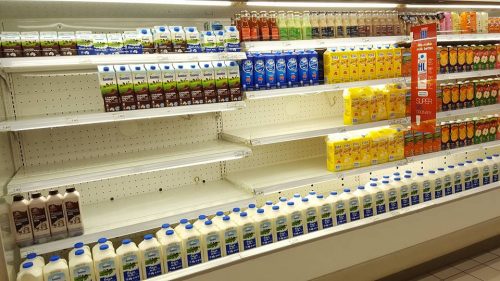
All the Marigold HL Milk was taken off the shelves at Cold Storage, Jaya One (image below was taken on 17 October 2016). This shows retailers have taken prompt actions to remove the affected products off their shelves.
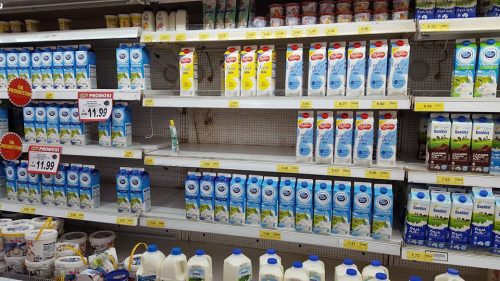
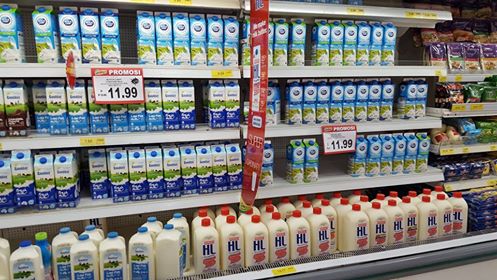
At Giant Taman Connaught, the Marigold HL 2 litre milk was still available as it was not part of the recall (image below).
Key takeaway
The company has been forthcoming in issuing the recall of not only the affected chocolate flavoured milk but also other plain milk including those with plant sterols.
However, the official statement on 15 October 2016 did not instill confidence because it did not explain the impact of drinking milk with higher-than-usual viscosity. The official statement by Malaysia Milk on 15 October 2016 can be interpreted as an attempt by the company to use technical term for damage control. This comes even though it has ascertained the source of the issue. The company eventually explained in detail about the negative impact of drinking milk with high viscosity on 17 October 2016 through the media without accompanied by another official press release, a move seen to mitigate the negative impact on the brand. (See the updates below).
Now the hard part is to regain consumer confidence and handling disgruntled consumers with compensation.
Updates on 19 October 2016:
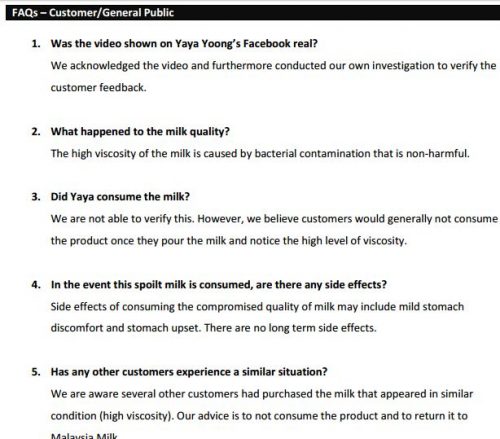
It appears there is a second official statement but it is not available on Malaysia Milk Sdn Bhd website/Marigold HL Milk MY Facebook page. There is also a small FAQ at the end off the 1st official statement. The FAQ explains what happens when you drink milk with high viscosity.
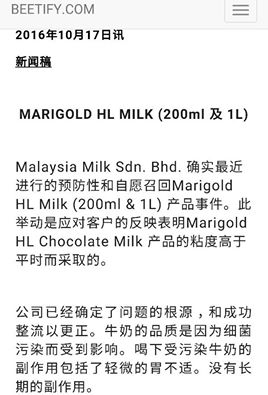
Here is the second official statement in Mandarin. It mentions about the contamination issue and is the press release used by the media for their reports on 17 Oct 2016. The question is why did the company not make this available to the public?
In September 2016, Ah Huat White Coffee launched an innovative advertisement in Malaysia. The advertisement developed by JT Media featured Ah Niu, a local singer who is also the brand ambassador, giving unsuspected WeChat/Line users a call.
Once the phone is answered, Ah Niu (literally translated means the cow in Mandarin) sings his iconic Ah Huat white coffee song, which is well known among the ethnic Chinese community in Malaysia. This is followed by a sing along session where you are invited to sing too.
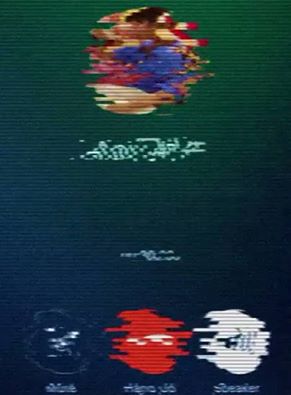
All of the sudden, the image on the smartphone becomes fuzzy.
This time, Ah Niu appears in person on the screen playing the song with his friends.
Then comes the surprising part, while singing Ah Niu moves closer to your screen and suddenly “cracks” appears on your smartphone screen and this caught many by surprise.
Was my mobile device screen really ‘cracked’? nope, it was just a prank by Ah Niu. At the end, the viewers are asked to share this clip with other people to bring laughter to everyone.
There was generally positive feedback about the clip. Most of the people said it was innovative and were surprised to ‘receive’ a call from Ah Niu. They also added that they would share it with their friends and family members, which is what Power Root, the maker of Ah Huat White Coffee, hopes to achieve to make the clip viral.
In Indonesia, Danone has recently issued a directive to prohibit toko (shop) owners that were selling Aqua bottled water from concurrently selling Le Minerale, a competitor product by PT Tirta Fresindo Jaya, a unit of Mayora Indah. Retailers in Jabodetabek (Jakarta-Bogor-Depok-Tangerang-Bekasi) and other areas had voiced their outcry over the anti-competitive move by Danone.
Losing Star Outlet status
According to the affected merchants, Star Outlet (SO) defined as those selling 5,000 gallons and 500 cartons per month, will see their SO status downgraded to the wholesaler or even retailer status thus losing the benefits as an SO outlet.
Mayora Indah launched Le Minerale in Q1 2015
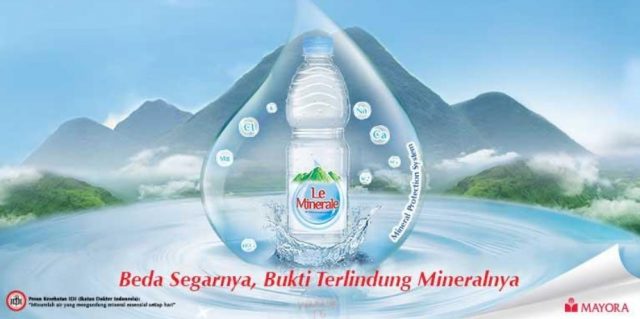
Mayora Indah, known for its Kopiko coffee, introduced Le Minerale in the first quarter of 2015 to enter the lucrative and fast-growing bottled water market currently dominated by Aqua. In Indonesia, Aqua is the name commonly used to refer to bottled mineral water regardless of the brand. This illustrates the domination of Aqua in the market.
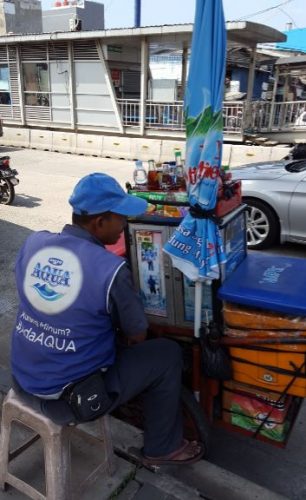
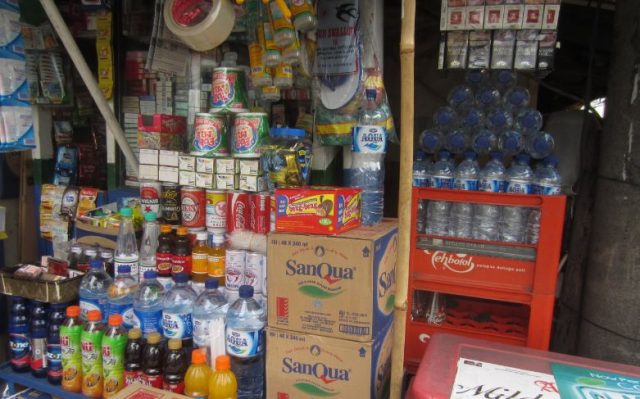
Latest move by Danone would impact this vendor in Jakarta who sells both Aqua and Le Minerale. Image above was taken by the author in August 2016.
Le Minerale has a bigger presence in the traditional trade such as toko and warung than in the modern trade. This is why the latest move will impact Le Minerale as it is threatening its key on-the-go distribution points. Within the modern trade, Le Minerale is rarely stocked by convenience stores and minimarts but can be mostly found in bigger stores like hypermarkets and supermarkets, according to store checks carried out in August 2016.
Mayora issues a summon against Aqua manufacturer
Tirta Fresindo Jaya issued Tirta Investama, the maker of Aqua, with a somasi (summon) acting on complains by Le Minerale sellers of alleged intimidation by Tirta Investama. The summon appeared in major newspapers claiming unhealthy competition by the maker of the Aqua bottled water.
Competition watchdog responded swiftly
The Business Competition Supervisory Commission (KPPU) has taken up the case and met with representatives from Tirta Fresindo Jaya on 7 October 2016. According to the legal representative from Tirta Fresindo Jaya, Suyanto Simalongo Patria, the quick action by the KPPU has resulted in a change in strategy by Tirta Investama. Now, they are using gifts, apologies and other more persuasive methods to encourage retailers not to sell Le Minerale products.
If the allegation proves to be true, Aqua, which dominates the bottled water market in Indonesia, will need to keep competitors at bay through a more ethical approach. This incidence also shows even an FMCG leader like Mayora Indah is facing challenges leveraging its popular products like Kopiko and Energen to make Le Minerale available in most distribution points.
Latest update
In December 2017, the country’s anti-monopoly agency has fined Tirta Investama IDR 13.85 billion (USD 1 million) and PT Balina Agung Perkasa, the distributor of mineral water Aqua, IDR 6.29 billion for unfair business practices.
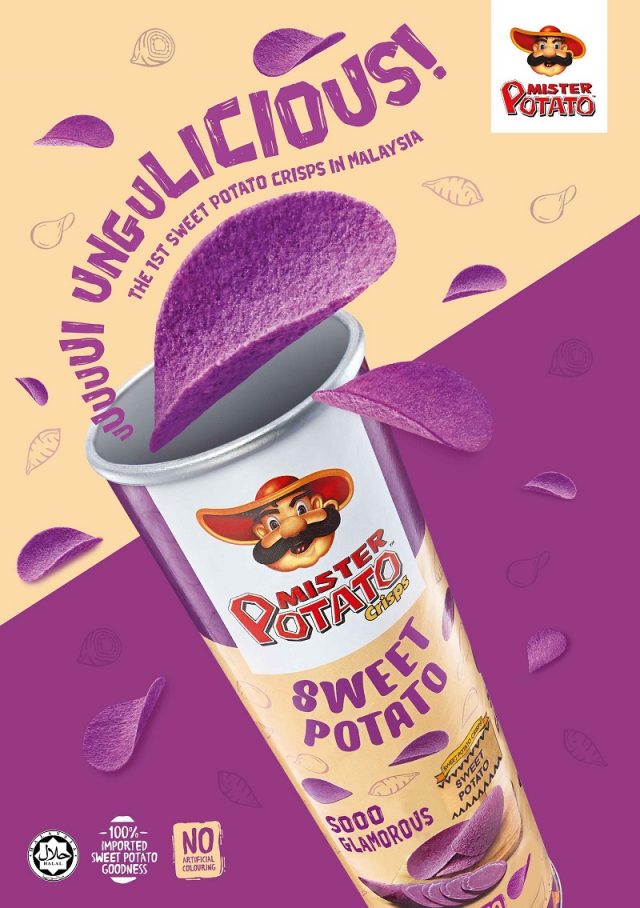
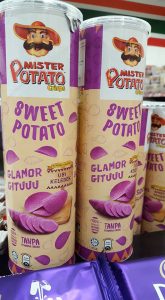
Mamee Double-Decker is betting on better-for-you crisps with the introduction of Mister Potato Sweet Potato in Malaysia. This follows the product’s earlier launch in Thailand in September 2016.
Available in Thailand
In Thailand, the Mister Potato Sweet Potato in 100g is priced at THB 55 (USD 1.58), while a 45g size is sold at THB 25. Mister Potato Sweet Potato is available at 7-Eleven, FamilyMart, Lawson and Tops in the form of on-the-go canister.
Free from
Mister Potato Sweet Potato Crisp is free from GMO, trans fat, artificial colouring and cholesterol. It is made from 100% imported sweet potatoes
Exhibited at Thaifex and SIAL Paris 2016
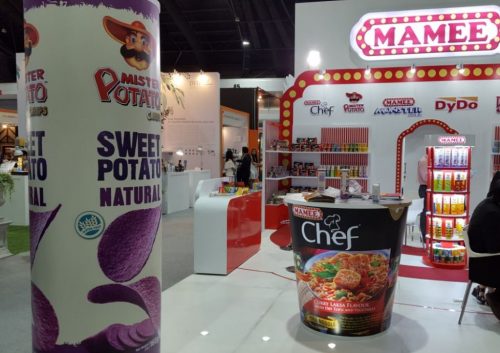
Mister Potato Sweet Potato was highlighted at Thaifex 2016 in the form of a giant canister. Image above was taken by the author. Thaifex 2016 was held in Bangkok on 25-29 May 2016. Mamee will also be showcasing Mister Potato Sweet Potato during the upcoming SIAL Paris on 16-20 October 2016. Exhibiting Mister Potato Sweet Potato at international trade events shows Mamee is betting big on the new sweet potato crisps to ride the global healthy snacking trend.
Now in Malaysia
The Mister Potato Sweet Potato is available at 7-Eleven at a price of RM 6.30 (USD 1.50), the same price as the other Mister Potato range made from potato. The sweet potato crisp is manufactured in Malaysia. The key ingredients are purple sweet potato powder, dehydrated potato flakes and tapioca starch.
Tong Garden’s NOI is closest competitor
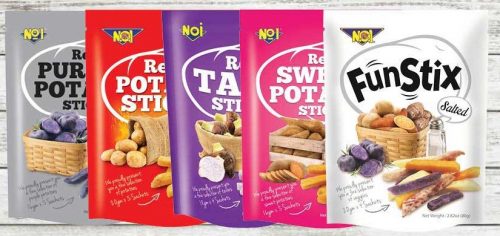
Tong Garden’s NOI range is the closest competitor but it is in the form of a stick in pouch and not in a canister.
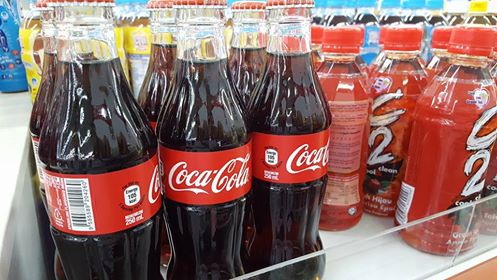
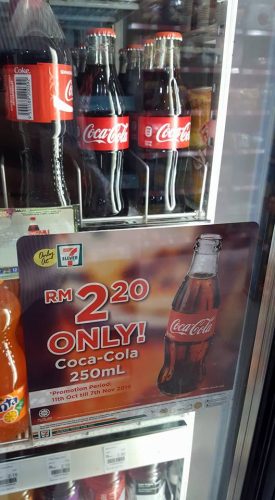
Coca-Cola in glass bottle has reappeared once more in Malaysia. The question now is this glass bottle marketed as a collectible or is it the same like other PET/can packaging meant for general consumption?
Failed experiment with foodservice channel
Back in 2013, Coca-Cola in RGB (returnable glass bottle) was introduced for the foodservice channel. The 250ml bottle, then priced at RM 1.20, was subsequently discontinued with the likely reason being the choice of glass packaging did not resonate well with foodservice patrons.
Made in Thailand
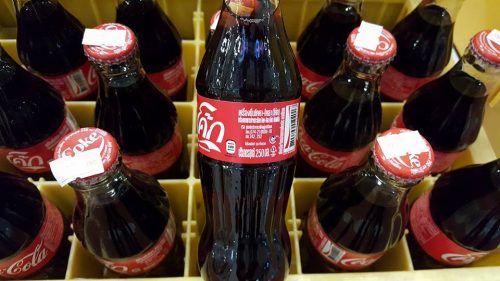
The interesting thing about the re-appearance of the non-returnable glass bottle (NRGB) is that it has the same volume of 250ml as the one that was previous sold in the foodservice channel. However, it is now made in Thailand by Thainamthip Manufacturing Limited, the official Thai bottler of Coca-Cola Co range of products.
In Malaysia, the 250ml is distributed by Coca-Cola Refreshments Malaysia Sdn Bhd. In Singapore, it is distributed by Coca-Cola Singapore Beverages Ptd Ltd, which means that the NRGB bottle is also being marketed in the southern neighbour.
The Coca-Cola NRGB bottle is selling at 7-Eleven at a promotional price of RM 2.20 (USD 0.52) per bottle. The promotion period runs from 11 October 2016 to 7 November 2016. The normal price is RM 4.80. As a comparison, the same product made in Thailand and sold in Malaysia as a collectible item comes with a price of RM 3.90 (image above was taken by the author). At 7-Eleven Malaysia, the 500ml Coca-Cola in PET bottle is retailed at RM 2.80.
NRGB Coca-Cola only THB 10 in Thailand
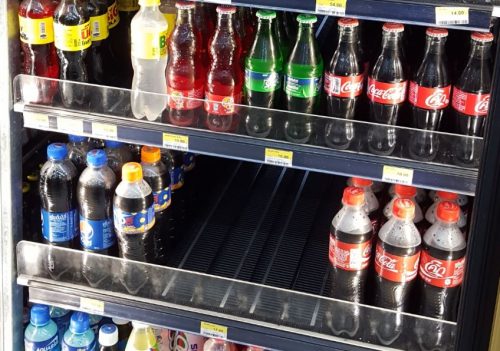
In Thailand, the NRGB Coca-Cola comes with the cheap price tag of THB 10 compared with THB 17 for the Coca-Cola in the PET bottle. This demonstrates NRGB is to make Coca-Cola affordable to price-sensitive consumers in Thailand. (The image above was taken by the author in Thailand’s 7-11)
Collectibles?
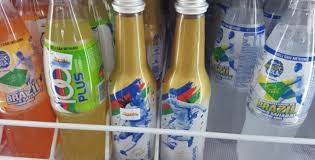
The 250ml NRGB in Malaysia is more likely to be positioned as a nostalgic item worthy of collecting by Coca-Cola fans as the normal price of the NRGB is at RM 4.80, much higher than those in PET or can. F&N has adopted a similar approach for its 100Plus selling it for the first time in glass bottle and with a premium price. Production overrun has meant that the limited-edition 100Plus is still available on shelves, which is something Coca-Cola will need to take into consideration for its NRGB version.
Indonesia has always been the pioneer in embracing coconut flavour in food and drinks in the region. Sinar Sosro introduced what was known as the first coconut flavoured carbonated soft drink Creso.
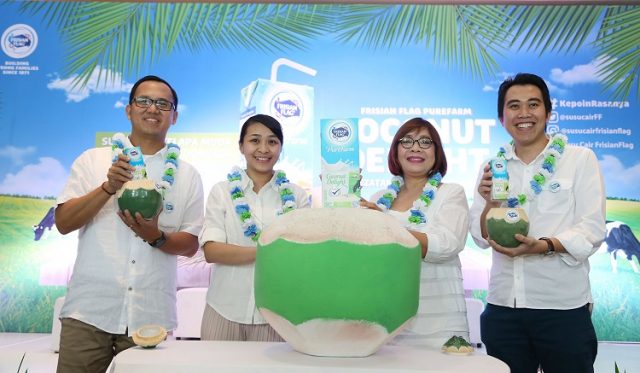
Now, FrieslandCampina’s local unit PT Frisian Flag Indonesia has launched the country’s first coconut flavoured UHT milk Frisian Flag Purefarm Coconut Delight. The new UHT milk contains 7 vitamins and 3 minerals.
The young coconut flavoured UHT milk with coconut water extract is to reconnect with young adults between the ages of 18 and 30 to get them to drink more milk. This is a segment that has access to a lot of beverage options. Flavour plays a key role in getting them excited about the milk category and this is what Indomilk has done with the latest banana flavoured UHT milk. Expect to see more flavour innovation in the Indonesian milk category going forward.
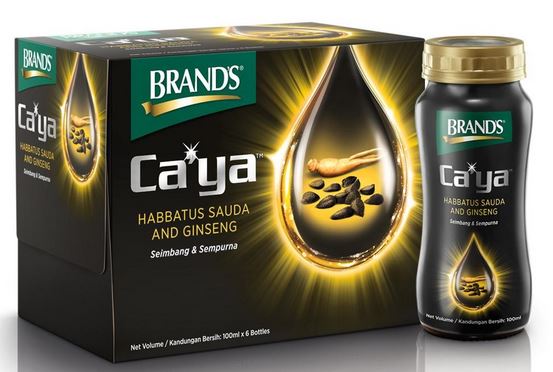
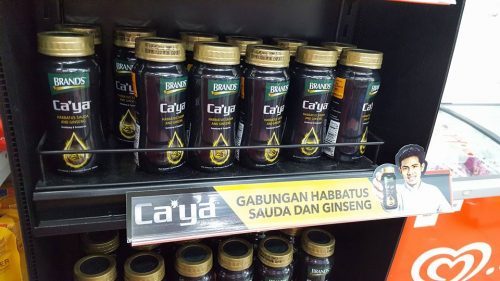
Yeo Hiap Seng (Malaysia) Berhad (Yeo’s) has been appointed by Cerebos Malaysia as the national distributor for Ca’ya, a health beverage with ginseng and habbatus sauda. The drink is described by Cerebos as a beverage that delivers sustainable energy and long-term vitality for men. Yeo’s will be distributing Ca’ya from October 2016.
New on-the-go strategy
The appointment of Yeo’s comes as Cerebos is embarking on a new strategy for Ca’ya. The new approach is to sell the health drink by ‘as individual bottles and placing them in chillers for immediate consumption,’ said Vice President and General Manager, Cerebos Malaysia, Koh Joo Siang.
Yeo’s will bring to the partnership 40,000 distribution points including provision shops, convenience stores and eateries. Ca’ya will be sold in chilled individual bottles for immediate consumption. This will represent a move away from at-home consumption usually associated with traditional health supplements such as Cerebos Brand’s Essence of Chicken.
At the moment, Ca’ya is sold in a 6-bottle pack (RM 34.80) in supermarkets, hypermarkets and pharmacies, while the individual bottle is available at selected convenience stores at RM 5.80 per bottle.
Natural energy drink as a selling point
Cerebos claims Ca’ya is a natural energy drink and has high hopes for its success. According to the press release, Cerebos aims to achieve a 10% market share in the energy drink category in the third year. This will put Ca’ya in direct competition with established energy drinks such as Red Bull and Power Root.
Natural energy drink becoming global trend
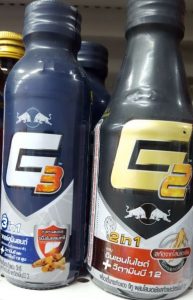
Globally, energy drinks are going natural. In Thailand, Red Bull has introduced Red Bull G2 with ginsenoside featuring ginseng extract and Red Bull G3 with curcuminoids featuring turmeric. (image below) These natural energy drinks can be found in convenience stores and both are priced at THB 15 each.
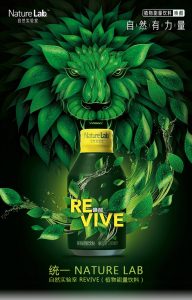
In China, Uni-President has the Nature Lab (自然实验室) series comprising Revive and Relax as well as 轻畅酵主, a noni-based detox enzyme drink. The key ingredients of Revive are Elder Flower (接骨木花) from Austria, green coffee (绿咖啡) from Brazil, ginseng (人参) from China and Maca (玛咖) from Peru.
In Malaysia, Ca’ya is in a good position to ride the natural trend as the only natural energy drink option in the convenience store and foodservice channel. Cerebos and Yeo’s will need do more to emphasise Ca’ya’s natural credential and position it as a lifestyle drink.
Update 16 October 2016
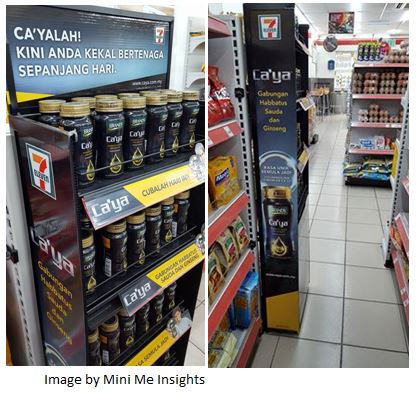
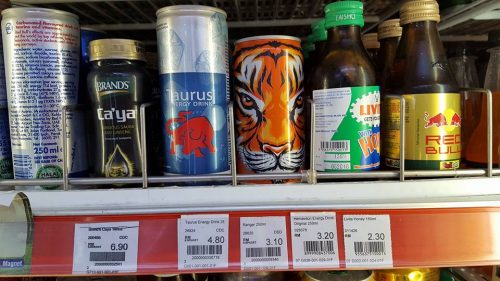
Ca’ya is now available at 7-Eleven as of 16 October 2016. The retail price per bottle is RM 6.90
Ca’ya is placed alongside other energy drinks and is the most expensive energy drink in 7-Eleven. Each bottle of Ca’ya is priced at RM 6.90. The second most expensive is Red Bull (European edition) 355ml at RM 6.85.
Exhibition tickets starting from only RM18*
KUALA LUMPUR, December 14, 2023 – Malaysia's First NARUTO Exhibition, celebrating the 20th anniversary of the iconic anime series, is...

 Essentially, nobody except those inside the dairy industry, knows exactly what has happened to Marigold HL Milk. Based on the messages left by consumers on Marigold HL Milk Facebook page, they were unclear about the effect of this issue on their health. Bryan Ng asked if it would be fatal, while Ng inquired about the side effects.
 Delayed response