Home Blog Page 1184

Malee Light fruit juice opens new page for stevia use in Thailand
Stevia is a highly popular low-calorie sweetener and can be found in many food products ranging from carbonated soft drinks to cookies. However, stevia application is rare in the fruit juice category in Southeast Asia due to the aftertaste issue.  Stevia does have a signature bitter aftertaste. Not finding ways to deal with the aftertaste is one of the key reasons for the failure of the ANOC range of tea drink and vitamin water in China. Dr. Zhang’s All Natural and Zero Calorie Beverage and Foods Company(AN0C) was a joint venture between GLG and China Agriculture and Healthy Foods Company Limited.

Dr Zhang AN0C stevia-sweetened RTD tea

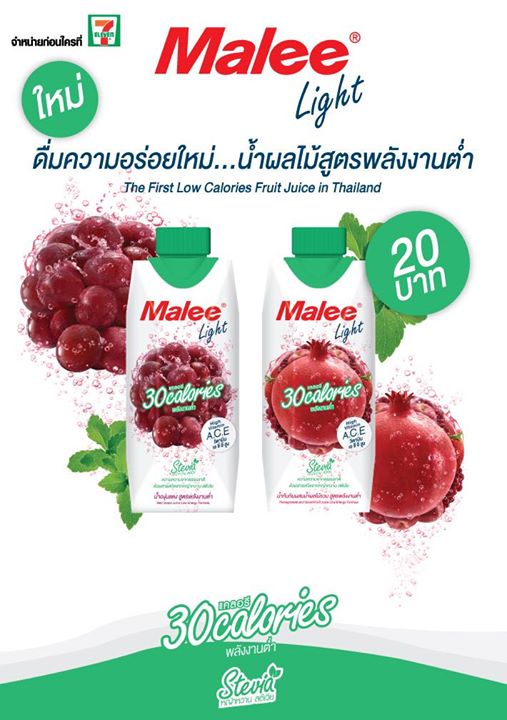
The most recent example of stevia use in Thailand is the Malee Light stevia-sweetened juice with 30 calories. It comes in 200ml and 1,000ml  and three flavours Mandarin Orange Juice with Orange Pulp, Red Grape Juice, Pomegranate mixed fruit juice. This product is clearly targeting at people with healthy lifestyles.

Launch of Malee Light

Malee Light does have a higher chance of success as Thai consumers are known to be very conscious of their diet. Beauty drinks with collagen, soy peptide and beta glucan, are extremely popular in Thailand. The obvious target for Malee Light should be young urban women who consume beauty drinks.

Lasis with abalone collagen

In neighbouring Malaysia, stevia-sweteened fruit juice remains a niche product. The distribution of these specialised drinks is usually confined to health centres such as hospitals with diabetes patients in mind. See the June 2014 blog post Exclusive from the 15th Malaysian International Food & Beverage Trade Fair.  Diabetics and obesity are key health issues in Malaysia.

Diabetes national prevalence rate (%)
Malaysia 16.61
Singapore 12.83
China 9.32
Thailand 8.45
Japan 7.60
Indonesia 5.81
Source: IDF.org

The use of stevia in F&B in Thailand coincides with the government approval in August 2014, making it possible to have F&B with stevia as a sweetener. Indonesia is the only country now that does not have the approval. Thanks to Thai consumers preoccupation with beauty and health, stevia makers may find Thailand a potential market to promote the use of natural sweetener.
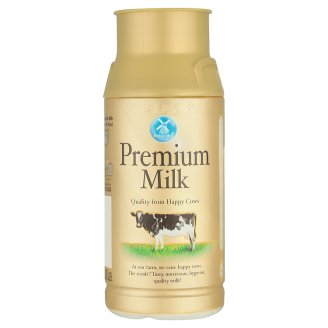
Milk from Happy Cow

Thailand’s Dutch Mill latest premium milk does stand out from the shelf space with its unique Dutch milk can design. The key message is the Dutch Mill premium milk is made from high quality milk from happy cows breed using the “traditional” way.

Vintage Original Dutch Copper milk Can Samenwerking-  Photo from RubyLane.

In terms of price positioning, Dutch Mill  fetches the highest price at THB 25 per 200ml within the 200ml pasteurised milk category in Thailand.

Thailand pasteurised milk (200ml) store check – Tesco Lotus 27 January 2015


Wahaha RTD tea not going anywhere in Indonesia

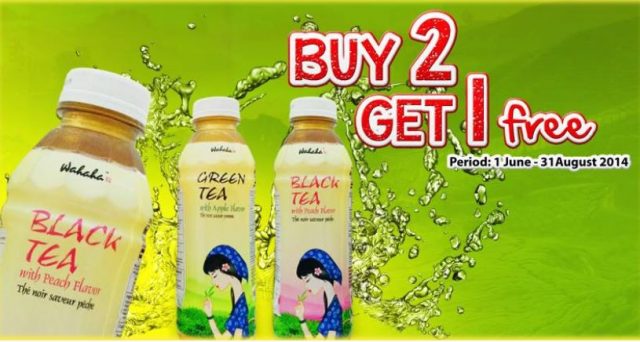
The Indonesian ready-to-drink (RTD) tea market continues to be bright spark as evidenced by the gravitational pull of Japanese and Thai RTD tea companies towards the Indonesian market. Wahaha from China is also trying its luck in Indonesia with its bottled black tea and green tea.

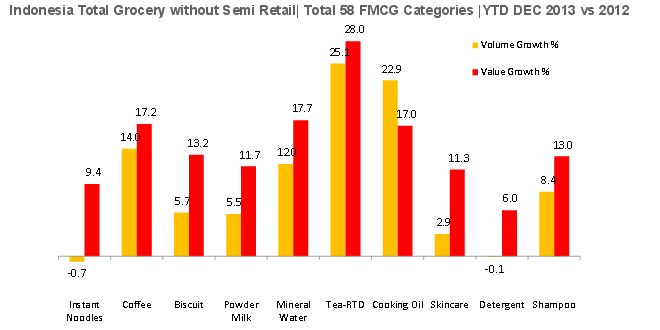
According to Alfamart citing data probably from Nielsen, RTD tea grocery sales without semi retail rose by over 25% in 2013 vs 2012. The rate of growth should be slower if semi retail, which includes mom-and-pop stores, is included. Euromonitor expects RTD tea to grow 10% by volume in 2014 to 1.2 billion litres.

Total grocery without semi retail

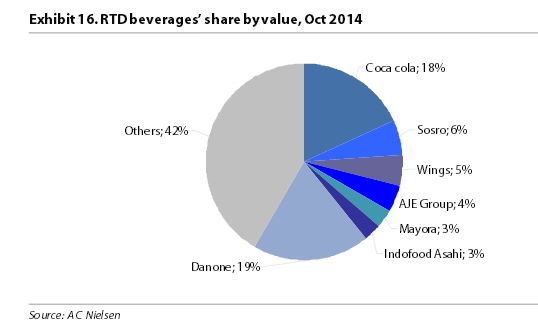
For a foreign player, a domestic partner with strong distribution is required to be successful in the Indonesian RTD tea market. For example, Indofood Asahi, since launching Ichi Ocha RTD tea in February 2014, has captured 3% of the Indonesian soft drinks market in October 2014, according to ACNielsen. Thailand’s Ichitan Group, which is rolling out its RTD tea in Indonesia in the first quarter of 2015, is working with PT Atri Pasifik, which is a joint venture between PT Sigmantara Alfindo (Alfa Group) and Japan’s Mitsubishi Corp. Alfa Group runs the Alfamart minimartket chain.

RTD beverage market share, October 2014

Wahaha RTD tea is not widely available and can only be found in selected 7-11 outlets, which shows the limited coverage enjoyed by Wahaha.

In terms of taste, Sosro Teh Botol has set the standard with its sweetened jasmine tea. Even Asahi’s Mytea Oolong, which claims to be the first oolong RTD tea in Indonesia, comes with a heavy jasmine taste. Wahaha RTD tea has to change its taste to suit the taste profile of Indonesian consumers.

Price wise, Wahaha RTD tea is at the end of the price range, which makes it quite unaffordable. Wahaha has to get its taste, distribution and price right to be successful in Indonesia.

All are prices from Alfamart Online except for Wahaha (7-11). Alfamart store check conducted in Jan 2015, while 7-11 was carried out in Dec 2014. * represents promotional price as of 25 Jan 2015.


Beer-free Indonesian minimarts

Indonesian Minister of Trade Affairs Rachmat Gobel has announced minimartkets will be prohibited from selling beer effective16 April 2015. Under the new regulation 06/M-DAG/PER/1/2015 signed on 16 January 2015, the selling of alcoholic beverages with up to 5% alcohol content in small, modern retail chain including mnimarts will not be allowed. Such alcoholic beverages are classified under Class A. However, the sale of alcoholic drinks with up to 5% ABV is still permitted in supermarkets and hypermarkets and in pubs and hotels. The ban will affect small, modern chains including convenience stores such as 7-11 and Circle K.

Beer manufacturers and minimart operators already see this as a long time making. Local governments in several locations in the country including Tangerang and Bogar has already banned alcoholic beverages in minimarts. Sumber Alfaria Trijaya corporate affairs director Solihin said the company “will obey the rules” and added that alcohol sales were not big income spinners. 

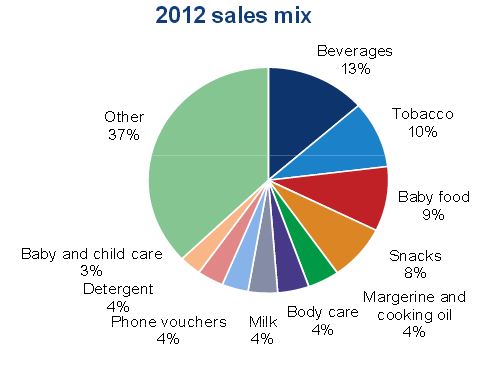
Looking at the sales mix of Indomaret in 2012, beverages indeed only contributed 13% of sales, of which the share of alcoholic drinks was even lower, probably at 1-2%. Small, modern retailers will have to find new products to populate the shelf, which is good news to consumers as more products will be given better shelf placement.

Sales mix of Indomaret in 2012

The recent launch of Guinness Zero, an alcohol-free drink, comes as at a time when Indonesian beer manufacturers are changing their product mix. Tough government regulations and a low per capita consumption of soft drinks mean the move forward is to focus more on non-alcohol sales.

Even in the the beer-loving Philippines where San Miguel Brewery (SMB) takes a 90+% share of the market, heavy taxes and high beer per capita spend has necessitated SMB to announce a new a multi-beverage strategy. In December 2014, the liquor unit of San Miguel, Ginebra San Miguel, said it would sell its non-alcoholic business to SMB. The non-alcohol beverages of Ginebra San Miguel include Magnolia Fruit Drink Mix, Magnolia Healthtea Mix, Magnolia Fruit Drink, Magnolia Healthtea Bottle, Magnolia Purewater and Berri Juice.

The alcohol sales ban in Indonesia does deprive alcohol companies from the impulse distribution channel with the strongest impact to be felt in the touristy Bali. The ban does set in motion a continued shift towards a multi-beverage strategy as alcohol companies tap opportunities in the fast growing non-alcoholic categories. Such trends is already evidenced in Indonesia and in the Philippines.

Innovative drinkable spoonable yogurt in the “Land of Smiles”

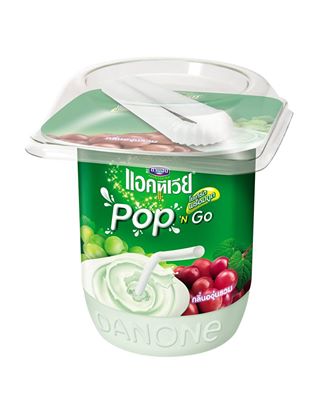
For the past few days, I was in the “Land of Smile”, a country where the consumption of drinking yogurt is very much higher than spoonable yogurt. To bridge the divide, Danone has come up with an ingenious idea by turning a spoonable yogurt into a drinking yogurt with a straw. Of course, the formulation has to be right to ensure the content can be consumed through the straw.

Similar product can be replicated in Indonesia, which also has a higher share of drinking yogurt consumption compared to spoonable yogurt. Danone Pop ‘N Go is retailed in 7-Eleven for on-the-go consumption occasion for THB 14.

Me with Pop ‘N Go

Beyond pure coconut water

Coconut water sales have skyrocketed in the US to about USD 400 million in 2013, according to Euromonitor. Vita Coco continues to be the market leader in the US, followed by Zico. In the past year, Vita Coco is diversifying from being a pure coconut water to one that full makes use of the hydrating qualities of coconut with new products such as Vita Coco Café, soft launched in 2013. Rival Zico is ahead of the game with Zico chocolate, launched in July 2013 and Zico Café, which appeared in 2012.

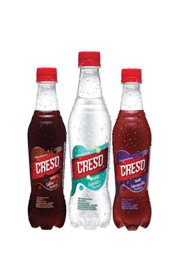
There has been a new development in Indonesia where Vita Coco and Zico source their coconut water. We have seen a flurry of launches in the pure coconut water scene in Indonesia such as Buavita coconut water. However, one that really excites the market is the special coconut-flavoured carbonated soft drink by PT Sinar Sosro. The taste of Creso is unique. The carbonated drink has a strong hint of coconut flavour, making carbonates and coconut flavour a match made in heaven.

Drinks with eye protection claim on the rise in China

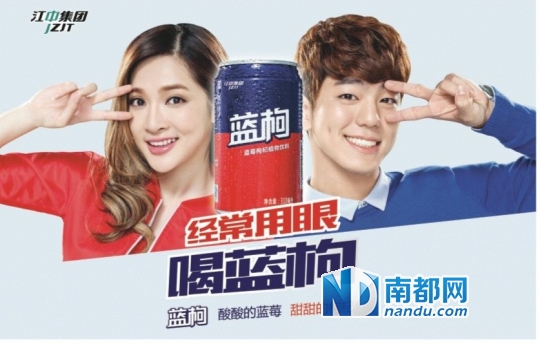
China’s Jiangzhong Pharmaceutical has launched another functional beverage – Jiangzhong Blueberru Goji Berry (蓝枸饮料) Drink. The drink claims to relieve tiredness and protect the eyes and is aimed at the e-generation who uses a lot of mobile devices.

Blueberry is positioned as good for the eyes, similar to walnut, which is marketed as food for the brain.

Below are examples of blueberry drinks with eye beneficial claims. Eye protection claim may see active new product launches in China since young consumers are spending a lot of their waking time on the screen.


Walnut milk drink market attracts key Chinese dairy giants Yili, Mengniu

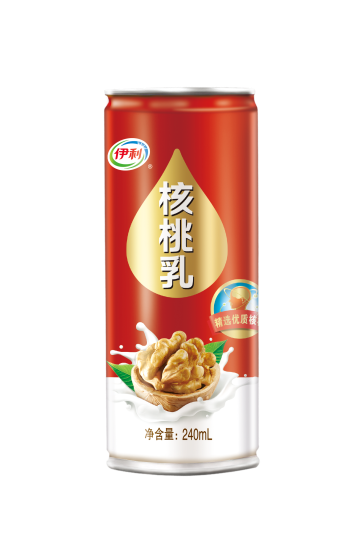
Inner Mongolia Yili Industrial Group (Yili), the Chinese dairy products company, has finally made an entry into the plant protein drink category with the new Yili Walnut Milk Drink (伊利核桃乳) . This comes after its rival Mengniu introduced a new Silk plant protein drink range with US-based WhiteWave Foods at the end of 2014.

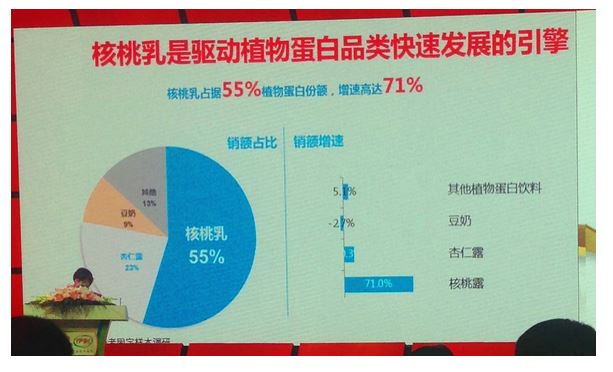
At the Yili’s new product launch ceremony, the company has identified walnut milk as the fastest growing category in the plant protein drink market in China with a 55% share of the market and a 71% growth rate. Apricot kernel drink (杏仁) accounts for 23% of the market, soybean at 9% declining by 2.7% and others at 13% expanding by 5.1%

Walnut milk drink is the fastest growing category within the plant protein drink market

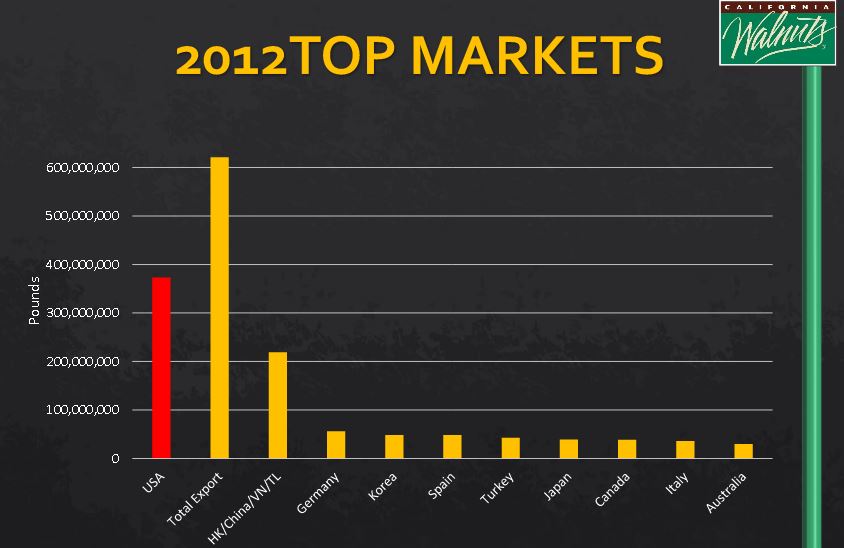
China, the world’s biggest walnut producer, is also net importer of walnut with the country becoming one of the leading export markets for California walnuts. The craze over healthy plant protein drink can be a boon for the California walnut industry but why is exports to China & Hong Kong failing.

China has become one of the biggest export markets for California walnuts
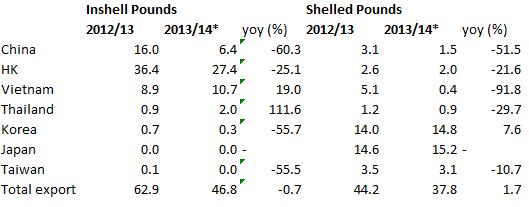
California walnut export

* 12 months to 31 August 2014. Numbers are percentage share (%) of total export. Data from the California Walnut Board.

The key reason is rising China’s walnut import from the Central Asian country of Kyrgyzstan in 2013 for low value walnuts. Kyrgyzstan became the largest walnut exporter to China in 2013, overtaking the US, in terms of volume. The US continues to be the biggest walnut exporter by value, according to China customs. statistics.

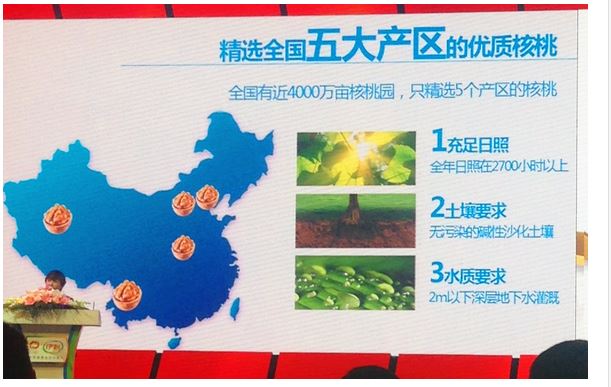
Yili walnut drink using local walnuts

Yili is opting for local walnuts from five key walnut producing regions in China for its new walnut drink. So it appears most US walnuts will not be going into beverages but will end up as snacks.

China’s ready-to-drink cocktail galore

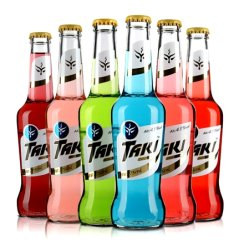
Competition in the ready-to-drink cocktail category in China is getting hot as the soybean and grain nutritious drink company Blackcow Food (黑牛食品) has introduced Taki. South Korean heartthrob Kim Soohyun, best known for his role in My Love from the Star, is the brand ambassador. He will be the face of Taki for 2 years. Taki focuses on tier one and two cities and is available through e-commerce, supermarket/hypermarket and night clubs. Female is the key target.

Taki with Kim Soohyun

The next contender for the cocktail frenzy is Huiyuan, yes, the Chinese fruit juice maker. The new cocktail is marketed under the name Zhen Xuan (真炫). Personally, I think the packaging does look very Chinese and may not appeal to sophisticated urban drinkers.

Zhen Xuan

Have a look at Rio TV ad and you will see how this brand has all the DNAs of a successful cocktail.


Maggi Royale goes for cup noodle

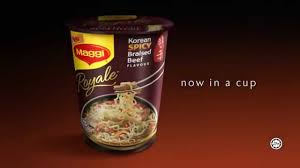
Maggi has beaten Sky Thomas Food Industries, the maker of MyKuali, in the instant cup noodle race with the new Maggi Royale Korean Spicy Braised Beef Cup Noodle. The question is why introduce a cup version for Korean Spicy Beef and not Penang Seafood Curry? Having a cup version for Penang Seafood Curry will definately give Maggi head start since Sky Thomas Food Industries already has plans to introduce a similar cup version for its MyKuali range.

Maggi Royale is priced at MYR 46.7 per kilogram and is at the middle to upper end of the price range for instant cup noodle in Malaysia. The product is more expensive than several Nongshim and Samyang products. I am sure a cup version for Maggi Penang Seafood Curry is in the offing.

Instant cup noodle price range, Aeon Big, December 2014 (MYR/KG). Orange is Korean brands, red is Maggi Royale and blue is other non-Korean brands

HOT NEWS

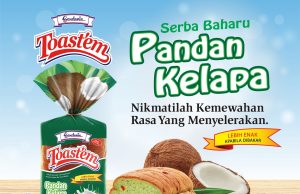
Go and try Gardenia Toast’em Pandan Kelapa

1
Gardenia Bakeries (KL) Sdn Bhd has launched the new Toast'em Pandan Kelapa (Pandan Coconut) bread. The sweet bread contains pandan, coconut and gula Melaka....

MUST READ

Ace your nutrition with the all-new tasty Gardenia Nutri-Ace Sprouted Soft...

0
by the leader of the Wholemeal & Functional bread category Singapore, 16 October 2023 - Gardenia, Singapore’s bread market leader with more than 50 delicious varieties...