Home Blog Page 1183

Dairy giant Mengniu integrates digital with workout, tapping the protein fad
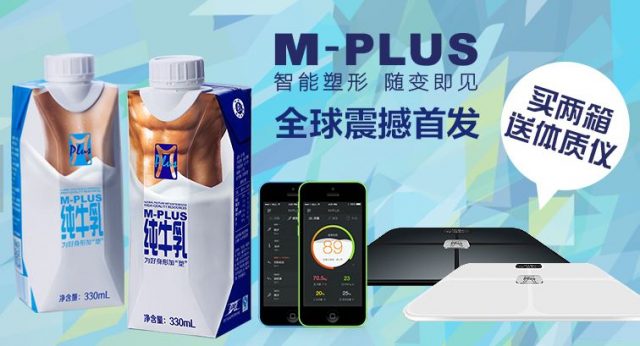
In the fourth quarter of 2014, Mengniu introduced M-Plus, a new fitness milk, in collaboration with Kunlun Fight, the biggest MMA/K1 event in China,  ChronoCloud Medtech (Shanghai) and Hylink Advertising, a full-service digital agency. The 330ml M-Plus contains 3.6g of high quality protein per 100ml, 20% higher than the national standard, and 118mg/100ml of iron.

Nutritional content.

M-Plus is to provide a complete self-help package to consumers who embark on an exercise program and stick with it.

Three ways to fitness

The pre-exercise stage involves measuring the body mass and keeping track of changes through an intelligent scale. The device monitors biological rhythms (Chronobiology) of user’s fundamental vital marks, such as blood pressure, heart rate, temperature, muscle and body fat.

Smart Body Analyzer Electronic Intelligent Scale

The second stage is to use the M-Plus app to obtain customised solutions to meet individual fitness needs.

M-Plus app

The third and final phase is consuming Mengniu M-Plus high-protein milk within 90 minutes after each workout session. The milk comes from Australian Jersey cows graze on 100% American pasture.

Nutrition-conscious consumers increasingly recognise the benefits of protein. The current fad for plant-protein drink in China epitomises the demand for protein. Plant-based protein is often associated with brain development, improve memory, beauty and good for health. The key benefits of plant-based protein drink is low in fat, balance diet, suitable for lactose intolerant consumers and free from cholesterol.

Maintaining healthy bones and muscle building are some of the more popular attributes associated with dairy protein. The new M-Plus helps associate dairy protein with fitness and this association provides the crucial link for Mengniu to tap the growing opportunities for dairy products as the go-to protein source for workout.

Combining the use of the digital platform such as cloud computing and app, M-Plus has branded itself as an integrated solution. It enables consumers to achieve the perfect workout without having to spend on expensive packages at fitness centres. Whether consumers will continue with the M-Plus program is another story.
GPR Food Cookies Fair 2015

With Chinese New Year just around the corner, the Malaysian biscuit producer GPR Food Sdn Bhd has done something special. It has set up several outdoor booths mainly in the Klang Valley as part of its Cookies Fair 2015. It is rather rare to have a booth selling only cookies. The usual CNY outdoor booth sells mandarin orange, dried meat, pomelo, hampers and new year cookies. The CNY booth tends to be located on the side of the road and red is the dominant colour with merchandise usually in red eg red mandarin orange boxes staked high on the ground.

Typical CNY booth
GPR Food outdoor tent
Promotion

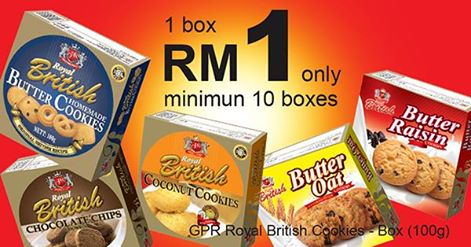
The company is selling the cookies at a deep discount such as RM 10 for ten boxes of cookies or RM 1 per box but the minimum purchase is 10 boxes.  The McOaty oat cookies and British cookies in tin are also on sale with prices ranging from RM 10 to RM 20 per three packs.

Perhaps such promotion is likely to serve as a means to promote greater brand awareness as GPR Food is shifting its focus on the domestic market. The company was previously focusing solely on exports. The timing of the cookies fair does coincide with the run up to CNY, which means the company may be trying to associate its cookies as CNY gift.

Nongfu Spring launches high-end mineral water

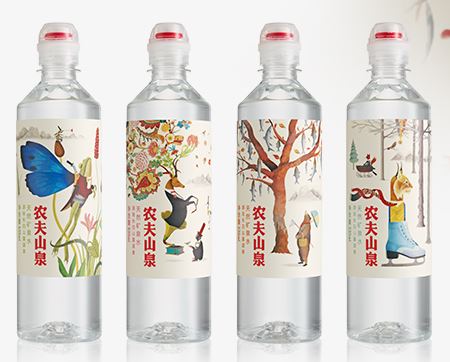
Nongfu Spring, famous for its tagline “Nongfu Spring: a little bit sweet,” has unveiled three range of mineral water in China including a high-end range priced at between RMB 35-45. All three products are sourced from Changbai Mountains.

The 750ml high-end mineral water in glass bottle contains only 2.0~6.8mg/L of sodium content giving it a clear and crisp taste.

For high-end consumers

The second is a mineral water for students. The four designs illustrated by Brett Ryder come with a sports cap.

For students

The third product is a mineral water with weak alkaline suitable for babies. 

Mineral water for babies

Key takeaways:
1.) Nongfu Spring is moving high-end because this is where the money lies. Premiumisation anyone?
2.) Evergrande’s mineral water ( 恒大冰泉), which is also sourced from Changbai Mountains, will find a strong competitor. Nongfu Spring will have an edge since it has a stronger distribution compared to Evergrande, which is a diversified company with focus on property development.
3.) Evian will continue to face pressure from domestic rivals in the high-end market.
4.) Artistic beverage bottle design is increasingly becoming a sales point.

Twinfish – most counterfeited oat choco in Malaysia

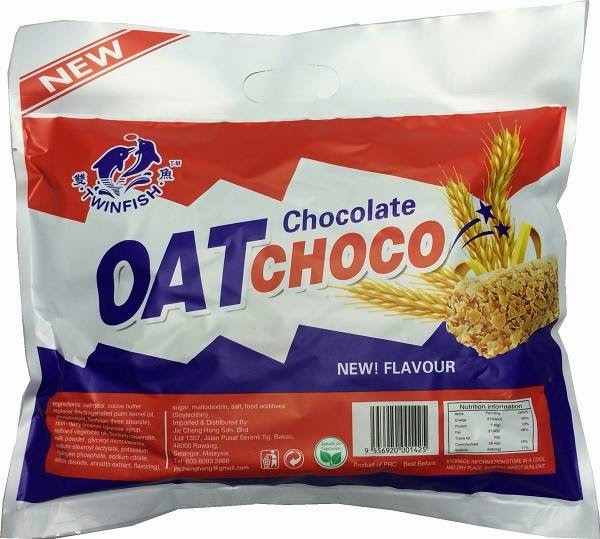
If there is one such thing as the most counterfeited food product in Malaysia, the award surely goes to Twinfish Oat Choco. Jie Cheng Hang Sdn Bhd, the distributor of the made-in-China Twinfish Oat Choco, claims there are over “16 brands of the similar product” in Malaysia since it debuted in the market in May 2013.

From Oat Choco Facebook page


Counterfeited oat choco

Why oat choco is so popular in Malaysia? Oat choco is the first of its kind in the market with a taste and texture different from oat biscuit and cereal bar. This individually wrapped product is small in size and good as a grab-and-go snack and ideal as a snack for portion control. The taste is not overly sweet. The oat ingredient gives the product a health halo. All these criteria make oat choco the perfect guilt-free snack.

Oat choco has the potential to go regional. When I was in Jakarta, I spotted a look-a-like product Naraya Oat Choco in a shopping mall. This product was marketed as a healthy snack. This proves once again the success of oat choco can be replicated in other neighboring markets.

Naraya Oat Choco

Gluten-free claim for RTD tea?

Since when Malaysians are aware of gluten? If you ask ordinary Malaysians what gluten is, I believe over 90% either have not heard of it or cannot explain to you what it means. There is a high chance there is no local translation for gluten in Malay, correct me if I am wrong.

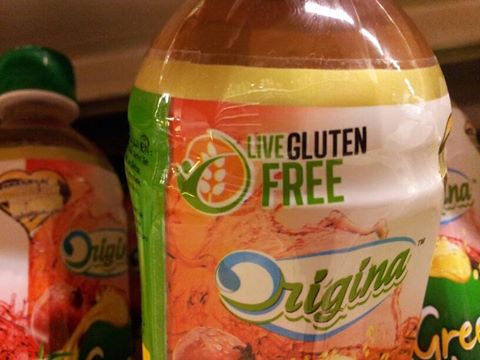
If gluten-free diet is unheard of in Malaysia, will gluten-free the reason consumers purchase the new Origina range of juice and tea beverages made by PS Food and Beverage Sdn Bhd? If gluten-free is not the reason, are they interested in the “Truly Natural” positioning of the drink or is it because of the novelty?

Why should consumers pay a premium for Origina when they can buy familiar Lipton ice tea, F&N Seasons ice tea or Coca-Cola’s Heaven & Earth at a cheaper price? Origina Green Tea + Pomegranate 500ml retails at RM 2.99 compared with Heaven and Earth Passionfruit Ice Tea 500ml (RM 2.49) and Lipton Ice Green Tea with Pear & Peach 450ml (RM 2.29).

Perhaps Origina needs a rethink of its marketing strategy or market this RTD tea in Western countries where gluten-free is widely know.

Origina
Origina Truly Natural


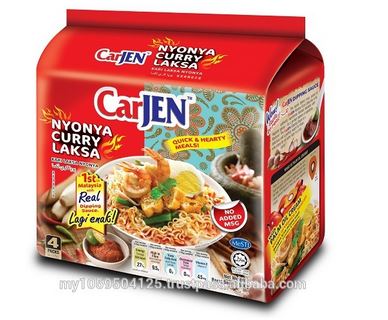
Carjeen Nyonya Curry Laksa with separate dipping sauce

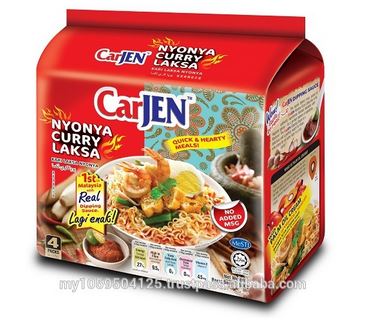
It has been a while since I wrote something about the white curry instant noodle craze in Malaysia. While driving to a shopping mall today, I saw a Carjen Food Sdn Bhd van with a poster of a new Nyonya Curry Laksa. This product is not seen in major supermarket/hypermarket chains in the Klang Valley.

Carjen Nyonya Curry Laksa

What is special about the instant noodle is the dipping sauce. The image below is a close up look of the dipping sauce as presented on the packaging. Carjen claims to offer the first instant noodle in Malaysia with “real dipping sauce.” I have not seen this product in person but based on the packaging information, this is indeed an innovation. Usually, all the ingredients including the paste are to be added as part of the preparation. However, this instant noodle comes with a separate dipping sauce to create the atmosphere of eating the actual noodle in the hawker stall. The dipping sauce adds to the spiciness of the noodle.

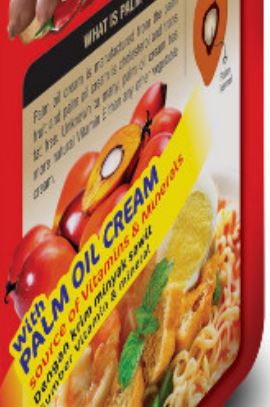
The noodle also comes with palm oil cream, which is a source of vitamins and minerals. Does palm oil cream worth mentioning as a unique selling point given the bad reputation of palm oil of being very high in saturated fat especially among Western customers? Malaysian customers normally do not subscribe to the notion of palm oil being unhealthy due to government PR campaign. But Carjen needs to take note of this if it intends to exports to other markets.
I would say this is a good attempt by Carjen to innovate using dipping sauce.

Collectible Chinese New Year beverage cans to stimulate sales in Malaysia

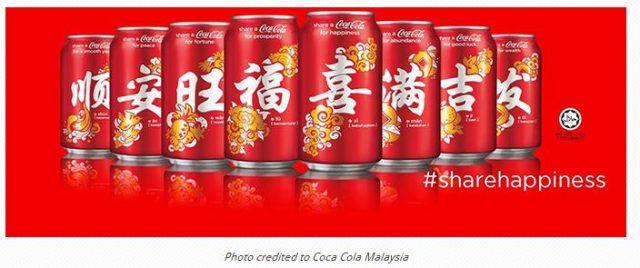
With the year of the Very Goat just around the corner (goat rhymes with the word good), the leading soft drinks companies in Malaysia The Coca-Cola Company and F&N have personalised their drinks for the festive occasion.

Lucky Chinese words such as prosperity and happiness are printed on the Malaysian edition of Coca-Cola cans for the first time. Yours truly have already collected two cans.

From Coca-Cola FB site

They come in a pack of 10 cans (10x324ml RM 11.88) as a gift pack. Now you can substitute the usual Chinese mandarin oranges with 10 cans of Coca-Cola imprinted with lucky Chinese words when visiting friends and relatives.

F&N has also introduced a collectible Chinese New Year design by cleverly adding a Chinese character next to 100 to create the word 福 prosperity.

F&N 100 Plus FB site

The limited-edition cans cannot be bought separately. It has to be purchased as part of a larger pack.

Let’s look at PepsiCo Malaysia, There are no collectible cans for this year but what we do know is the company is having its usual campaign to support Chinese education, an issue dear to the heart of the Chinese community. However, the limited-can campaigns of The Coca-Cola Company and F&N are likely to yield better results than PepsiCo’s Chinese education campaign because the collectible cans are simply too irresistible!

Tesco Malaysia: Online price discrepancy

Misleading discounted price as stated on the website on 1 February 2015

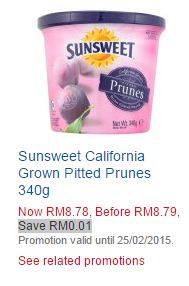
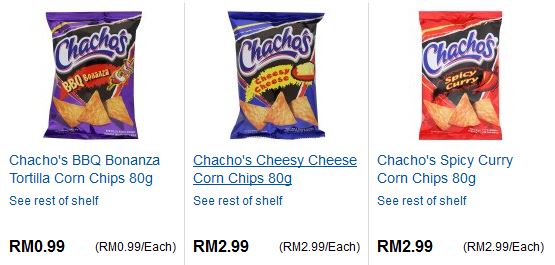
Chacho’s BBQ Bonanza Tortilla Corn Chips (80g) only RM 0.99 on Tesco online store in Malaysia? This really appears as a mistake. There are numerous examples of these on the Tesco Malaysia online shopping site including the ridiculous RM 0.01 discount.

Misleading one cent discount as stated on the website on 1 February 2015

An email sent to Tesco on 29 January 2015 at 11.30am informing them about the price discrepancy was given a reply hours later on the same day at 5pm. The following was the reply:

Thank you for writing in.


Refer to your inquiry below, please be informed that we have been escalated this issue to the relevant department and will get back to you upon receive feedback from the relevant department.

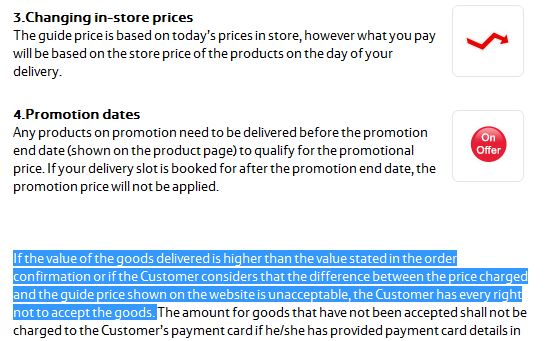
Until the time of writing on Sunday (1 February 2015), the errors with the price have not be addressed. Tesco does have a price guide policy:

So, it appears Tesco is well protected but what about consumers? Consumers do have the right not to accept the goods. But wouldn’t it be better for Tesco to have someone checking all the prices to eliminate price discrepancy in the first place? Tesco does have a lot to do to improve customer service to address the misrepresentation of price and misleading discounts.

On Monday (2 Feb 2015), I received the following replies from Tesco:

Regarding the RM 0.01 discount:

Chacho’s RM 0.99


New launches in plant drink & plant protein space

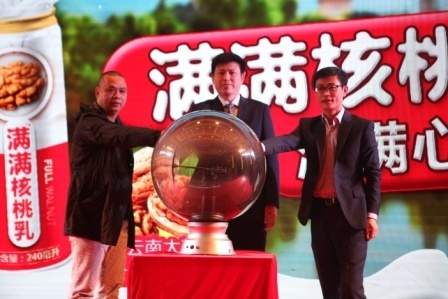
Two new launches in the plant drink and plant protein drink space were made in China. Taotaoju (陶陶居), one of the most famous tea houses in Guangzhou, has launched a new plant protein drink. The “Man Man” (满满) walnut drink is made from walnuts grown in Dali, Yunnan and stachyose.

Wang Lao Ji, famous for its red can herbal drink, has recently debuted a Chinese Caterpillar Fungus (虫草) or cordyceps drink as part of its diversification from herbal drink. The cordycep drink is targeted at consumers at 28 to 45, a working age group that suffer from stress and heavy workload. Th drink claims to delay aging, improve the function of the liver, prevent brain haemorrhage and improve the immune system. The other ingredients are solomon’s seal, dates, longan and Chinese liquorice.

Product positioning of the new cordycep drink

As Chinese consumers increasingly demand functional food and beverage, the pant protein category will continue to be the key beneficiary of the trend. Do stay tune for more updates.

Regional governments tightening grip on alcohol sales

Governments in Southeast Asia are clamping down or restricting alcohol sales. Within a span of few weeks, Indonesia has announced a new law prohibiting small store i.e. convenience stores and minimarts from selling alcoholic drinks with 1-5% ABV. This is a nationwide ban and the cited reason was for “the protection of morals and culture in the society.” Education Minister Anies Baswedan applauded the trade ministry’s move saying “this regulation really helps children or school kids from avoiding exposure to such liquor.”

In Indonesia, bootleg liquor death numbers around 18,000 each year despite the passing of 147 government regulations. Experts feel the liquor ban in minimarts will result in more bootleg death.

In neighbouring Malaysia, the state of Malacca has decided to to ban the sale of “hard liquor” in 7-11 convenience stores in Malay-Muslim majority areas such as Masjid Tanah. Beer is still allowed. The ban will not affect non-Muslim majority areas. Also, coffee shops have to remove signboards bearing the logos of liquor brands. The moves are “to prevent the sale of liquor to youths in these areas and to stop them from consuming alcoholic drinks, besides curbing social problems arising from the drinking habit.”

In modern Singapore, the government has passed the Liquor Control (Supply and Consumption) Bill in January 2015 to reduce crimes related to alcohol consumption. According to the government, there were 115 cases of serious hurt and 47 cases of rioting in 2014 linked to alcohol consumption. The new bill prohibits the sale of take-away alcohol after 10.30pm and alcohol cannot be consumed in public places between 10.30pm and 7am every day.

What we are seeing is the governments of Indonesia and Singapore and the state government of Malacca are trying to reduce social problems linked to alcohol consumption. In Muslim-dominated countries like Indonesia and Malaysia, such moves are usually interpreted as rising Islamisation. In Singapore, the action is seen as largely directed at foreign workers who cannot afford to drink in establishments that serve alcohol.

For Malaysia, the Malacca example, if successfully carried out, may eventually lead to a nationwide ban. The nationwide ban in Indonesia was a culmination of individual bans carried out by the local government. There is indeed a real fear in Malaysia by non-Muslims that the alcohol restriction may see the country becoming less tolerant of non-Muslim needs.

Singapore Liquor Control Bill

HOT NEWS

Low-calorie Daebak Spark Muscat Grape is now available in Indonesia

0
The Manado-based alcoholic drink producer PT Jobubu Jarum Minahasa has launched Daebak Spark Muscat Grape. The new low-calorie hard seltzer with a 5% ABV...

MUST READ

All-New Saga Hits 10,000 Bookings – One Every 43 Seconds After...

0
10,000 bookings in 5 days — that’s 2,000/day, 83/hour, 1 every 43 seconds. Malaysia’s most iconic sedan continues to capture the hearts of...