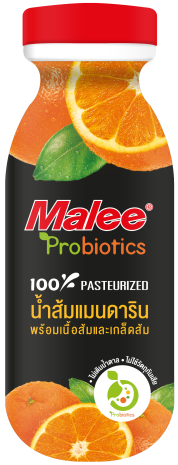
Malee has recently unveiled Malee Probiotics 100% pasteurised in Thailand. Probiotics are usually found in dairy. Research has found certain strains of bacteria that survives when added to fruit juices, making fruit juice a viable carrier of probiotics.
Malee is going down the functional health route targeting young urban females with Malee Light (30 calories with stevia as the sweetener) and Malee Healti Plus (with hyalurnic acid for all day skin hydration).
The latest addition Malee Probiotics is an extension of the functional theme. This time, the new product focuses on the goodness of probiotics for digestion. The Malee with probiotics will surely strike a chord with Thai female consumers who key consumers of drinkable beauty products.
Malee Probiotics for tummy health targeting young women
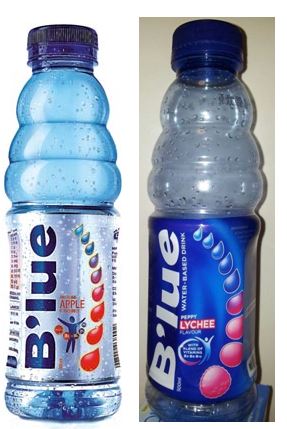
India version (left) and the Philippines version (right)
The new B’lue isotonic drink, recently launched in the Philippines, bears a striking resemblance with another B’lue water-based restoration drink, which made its debut in India at the end of 2011. In India, B’lue was launched by the French food and drink group Danone in a joint venture with local Mumbai-based Narang Beverages. According to Pierre Betat, country manager Danone-Narang Beverages, B’lue “has been designed and developed, especially by the Indian consumer and for the Indian consumer.”
Following its debut in the subcontinent in 2011, B’lue seems to have “disappeared” lately. The official portal http://www.drinkblue.in/ says the “Website currently under maintenance.” Moreover, there were no signs of B’lue in Hyderabad, a city in central India, when I visited in early 2015. In October 2014, news surfaced citing sources that Danone might part ways with Rahul Narang Group. Danone was reportedly wanting to take full control of B’lue and Qua, which were then made and distributed by Narang Danone Access and Danone Narang Beverages.
In the Philippines, the new water-based drink brand B’lue by Danone Universal Robina Beverages made its debut in January 2015. I blogged about this in an October 2014 post saying the joint venture would most likely focus on sports/isotonic drink. My initial guess was Danone would introduce to the Philippines market the Mizone aquadrink brand, which is highly successful in Indonesia and China. The choice of B’lue is not within expectation.
Mizone in China (left) and Indonesia (right)
In the Philippines, B’lue is targeted at millennials.
Inspired by how the millennial generation lives, B’lue–a water-based drink– provides a unique drinking experience that deeply refreshes you, body mind and mood. Whether you are tired or feeling great, B’lue makes you feel fully alive to take on what’s ahead. It comes in a 500mL PET bottle, offering three fruity flavors: Orange, Calamansi and Lyche.
The new isotonic drink focuses on you and me, the ordinary urbanites who dare to dream and want to live life to the fullest. The target audience is therefore much broader and includes the majority of people who are less active in sports. As a comparison, Gatorade, the leader in the isotonic drink category, tends to associates itself with sports, thus restricting the consumption occasion to sporting activities.
On store shelves, B’lue, which claims to be a water-based drink, is placed among bottled water when the store check was carried out at Robinsons Supermarket in Manila. Similarly, B’lue is not placed alongside other energy/isotonic drinks in convenience store. The Ministop example shows B’lue is sharing the same space with C2 RTD tea.
B’lue among bottled water at Robinsons Supermarket, Manila
B’lue in a Ministop convenience store in Makati, Manila
In terms of the pricing, B’lue is priced at a 31% discount to Gatorade and is slightly cheaper than Powerade. B’lue is also priced within the range of RTD tea drinks but higher than bottled water.
Store check at Robinsons Supermarket, Manila, March 2015
B’lue has the potential to become the next Mizone in Indonesia and China as flavoured vitamin-enriched water is highly adaptable and fits perfectly in most consumption occasions. The key is to start ’em young and start connecting with young consumers.
Students at Colegio de San Juan de Letran trying B’lue for the first time
World's best instant noodle. Photo taken at RT-Mart, Taipei
It has been a while since I have posted anything as I was too busy with travels including a trip to Taipei. We do know MyKuali is making waves in Hong Kong, Taiwan, Macau, the US and even Papua New Guinea. According to the company, 40% of the monthly production of 250,000 cartons are shipped overseas. For MyKuali Penang White Curry Noodle, 30,000 cartons are sold locally and 15,000 cartons sold overseas with each carton containing 48 packets of noodles.
Store checks in Taipei have revealed the high-end City’Super and Jasons Marketplace as well as the hypermarket chain RT-Mart have stocked not only MyKuali range but also other white curry noodles from Malaysia.
Below is the price list:
Store check Taipei in March 2015.
What is interesting from the store check is Carjen, which cannot be found in Malaysia, is available in Taiwan, which shows Carjen is probably aimed at the overseas market. I have blogged about Carjen in one of my earlier postings.
Both MyKuali Tom Yum Goong and Penang Hokkien Prawn Noodles are new to Jasons Marketplace, a high-end grocery owned by Hong Kong-based Dairy Farm International.
MyKuali does have a clear advantage over the rest of the Malaysian cohorts in Taiwan, thanks to Ramen Rater, which rated MyKuali Penang White Curry Noodle as the top instant noodle in the world for 2014.
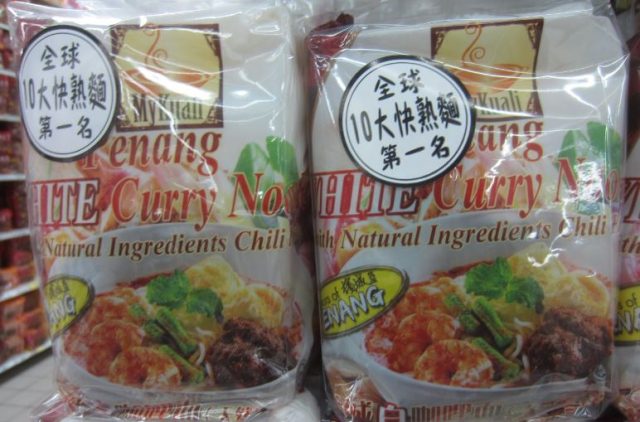
MyKuali, Malaysia’s first Penang White Curry Noodle, at Jasons Marketplace
MyKuali Penang White Curry Noodle – a little known homegrown brand that is now an award-winning product – is selling at 30,000 cartons nationwide and 15,000 cartons overseas each month. Each carton has 48 packets of noodles. – See more at: http://www.themalaysianinsider.com/food/article/famous-penang-brand-mykuali-to-serve-bihun-in-bowls#sthash.dvvqK5QX.dpuf
My prediction is Mamee Chef Gold Recipe, rated “5.0 out of 5.0 stars” by Ramen Rater, will likely to become the next Malaysian instant noodle to be made available in Taiwan.Will curry noodle make it big in China. Perhaps it can be successful in southern China, which shares a similar diet as Hong Kong but for the rest of China, I doubt so because Chinese have not acquired a taste for curry. They prefer spicy, not curry.
With a new plant opened earlier this year in Penang, the company now produces 250,000 cartons a month, with 40% of it being shipped overseas. – See more at: http://www.themalaysianinsider.com/food/article/famous-penang-brand-mykuali-to-serve-bihun-in-bowls#sthash.dvvqK5QX.dpuf
In Malaysia, the much feared 6% GST is only 23 days away. From 1 April 2015, most of the food and beverage products as well as cosmetics and toiletries, household wares and medicine will be subject to a 6% GST.
The good news for Panadol fans is all forms of Panadol including ActiFast and Caplets are GST free. It is not certain if GST-free is for Panadol only or for all forms of paracetamol. Coffee in powder or bag (uncang) is free from GST but instant coffee (2-in-1/3-in-1) is subject to 6% GST. This is strange but that’s the truth.
Condensed milk is subject to 6% GST but tea (powder/bag) is exempted. If you drink teh tarik in the restaurant, will you have to pay 6% GST because condensed milk is taxed? Instant tea (2-in-1/3-in-1) comes under 6% GST.
Cooking oil (palm oil/ground nut oil/coconut) is free from GST. Olive oil is most likely getting 6% GST.
All these bottled water (still/sparkling/flavoured) will be levied with a 6% GST.
Infant formula (for babies up to 36 months) is free from GST but milk powder will get 6% GST. The question is does susu tepung (infant/bayi) include growing up formula eg step 3/step 4?
For more information, go to the Malaysian Customs website. Here is the link.
As dengue cases soar in Malaysia, there is a demand for alternative remedies such as papaya leaf drink, which has been proven to increase blood platelet count. Even though it looks easy to produce papaya leaf drink at home but the process can be troublesome because first you need to have papaya leaf and second you have to grind it to extract the juice.
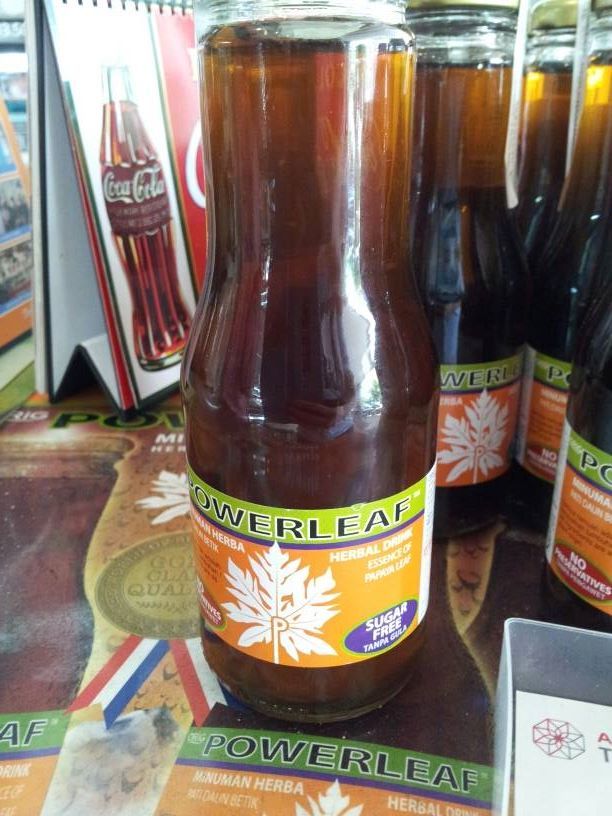
While having lunch at a Indian Muslim restaurant in Pandan Indah, I came across the Powerleaf drink by ORiG International Sdn Bhd, the company that brought us goat’s milk and bird nest drink.
The beverage comes in a 250ml glass bottle and is described as a herbal drink sweetened with stevia and does not come with preservatives. The drink is not suitable for pregnant women. Since papaya leaf juice is extremely bitter, the stevia-sweetened ORiG Powerleaf makes the drink more palatable. There are online testimonies saying the drink is effective to increase platelet count but it is safe to say that it is only a herbal drink and may or may not have the curative effect.
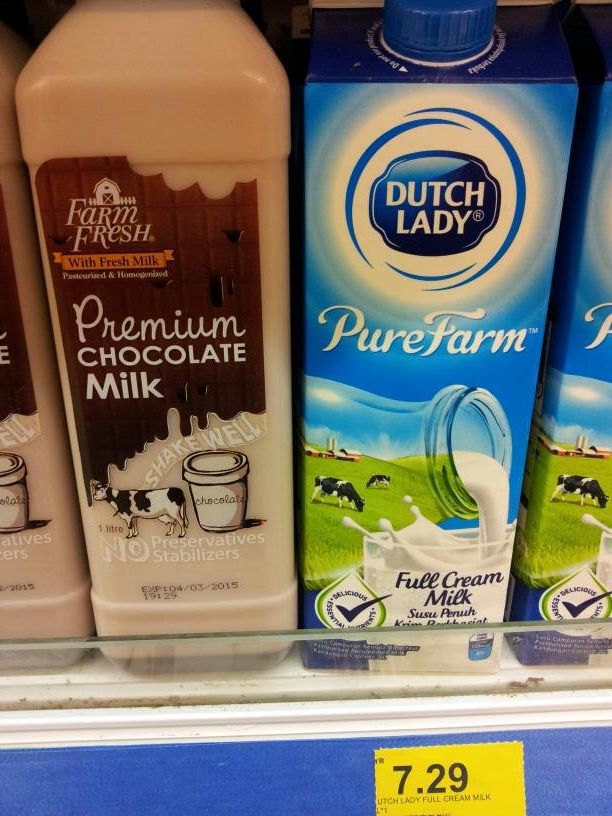
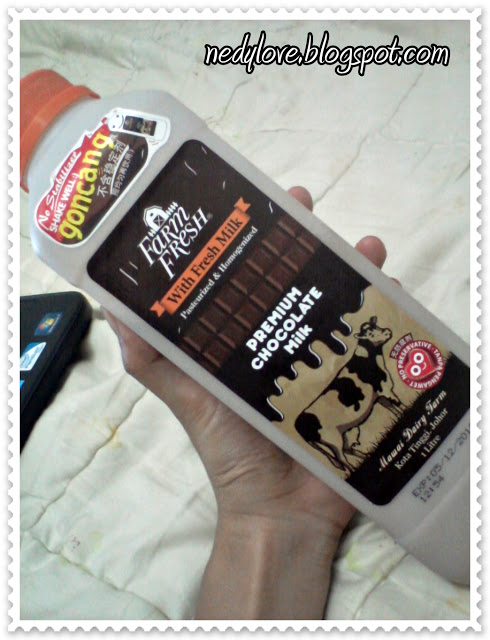
In Malaysia, Farm Fresh Premium Chocolate Milk has a new look. If you look closely, Farm Fresh’s new packaging design has a lot of similarities with the new Dutch Lady Pure Farm packaging. The brand name, text and the picture of the cow and bottle are aligned with each other. Whether this is a matter of coincidence or done purposely, the new packaging of Farm Fresh Premium Chocolate Milk does look cleaner and less cluttered.
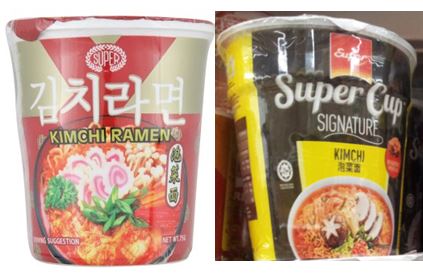
Super has rebranded its Kimchi Ramen and Black Pepper Crab instant cup noodles in Malaysia under the Signature range. The new look sets the old product apart from the other Super cup noodles by presenting a more premium feel through the use of the word Signature. The choice of ingredients – dehydrated kimchi flakes and crab sticks are emphasised on the new packaging. Even though there has been a change in the packaging to present a more premium positioning, the price remains the same at RM 2.65 per 75g at Aeon Big.
Emphasis on ingredients – dehydrated kimchi flakes for the kimchi cup noodle and crab sticks for the black pepper crab cup noodle
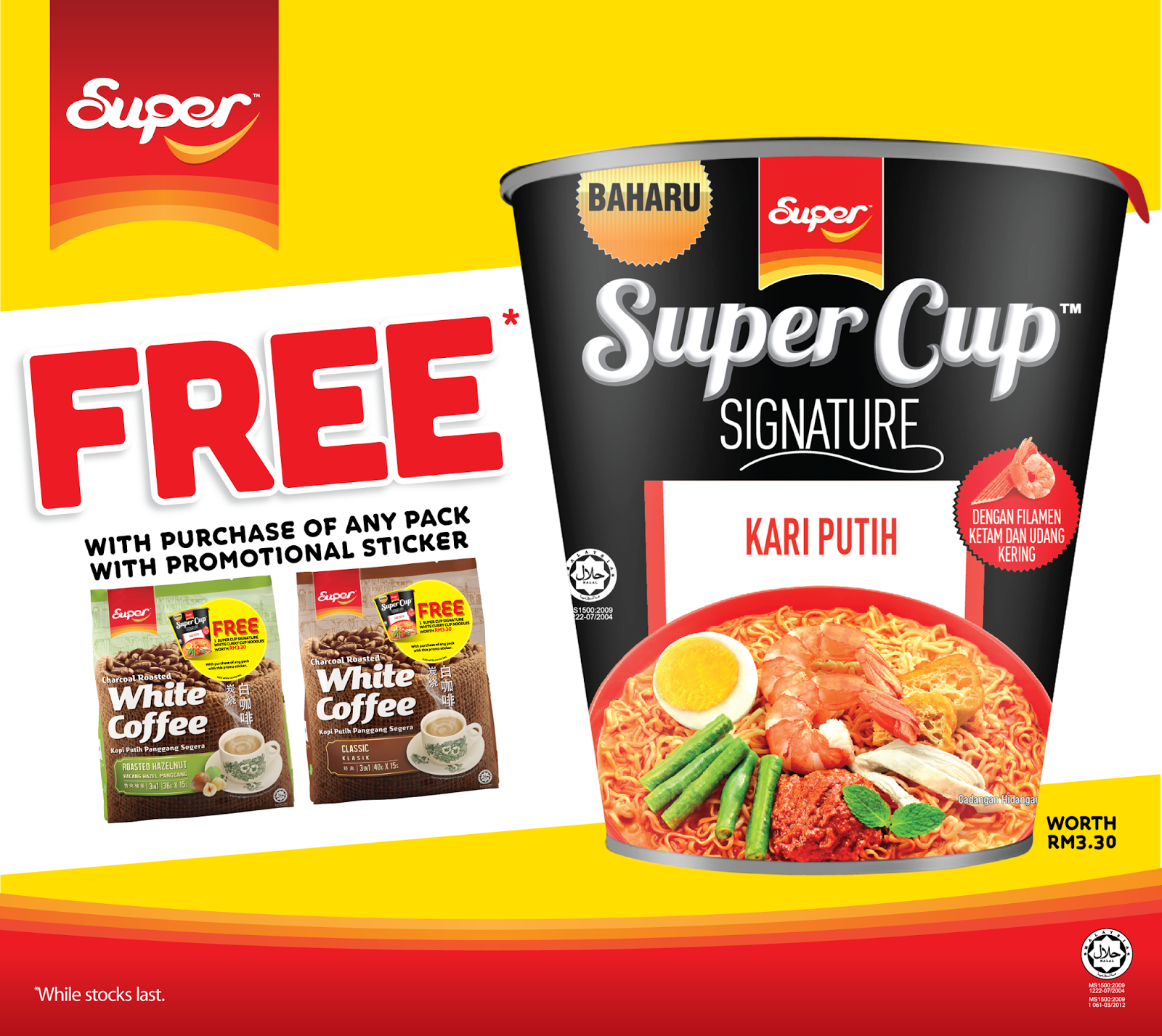
Another important product that is likely to hit shelves soon is the Super Cup Signature White Curry. This cup noodle is currently free with purchase of any pack of Super instant coffee with the promotional sticker. The normal price for the Signature white curry cup noodle is RM 3.30, which makes it even more expensive than the existing kimchi and black pepper crab variants.
The white curry cup noodle also comes with crab sticks and dried prawns. When it debuts, the product will become the first white curry instant noodle in the cup format and will mark Super’s belated entry into the white curry segment.
Super Cup Signature White Curry
Additional information:
Price check on cup noodles at Aeon Big on 15 February 2015. The list excludes Maggi Royale Korean Spicy Braised Beef, which is selling at Tesco for RM 2.8 per unit.
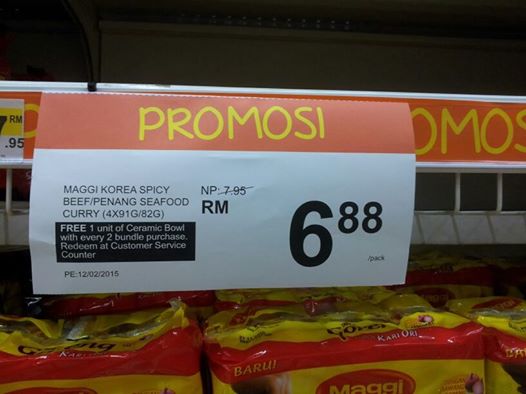
Maggi Royale range of instant noodle has become cheaper thanks to on-going promotions at Giant and Aeon Big. Both Maggi Korea Spicy Beef/Penang Seafood Curry comes with a promotion price of RM 6.88 per pack compared with the normal price of RM 7.95 at Aeon Big and RM 7.99 at Giant. There is also a free ceramic bowl for every purchase of two bundles. Usually, Maggi Royale does not do promotions. What makes it different this time round when all other competitors are keeping their prices intact is something to ponder.
Revive Isotonic Hydration Kit campaign through MyTaxi app
Dengue cases have spiked in Malaysia and the number of cases as of 6 December 2014 reached 98,128, up from just 37,698 cases in the same period a year ago. On a personal level, two of my family members contracted dengue within the last 3 months.
In view of the rising dengue epidemic in Malaysia, Permanis, owned by Asahi Group, has launched an interesting Revive anti-dengue campaign through the MyTaxi app. The kit comes with mosquito repellent patches, an awareness infographic and yes, 3 cans of Revive Isotonic. As a non-Malaysian, you may wonder what isotonic drink has got to do with dengue? In this country, isotonic drink is one of the many non-scientific remedies to cure dengue apart from consuming crab soup, guava juice and papaya leaves.
Can 100Plus cure dengue?
The most interesting thing about the campaign is Revive is trying to topple 100Plus as the preferred isotonic drink for dengue patients. At the moment, Malaysians often prescribe 100Plus to their family members who are down with dengue. Recently, my aunt contracted dengue and several bottles of 100Plus could be seen on the table next to her hospital bed. Yours truly also consume 100Plus when down with fever.
Since the curative effect of isotonic drink has not been proven scientifically, what Revive did was advising people, implicitly at those suffering from dengue, to “rehydrate” with Revive isotonic drink.
An ad in The Sun newspaper on 11 February 2015
A close up of the ad in The Sun newspaper on 11 February 2015
Communal work (gotong-royong) is a following up activity by Revive to keep the surrounding area clean to combat the deadly dengue menace.
Revive gotong-royong
Government anti-aedes gotong-royong poster
The rehydrate with Revive campaign focusing specifically at dengue may play into the hands of 100Plus. The F&N brand has not launched any campaign, correct me if I am wrong, to associate itself as a “cure” for dengue. With Revive coming out openly on the benefits of isotonic drink, what this campaign achieves is reinforcing what Malaysians already know and placing an official mark of approval on the usage of isotonic drink to relief the symptoms of dengue.
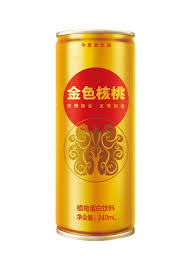
China’s Jinmailang (今麦郎) has recently introduced Golden Walnut (金色核桃) as a gift for loved ones. The special thing about this new walnut beverage is the choice of its colour – gold. Gold is something unique for walnut drink as most of the mainstream walnut drinks in China are usually in blue and green with white spaces.
Samples of existing walnut drinks in China
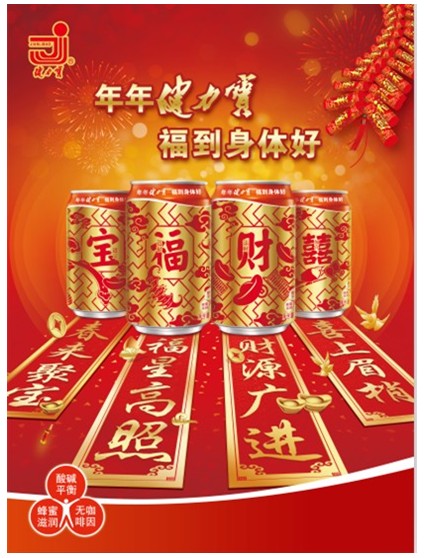
Red is the colour of choice for Chinese New Year and other festivity, which fits the gifting positioning of this drink. Gold is the colour of exuberance, a colour of tuhao (土豪), which often refers negatively to mainland Chinese who are rich but uncultured or uncouth nouveau riche.
Here is a list of items considered to be tuhao including this luxury car in gold. The question is will Golden Walnut still attract consumers during non-festive periods or will the colour change to something less gold to attract non-gifting occasions?












%2BInformation%2BPage%2BR1%2B140115.png)