Home Blog Page 1139

Dutch Mill enters Indonesia, 2nd generation probiotic drink for the Philippines
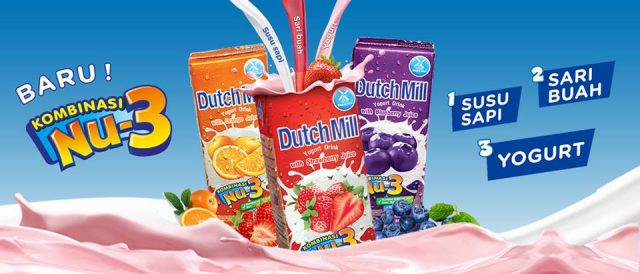
Thailand’s Dutch Mill has entered the Indonesian market with the launch of the Dutch Mill yogurt milk drink in September 2016. The 180ml drink comes in three flavours containing 15% blueberry, orange or strawberry juices and 41.34% low-fat milk. The packaging sizes are 90ml and 180ml.

The 180ml Dutch Mill is priced at IDR 5,000 compared with Heavenly Blush 200m (IDR 8,500), Yummy Yofit 180ml (IDR 9,000) and Cimory Yogurt Drink 250ml (IDR 8,500) at Indomaret.

Can be stored in room temperature

The Dutch Mill yoghurt drink can be stored at normal room temperature, which sets it apart from the more expensive yoghurt drinks by Cimory, Yummy and Heavenly Blush. The need for refrigeration could potentially put yoghurt drinks at a disadvantage over other milk-based UHT drink as the chilled chain is still under developed in Indonesia.

To protect the quality, the Dutch Mill yoghurt drink is recommended to be kept refrigerated at a temperature between 2 to 8 degree Celsius.

Nu-3 combination
nu-3

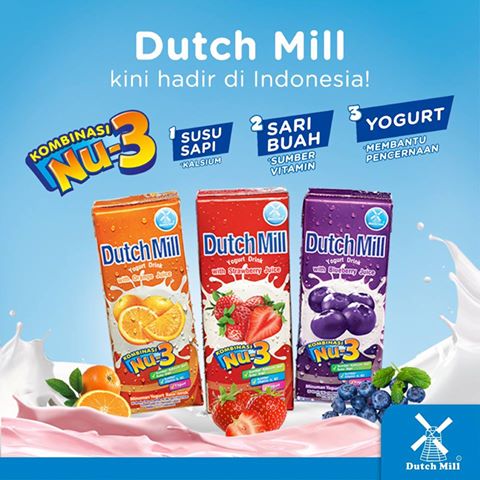
The key unique selling point of the new Dutch Mill yoghurt drink is summed up as Nu-3 or three nutrition from cow’s milk (calcium), fruits (vitamin) and yoghurt (digestion).

The advertisement shows the yoghurt drink combines the benefits of all the three ingredients to deliver the goodness to ‘superkids.’

PT Nirwana Lestari is the importer of Dutch Mill in Indonesia. In the Philippines, local Monde Nissin, known for its biscuit crackers and instant noodle, is in charge of the marketing and distribution of Dutch Mill in the second most populous country in Southeast Asia.

Dutch Mill Delight with prebiotic fibre

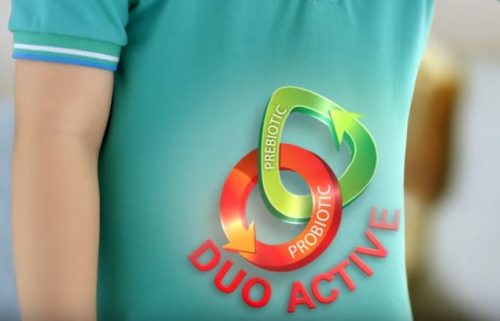
In the Philippines, Dutch Mill has moved beyond UHT yoghurt drink with the new Dutch Mill Delight with probiotic (lactobacillus paracasei) and prebiotic fibre for healthier tummy. The new product is also known the “2nd generation probiotic drink.”
dutch-mill-duo-activ

Clevo flavoured milk sets 35% growth target for 2017

Clevo set to achieve 35% growth in sales in 2017

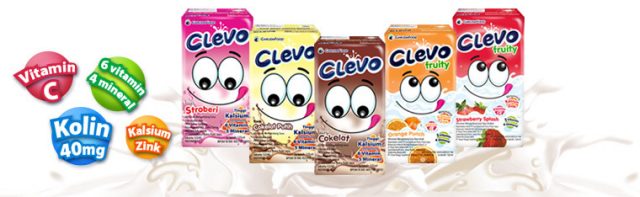
Indonesia’s PT Garudafood Putra Putri Jaya (GarudaFood Group) said sales of its Clevo flavoured UHT milk in 2017 is expected to accelerate to 35% compared with the projected growth of 18.5% for 2016. This information was conveyed by GarudaFood Head Corporate Communication Dian Astriana to Beritasatu.

Clevo contains choline

From Clevo Youtube clip

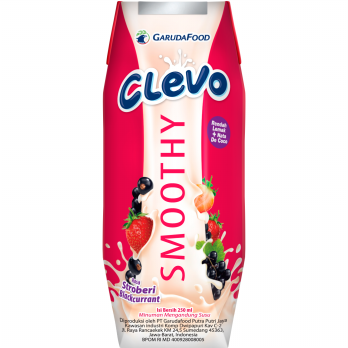
Clevo is high in choline and calcium. It is currently sold in a 125ml format for children with a price of IDR 2,800 (USD 0.21). The company has recently added Clevo 200ml for ‘big kids’ and Clevo Smoothy for young adults.

clevo-smoothy

Clevo Smoothy weighs 250ml and comes in strawberry & blackcurrant and peach & lychee flavours. The price is IDR 7,800. All the flavoured milks are made at the factory in Rancaekek, Bandung. Clevo Smoothly contains nata de coco.

Targeting older consumers

Dairy brands are now targeting older consumers who used to consume flavoured milk but are now leaving the category. Recent examples of brands re-focusing on young adults include Frisian Flag coconut flavoured UHT milk and Indomilk Banana Milk.

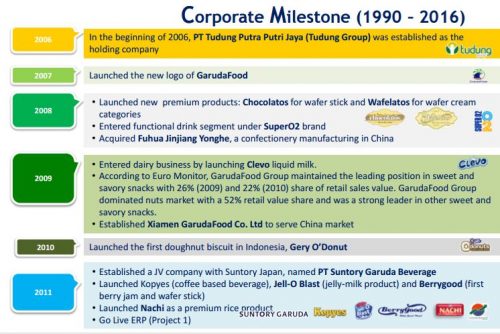
Clevo was first launched at the end of 2009. By broadening the appeal with Clevo Smoothy and Clevo 200ml, Clevo will be able to grow with their consumers who are now older children or young adults.

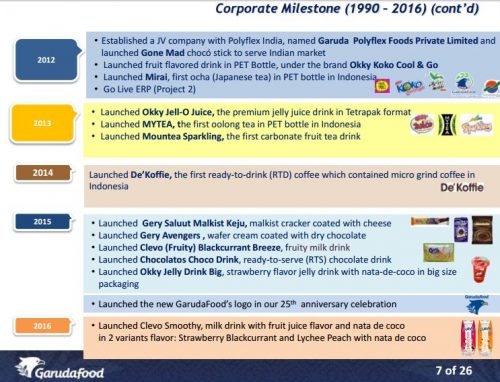
Images above come from Garuda Food corporate milestone (2006-2011).

Ayamas Kitchen: More than Chicken

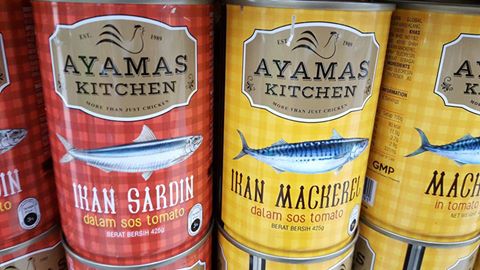
Ayamas, a Malaysian brand closely associated with poultry, is looking to move away from focusing on chicken (ayam). It has come up with the new brand known as Ayamas Kitchen with the tagline “More than Chicken”.

Ayamas Kitchen

ayamas-kitchen-2

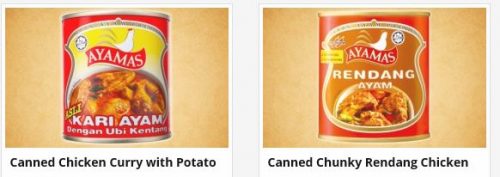
The first two products under the Ayamas Kitchen label are shelf stable canned seafood – mackerel and sardine, both in tomato sauce. The two canned seafood adds to the existing lineup of canned meat such as chunky rendang chicken and chicken curry with potato. Ayamas is known as a household name in frozen processed poultry.

ayamas-canned-chicken

The seafood is made in Thailand for QSR Trading Sdn Bhd.

Since 1989

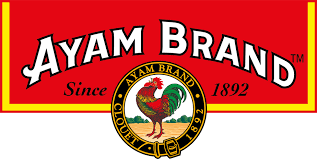
The interesting thing about the new Ayamas Kitchen is the logo design stresses the brand heritage. Ayamas was founded in 1989. If you look closely, it does closely resemble the theme for Ayam Brand, a brand that has been in existence since 1892.

ayam-brand-since-1892

Press Release: 7-Eleven Malaysia Continues to Expand Store Network

Image from 7-Eleven Malaysia

7-eleven-3q-2016-results

HIGHLIGHTS

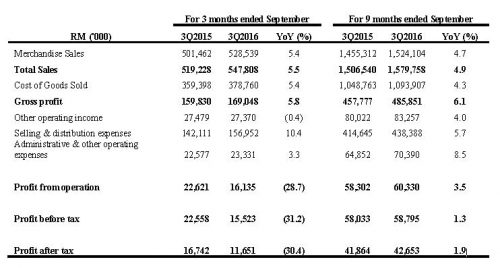
  • Strong Sales growth of 5.5% in 3Q16 despite the sluggish retail market.
  • Store expansion continues, 2057 stores as at end Sept 2016
    Gross profit margin continues to improve versus last year.
  • Significant negative impact on 3Q 16 profit from the increase in Minimum Wage from 1st July 2016.
  • Average spend per customer increase of approx. 4% in 3Q 2016 versus same period last year.

Comments from CEO – GARY BROWN

“The 3rd Quarter 2016 continues to highlight the tough retail market in which we operate since the introduction of GST coupled with low consumer sentiment and spending. The impact of the Minimum Wage increase in July 2016 has negatively impacted the 3Q16 results. We remain confident that continuous store expansion, refurbishment, promotional activity, improved merchandise mix and expanded in-store services will continue to deliver positive results despite the challenging headwinds.”
For the 3rd Quarter ended 30 September 2016

The Group’s revenue for the current quarter of RM547.8 million grew by RM28.5 million or 5.5% against the corresponding quarter’s revenue in the previous year of RM519.2 million. The growth in revenue continued to be driven by the growth in new stores, improved merchandise mix and consumer promotion activity. This growth was achieved despite prolonged on-going retail market softness caused by weak consumer confidence/spending.

Gross profit of RM169.0 million improved by RM9.2 million or 5.8% compared to the corresponding quarter in the previous year and this was mainly attributed to the revenue growth of 5.5%.

Selling and distribution expenses for the quarter increased by RM14.8 million or 10.4%, mainly caused by new store expansion resulting in higher staff cost, rental cost, store depreciation expense and utility cost. In addition, the increase in the minimum wage effective 1st July 2016 has caused the store staff costs to rise by approximately 10% in the current quarter.

Administrative and other operating expenses for the quarter increased by RM0.7 million or 3.3% due to higher staff cost, head office IT depreciation expense and amortization of intangible assets.

The profit before tax of RM15.5 million decreased by RM7.0 million or 31.2% compared to the corresponding quarter in 2015 despite positive sales growth due to higher selling and distribution expenses caused by new store expansion and the impact of minimum wage increase effective 1st July 2016.
For the 9 months ended 30 September 2016

For the 9 months ended 30 September 2016, the Group’s revenue of RM1.58 billion grew RM73.2 million or 4.9% against the corresponding 9 months’ revenue in the previous year of RM1.51 billion. The growth in revenue was driven by the growth in new stores (total stores as at 30 September 2016: 2,057 stores), improved merchandise mix and consumer promotion activity.

Gross profit improved by RM28.1 mil or 6.1% compared to the corresponding 9 months in the previous year and this was mainly attributed to the revenue growth of 4.9% and gross profit margin expansion of 0.4% points.

Selling and distribution expenses for the 9 months period in 2016 increased by RM23.7 million or 5.7%, mainly caused by higher staff cost, rental cost, store depreciation expense and utility cost which is in tandem with new store expansion coupled with impact of minimum wage increase on the staff cost.

Administrative and other operating expenses decreased by RM5.5 million or 8.5% vis-à-vis the corresponding 9 months in the previous year due to higher staff cost, head office IT depreciation expense and amortization of intangible assets.

The profit before tax of RM58.8 million increased by 1.3% or RM0.8 million despite revenue growth of 4.9% and gross margin expansion by 0.4% points due to higher selling and distribution expenses from new store expansion and also the impact of minimum wage increase effective 1 July 2016 on the salary cost.

Future Prospects

The Board of Directors is of the view that the trading conditions for the remaining period of the current financial year is expected to remain challenging due to continued weak consumer confidence/spending and current macro-economic conditions. Despite this latest development, we remain positive of holding onto our market leading position.

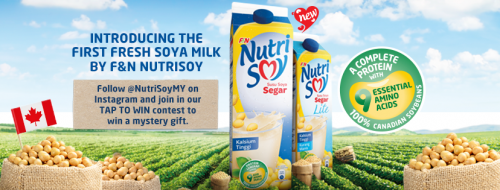
New F&N Nutrisoy Fresh soya milk drink

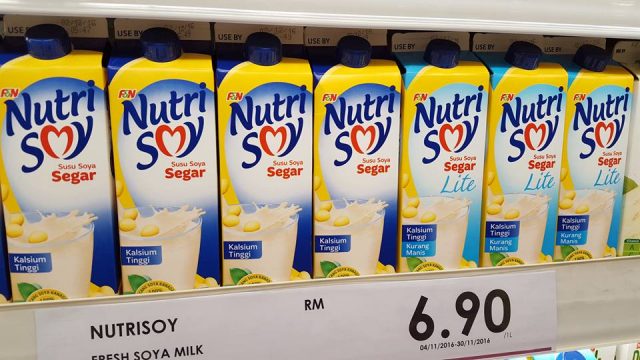
F&N has recently introduced Nutrisoy Fresh, a new soya milk-based drink and also Malaysia’s first pasteurised fresh soya milk drink. The shelf life is able to reach 35 days after being treated with the High Temperature Short-Time Method. The drink is made from non-GMO Canadian soy beans and comes in two variants – Fresh and Fresh Lite (less sugar). The selling price for the 1L format is RM 6.90. As a comparison, the UHT version is priced at RM 2.20.

F&N Nutrisoy Fresh was first spotted at the 16th Taste Fully Food & Beverage Expo 2016 on 10-12 November 2016.

https://www.facebook.com/NutriSoy.MY/videos/1325286844168936/


Timeline of F&N soya bean category evolution in Malaysia:

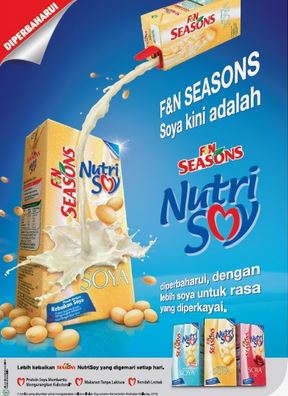
  • 2013 – Changed to F&N Seasons NutriSoy from F&N Seasons

fn-seasons-nutrisoy

  • 2014 – New packaging design with 9x more calcium than ordinary soy bean milknutrisoy-baharu-4-august-2014

In 2016, F&N Nutrisoy is back with a new packaging design. The lite version now features the outline of a female body to suggest it is nutrisoy-new-packaging

Singapore F&N leads fresh soy bean innovation

Fresh soya bean drink as a category in Singapore has evolved beyond less sugar. In Singapore, the Nutrisoy range includes almond with reduced sugar and omega with reduced sugar. What this means is some of these innovations may be introduced in Malaysia in the future to meet the growing sophistication of Malaysian consumers opting for fresher products.

singapore-nutrisoy-2


Indonesian isotonic drinks growing at single-digit

How strong has the Indonesian isotonic drink category grown so far?

Pocari Sweat growing 2% annually

Pocari Sweat during Ramadan

According to the latest news article by the business daily Kontan on 21 November 2016, market leader Pocari Sweat (PT Amerta Indah Otsuka) is growing at a rate of around 2% annually, in line with the growth in sporting activities, said Daniel Pieter, head of marketing Pocari Sweat. According to Pieter, Pocari Sweat’s market share is currently above 50%.

pocari-sweat-run

The isotonic drink is well known among general consumers but the weakest link is sports. The brand is currently focusing on growing its share in the sports segment.

Mizone expanding at 3.8%

mizone-gue

Danone’s Mizone, the second largest player in the category, is growing at 3.8% year-on-year, according to Mizone senior brand manager Ahmad Fauzi citing September 2016 Nielsen Retail Audit for Java island, the country’s most populous island.

Newcomer Isoplus aims to grow by 15% in 2017

wings-isoplus

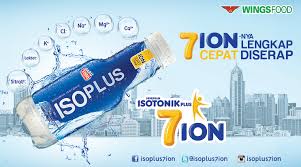
Isoplus from Wings Food, launched in June 2016, is targeting to achieve a 15% growth in sales in 2017. Aristo Kristandyo, Head of Marketing Beverages Wings Food, said the Indonesian isotonic drink annual market volume is 280 million tons. Wings Food derives around 16% of its sales from the sale of beverages. According to Kristandyo, the key strategies for Isoplus are expanding the distribution reach and keeping the price affordable.

The current retail price of Isoplus is IDR 3,000 per 350ml PET bottle. At the moment, there is only one packaging for Isoplus. For a similar PET packaging in 350ml, Pocari Sweat is twice more expensive than Isoplus, selling at a retail price of IDR 6,000. Mizone in 500ml PET is priced at IDR 4,400.

MARS Indonesia research points to 6.24% annual growth

Market research company MARS Indonesia research shows the country’s isotonic drinks market grew at an annual rate of 6.24% from 2014 to 2016. The market share of Pocari Sweat is 56.3%, making it the market leader, followed by Mizone, PT Kalbe Farma’s Hydro Coco and PT Djojonegoro‘s You C1000.

According to the research agency, the number of active players in the market has shrunk to 42 from 76 in 2014, which suggests strong competition.

Sporade exited the market?

sporade-indonesia-small

AJE’s Sporade, launched in 2014, is no longer to be found in Jakarta or possibly in other parts of the country. The last active post on Sporade’s official Facebook account was 1 January 2016. There were no longer any new posts after that.

Mondelez expands Johor factory, sees huge potential in Indonesia’s breakfast market

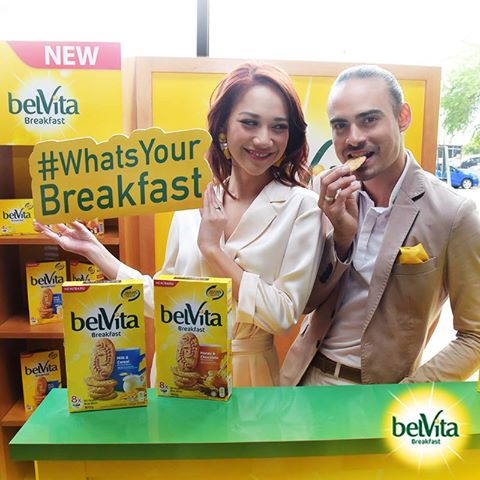
Celebrity couple Ashraf Sinclair and Bunga Citra Lestari is the ambassador of belVita in Indonesia and Malaysia

USD 5.2 million to expand Tampoi plant

Mondelez has recently announced it has invested RM 21 million (USD 5.2 million) at its halal-compliant manufacturing plant in Tampoi, Johor a state nearest to Singapore. The current annual capacity is over 32,000 tonnes of biscuits.

Expansion to cater to Southeast Asia markets

The additional expansion is to cater to the domestic as well as the Southeast Asia markets. At the moment, the belVita breakfast biscuits account for 14% of the factory’s production capacity. The factory currently produces 46 stock keeping units (SKUs) for brands like Tiger Biskuat, Chipsmore and Jacobs. The finished products are also exported to Southeast Asia, Hong Kong and Lebanon.

belVita growing 20% annually

The company said the belVita breakfast biscuits is growing by around 20% per year in the past few years. Mondelez produces belVita at its Tampoi factory for markets like Indonesia.

Indonesia’s breakfast market is worth IDR 31.6 trillion

According to research by Mondelez Indonesia, the breakfast market in Indonesia was valued at IDR 31.6 trillion (USD 2.3 billion) in 2015. The company launched belVita on 19 April 2015 to tap into the huge breakfast market. belVita is aimed at the 25-35 age group who are seeking convenient, nutritious and tasty breakfast option, said Sunil Taldar, Mondelez Indonesia president director during an interview with Metro TV.

Mondelez Indonesia currently has three factories in Cikarang, Karawang dan Bandung and does not rule out the possibility of adding another factory. At the moment, biscuit accounts for over 50% of the company’s revenue in the country, said Taldar.

7-Eleven Malaysia adds onigiri

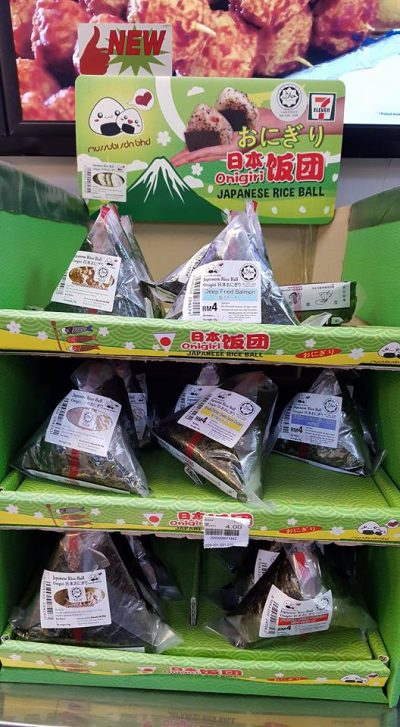
Image taken by the author at 7-Eleven Sunway Medical Centre

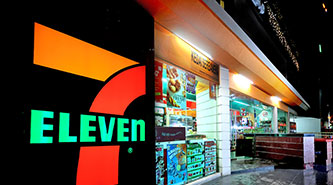
The author paid a visit to the 7-Eleven outlet at Sunway Medical Centre in Bandar Sunway, Petaling Jaya, while undergoing a routine medical check up at the medical facility.

New Japanese rice ball

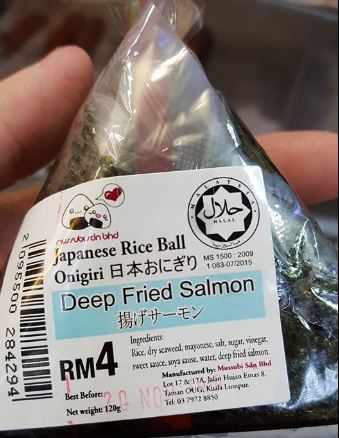
7-Eleven Malaysia Holdings Bhd has enriched its ready-to-eat section with onigiri or Japanese rice ball. Each onigiri weighs 120g and is manufactured by Mussubi Sdn Bhd, which is located at Taman OUG, Kuala Lumpur. The halal (Jakim-certified) onigiri is priced at RM 4 each.

7-eleven-onigiri-2

The onigiri range includes:

  • Egg mayo
  • Panpanji (sesame chicken)
  • Deep fried salmon
  • Teriyaki chicken (sweet sauce chicken)
  • Ebiko (capelin roe)
  • Potato mayonnaise
  • Tanuji (fried rice)
  • Cucumber

Steamed bun

7-eleven-steamed-bun

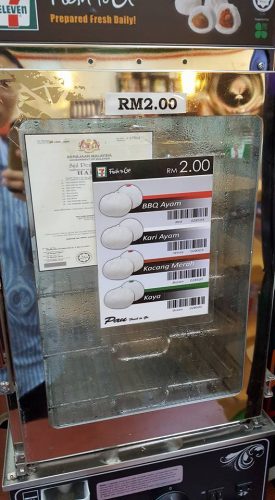
The convenience store chain, the largest in Malaysia, has been making available hot steamed bun (pau) in its stores. There are four steamed buns – BBQ chicken, curry chicken, red bean and kaya. The selling price for each halal (Jakim-certified) bun is RM 2.00. PPS Food Industries Sdn Bhd is the steamed bun supplier to 7-Eleven.

On the halal-certified list are 10 types of steamed bun but only four were available in the store at Sunway Medical Centre. The other six buns include petai steamed bun, kurma (date) steamed bun, chicken rendang steamed bun and meat rendang (rendang daging) steamed bun.

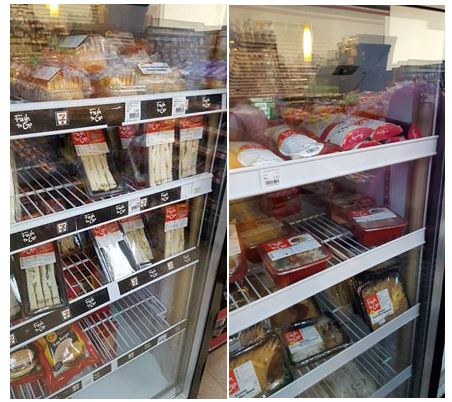
Fresh to go sandwiches and ready meals

7-eleven-chilled-food-4

  • Crabstick Spread Salad Sandwich
  • Sandwich Chicken Cajun
  • Garden Salad with Kewpie Sauce
  • Sausage Bun with Black Pepper Sauce
  • Sandwich Potato Spread
  • Sandwich Chicken Mayo Salad
  • Sandwich Chicken Mayo Salad Wholemeal
  • SCH Pocket Pie Chicken
  • Panini Chix Sundried Cheese Cheddar
  • CP Egg Burger
  • Entrée Nasi Lemak Ayam Rendang
  • Entrée Fried Rice Malaysia
7-eleven-sausage
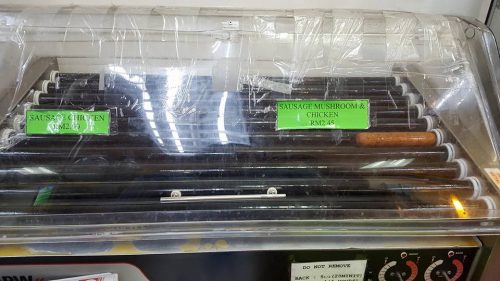
Hot sausage
7-eleven-bread-1
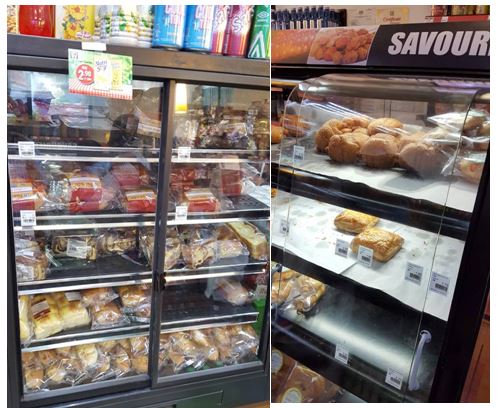
Bread, pastry and savoury food

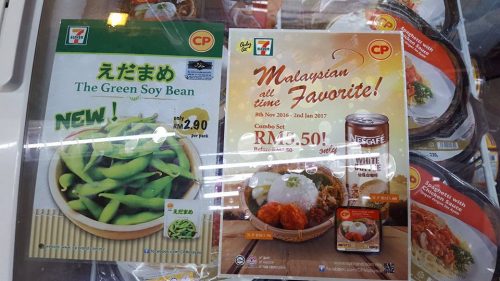
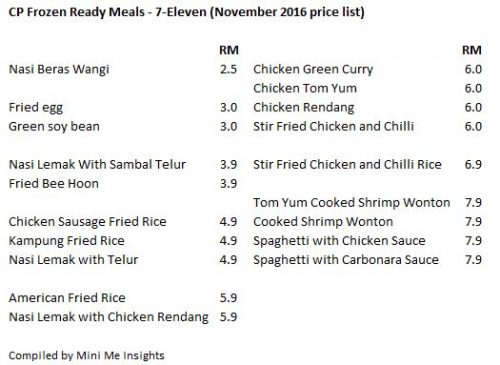
CP frozen ready meals

7-eleven-cp

7-eleven-cp-ready-meals

The opening of the first FamilyMart outlet in Malaysia in November 2016 will intensify competition in the ready-to-eat segment. The introduction of onigiri by 7-Eleven is seen as one of the steps taken by the leading convenience chain to improve its ready-to-eat offerings to compete in the new environment.

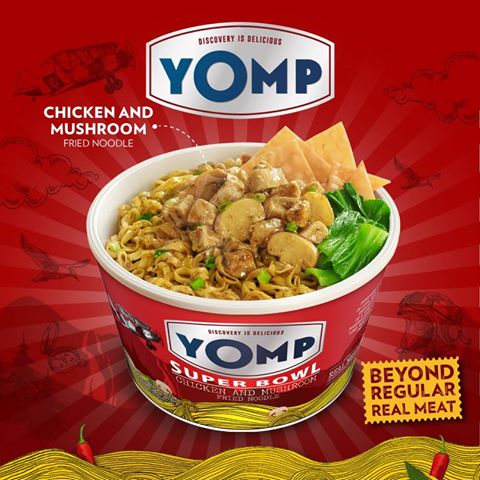
Yomp Super Bowl with real meat competes in niche bowl segment

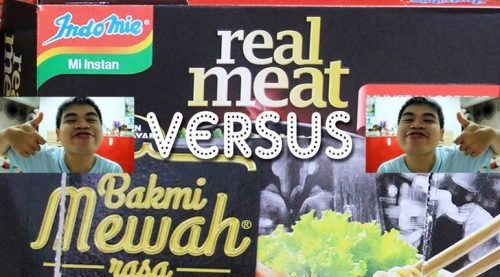
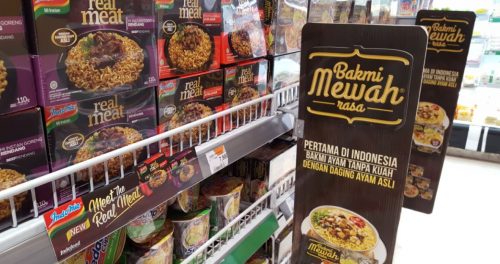
Heated competition between Bakmi Mewah and Indomie Real Meat

With competition between Bakmi Mewah and Indomie Real Meat becomes increasingly heated in social media and on the ground. Lurking in the undercurrent is a third contender – ABC Yomp Super Bowl, the first bowl noodle in Indonesia with real meat.

real-meat-vs-bakmi-mewah

Pack dominates instant noodles sales

Mayora’s Bakmi Mewah was the first to come up with the premium real meat concept in late 2015, followed Indomie Real Meat in early 2016. Both are instant noodles in pack, which is the biggest segment. Cup/bowl, on the other hand, is the smallest of the two.

Yomp goes for differentiation

yomp-superbowl

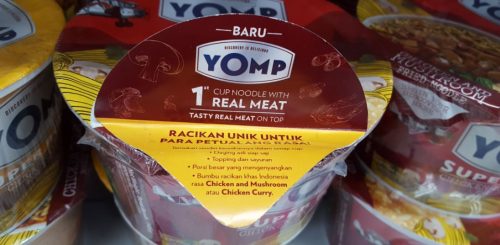
PT ABC President Indonesia, a joint venture between local PT ABC Central Food and Taiwan’s Uni-President Enterprises Corporation, avoided the competition in the crowded pack segment by focusing on the convenient, ready-to-eat bowl market.

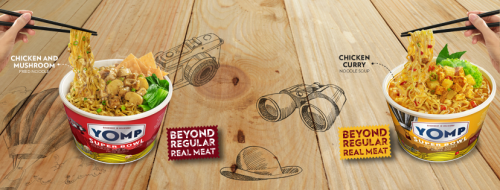
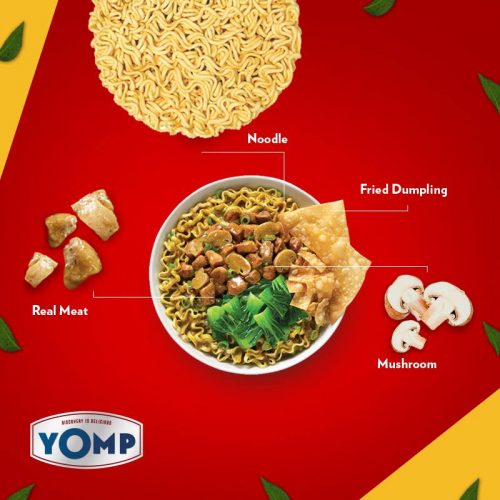
Launched in August 2016, Yomp Super Bowl comes in two flavours – Chicken Curry and Chicken and Mushroom.

yomp-ingredients

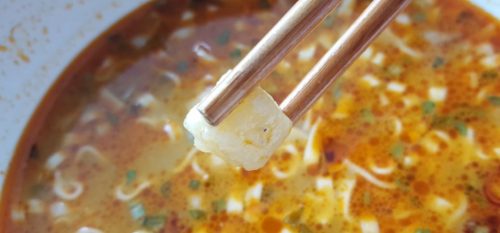
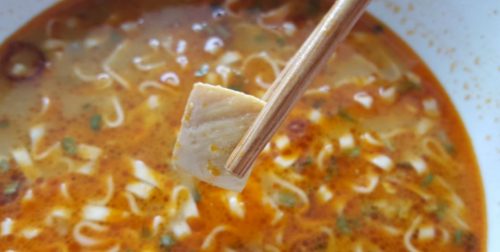
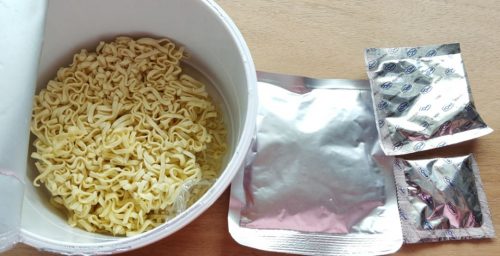
The author reviewed the Chicken Curry noodle. What amazes me is the retort pouch contains not only real meat but also real potato pieces.

yomp-content

yomp-potato

Real potato pieces (image above captured by the author)

Real meat pieces

Real meat pieces (image above captured by the author)

Longest in diametre

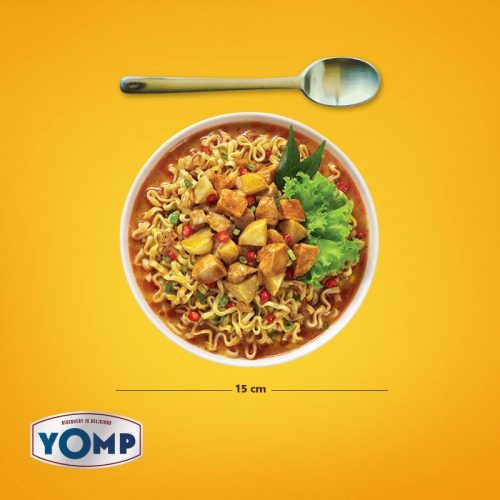
Yomp Superbowl claims to have the longest diametre – 15cm – making it the largest bowl noodle in Indonesia.

yomp-15cm

Brand activation

yomp-cosplay

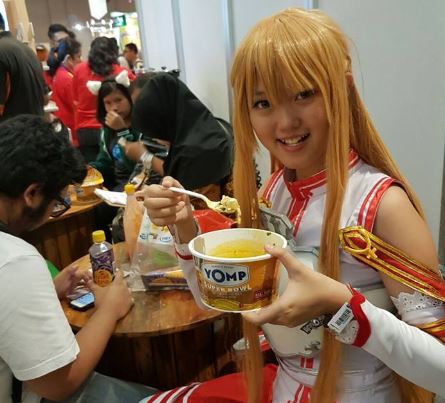
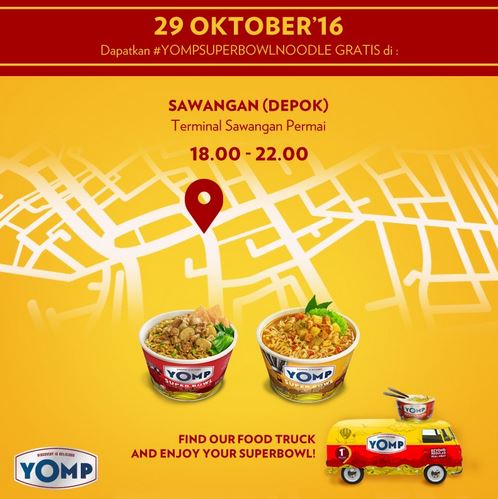
Yomp Super Bowl participated in Anime Festival Asia Indonesia 2016 to reach out to anime fans who are also young adults, a key market for cup/bowl noodle. The company also introduced the Yomp Foodtruck, which travelled around the Jabodetabek metropolitan region including Jakarta and Depok distributing free noodles to encourage trial. (image above from Yomp official Facebook page)

yomp-foodtruck-2

Widely distributed

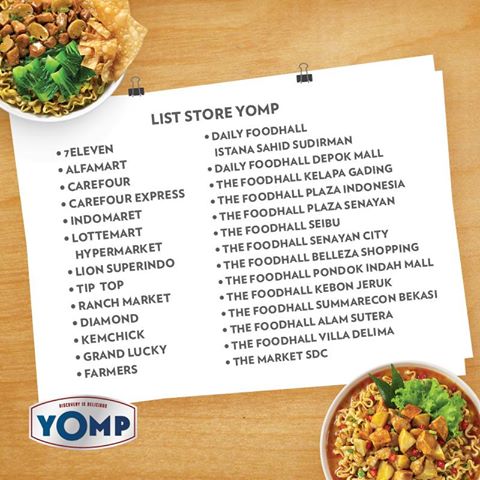
Yomp Super Bowl is widely distributed and is available in the leading retail outlets including Alfamart, 7-Eleven, Indomaret and Carrefour.

yomp-distribution

Overshadowed by Bakmi Mewah, Indomie Real Meat

Yomp Super Bowl is overshadowed by Bakmi Mewah and Indomie Real Meat. Apparently, ABC President Indonesia did not spent on creating a TV commercial for Yomp. Most of the clips about Yomp were user generated contents with the company counting on social media influencers to spread it though word-of-mouth.

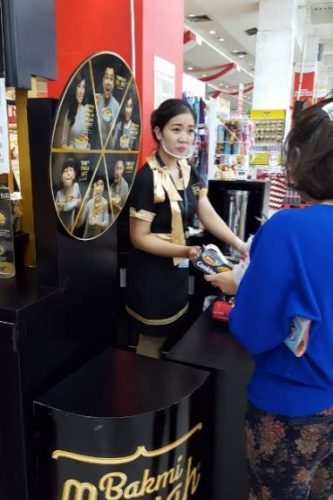
bakmi-mewah-in-store

At Carrefour, Mangga Dua, August 2016

Images above were captured by the author at Carrefour, Mangga Dua, August 2016

yomp-1st-real-meat

Premiumising the category

All three instant noodles with real meat show the key players are premiumising the instant noodle market. With volume consumption slowing down as consumers now have more alternative, selling more expensive instant noodles with better quality is the way forward not only to sustain value growth but to keep consumer engaged with the category.

Samyang Challenge at SIAL Interfood 2016, strengthens halal assurance

The supersized noodle on the top left is the legendary Samyang Bldalk Bokkeummyeon

South Korea’s Samyang Foods Co., Ltd. made a big appearance at SIAL Interfood 2016 in early November 2016. SIAL Interfood is one of the major food and beverage trade shows held annually in Indonesia.

Samyang Challenge

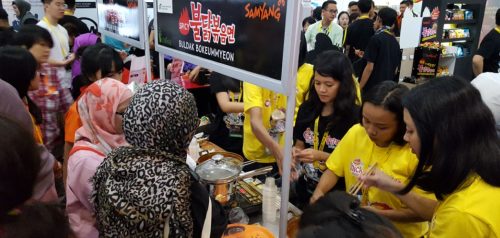
Samyang Challenge in Indonesia

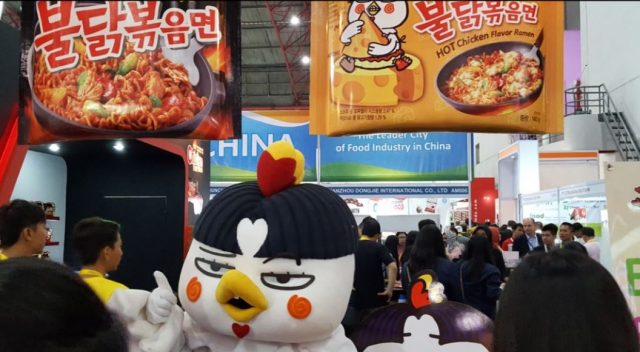
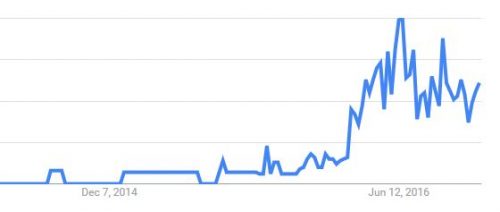
The key theme at the event was to celebrate the hot chicken flavour ramen leveraging on the Samyang Challenge, which is trending on social media. Samyang Challenge is a dare where consumers has to eat the whole packet of the fiery noodle within the shortest possible time. This feat is often captured and shared on social media.

Samyang Challenge as the key word search on Google Trends

Samyang Challenge as the key word search on Google Trends – globally (image above)

Indonesians are wholeheartedly embracing the Samyang Challenge. Young consumer are especially keen on the craze of subjecting themselves to the trial of eating extremely spicy food and surviving the ordeal and boosting about the experience with their friends.

Some Indonesians are bringing the spiciness to the next level by adding local spices like cabe rawit (bird’s eye chili) and sambel shalom into the fiery mix to make it more potent.

samyang-challenge-cabit

Samyang at SIAL Interfood 2016

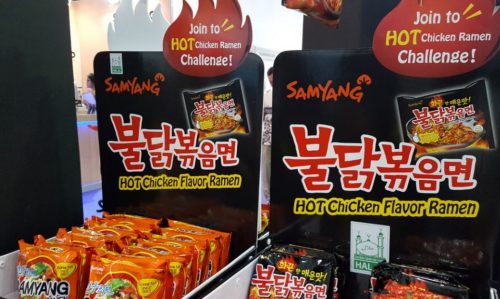
The Samyang Foods booth at SIAL Interfood 2016 paid homage to the fiery noodles – the hot chicken flavour ramen. The ‘stew’ type Samyang Bldalk Bokkeummyeon is the spiciest with a spicy level of three out of three, while the hot chicken flavour ramen (cheese) is the mildest with a spicy level of just one out of three.

samyang-challenge

Join the hot chicken ramen challenge

Images above were captured by the author at SIAL Interfood 2016

Assuring consumers on halal

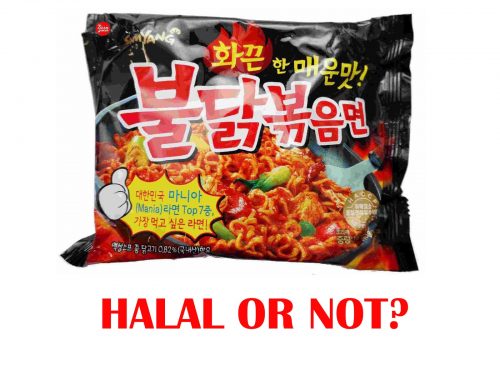
samyang-halal-or-not

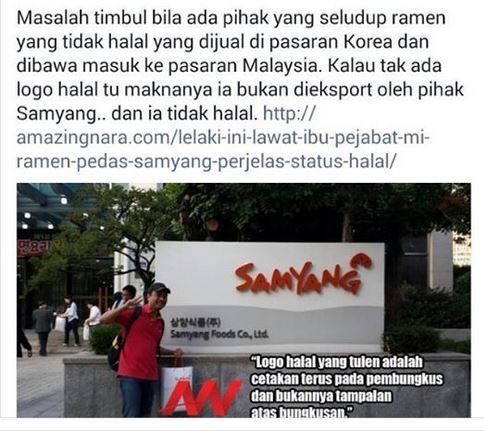
Samyang has come under a lot of attention in Indonesia and Malaysia over the halal issue. One consumer from Malaysia by the name of Nizam Tikir went to the extent of flying all the way to South Korea to visit the Samyang headquarters in Miasamgeori, Seoul to obtain clarification on the matter. (image below)

Malaysian netizen visiting Samyang factory in Seoul

He received confirmation from Samyang Foods Co Ltd Executive Director of Sales (Overseas) that the Samyang instant noodles exported to Indonesia and Malaysia are made in Wonju. The dedicated factory is certified halal by the Korean Muslim Federation (KMF). The instant noodles sold in South Korea is not halal and a small portion of them ended up in overseas markets after being exported by unauthorised vendors. This is the root cause of the confusion why there are non-halal Samyang noodles in markets like Indonesia and Malaysia.

According to Halal Korea, a halal watch body in South Korea, the lack of a halal chicken slaughterhouse is the real reason why South Korea has to import halal chicken from Brazil. Chicken meat is used in the production of Samyang hot ramen noodles.

halal-korea

Samyang will need to work hard to assuage Indonesian and Malaysian consumers on the halal status of its noodles before it becomes unmanageable.

HOT NEWS

McDonald’s Brings Birthday Cheer to Orphans

0
McDonald's Community Month initiative and RMHC throw birthday parties for 12,000 orphans at 400 welfare homes nationwide Kuala Lumpur, 2 October 2022 – McDonald's Malaysia and...

MUST READ

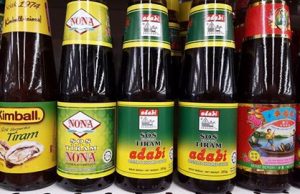
Adabi clarifies about authenticity of Adabi Oyster Sauce

0
There has been a commotion over the authenticity of Adabi Oyster Sauce in Malaysia. In response to that, Malaysia's Adabi Consumer Industries Sdn Bhd...