Home Blog Page 1147

A tour inside Alfamart Shell Residences in Manila

The Alfamart at SMDC Shell Residences near The Mall of Asia (MOA) is a good example to show how the minimarket is adapting to the local environment in the Philippines.

alfamart-shell

alfamart-shell-1

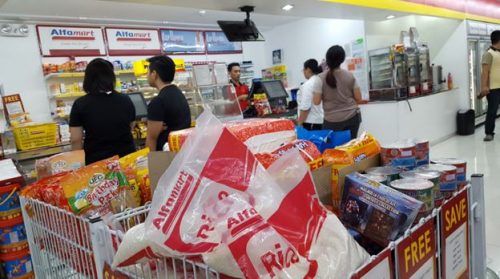
On the main entrance is a price markdown area with products selling at a discount.

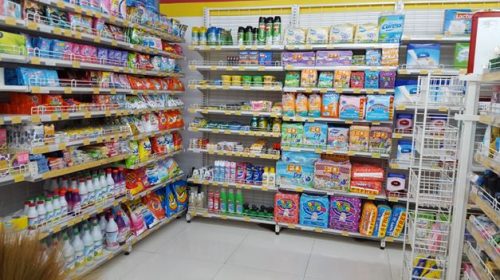
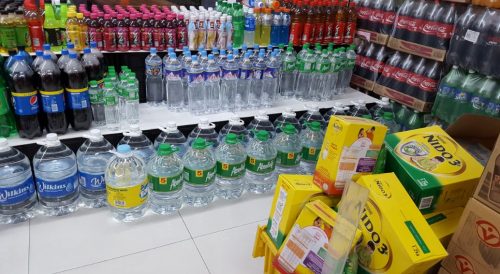
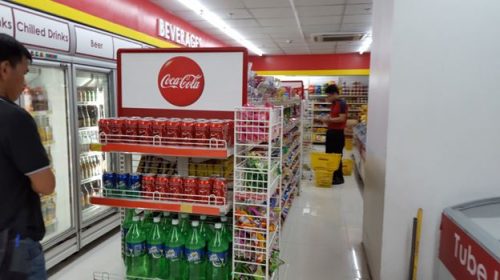
On the left is the section for household products, cosmetics and toiletries, baby food and diapers as well as non-chilled beverages.

alfamart-shell-2
Household products, diapers and baby food
Non-chilled beverages

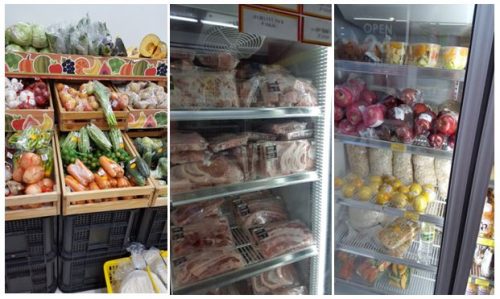
On the right is the area for food and beverages including fresh produce and frozen meat.

alfamart-shell-3

As a minimarket, this store has all the products required by a typical household to cook a meal from scratch.

alfamart-shell-5
Fresh produce (right), frozen meat (middle) and fruits (right)

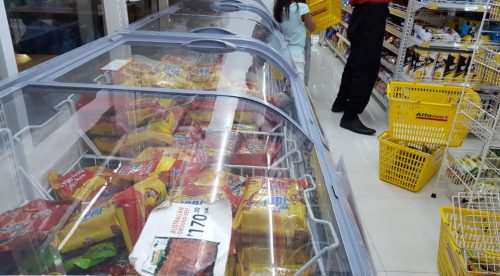
The frozen meat section has chicken wings, chicken thighs, Australian ground beef, hotdogs, frozen french fries and frozen vegetables.

Frozen foodstuff
Frozen foodstuff

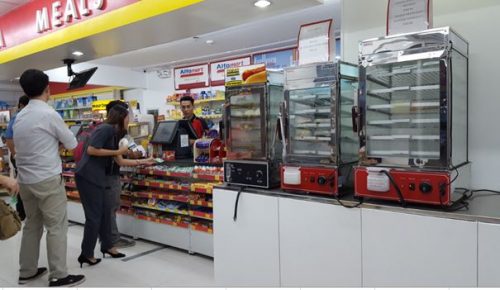
Right next to the check out counter is the ready-to-eat hot food section serving hotdog sandwich, siopao and chicken BBQ meal. The hot food improves the competitiveness of Alfamart vis-a-vis other convenience stores where hotfood has become their key selling point.

alfamart-shell-8
Ready-to-eat hot food

How it differs from the minimarkets in Indonesia

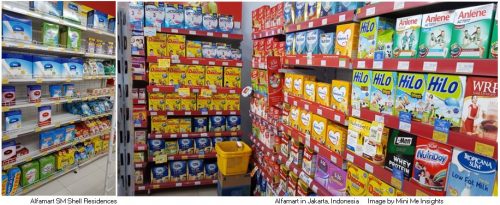
In Indonesia, minimarkets such as Alfamart and Indomaret are a key destination for powdered milk largely because of the competitive prices and promotions.

alfamart-shell-9-vs-indonesia

Indonesian minimarket chains focus strongly on promotion. The promotional materials and items are clearly visible inside and outside of the stores through POS and banners as well as online/social medai. However, this is largely absence in the Alfamart in the Philippines where it does not even have its own website and social media pages.

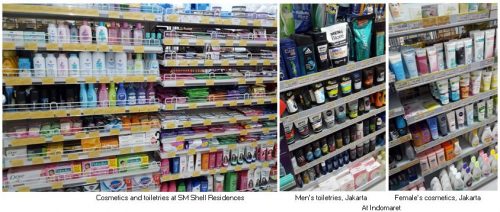
At Indonesia’s Indomaret, men and female cosmetics and toiletries are placed next to each other but in separate shelves. There is also a wider range of men’s products unlike Alfamart Shell Residences where the choices of men’s cosmetics and toiletries are limited.

alfamart-shell-10-vs-indonesia-indomaret

One key difference between the Indonesian and the Philippines’ minimarket is the former does not sell frozen food.

There is still a lot of room for improvement for Alfamart Philippines with the setting up an online presence being the first step to improve consumer engagement.

Alfamart Philippines update, financial comparison with competitors

Image taken by the author

It has been a while since this blog talks about Alfamart’s operation in the Philippines.

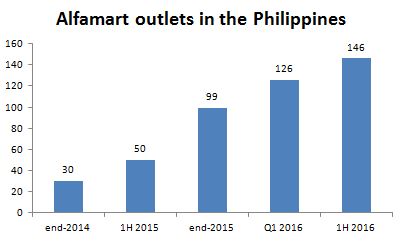
As for the end of June 2016, there were 146 Alfamart outlets in second most populous nation in Southeast Asia. Almost all the stores are located in Luzon. The company plans to bring Alfamart ‘across the country very soon’, including to the Visayas-Mindanao area, said SM senior vice president for investor relations Corazon Guidote.

Compiled by Mini Me Insights from company information and news reports

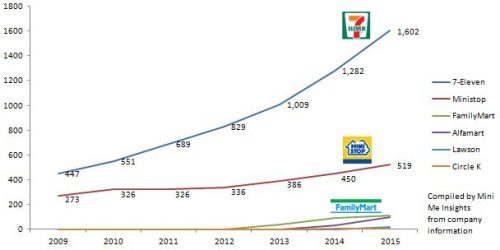
Alfamart occupies 4th spot in overall store count

ph-covenience-store-outlet

In the convenience store segment, 7-Eleven is still the market leader with a total of 1,602 outlets at the end of 2015. Trailing behind on a wide margin is Ministop with 519 stores. Alfamart (although technically is a minimarket) is 4th with 99 outlets.

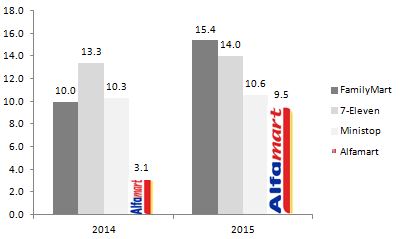
Lowest average sales per store but catching up fast

ph-convenience-store-average-sales

Data above was compiled by Mini Me Insights. Revenue comprises merchandise sales in PHP million per store.

Among the four chains (excluding Circle K), the average sales per store for Alfamart is the lowest at PHP 9.6 million (USD 0.2 million) in 2015. The low average sales per store is explained by the large number of stores that were opened less than one year and the fact that minimarket sells products at prices comparable to supermarket but lower than convenience store. Another notable difference is Alfamart sells frozen ready to cook meat, a category absent in the convenience store chains.

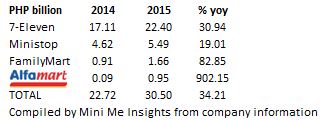
Alfamart net sales up by 9x times in 2015

ph-convenience-store-sales

Of the four chains. Alfamart posted the highest increase in revenue, up 9x times, in 2015 compared with a year ago. The strong growth is attributed the net increase of 44 outlets in 2015 and a very small base in 2014. The first Alfamart outlet opened in June 2014.

Profitability wise, both Alfamart and its competitor FamilyMart are still loss making as they have not achieved economies of scale.

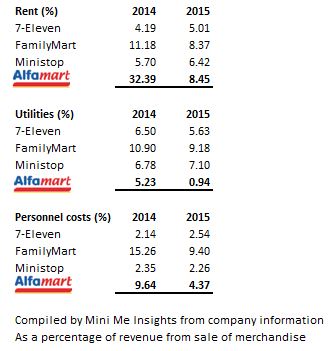
Expenses

Here are a few ratios to benchmark Alfmart’s cost structure with its convenience store peers. As the minimart chain commenced operation in 2014, it took a while before operation stabilised. Newcomers are more likely to experience higher rent and personnel cost as a share of revenue from merchandise sales. Strangely, utilities cost (communications, light and water) for Alfamart is very low at PHP 8.9 million in 2015 up from PHP 4.9 million a year ago.

ph-convenience-store-cost-breakdown

Opening 100 outlets in 2016

Alfamart plans to open 100 outlets in 2016, said Alfamart CEO Hans Prawira when speaking to the Indonesian news agency Antara on 16 September 2016. With 146 stores in operation by the end of June 2016, this will leave another 53 stores to open to reach the 2016 full year target of 100 new stores.

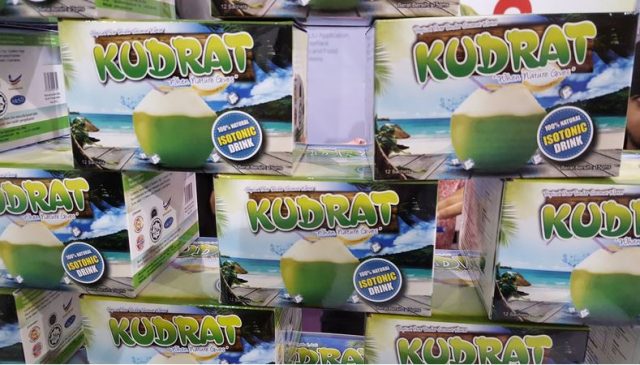
Kudrat first powdered coconut water in Malaysia

One product caught my eye at the recent Halfest 2016, which was held from 31 Aug 2016 to 4 Sep 2016. That product was known as Kudrat, a  powdered coconut water. The manufacturer SGN Sales Sdn Bhd claims Kudrat is the first of its kind in Malaysia. Based on my observation, it is likely so as there is no powdered coconut water product in Malaysia. I have seen something similar by an Indian company for the India market but nothing of this sort in Malaysia.

The company said it is targeting restaurants and hospitals with the new powdered coconut water. The drink will enable these establishments to offer customers with something new besides the usual beverages.

Each sachet weighs 15gm and can be used to make 250ml of natural coconut water.

Overnight oat gains following in Malaysia, Indonesia (Updated)

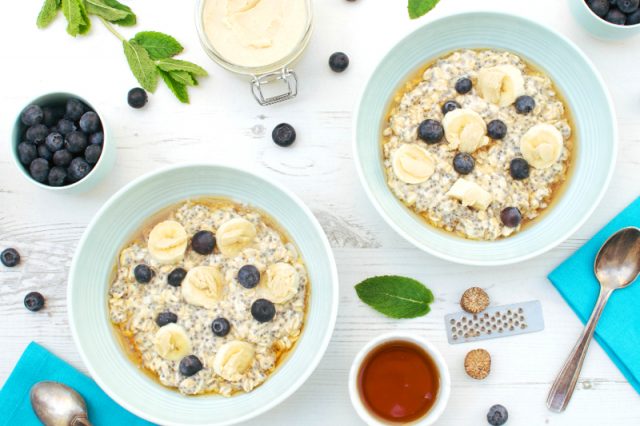
Image from theflexitarian.co.uk

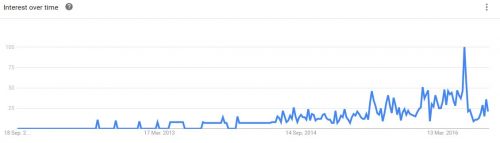
Overnight oatmeal is growing in popularity in Malaysia and Indonesia with consumers eating it as a way to aid weight loss and to keep their hunger under control. Some people find it easier to digest soaked oats than eating cooked oatmeals as the digestibility of oats improves by soaking it overnight.  Soaked oat also makes a quick breakfast as the oatmeals were prepared the day before. Image above comes from Google Trends for overnight oats (Malaysia)

Google Trends for overnight oats (Malaysia)

The overnight oatmeat concept has taken hold in Malaysia and Indonesia. Practitioners do it at home but some companies have started to turn it into a ready-to-eat variant selling through special order or making it available in specialty stores and supermarkets.

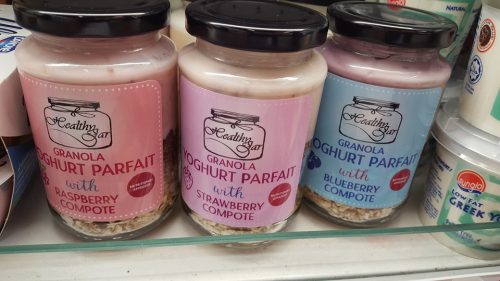
In Malaysia, Healthy Jar, founded in April 2015 claims to be the ‘oatmeal sifu that serves oatmeal in a jar.’ The products are available at over 20 retail stores. Image below shows Healthy Jar Granola Yoghurt Parfait at RM 16.90 per bottle.

healthy-jar

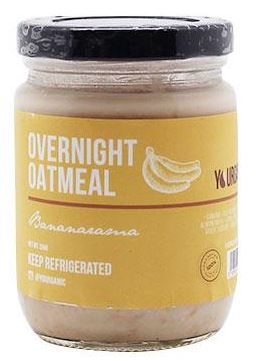
In Indonesia, the overnight oat scene is more vibrant with more choices and players. Yourganic, established in May 2013, has three overnight oatmeals in 250g selling online and via speciality stores like Kem Chicks and Ranch Supermarket. On the website, each bottled is priced at a price of IDR 55,000, which is higher at physical outlets.

  • Overnight Oatmeal Kakaoat
  • Overnight Oatmeal Berryoatsy
  • Overnight Oatmeal Bananarama

overnight-oat-meal-banana

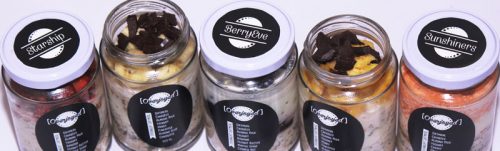
Jakarta-based Overjoyed sells smoothies, pressed juice and overnight oatmeals. The overnight oatmeas are mixed with plain yoghurt, almond milk and fresh toppings. The shelf life is two days. Each bottle is priced at IDR 50,000.

overnight-overjoyed

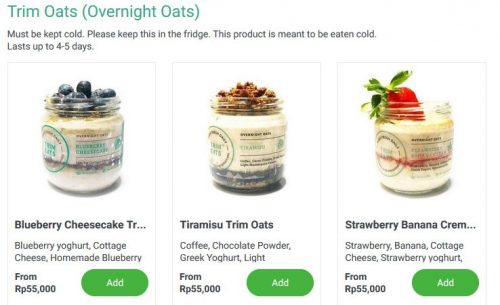
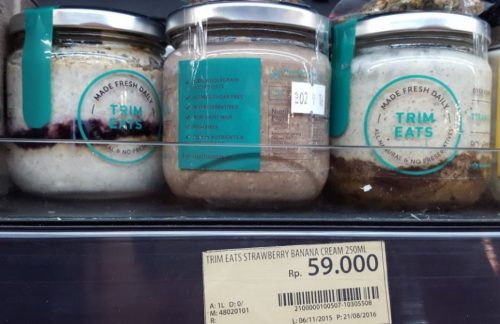
Trim Eats claims to be the ‘first and leading savoury oats innovator’ in Indonesia. As stated on the website, the company ‘provides overnight oats that are made with 100% wholegrain rolled oats and soaked overnight with non dairy milk (unsweetened almond milk, hazelnut milk, or soy milk).’

trim-eats

Image above from Trim Eats website

Image by the author taken at Ranch Supermarket

Image was taken by the author at Ranch Supermarket

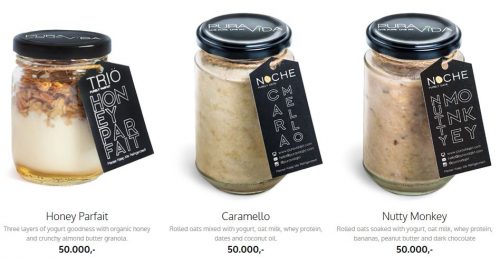
Other players in the overnight oat scene include KREATÉ and PÜRA VÏDA.

Pura Vida Overnight Oats. Image from Pura Vida website

Most of the specialty food players in Indonesia and Malaysia sell overnight oatmeals through social media (Instagram and Facebook) and directly on their website with some having presence in physical stores. The overnight oats are priced at a premium around IDR 50,000 to IDR 55,000 in Indonesia (USD 3.8 to USD 4.2), which suggests they are targeting the middle and upper class consumers who are health conscious and who are keenly following the latest health fad.

Perhaps dairy and oat manufacturers can take a cue from what’s happening in the overnight oatmeal scene with cross-category marketing involving dairy and oatmeal.

Update on 8 October 2016

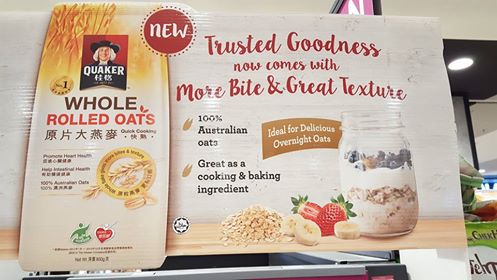
whole-rolled-oats

PepsiCo (Malaysia) Sdn Bhd has made available Quaker Whole Rolled Oats. The product is promoted as ideal for overnight oat. The Quaker Whole Rolled Oats features the logo of being the number 1 oat in Hong Kong as audited by Nielsen from January 2011 to December 2013. PepsiCo is importing this product from Hong Kong to into the trend of overnight oat in the country.

Indonesia soya milk drink imports down in 2015, rebounded in H1 2016

22% decline in import in 2015

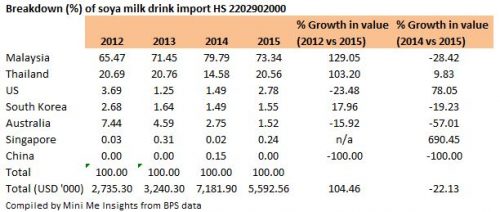
Indonesia’s soya milk drink import in 2015 declined 22.13% in value to USD 5.59 million compared with the same period in 2014, according to the Indonesian Central Bureau of Statistics (BPS). In 2015, volume fell 14.35% year-on-year to 9.22 million kg. The decline in volume and value presents a surprising change from several years of strong growth (2012-2014) with Malaysia driving most of the growth during that period.

soya-milk-drink-import-2015

Malaysia’s significance declined

In 2015, the significance of Malaysia declined with the gap filled by imports from Thailand. Despite the rise of Thailand, Malaysia still accounted for the bulk of import with 73.3% of value and 85.4% of volume in 2015.

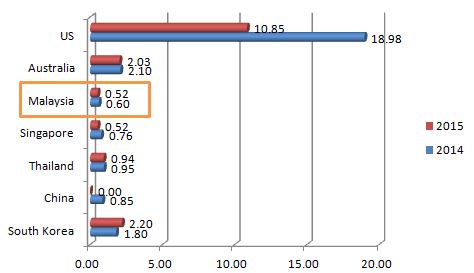
Low price is the key reason why Malaysia is popular with importers. In 2015, a kilogram of made-in-Malaysia soya milk drink cost USD 0.52 at the port of entry. As a comparison, the soya milk drink from the US and Australia were priced at a premium, respectively at USD 10.85 and USD 2.03 per kilogram.

average-price-soya-milk-drink-chartImage above shows the average price per kilogram. Compiled by Mini Me Insights from BSP data

Strong rebound during first half 2016

After the lull in 2015, the market rebounded strongly in the first half 2016 with import volume rising 142.9% and value surging 98.6% year-on-year. The first half 2016 import value reached USD 6.25 million, more than the full year value achieved in 2015. The first-six month volume import of 11.7 million kilogram in 2016 also surpassed the full year volume in 2015.

More local products emerging

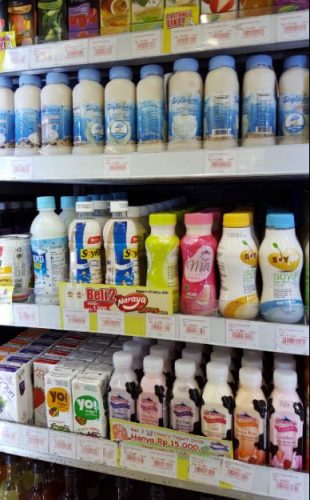
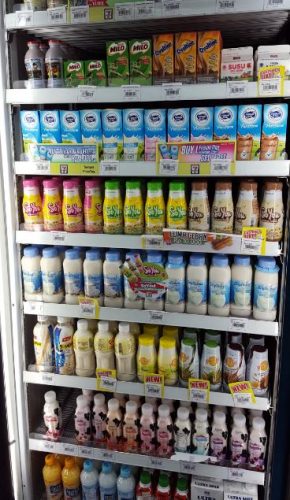
More domestic products are being launched into the market and they are grabbing shelf space. 7-Eleven now devotes three racks for soya milk drink as of August 2016 compared with only 2 racks in October 2015 (image below)

Soya milk drink at 7-Eleven in October 2015

Soya milk drinks at 7-Eleven in August 2016 (image below).

soya-milk-drink-7-11-august-2016

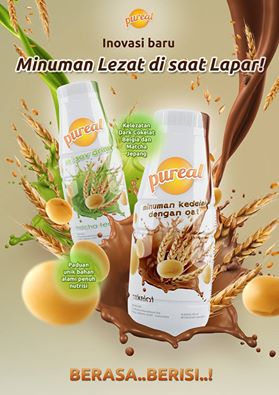
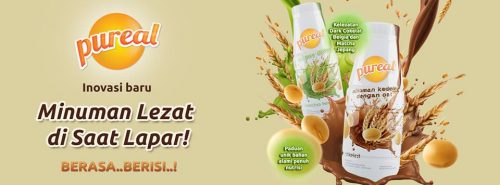
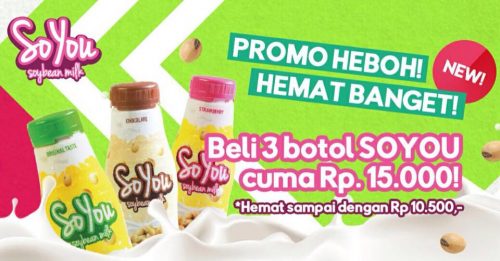
The product composition has also changed with the racks in August 2016 now including a lot more local brands such as Naraya, Soylicious and SoYou (PT Zehat International) and Pureal (PT Akasha Wira International Tbk) alongside imported Yeo’s. Pureal was launched in 2015 and contains oat, while SoYou was introduced in May 2016.

In October 2015, the racks consisted of imported Yeo’s and SoyUp and local brands Soylicious and Cimory.

pureal

soyou

Key takeaways

Soya milk has attracted a lot of attention from the media focusing primarily on its benefits. The positive health benefits of soya milk have spilled over to the soya milk drink category. Consumers are now upgrading to packaged soya milk drink from drinking soya milk on the streets. Import helps to fill the gap in meeting the rising demand for packaged soya milk drink. Eventually, such needs will be increasingly fulfilled by domestic companies as evidenced by the increase in new launches by local brands. In the meantime, importers are enjoying a heyday and enjoying while it last.

Palm oil-based santan sawit posing as alternative to coconut milk

Santan kelapa or coconut milk is a popular ingredient used in Southeast Asia and is best known as an indispensable ingredient in nasi lemak. In August 2015, the Malaysian no-frills airline AirAsia aptly named its new inflight menu Santan for use across all its routes as santan binds the food across the region.

In Malaysia, however, santan is increasingly getting a bad reputation for its saturated fats and is being blamed for contributing to high levels of bad cholesterol. The common alternatives to santan are yoghurt and milk. Nestle has been promoting yoghurt as a substitute for coconut milk for cooking.

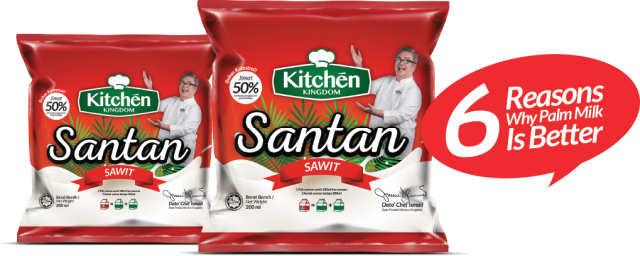
Santan sawit by Kitchen Kingdom

kitchen-kingdom

Apart from milk and yoghurt, there is an existing challenger to coconut milk. It is called santan sawit, a palm oil-based coconut milk substitute. Santan sawit was developed by Lembaga Minyak Sawit Malaysia (MPOB) or the Malaysian Palm Oil Board in 2008. In 2010, local Premium Food Corporation Sdn Bhd.(PFC) introduced Khalis santan sawit into the market but the response was not exceptional.

Now, new entrant Kitchen Kingdom Sdn Bhd plans to change that with its new santan sawit. Actually the product was available since the end of 2015. Kitchen Kingdom santan sawit was officially launched at Halfest or Halal Fest at the Mines Convention Centre held over a five-day period from 31 August 2016 to 4 September 2016.

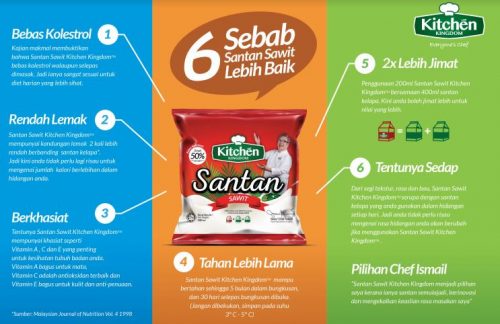
According to Kitchen Kingdom, the company claims its santan sawit has 6 benefits:

  • Cholesterol free
  • Low fat (contains 2 times lower fat compared to coconut milk)
  • Nutritious (contains Vitamin A, C and E)
  • Last much longer (up to 5 months while in packaging and 30 days when the packaging is opened.)
  • Save up to 50% (usage of 200ml Santan Sawit Kitchen Kingdom is equivalent to 400ml regular coconut milk usage)
  • Simply delicious (similar texture, taste and smell as regular coconut milk in your daily meals)

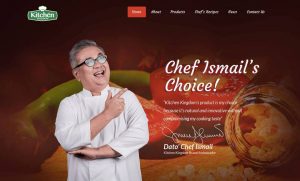
Kitchen Kingdom said it will work to promote santan sawit usage in Malaysia and has roped in celebrity Chef Ismail as its brand ambassador. The company also has plans to expand into Indonesia via Giant Supermarket. In the coming two years, the plan is to go into Pakistan, China and Thailand followed by other Southeast Asian countries, said Kitchen Kingdom Executive Director Mutanazim Abd Mubin.

chef-ismail

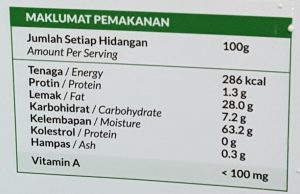
Less fat compared to coconut milk

kitchen-kingdom-nutrtion

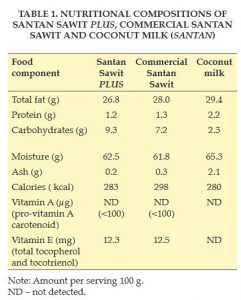
Based on the study by MPOH comparing the nutritional composition of commercial santan sawit versus coconut milk, santan sawit’s total fat is only 4.8% less than coconut milk on a 100g per serving basis. The ready-to-use liquid santan sawit PLUS developed by MPOH has lower total fat than the two. But according to Kitchen Kingdom, 200ml Santan Sawit Kitchen Kingdom is equivalent to 400ml regular coconut milk usage. Therefore, the total fat should of Kitchen Kingdom santan sawit should be less than coconut milk.

On a per 100g basis, the commercial santan sawit has higher calories than coconut milk and lower protein than coconut milk. The carbohydrate of commercial santan sawit is much higher than coconut milk at 7.2g vs 2.3g per 100g serving. At the end, it is down to consumer education to ensure the success of santan sawit. Image below comes from the Nutritional Value report from MPOH.

Nutritional value from MPOH

New Mie Sedaap White Curry

White curry instant noodle has become an established category in Malaysia since MyKuali first introduced it in May 2013. However, white curry has not taken hold in neighboring Indonesia despite scoring success in Singapore, Taiwan and Hong Kong.

There are a few imported white curry instant noodles in Indonesia’s high-end supermarkets but no local mainstream brands have innovated using white curry until Wings Food’s new Mie Sedaap White Curry.

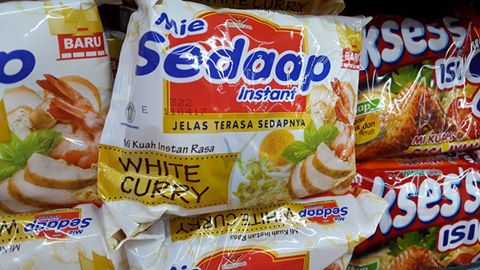
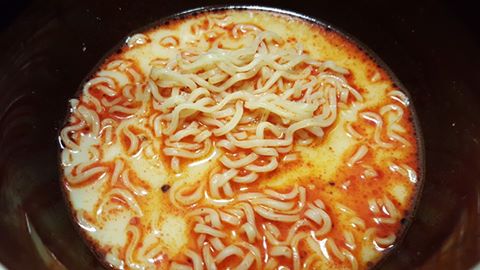
Launched around June 2016, the new Mie Sedaap White Curry uses non-dairy creamer, which is the same ingredient used by MyKuali for its white curry noodle. The non-dairy creamer makes the noodle creamy, a unique selling point.

mie-sedaap-white-curry-2
The author’s Mie Sedaap White Curry

creamy

The taste is slightly different from the white curry in Malaysia with the spiciness formulated for the Indonesian palate. The question is would Indomie follow suit with its own white curry instant noodle?

Premiumisation?

In Malaysia, white curry is the flavour to premiumise the instant noodle category. However, this is not the case in Indonesia. White curry is just another new flavour innovation. Mie Sedaao White Curry is priced at IDR 2,000 at Lotte Mart within the IDR 1,500 to IDR 3,000 range. The real action for premiumisation is ‘real meat,’ the inclusion of real meat ingredient, which will be addressed in another post.


Nestle Greek Yoghurt given pack revamp, new flavour Salted Caramel & Chia Seed

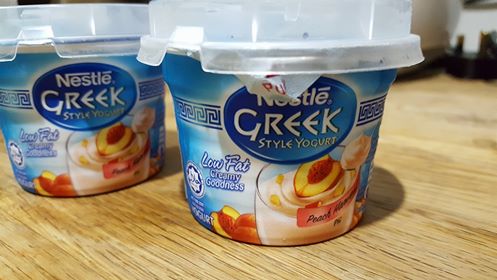
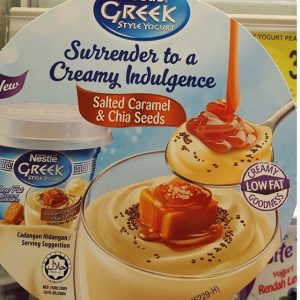
In Malaysia, the Nestle Greek Style Yoghurt has been given a new packaging design and a smaller pack size. Previously, the spoonable yoghurt weighs 135g. Now, it is in a smaller 100g packaging.

More affordable price point and portion control

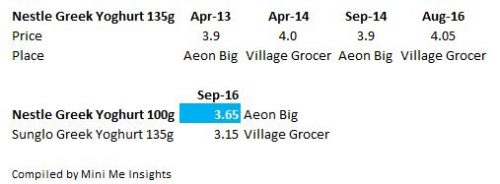
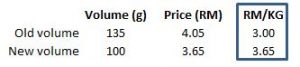
Companies can charge more for portion-controlled products than family pack, which makes smaller portions more profitable. For example, the new price for Nestle Greek Style Yoghurt is RM 3.65 (USD 0.90) per 100g, which is down from th RM 3.90-RM 4.00 level for the previous 135g format.

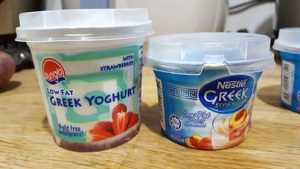
Nestle Greek vs Sunglo price

Greek vs sunglo

Even though the price has been lowered to RM 3.65 for the new 100g packaging size, consumers are actually paying more on a per volume basis. This is the same approach currently used by Coca-Cola to sell less sodas through smaller packages at higher prices per ml to drive value growth.

Nestle Greek price

The reduction in the pack size to 100g also lowers the price to a more affordable level. The closest competitor Sunglo is selling for RM 3.15 per 135g. Now the price gap has been narrowed.

New flavour

As part of the pack revamp, Nestle has also added a new flavour – Salted Caramel & Chia Seeds. The use of chia seed in dairy is interesting. The Chinese dairy firm Yili launched 伊利每益添饮用型酸奶 (Pure Day yoghurt drink) in June 2016. The yoghurt drink contains chia seed and is formulated using Maillard reaction. Perhaps we will be seeing a lot more dairy products incorporating chia seed as part of their ingredient mix to provide more texture.

Chia seeds nestle

Nestle Bliss Go with inulin promotes good digestive for children

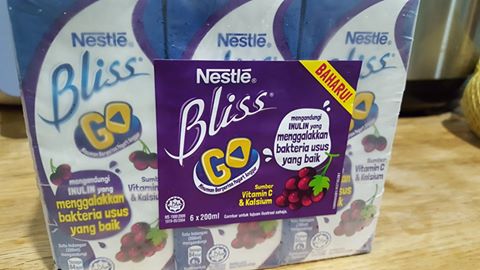
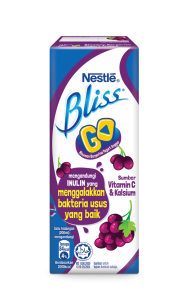
The new Nestle Bliss Go was launched in early September 2016. Targeting at children aged below 12 years old, Nestle Bliss Go comes in a portable Tetra Pak with a serving size of 200ml. It also marks the extension of the brand from targeting family especially female to one that includes young children.

Projek bliss 2

Contains inulin

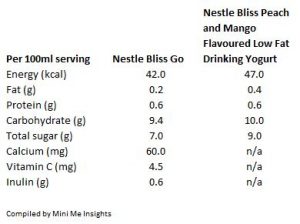
Nestle Bliss Go features inulin for digestive health. The pack reads ‘inulin promotes good bacteria in the gut.’ Apart from inulin, it also has calcium for bone health and vitamin C to enhance the absorption of iron.

Image from wanista.com

Shelf-stable drink

Nestle Bliss Go can be stored in ambient temperature, which makes it portable and ideal for children.

Use of stevia

Interestingly, Nestle Bliss Go is naturally sweetened with stevia. Stevia is perceived as a healthier option as it comes without the calories. Milo RTD uses monk fruit as a sweetener. However, stevia does leave a poor aftertaste, a thing that needs addressing if it becomes an issue with consumers.

Nestle Bliss Go Nutrition valueThe increasing use of stevia in dairy is something that is worth taking note of especially in countries with high incidences of diabetes such as India, Indonesia and Malaysia.

Why gluten-free diet is trending in Indonesia

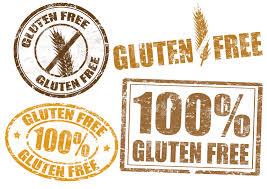
Image from http://gazettereview.com

There has been a lot of media coverage on the gluten free diet (diet bebas gluten) in Indonesia. Why are Indonesians embracing the gluten-free dietary trend?

Book on gluten-free diet

Indonesians have a history of taking up new dietary fads ranging from Mayo diet, which limits the intake of salt, sugar and carbohydrate, to avoiding rice. So what’s in it for gluten free that even led to a local author Lies Dahlia to pen a book on “Healthy Living with Gluten” (Hidup Sehat Tanpa Gluten) in 2014?
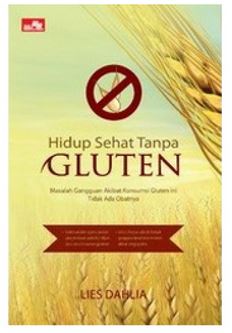
Gluten free book

Celiac disease a hidden danger for 1% of population

Even though Indonesians generally are not prone to having celiac disease, it is estimated 1% of the population suffer from celiac disease, according to The Doctor Indonesia. However, many go on with their life without even realising they have celiac disease. Only a few would took the pain of undergoing tests.

Autism and gluten-free

Parents with autistic children are a driving force in adopting the Gluten Free and Casein Free (GFCF) diet. However, there is currently no data on the number of children suffering from autism in Indonesia, said Melly Budhiman, child psychiatrist and chairwoman of Indonesia Autism Foundation (YAI). But it is estimated by the Department of Mental Health in 2013 that there were around 112,000 sufferers aged between 5 and 19.

Local baby food manufacturers have responded by introducing gluten-free rice crackers and biscuits. Here are two examples from Monde and Yummy Bites.
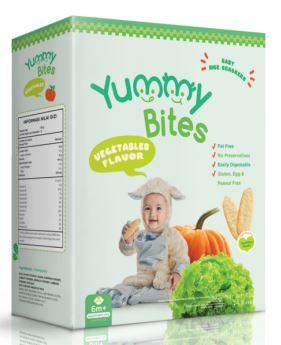
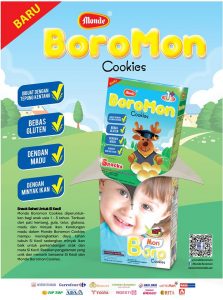
 

Image from Yummy Bites

New packaging for Boromon. Image from Monde

Avoidance for better health

It is better to be safe than sorry. Avoidance seems to be the reason why Indonesians are choosing gluten-free food. The gluten-free trend is largely commercially-driven. By highlighting gluten-free on the packaging, food manufacturers are able to improve the product’s healthy image thus justifying a premium pricing.

Gluten-free not confined to snacks

Snacks appeared to account for a high percentage of products with the gluten-free claim due to the fact that a lot of these snacks are imported from countries where the gluten-free claim has become established. However, there are other foodstuff that comes with the gluten-free claim including rice.

Here are a few examples of local specialty food products with the gluten-free/low-gluten claims:

Bionic Farm Organic Red Rice (gluten free) (image below)
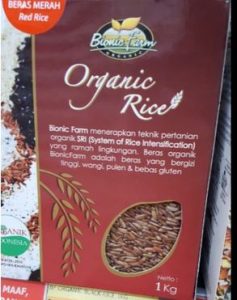
Bionic Farm Red Rice

Image below – Bionic Farm Sprouted Beans (gluten free)
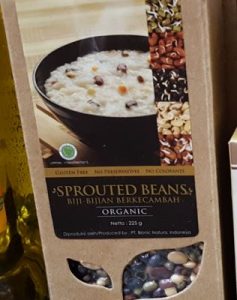
Bionic Farm Sprouted Beans

Mister Timber Oat and Almond Stick Crackers Baked with Fruits (low gluten claim) (image below).
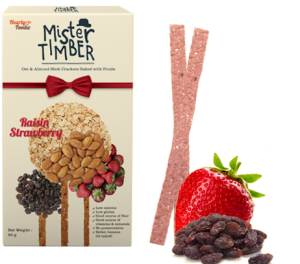
Mister Timber

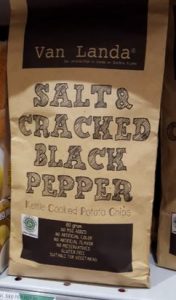
van lande

Image above is the Van Landa Salt Cracked Black Pepper Potato Crisps (gluten free).
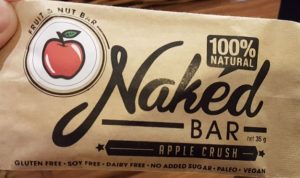
Naked Bar Apple Crush (gluten free)

Image above is the Naked Bar Apple Crush (gluten free)

Influence of mass media

The media is playing a pivotal role in imparting the knowledge of the benefits of going gluten free and also dispelling the myths of gluten free.

A Republika.co.id article dated 1 February 2016 cites celiac disease as one of the five reasons why the stomach is bulging. Suara.com on 26 May 2016 says there are five reasons why you should stop consuming bread. The article mentions bread contains a lot of gluten, which causes fatigue, bloated stomach and causes the walls of the intestinal tract to become damaged. Bintang.com on 30 November 2015 names gluten as one of the reasons for frequent bowel movement.

Parenting.co.id, on the other hand, dispels the myth of giving children the gluten-free diet. According to the article, gluten-free food is usually high in sugar and fat. Children fed with a gluten-free diet will become overweight. 1health.id teaches consumers how to choose gluten-free food. The 12 May 2016 article says the frequent consumption of gluten-free food does not mean you will become healthy. In fact, you need to ensure you consumes a balance diet including reducing the intake of sugar, fat and salt.

New food labeling regulation

In response to the rising interest in gluten-free, the Indonesian government has updated the Control of Claims on Processed Food Labeling and Advertisements in 2016 to include regulating the gluten-free claims. According to the regulation, products with the ‘gluten free’ claim is less than 20mg/kg, while ‘low in gluten’ is 21-100mg/kg. Food ingredients that are free from gluten are cassava, corn, sago, sweet potato, potato and soya.
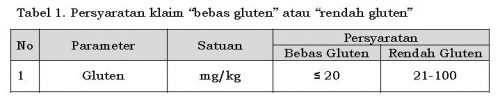
GLuten free ingredient

Key takeaway

The GFCF diet has permeated parents who are raising autistic children. The mass media also plays a pivotal role in setting the scene for gluten-free claim to remain in the spotlight. Given the largely negative perception crafted by the mass media towards gluten, adopting a gluten-free lifestyle even for a population with low incidence of celiac disease provides consumers with another way to safeguard their health.

Specialty food producers are actively tapping into the gluten-free trend. To prolong this dietary fad, they will be the ones that will need to create the environment for the wider adoption of a gluten-avoidance lifestyle together with the help of the mass media.

HOT NEWS

New est Glow Edition captivates young, novelty-driven consumers

0
est, a carbonated soft drink brand under Thai Beverage, has unveiled its latest innovation — est Glow Edition, a vibrant new line of sodas...

MUST READ

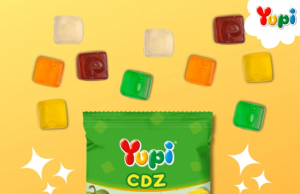
New Yupi gummy with vitamin C, D and zinc

0
The Indonesian gummy maker Yupi has announced the launch of Yupi CDZ. What makes Yupi CDZ interesting is the fact that it contains vitamin...