Home Blog Page 1148

Indonesian celebrities avoiding rice

Are Indonesians becoming averse of rice? A growing number of local celebrities are expounding the rice-free diet to achieve the perfect health and body shape. On 1 July 2016, Miss Indonesia 2013 Whulandary Herman disclosed to the media she has stopped eating rice since two years ago. Replacing rice is a diet rich in beans, fruits, vegetables and potatoes. She did this to avoid food high in sugar and carbohydrate.

Celebrities avoiding rice

Whulandary is not alone. Actor Reza Rahadian embarked on a diet that is light on rice to ensure he was fit for the new role as Rudy Habibie in the movie Habibie & Ainun 2. Indonesia Idol first season winner Nania Kurniawati Yusuf, also known as Nania Idol, managed to reduce 12kg by ceasing to eat rice for three months. During that period, she exercised and ate a lot of fruits and vegetables. The commonality between Reza and Nania is that both felt rice is high in carbohydrate.

2016 storibriti.com/Abdul Aziz Prastowo

The 18-year-old singer Aurel Hermansyah is also on the list of celebrities that avoided eating rice. She did so after trying many dietary fads. According to her, refraining from eating rice is the easiest and the fastest way to lose weight. Another male celebrity, the 42-year-old rocker Akhadi Wira Satriaji (Kaka Slank) said he replaces the rice diet with lots of fruits and protein to ensure he is fit to perform on stage.

Kaka Slank

114 kilograms of rice consumed per year

Despite some of the celebrities openly saying they have stopped eating rice, Indonesians are expected to eat 114 kilograms of rice on a per capita basis in 2015. That is a reduction of 10 kilograms in 2014 partly due to the diversification to include more bread and noodles, according to the Indonesia’s National Statistics Agency. Even with a forecast decline in consumption, rice is still on most of people’s dishes in the country.

Diabetes and rice

Diabetes is a rising health issue in the country. According to the International Diabetes Federation (IDF), there were 10 million diabetes cases in Indonesia in 2015 with a prevalence of diabetes in adults (20-79 years old) at 6.2%.

With white rice often linked to diabetes, brown rice is now touted as the healthier alternative to white rice. Rice manufacturers are launching healthier brown rice featuring the organic, low-GI and low sugar claims.

Prime Lotte Mart organic brown + white rice featuring the low sugar claim
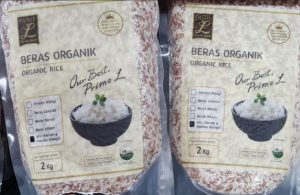
Prime Lotte Mart organic brown + white rice

Tropicana Slim organic brown rice with low GI
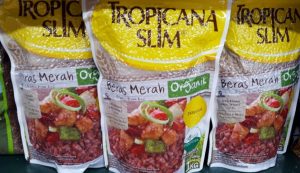
Tropicana Slim organic brown rice with low GI.

Rice-bashing?

In the West, grain-bashing and anti-wheat sentiment is on the rage. But are we seeing in Indonesia the start of rice-bashing or put it in a more polite manner rice-avoidance? Would Indonesians start to consider other form of carbohydrates such as cassava to replace their love of rice? The celebrity-driven trend of avoiding  any form of rice may have influenced a small section of the society.

Going beyond avoiding rice, the realisation of the link between white rice and diabetes may spur demand for brown rice. In Padang, brown rice in wet market is often sold out as it is popular with parents who buy them for their children and with people suffering from heart problem and diabetes, according to a local media report.

With diabetes on the rise and the media promoting eating less rice, this may influence consumers to start lowering their rice consumption and reconsider replacing the rice-rich diet with other food high in carbohydrate such as casssava (singkong), sweet potato (ubi jalar), oatmeal, corn, potato and wheat. Diabetes, celebrity influence and media reports may change popular perception towards rice as a whole and this would result in a more diverse diet going forward.
Coca-Cola 80th anniversary in Malaysia, to expand production capacity

Coca-Cola Bottlers (Malaysia) Sdn Bhd celebrated Coca-Cola’s 80 years of presence in Malaysia with an open house at its Nilai factory on 25 August 2016. The author was invited as well.

To acquire additional land to grow output

On Thursday, the company announced plans to “acquire additional land [10 acres] to accommodate further warehousing and production capacity to complement its existing manufacturing facility.”

The existing plant is a “halal hub for the Malaysia, Singapore and Brunei markets, while producing specialty products for some other ASEAN markets.”

Focus on healthier drinks

The company is focusing on lower sugar, lower calorie drinks and drinks in smaller sizes for portion control for Malaysian consumers.

“We will continue to innovate our beverage portfolio and serving sizes, including smaller packs, to provide more choices for our consumers,” said Coca-Cola Bottling Investment Group for Singapore-Malaysia-Brunei chief executive officer Stephen James Lusk.

Lusk highlighted the fact that the zero-calorie Coke Zero, launched in Malaysia in 2015, has done “phenomenally well” and Coca-Cola is the “first company to move into the zero-calorie beverages”.

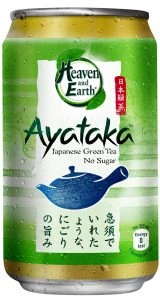
The latest Heaven & Earth Ayataka zero sugar green tea and the existing carbonated soft drinks in small pack sizes eg 390ml are evidence of Coca-Cola moving towards the healthier direction.

Ayataka

Widening product range

Coca-Cola has plans to be in a “much wider range,” said Antonio Del Rosario, Coca-Cola general manager for Singapore, Malaysia, Brunei, Vietnam, Cambodia and Myanmar.

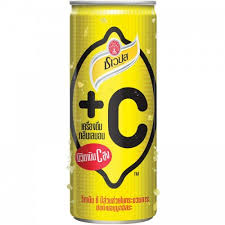
When asked by the author about any future plans to introduce the popular Schweppes +C Lightly Sparkling Lemon Flavoured Soda, the company did not rule out the possibility. Schweppes +C is already in Hong Kong, China, Thailand, Taiwan and several other countries.

Schweppes +C

When it comes to entering the coffee category, the reply given suggested it is now not the right time to move into the RTD coffee segment.

Why switch to slim can?

Competitor F&N, which produces the highly popular 100 Plus isotonic drink, changed its cans into slimmer version before Coca-Cola did with its beverages. Now most of the Coca-Cola range of products are sold in slim can. The reason for embracing the slim can is due to consumer preference. According to Antonio Del Rosario, “there is a preference actually for a slimmer can that the Malaysian consumers have told us they like.”

F&N said previously it could save cost by using slim can. Coca-Cola, on the other hand, clarified the switch to slim can is “driven by consumer” and “not driven by cost,” said Lusk. He also added that the slim can is”attractive” and would “stimulate growth” and that most beverage companies are switching to slimmer cans.

In China, Coca-Cola actually promoted its slim can as modern and stylish.

Slim can china

Going back in time – 80 years in Malaysia

Here are few old pictures of Coca-Cola in Malaysia courtesy of Coca-Cola Bottlers (Malaysia) Sdn Bhd.

A picture taken in 1960 showing the Coca-Cola truck that travelled to kampung (villages) and small towns to show films.

Coke kampung

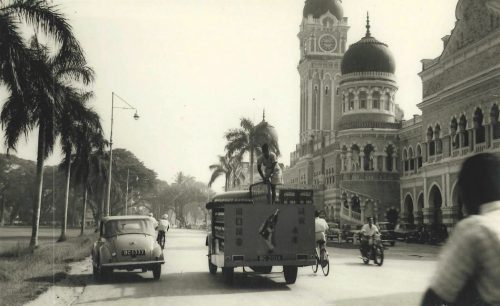
A Coca-Cola truck in front of the historic Sultan Abdul Samad building.

Coke samad

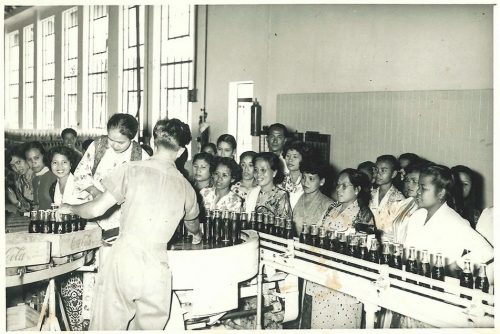
A Coke plant visit in 1956.

coke plant


How companies highlight butter provenance in China

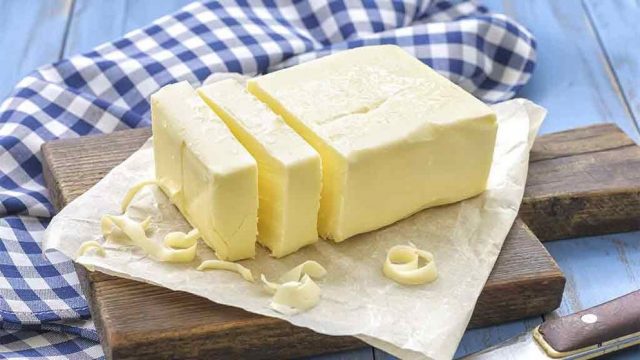
Image from Choice.com.au

Most of the time, companies take for granted for not highlighting the source of the ingredients. Here, we have few examples of packaged food and bakery operators in China highlighting the use of high quality butter.

New Zealand butter

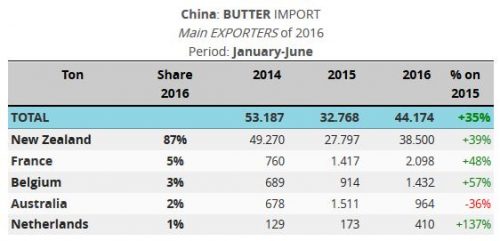
New Zealand butter comes with a stamp of quality in the minds of Chinese consumers. This comes as New Zealand is the key source of butter import into the country, accounting for at least 85% of total butter import volume in 2016. Image below was taken from CLAL.IT.

From CLAL.it

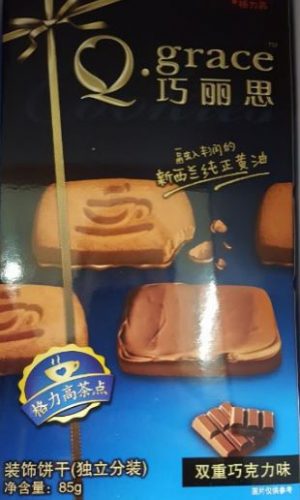
The packaging of Glico Q Grace comes with the ‘pure New Zealand butter’ claim.

Grace

French butter – Isigny Ste Mere

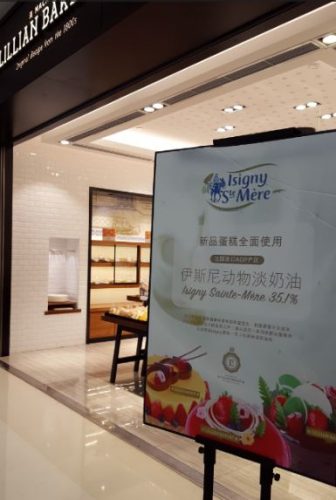
Lilian Bakery in China said all its new cakes are made using French butter Isigny Ste Mere with a fat content of 35.1%. The butter features the AoC (Appellation d’origine contrôlée) stamp of approval or protected designation of origin. France accounted for 5% of China’s butter import volume in the first half of 2016.

Mere

Panami Matcha Cookies

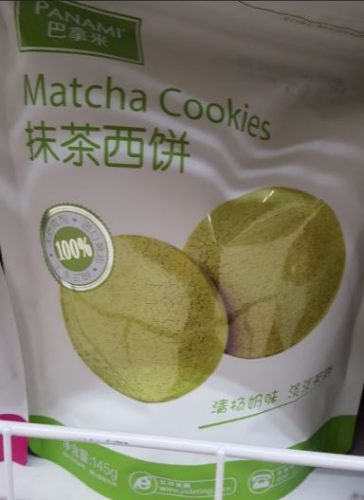
Some products do not have the provenance claim. Here we have an example of a matcha cookies by Panami claiming the cookies are made using 100% imported butter.

Panami

The key takeaway is Chinese consumer sensitivity toward food safety provides food manufacturers with an opportunity to highlight the source of their ingredients. Transparency works and the claim works better if the country of origin is named.

Is chia seed an emerging ingredient in China?

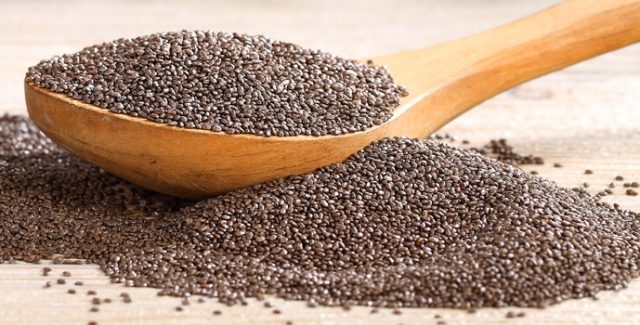
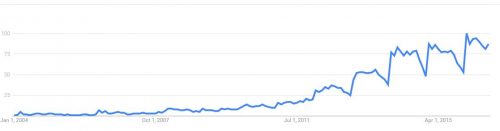
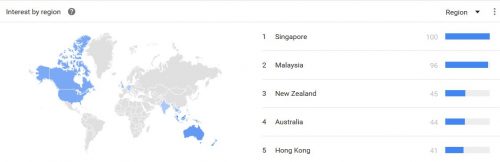
Chia seed (奇亚籽) is known for its powerful nutrients. According to Google Trends, this ancient grain consumed by the Mayans and Aztecs is now trending globally with key interest for chia seed in Southeast Asia, Oceania, India and North America.

Interest about chia seed - Google Trend
Interest about chia seed – Google Trend
Chia Seed interest by region - Google Trends
Chia Seed interest by region – Google Trends

Food and beverage application in China

Moving into China, Google Trends does not cover China because Google is banned in that part of the world.

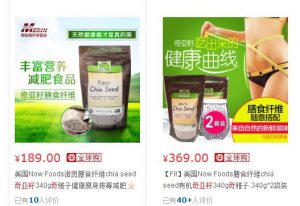
A search on JD.com, shows chia seed is sold as a slimming health supplement. The examples below are from the US-based Now Foods.

Chia seed slimming

Several other chia seed products on JD.com are either from Taiwan or made under Taiwanese guidance, which shows the recognition of Taiwan as a chia seed powerhouse.

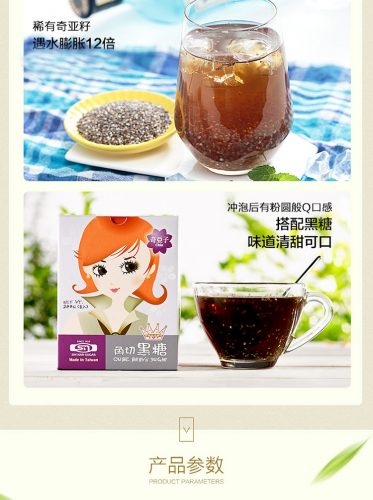
Here is an example of a Taiwan-made cube brown sugar with chia seed from Sin Nan Sugar. This product is aimed at alleviating menstrual pain.

Cube Brown sugar

The other product is Slim Dairy (享瘦日记) for low carb dinner in the form of a snack bar.  The pack containing 7x30g bars costs RMB 178.

slim dairy

Chia

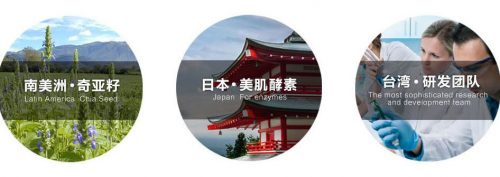
The snackbar contains chia seed from Latin America, enzymes from Japan and made by Taiwan’s ‘most sophisticated research and development team.’

Chia seed in dairy

China’s leading dairy company Yili launched 伊利每益添饮用型酸奶 (Pure Day yoghurt drink) in June 2016. The yoghurt drink contains chia seed and is formulated using Maillard reaction.

Chia seed yili

Chia seed in candy

China’s Xin Zhong Yi Food (新中意食品), a unit of Jinjian Cereals Industry Co, has announced in August 2016 it is adding chia seed in sugar confectionery, the first of its kind in the country. According to the company, chia seed has three major benefits – beauty, slimming and anti-oxidant.

Chia seed in mooncake

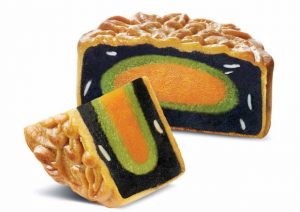
Chia seed application in mooncake is no longer a novelty in mooncake. In Malaysia, Thai Thong has already incorporated chia seed in its mooncake back in 2013. Here is the Emerald Ferrringhi, a ‘white-skinned chia-seed studded Mooncake featuring earthy Cameron sweet corn and fragrant pandan’ from Thai Thong.

mooncake

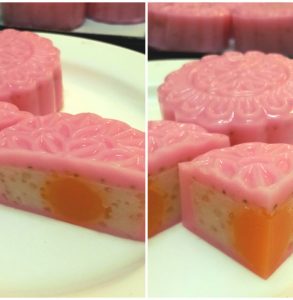
Chia seed is also suitable for jelly mooncake.

Image from Hokkien Chiak

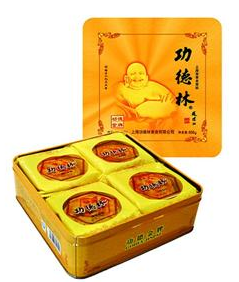
In China, we are seeing local mooncake producers like 功德林 (Gong De Lin) coming out with chia seed mooncake for its spring summer series.

Gong De Lin mooncake

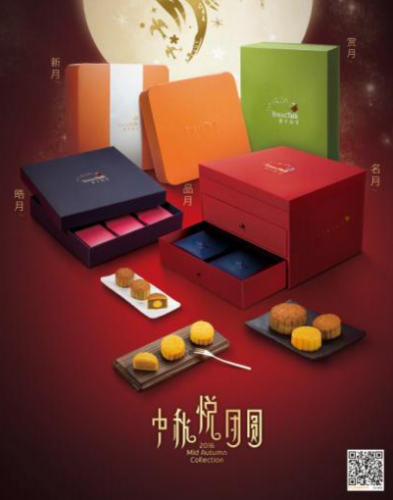
Singapore-based Breadtalk with 460 bakery outlets in China has unveiled chia seed-based mooncakes.

Breadtalk chia seed mooncake

Taiwan key to popularising chia seed in China

The awareness about chia seed is still low in China but its health beneficial properties such as slimming and beauty and the texture can help to elevate the usage of chia seed in food and drinks. At the end of the day, it will be the Taiwanese that will have a key role in popularising chia seed in China as the application and awareness of chia seed in Taiwan is in the advanced stage.

Mie Bikini causes uproar in Indonesia

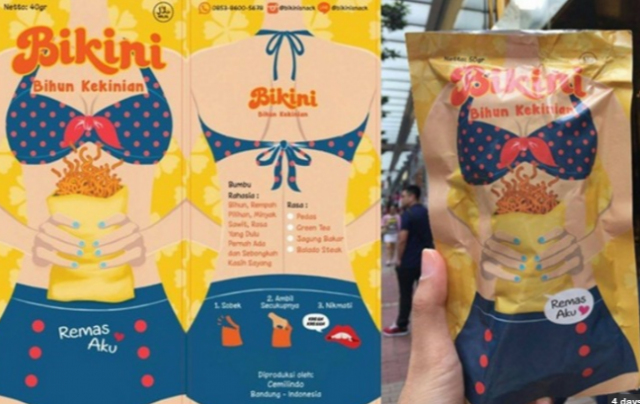
Bihun Kekinian (Mie Bikini) has stirred up controversy in Indonesia with its eye-catchy but controversial packaging featuring a female clad in bikini. The name Mie Bikini comes from the abbreviation of Bihun Kekinian, which literally means vermicelli (bihun) and current situation (kekinian).
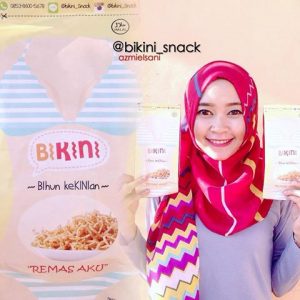
The word ‘Remas Aku’ (squeeze me) together with the packaging design and name has made Mie Bikini extremely controversial. The government stepped in and raided the workshop in Depok, East Java on 6 Aug. According to the authority, the noodle snack was made by a 19-year-old female at her home. Over 11,000 packs have been sold across the country mainly through social media since March 2016. The concept for this product first started as a uni project. The government is now pondering the next move.
Bikini snack
Creator of Mie Bikini – image taken from www.maxmanroe.com
Indonesian millennials want novelties
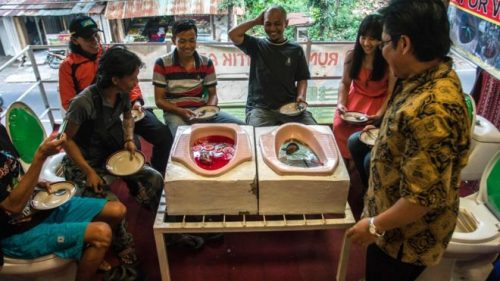
The Mie Bikini debacle shows Indonesian millennials are keen on new novelties. They are willing to step beyond the socially-confined boundaries embracing or creating new concepts such as eating from toilet bowls, from flower pots or drinking from packaging resembling popular dishwashing liquid.
New loo-theme restaurant in Indonesia. Image from BBC.co.uk

Invariably, these novelty food and drinks are promoted through social media, a testament to the strength of social media in shaping consumer trends.

Product innovators can harness the power of social media to create buzz and create novel concept that is attuned to the aspiration of Indonesian millennials who are opened to new experiences.

Sprite promotes ‘Clarity of Mind’ message

Sprite wants consumers to have a clearer mind when ‘teased’ for their shortcoming whether in their sense of fashion, gadget or the way they speak English without the slang.

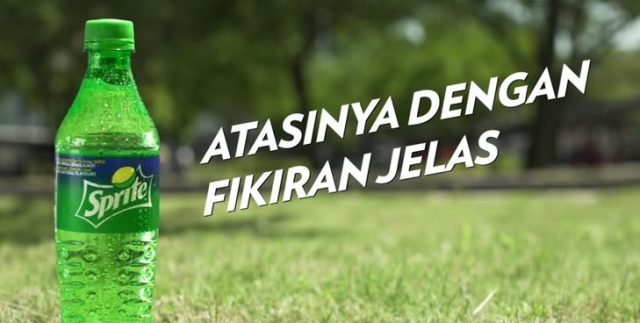
The key message is ‘atasinya dengan fikiran jelas’ or ‘overcome it with a clarify of mind.’

Atasi

An example is a clip below about the fashionable (Mat Fesyen) challenging Mat Sprite. At the end, Mat Fesyen couldn’t get the girl because he did not want to make its leather jacket dirty and decided to walk way. Mat Sprite, in the other hand, was willing to sacrifice his jacket and turned it into something that the girl could sit on.

https://www.youtube.com/watch?v=6UTv94tuW7o

The target audience is young men. Each clip features Mat Sprite (the guy who drinks Sprite) addressing each situation with the clarify of mind without losing to the one who seems to have everything. The situations faced by Mat Sprite ranged from being challenged for not having the latest gadget to confronting someone appeared to be cultured speaking in English with the UK accent.

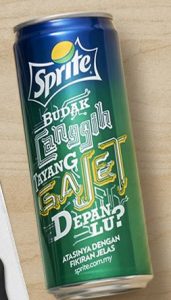
There are four bottle designs as part of the campaign and are available at 7-Eleven.

Sprite canggih
When challenged by a male with the latest gadgets

Not just in Malaysia but in Vietnam

The message you win not because you are rich or have it all but because you are sincere is repeated in the Sprite TVC in Vietnam. In the TVC, it shows a young male driving a motorcycle competing with another male driving a sports car for a girl waiting at the bus stop. At the end, the old lady gets in the sports car, while the young lady gets a ride on the motorcycle.

https://www.youtube.com/watch?v=mup5XmsGvqo


Snickers ‘Hunger killing’ Olympic style in China

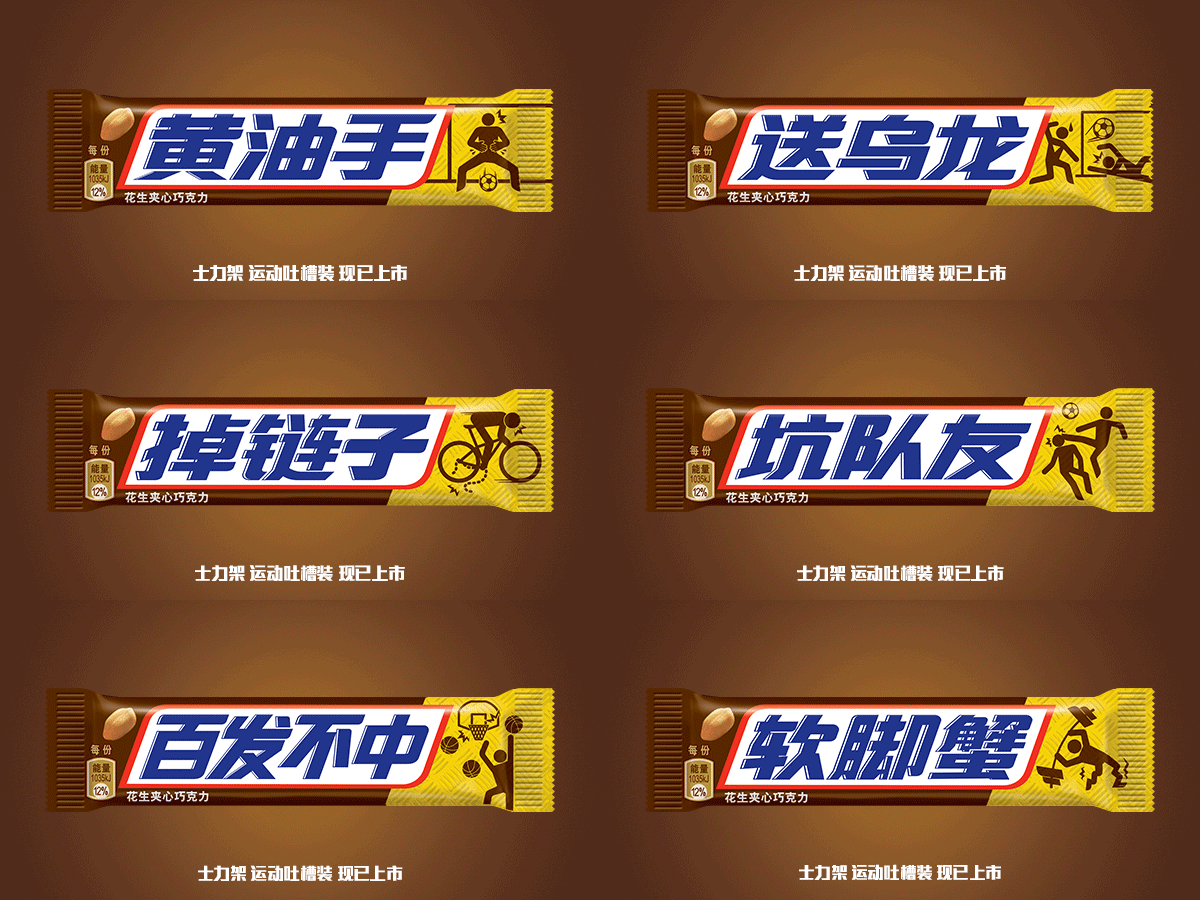
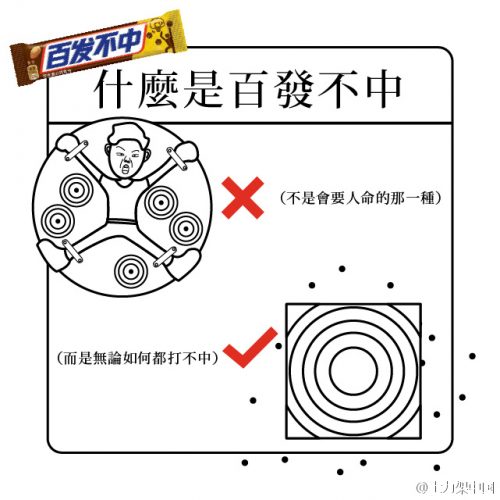
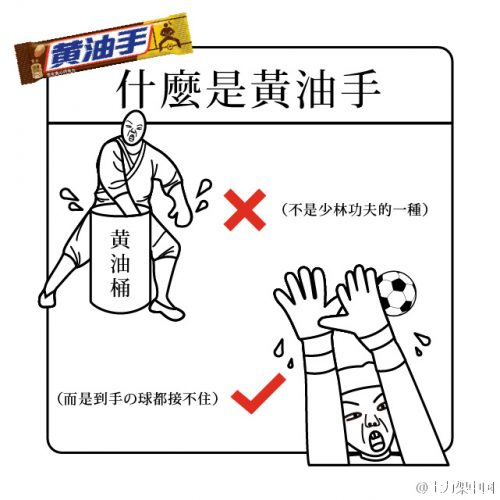
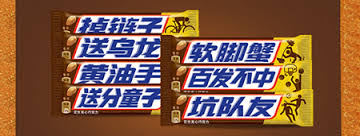
In China, Snickers has brought to life a new version of the ‘hunger killing’ global positioning for the Rio Olympics. The new Snickers features seven parodical messages such as ‘all 100 shots missed the mark’ (百发不中) and ‘slippery hand’ (黄油手).

“Slippery hands’ and ‘missing the mark’

The main message is hunger makes you the laughing stock in the sporting area. If you are competing in the rifle event and are feeling hungry, all your shots would have missed the mark.

100 marks
Images from Socialbeta.com

If you are the goalkeeper, hunger would make you fail to prevent all the balls from becoming a goal for the opponent. At the end, you will be known as ‘buttery hand’ or ‘slippery hand’ (黄油手)

Images from Socialbeta.com

Other five parodical messages

Snickers 2

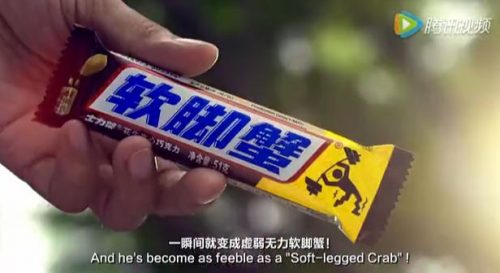
The other 5 messages include ‘giving away points’ (送分童子), ‘own mistake’ (送乌龙) and ‘soft-legged crab’ (软脚蟹), which literary means namby-pamby, a person who is spineless without much determination.

Spinessless
‘Soft-legged crab’
Soft-legged crab
Soft-legged crab

Defeat your hunger, kick-ass in sports

kick ass

You can kill hunger and reverse this unlucky situation by consuming Snickers, which can give you the extra energy boost.

after snickers

Strong localised ‘Kill hunger’ message

Snickers’ ‘kill hunger’ message is strong and is adaptable for different situation. In early 2016, Snickers collaborated with TFBoys, a popular teenage pop band, to address the lack of energy during examination. The key message was Snickers could help you stay alert and get rid of all the things that affected your study preparation including ‘avatar devil’ (阿烦达) that made you felt ‘frustrated’ (烦).

Snickers exam

The localised ‘hunger killing’ message has helped Snickers to resonate with Chinese consumers in areas that mattered the most including examination and staying in peak performance. This effective communication ensured success for Snickers in China.

Malaysian pepper featured in Chinese instant noodle innovation

Malaysian instant noodles are trying to penetrate China’s large instant noodle market but taste if often the key barrier in achieving mainstream appeal. In Southeast Asia, we tend to see instant noodle companies tapping into regional tastes for their premium line such as tom yum, kimchi and laksa. But this is seldom the case in China where the interest is all about local flavours plus Korean.

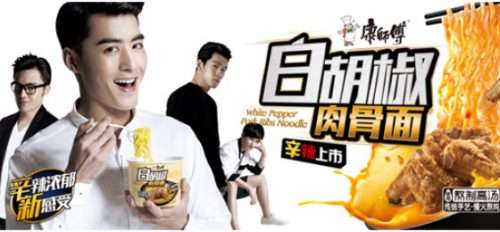
Tingyi white

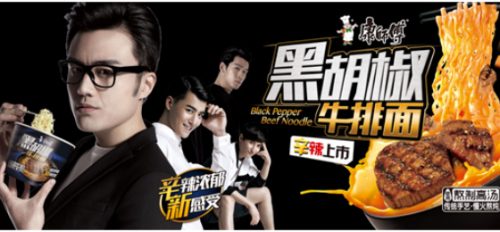
Tingyi black

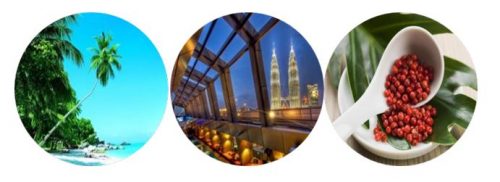
One interesting thing about the latest Tingyi’s Master Kong black pepper beef noodle and white pepper pork rib noodle is the use of Malaysian peppers. The use of the Malaysian pepper ingredient serves to provide provenance, an important marketing tool to improve quality perception.


tingyi pepper marketing

The marketing is supported by a trip to Malaysia to discover the origin to the pepper.

1 million boxes sold in one month

Tingyi said in its Q1 2016 earnings report it sold 1 million boxes of Master Kong black pepper beef noodle and white pepper pork rib noodle within one month. The pepper series were launched during the Spring Festival in 2016. It claims the ‘pepper flavor series detonated the domestic market instantly.’

From an ingredient perceptive, the Malaysian Pepper Board would be extremely happy to see the wider use of pepper within food and drinks. Even though Malaysian distinctive flavours such as laksa and prawn noodle have not made it big in China, at least pepper is a good start.

Wonda Coffee playing prank on consumers with cheeky Dowan, Cafe Nasty ads

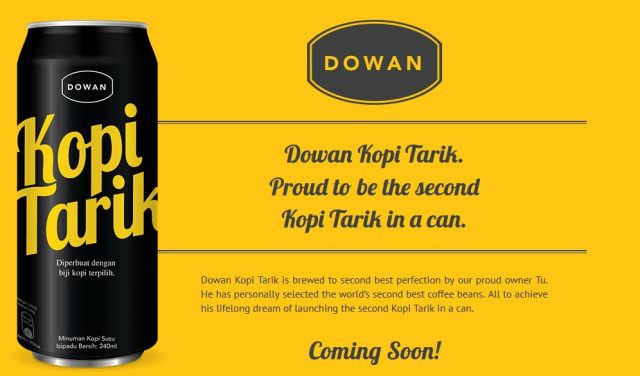
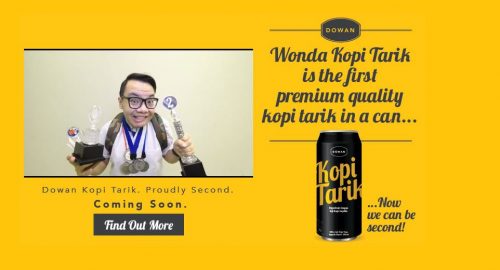
The new Dowan Kopi Tarik is bombarding the social media with a pre-launch teaser. The new kopi tarik, Malaysians commonly refer it as teh tarik (literally “pulled tea”), is ‘proud’ to be the number two kopi tarik after Asahi’s Wonda Kopi Tarik.

Dowan 2

Targeting Malaysiakini.com users

The teaser has attracted the attention of many readers of Malaysiakini.com, a hugely popular alternative media website. Whenever readers go into the Malaysiakini.com website, especially on the mobile site, the first ad they would see is the funny Dowan video. However, quite a number of readers find this irritating, especially after it becomes apparent that you have to skip this ad every time you visit the website.

Malaysiakini.com is the 21st most widely accessed website in Malaysia and the second most popular in the news and media category, according to SimilarWeb Rank.

Dowan ad Dowan ad 2

Despite the intrusiveness of the advertisement, it has served its goal of creating a buzz and hunger for the product.

But is Dowan Kopi Tarik real or a hoax?

Now comes Cafe Nasty

Cafe Nasty

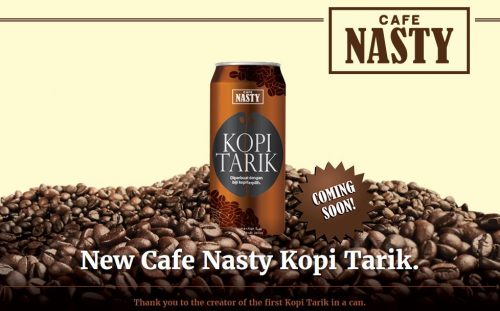
Yesterday (24 August 2016), an advertisement appeared once again on Malaysiakini.com introducing the new Cafe Nasty Kopi Tarik. It paid homage to the existing Wonda Kopi Tarik.

cafe nasty 2

The clip featured the CCO (Copy Cat Officer) of Cafe Nasty who sounded like a ‘Chinaman’ The video showed Cafe Nasty was actually Wonda Kopi Tarik but with a new sticker.

Lots of ‘competitors’ but all serve to highlight the impeccable quality of Wonda Coffee

From Dowan Coffee (proud to be number 2) to Cafe Nasty (copy cat), they are all about highlighting Wonda Kopi Tarik as simply the best kopi tarik in the market. No copy cats or wannabes can ever beat it.

Don’t expect Cafe Nasty or Dowan Coffee to be out in the market ‘real soon’ as they are fictional products.

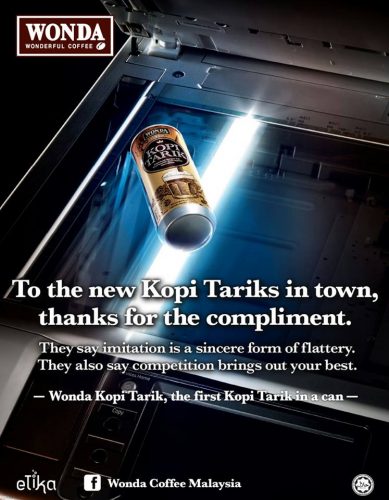
Wonda finally revealed it all

Wonda revealed
Last installment of a three-part marketing campaign – image taken on 26 Aug 2016

Etika has done it again with this self-directed, self-praising three-part creative advertisement that caught many people by surprise. Some people are still eagerly anticipating the launch of Dowan and Cafe Nasty. It would do no harm to bring the two kopi tarik to life, wouldn’t it?

dowan-closing-down

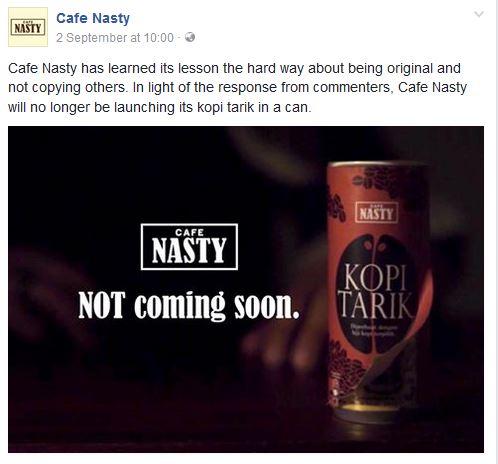
Apparently, not. Dowan Kopi Tarik and Cafe Nasty have decided not to go ahead with their ‘launch.’ This marks the conclusion of this viral marketing by what the author believes as none other than Wonda Coffee.

cafe-nasty-no-launch

Mamee Cool Tea goes to China

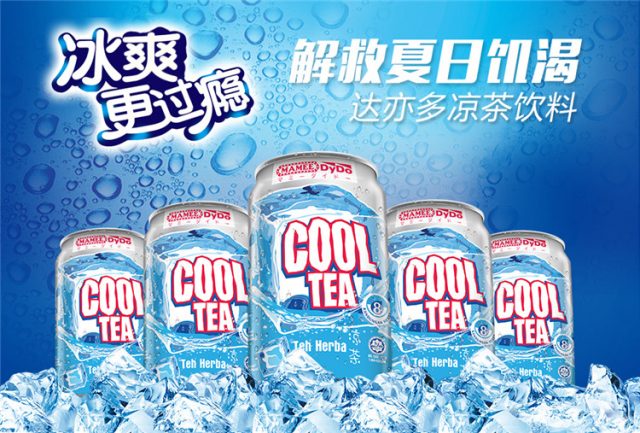
Mamee Cool Tea is now in China for the hot summer. Japan’s DyDo Drinco, which has a 49% stake in the beverage arm of Malaysia’s Mamee Double Decker (M) Sdn Bhd, has introduced the RTD herbal tea in China. This shows the synergy achieved through the JV to bring what’s best from Malaysia to new markets (ie. China) and from Japan to Malaysia and other markets where Mamee has a strong presence.

From 1 August 2016, Mamee Cool Tea is available at over 2,000 Kedi and Alldays convenience stores in China as well as on Tmall Chaoshi (Tmall’s B2C supermarket).

Kedi and Alldays are tired looking

Unfortunately, the choice of Kedi and Alldays does not appear to be good. Even though there are over 2,000 Kedi and Alldays outlets in China, these shops are small, unexciting and staff by elderly folks. The fresher looking and modern convenience stores are the 7-Elevens, Lawsons and FamilyMarts frequented by urban professionals and young consumers. These should be the convenience stores Mamee Cool Tea should seek to enter.

Competing in a crowded herbal tea market

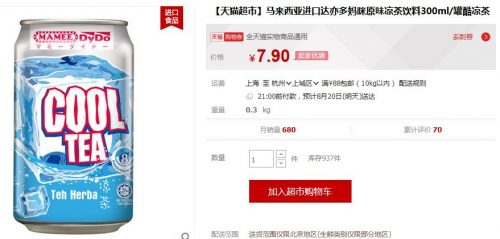
DyDo Mamee Cool Tea
Image from DyDo Tmall Chaoshi site

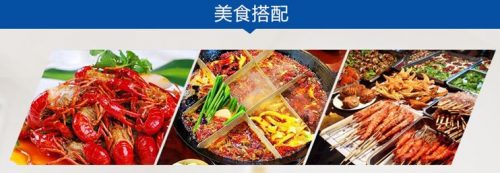
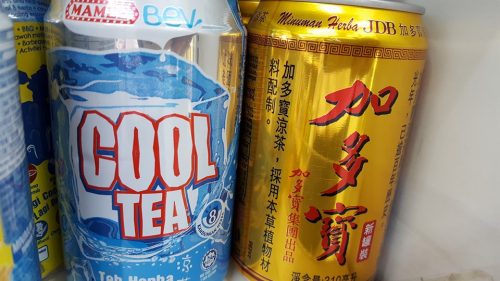
Cool Tea is competing in a market dominated by the two herbal tea behemoths Wang Lao Ji and Jia Duo Bao (JDB). All the herbal teas are positioned as drink companion to hot and spicy food including the ubiquitous hot pot.

Similar ingredients

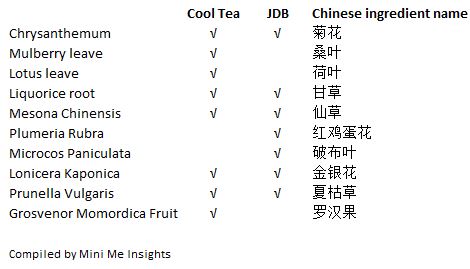
Mamee Cool Tea shares a lot of similarity with JDB in terms of the ingredients. This can be  explained by the fact that herbal tea is originated from southern China and most of the Malaysian Chinese originally came from southern China. The migrants brought with them similar recipes for herbal tea. The Mamee Cool Tea taste may suit Chinese consumers who are accustomed to Wang Lao Ji and JDB.

Cool tea vs JDB

Cool tea vs JDB ingredient

1.6 times more expensive

The price for a 300ml imported Mamee Cool Tea is RMB 7.90 (USD 1.20 or RM 4.75). In Malaysia, a similar product is sold at Tesco at RM 1.80 and the price difference is 1.6 times compared to the same product selling in China.

In China, a 310ml can of Wang Lao Ji is RMB 3.00, while a 310ml can of JDB is RMB 4.50.  The price difference between Mamee Cool Tea and Wang Lao Ji in China is also 1.6 times.

Mamee China 7.90

Future outlook for Mamee Cool Tea in China

Mamee Cool Tea has to seek shelf placement in the happening convenience stores like 7-Eleven, Lawson and FamilyMart but this would mean higher placement fee and sacrificing margins.

There is also an opportunity to cross sell Mamee Cool Tea with Mister Potato chips. At the moment, Mister Potato Chips are available in China and are usually place in the imported section.

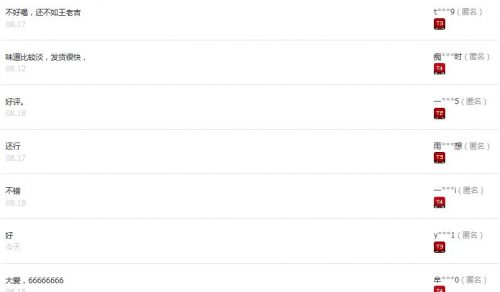
Taste is important for herbal tea. It would be interesting to know if mainland consumers like the taste of Mamee Cool Tea. Early results show some find it too ‘mild’ and one said ‘it is not as good as Wang Lao Ji’, while others liked it.

From DyDo Tmall Chaoshi site as of 19 August 2016


HOT NEWS

Chester’s and iberry launch hot chili fish sauce ice cream

0
Chester's has partnered with iberry, the premium homemade ice-cream in Thailand, to launch a new ice cream featuring Chester's signature fish sauce. The CPF...

MUST READ

Get ready for all-round nutrition with Ovaltine RTD

0
In Singapore, the Ovaltine instant malt drink is now available in ready-to-drink (RTD) format in PET bottle and Tetra Pak carton. Ovaltine combines the nutrition of...