Home Blog Page 1110

New Cowa Treats, flavoured coconut water set to debut
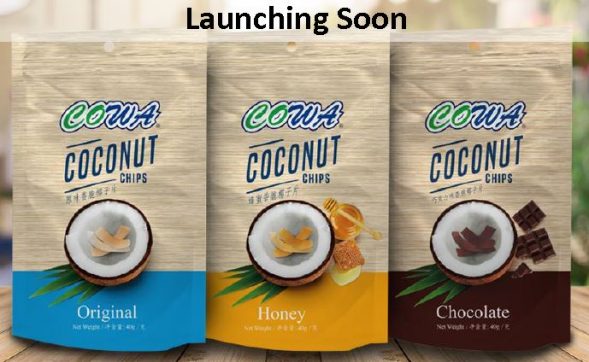
Coconut Water (COWA) Sdn Bhd, the company that introduced the Cowa coconut water, is planning to launch Cowa Treats by September 2017. The company revealed this at the Taste Fully Food & Beverage Expo, which was held at Mid Valley Megamall from 30 May 2017 to 2 June 2017.

New Cowa Treats

Cowa Treats will represent the extension of the Cowa brand from coconut water to virgin coconut oil (VCO) and subsequently into coconut snacks.

According to the information supplied by Cowa, the Treats range  comprises:

  • Coconut chips (40g) – original, honey and chocolate
  • Coconut chunks (40g) – original and honey
  • Coconut cereal bites (70g) – original
  • Coconut flake rolls (36g) – original

Cowa Coconut Chips are made from well selected mature coconuts and is baked and roasted using the equipment that preserve the original taste, aroma and texture.
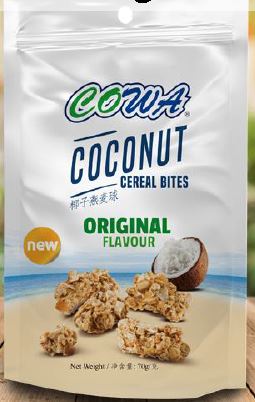
Cowa Coconut Cereal Bites combines the natural goodness of coconut, almonds, cashew nuts and oats.
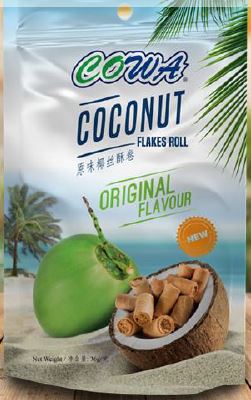
Cowa Coconut Flakes Roll combines the natural goodness of coconut milk, desiccated coconut, rice flour and brown sugar.
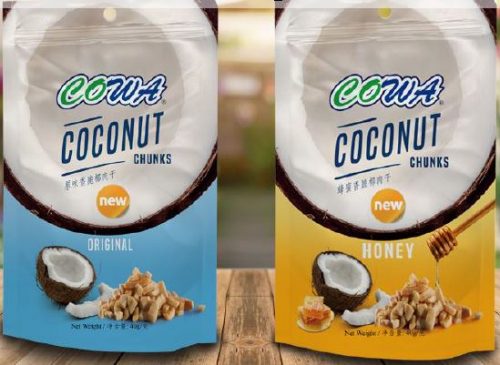
Cowa Coconut Chunks are made from well selected mature coconuts and is baked and roasted.

New packaging for Cowa VCO
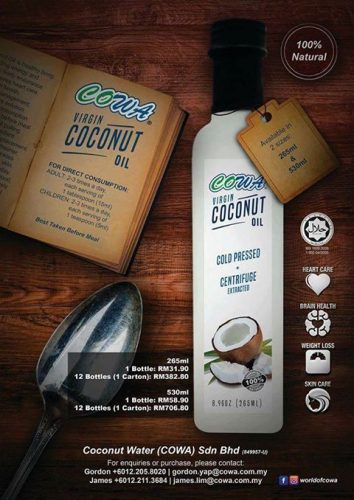
In addition to Cowa Treats, the company’s Cowa Virgin Coconut Oil (VCO) was given a new look as early as early 2017. The Cowa VCO was first spotted by the author at the Taste Fully Food & Beverage Expo in November 2016 but with an old packaging. The Cowa VCO is “centrifuge extracted from fresh coconut meat” with a “very mild coconut taste and is packed with anti-oxidants.” This production process makes the VCO tastes smoother and preserves all the nutrients. The Cowa VCO is available in 265ml and 530ml.

Flavoured coconut water set for Q4 debut
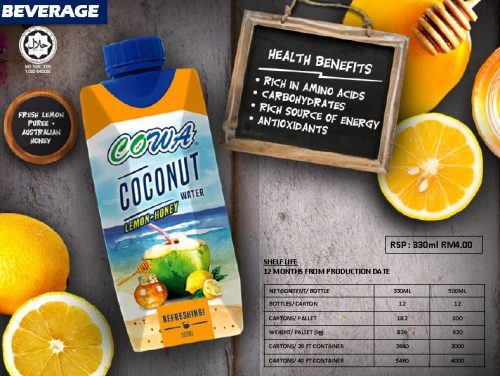
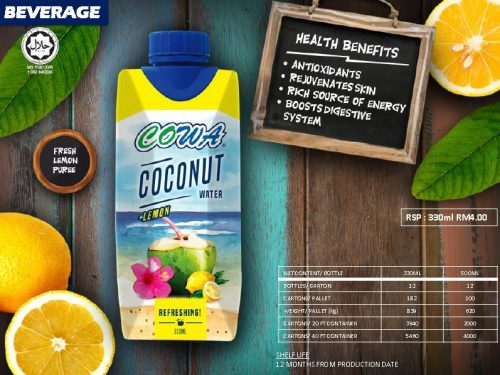
The honey and honey-lemon coconut water variants will be launched in Malaysia in the fourth quarter of 2017. The two new flavours have already been made available by the company along with coconut juice in China in 2017.

The debut of the honey and honey-lemon flavours will mark the expansion of Cowa coconut water into the flavoured category. A similar move to introduce the flavoured variants has already been made by its competitor Karta as early as 2015.
Coconut juice

Also available in Malaysia is the Cowa Coconut Juice in a plain white packaging. Promoting coconut juice will be challenging. Malaysian consumers would automatically associate coconut juice with santan, the liquid that comes from the grated meat of a mature coconut and used in curry.
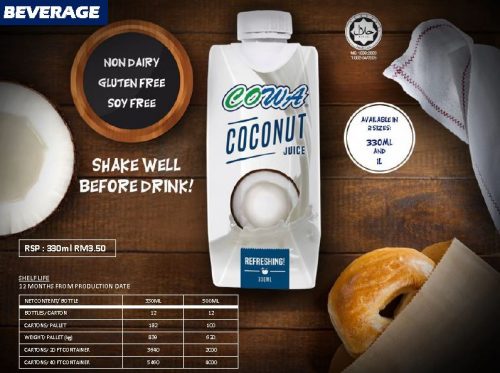
The market is slowly moving towards coconut milk-based beverages, offering consumers with a non-dairy and soy-free option. At the end of 2015, FAL Food & Beverages introduced Coco Joy Natural and Flavored Coconut Milk in Malaysia through 7-Eleven but this product failed to gain traction and was withdrawn from the market.

In January 2017, Thai Coconut Public Company Limited launched the world’s first sparkling coconut water as well as Thai Coco snacks (Roasted Coconut Bar and Coconut Chips) and Thai Coco Coconut Milk Beverages in Malaysia. These products are distributed locally by Euro-Atlantic Sdn Bhd.

The Milky Coco Coconut Milk Drink by Cocomax is available in Malaysia at selected channels including at Cold Storage. Cocomax is manufactured by Thailand’s Asiatic Agro Industry Co., Ltd. and distributed locally by Max Food Enterprise (M) Sdn Bhd.

What Mini Me thinks

The availability of more coconut-based products in Malaysia including coconut snacks, flavoured coconut water and coconut milk-based drinks shows the growing maturity of the category. It does take time to cultivate the market for coconut-based products, given the strong attachment of Malaysian consumers to the taste of natural coconut water consumed straight from the nut.

In terms of marketing, companies are pitting packaged coconut water as the healthier alternative to isotonic drink with marketing campaigns targeting sporting events. Virgin coconut oil (VCO) is positioned as a nutritional supplement and is fetching a premium price. The marketing of coconut milk-based beverages in Malaysia may be hampered by the taste factor as coconut milk-based beverage does share a strong taste profile as the coconut milk (santan) used in cooking.

In my opinion, the coconut juice and treats are aimed largely at China.

*All the images come from Cowa.
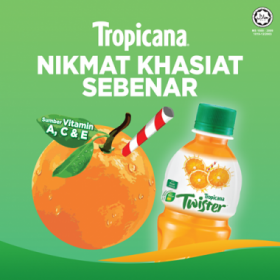
Tropicana Twister sports a new look, resembling private label?

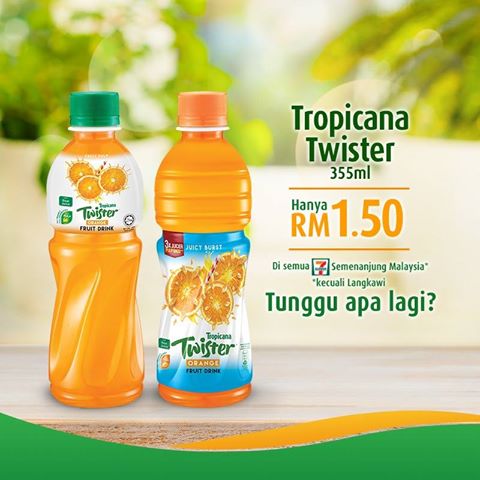
The Tropicana Twister juice drink range in Malaysia has been given a packaging makeover, now featuring three slices of oranges. FMCG brands are prone to upgrade their packaging to improve consumer engagement in the absence of new launches or innovations. We see this happening with snacks where it has become a yearly occurrence.

Some changes to the packaging refresh the brand image but some do not. For the new Tropicana Twister fuit pulp juice drink and juicy burst, I find they look more like private label juices. The word Tropicana is now much smaller. The new focus is on the three orange slices and a straw to highlight the fact that the juice drink is made from real juice and comes with refreshing fruit pulps.

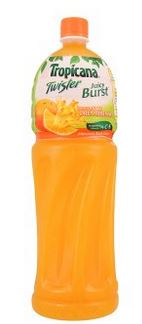
Below is the image of the old packaging for Tropicana Twister Juicy Burst.

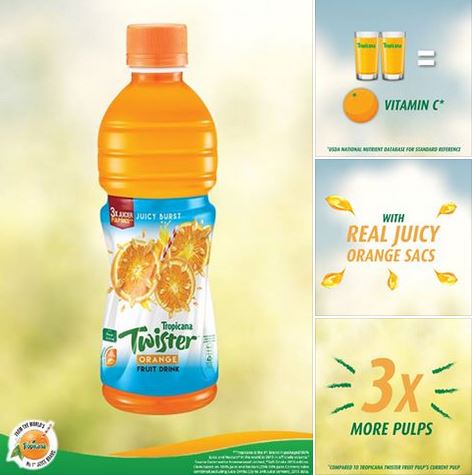
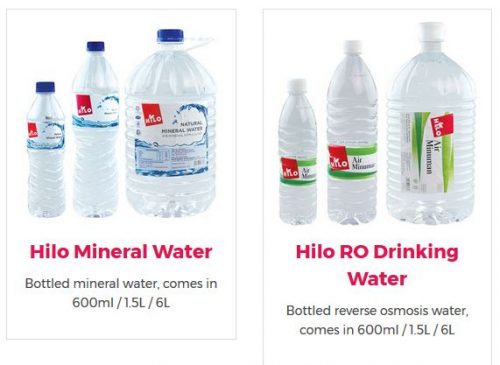
The new Tropicana Twister Juicy Burst (above) comes with 3x more pulps. The red label on the top left reminds me of the Hilo private label products of Hero Market, a supermarket chain in the Klang Valley. Perhaps this is a coincidence!

GreenLife introduces first organic coconut spirit in the Philippines

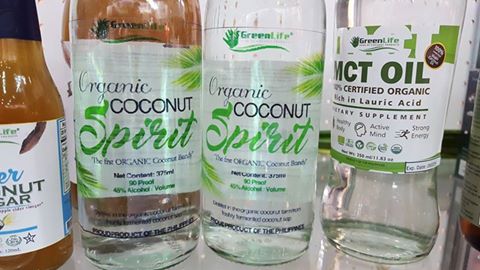
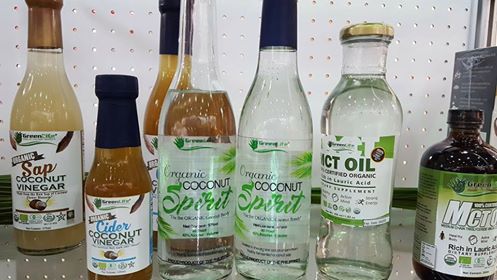
GreenLife Health Products Philippines (GreenLife) showcased a range of coconut-based products at the recent Taipei International Food Show (June 21-24, 2017) including the Philippines first organic coconut brandy. The spirit, launched in January 2017, has 45% alcohol volume (90 proof) and comes with a net content of 375ml. It is distilled in the organic coconut farm from freshly fermented coconut sap.

There are other lambanog or coconut arrack,a Filipino alcoholic beverage, but GreenLife’s is the first that is certified organic by international bodies in the US and Europe.

GreenLife Oganic Coconut Spirit is available at Rustan’s, Robinson, Alldays and organic shops.

*photo above taken by the author at the Taipei International Food Show

Indonesia FMCG sales slowing down or bottoming

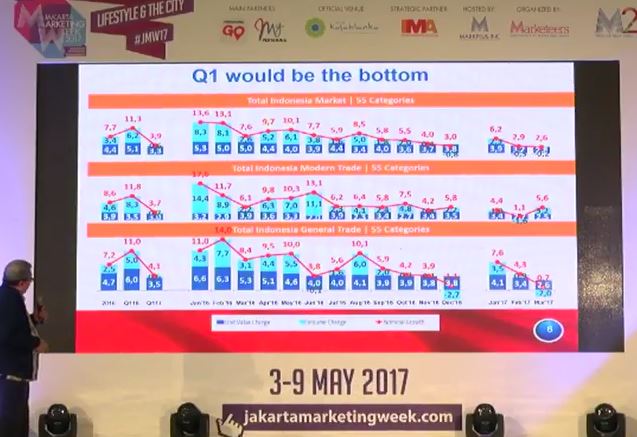
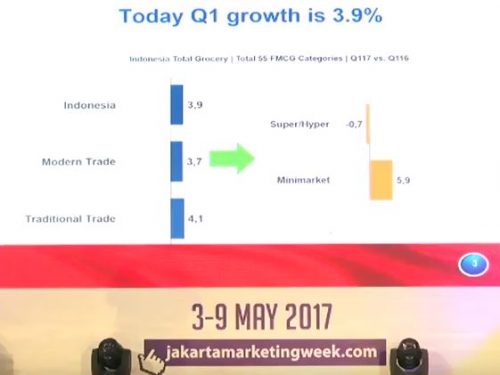
Indonesia’s FMCG sales value (total 55 categories) grew 3.9% year-on-year during the first quarter of 2017, said Roy Mandey, chairman of the Indonesian Retail Merchants Association (Aprindo), at Jakarta Marketing Week (3-9 May 2017). FMCG sales value grew 10.9% in the same period a year ago. He did not mention the source of the Q1 2017 data but is likely to come from Nielsen Retail Audit.

FMCG sales growth moderating

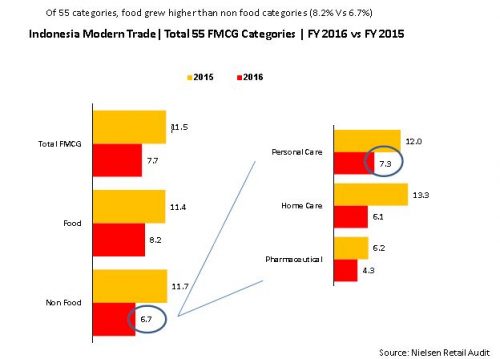
Over a three-year period from 2014 to 2016, Nielsen Retail Audit data shows growth in Indonesia’s FMCG sales value (55 categories) has moderated. The FMCG market in 2015 grew by 11.5% year-on-year, falling subsequently to 7.7% year-on-year in 2016, according to data from the Alfamart year-end corporate presentation slides.

Non-food driving growth

Nielsen data shows non-food contributed most of the growth in 2016, of which personal care, home care and pharmaceutical sales value rose respectively by 7.3%, 6.1% and 4.3%, still a slowdown from a year ago.

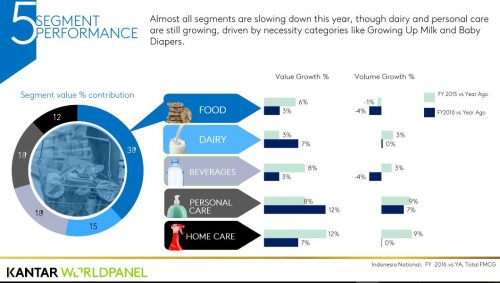
Kantar Worldpanel data substantiated Nielsen’s claim in home care. According to Kantar data, which tracks around 5,000+ households in Indonesia, home care sales value in 2016 fell compared to 2015 but personal care surprisingly saw higher growth, up 12% in 2016 compared with a 8% growth in 2015.

Looking at the food sector (food, dairy and beverage), both Nielsen and Kantar data reveals strong dairy sales by value but slowdown has affected food and beverages. The Kantar Worldpanel slide did not disclose the breakdown for food, dairy and beverages.

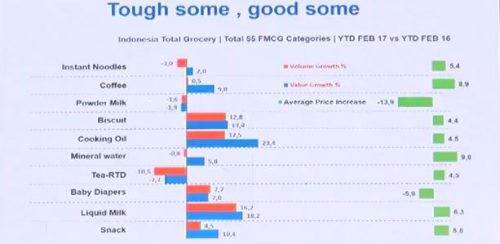
The presentation by the head of Aprindo, Roy Mandey, reveals how the various segments performed year to date (YTD) February 2017 versus YTD 2016 citing Nielsen total grocery (55 FMCG categories).

It is apparent value is driving growth as manufacturers passed on rising cost to consumers to mitigate the effect of inflation. Inflation in 2016 stood at 3.02%, down from 3.35% in 2015, the lowest since 2012, according to the Central Statistics Agency (BPS). Food inflation in 2016 stood at 5.69%, up from 4.93% in 2015 but down from 10.57% in 2014.

Categories seeing decline

The consumption volume of instant noodle fell but value grew marginally, a sign that consumers are shifting to more expensive products as they go for quality than quantity. This is in line with the premiumisation efforts by the instant noodle players to upgrade their products including adding real meat pieces.

Mineral water sales volume fell 0.8%, while value grew 5.8% but with a high 9.6% average price increase. The premiumisation effort is strong within mineral water as companies introduce products with a higher pH level and more convenience packaging.

RTD tea was the biggest decliner with volume and value YTD February 2017 down by 10.5% and 7.2%, respectively. This is a big surprise.

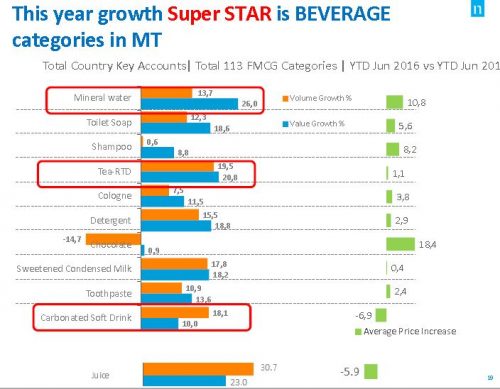
In YTD June 2016 versus YTD June 2015, RTD tea was a star performer, up by around 20% in value and volume, as with mineral water, according to Nielsen.

Image above from the Retail trend & marketing strategy 2017 presented by Yongky Susilo. Presentation slides available on Frontier Consulting Group website

Sales performance during Ramadan/Lebaran key barometer

The performance of 2017 will hinge on sales prior to Idul Fitri (Lebaran) festivities. Roy said during an interview with Media Indonesia on 4 July 2017 that sales in the final 10 days leading up to Idul Fitri saw strong growth due to heavy discounting by retailers. Lebaran/Ramadan contributed around 45% towards full year sales. Aprindo expects sales to grow 8% in 2017.

Vegan diet rising in the Philippines

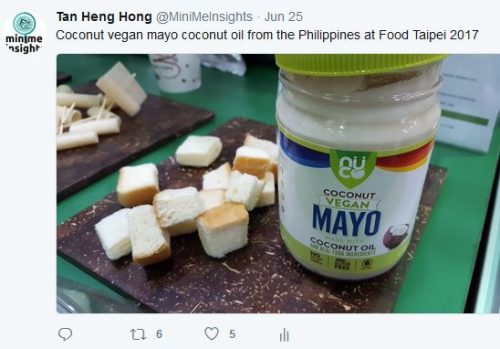
My recent Twitter post on NUCO Coconut Vegan Mayo (Made with Coconut Oil and Avocado Oil) has attracted a lot of attention from Philippines social media users. NUCO Coconut Vegan Mayo is made by Prosource International Inc and was launched in Nov 2016.

I first saw this product at the Taipei International Food Show in June 2017.

This led me to dig deeper to try to understand why a vegan product receives such a strong interest in a country not known for being vegan friendly.

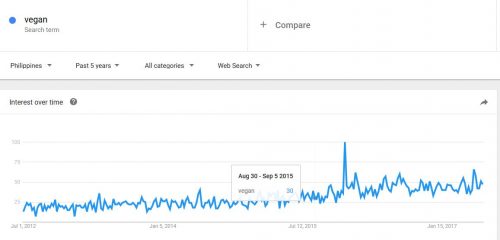
Google Trends validates assumption of the rising in interest in vegan

The first port of call is Google Trends. The data shows there is indeed a slow but rising in the interest in “vegan” as a keyword search in the Philippines. This is a strong indicator that Internet users in the Philippines are actually showing interest in the vegan lifestyle. The top five related queries are “vegetarian”, “vegan diet”, “vegan recipes”, “vegan meaning” and “vegan food.”

Quorn changes meat-eating lifestyle

The launch of Quorn (owned by Monde Nissin) in the Philippines at the end of 2016 reveals a demand for meat-free substitute.

“Younger, more educated consumers are seeing the need to reduce meat consumption for health and sustainability reasons. While we have just launched in the Philippines, strong early sales reinforce evidence of this trend,” said Quorn CEO Kevin Brennan quoted by inquirer.net on 17 April 2017.

For a better world

The embrace of the vegetarian diet in Thailand, China and among the ethnic Chinese in Southeast Asia is driven by the Buddhist/Taoist religions. In the predominately Roman Catholic Philippines, the shift towards a vegan diet is driven mainly by ethical, the desire to protect the welfare of animal and to reduce the impact on the environment.

People for the Ethical Treatment of Animals (PETA) has a strong influence in some people who cited the unnecessary killing of animals as the reason why they go for a meat-free diet, according to a survey by inquirer.net. Others mentioned the influence of mass media like the documentary The Earthlings, documenting the suffering endured by animals at factory farms, puppy mills and research labs, and a short clip on the internet “Dairy Is F**king Scary!”

What Mini Me thinks

The meat-free trend in the Philippines has leg to grow especially among millennials who are more likely to embrace ethical consumerism.

Nestle Boost for Philippines seniors, Chinese working adults

Image from Mommylace.com

New Nestle Boost debuts in the Philippines

Nestle Health Science has launched a new dietary supplement Boost in the Philippines in June 2017 targeting ageing consumers (50 years old and above).

In the words of Paul Bruhn, regional business head of Asia, Oceania and Africa (AOA), Nestle Health Science, “we recognize the increase in numbers of ageing consumers who now live longer, and we aim to empower them to take action to manage the age-related changes they experience and help them stay healthy.”

Nestle Boost range

The range comprises Mobilis, Optimum and Energis.

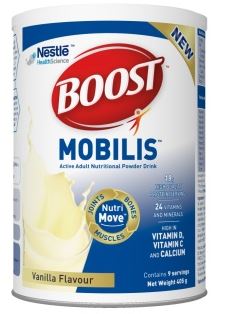
Boost Mobilis 405g

  • Targeted nutrition for Joint, Muscles & Bone
  • Gluten-free, no added sugar, and low calories
  • Contains High Quality protein, High in Calcium, Vitamins C and D
  • Oral Nutritional Supplement

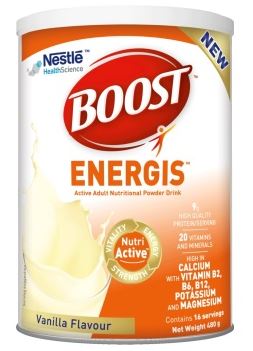
Boost Energis 405g

  • Targeted benefit for Vitality, Energy, and Strength
  • Gluten-free, no added sugar, and low calories
  • Rich in high quality protein, calcium, potassium, and magnesium
  • Contains 20 vitamins and minerals
  • Rich in Vitamins B2, B6, and B12
  • Oral Nutritional Supplement

Boost Optimum 405g

  • Contains Vitamins E, B6, and B12
  • Has 50% whey protein that contributes to the maintenance of muscle mass and helps muscles recover from injury or illness
  • Keeps the gut healthy with probiotics and prebiotics

New product for senior in a country with young population

The demographic of the Philippines is still very young with a median age of around 23.4, according to the CIA World Factbook. Even though the pyramid population of the Philippines is still in a triangular shape, Nestle is not neglecting consumers on the peak with a dietary supplement to support graceful ageing.

Seniors are expected to account for 11.5% of the population by 2030, said Dr. Earleen Seno-Ong, head of geriatrics at St. Luke’s Medical Center. At the moment, 6.9% of the population are above 60 years old.

As a comparison, China has a much higher median age of 37.1, which puts the world’s populous country in a perilous situation, having to cope with dwindling labour and ageing.

Nestle Boost focuses on urban working population in China

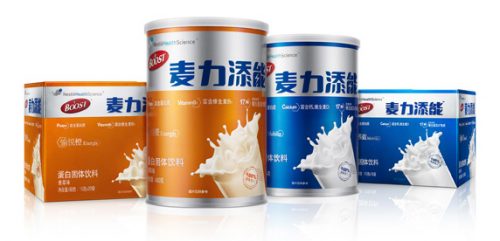
In China, Nestle Health Science launched Boost (麦力添能) in May 2017 not for seniors but for the “busy urban working population”. According to the press release, “Boost is an innovative range of science-based nutrition targeting the needs of the healthy consumers, focusing on China’s busy urban working population.”

The range comprises Mobilis and Vitalis to address the need for vitality and mobility among the active population.

The launch was made in collaboration with AliHealth, Alibaba’s flagship medical and health e-commerce platform. AliHealth will contribute its e-commerce and big data capabilities to support the launch of Nestle Boost.

Nestle has an existing dairy product for senior in Chinaunder the Yiyang (怡养) range. The new “Yiyang Fuel for Brain” senior milk powder, launched in May 2017, contains medium-chain triglycerides (MCT) and adds to the existing range comprising Yiyang Protein Powder.

The existence of the Yiyang range explains why Nestle China is targeting the urban working population with the new Boost range.

Nice to see you again Martin Yan! now with Julie’s

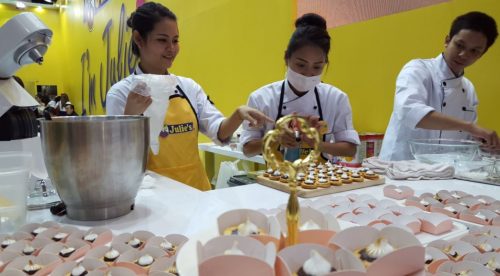
Image from Julie's Taiwan Facebook

Yan can cook!

Most Malaysians knew or have heard of Martin Yan, best known for his “Yan Can Cook” PBS series in the 80s and 90s. In fact, the Chinese-Hong Kong-American chef and food writer has been hosting the “Yan Can Cook” series on PBS since 1982. Those in that generation will always remember his famous catchphrase “If Yan can cook, so can you!” 

Rekindling interest in Martin Yan

The interest in Martin Yan was rekindled with the latest installment of Yan Can Cook: Taste of Malaysia in 2015. The 26-episode programme saw him travelling to different parts of the country introducing unique cuisines and showing the versatility of palm cooking oil in Malaysia’s cuisines. The Malaysian Palm Oil Council (MPOC) was one of the sponsors. 

Meet Julie’s Biscuits Director Martin Ang

In the Yan Can Cook: Taste of Malaysia – Malacca programme, the two Martins – chef Martin Yan and Julie’s Biscuits Director Martin Ang met in Malacca. The chance encounter was sponsored by none other than by Perfect Food Manufacturing (M) Sdn Bhd, the maker of Julie’s biscuits. Martin Yan has since become the brand ambassador for Julie’s. Image above from The Star.
On the tour again with Julie’s

Martin Yan has been very busy attending Julie’s trade shows as brand ambassador. He was in Shanghai for SIAL China 2017 (中食展), in Bangkok during Thaifex 2017 and in Taipei gracing Julie’s booth at the Taipei International Food Show (2017台北國際食品展). All three international food expos were held within a space of two months – May-June 2017.

Martin Yan x Julie’s co-creation

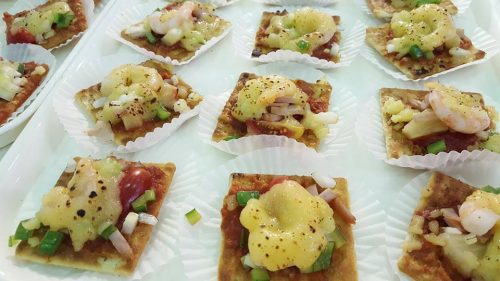
The key purpose of having Martin Yan at Julie’s event is to personally introduce consumers to Julie’s gourmet creation. The mouth-watering creations including mini pizzas and capanes are made using Julie’s crackers. Hopefully, such unique creations would attract new consumers or introduce a new way of eating to existing customers.

Julie’s canapes at Thaifex 2017 (Image above). The canapes were made with Julie’s Peanut Butter Sandwich. The picture was taken by the author.

What Mini Me thinks

Julie’s have a dedicated section on its official website under Julie’s Recipes. The recipes look easy but how many people would actually try them at home?

Moreover, the younger generation do not recognise Martin Yan, let alone his signature catchphrase. Consumers in China and Thailand may not even know him. Perhaps the marketing budget would be better spent on young celebrity chef like Olivia (邱韻文) and Titan (張秋永) in Taiwan to target younger generation of biscuit eaters.

Nevertheless, I would like to say a big thank you Julie’s for bringing Martin Yan over and giving me the opportunity to have a selfie with him at Thaifex 2017.

*All the photos were taken by the author at Food Taipei 2017 2017台北國際食品展 except for the first one taken from The Star.


iTQi Superior Taste Award winners basking in glory at Food Taipei 2017

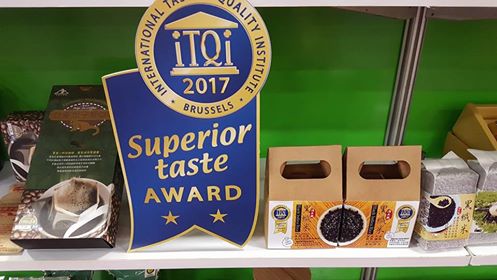
Organic Black Indica Rice by Origin Agriculture Co., Ltd.

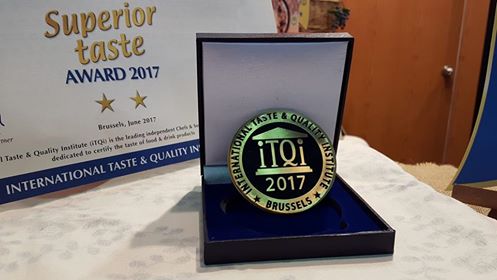
The International Taste & Quality Institute (iTQi) Superior Taste Award was widely used in business-to-business (B2B) promotion at the recently concluded Taipei International Food Show 2017. Of all the trade shows I have been to in Indonesia, Thailand, Malaysia and China, Taiwan is the only market where iTQi is widely used for product marketing and promotion to suppliers, distributors and end consumers.

Benefits of winning iTQi

The benefits of winning the award is explained on the iTQi website.

  • Business negotiations (export and local distribution)
  • External communication (marketing)
  • Product improvement (challenge R&D team)

The jury team comprises chefs and sommeliars who have worked not only in Europe (iTQI is based in Brussels) but also in other parts of the world including Japan and Thailand.

iTQi winners at Taipei International Food Show

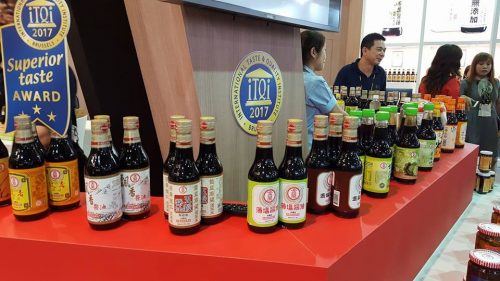
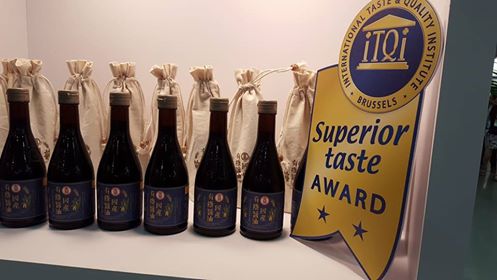
Here are some examples of the  iTQi award winners at the Taipei International Food Show 2017 (21-24 June 2017).

Soy sauces by Kimlan Food Co., Ltd. (image above)

Organic soy sauce by Kimlan Food Co., Ltd. (image above)

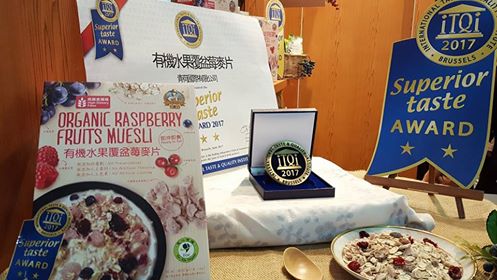
Vilson Organic Raspberry Fruits Muesli (image above)

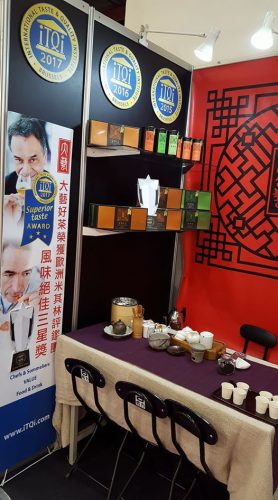
Honey Black Tea by Max Art International Corp (image above)

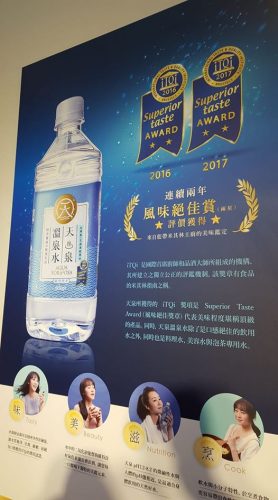
Aqua Formosa water from AQUA FORMOSA Co., Ltd. (image above)

Analysis of iTQi 2016 winners

Japan has the biggest share, accounting for nearly 60% (232) of all winners from Asia (390), followed by Taiwan (51) and Thailand (30) respectively at 13% and 8% of total. With Taiwan known for its tea, of the 51 winners, 22 are tea products, which highlights the eagerness of Taiwanese tea producers in getting global recognition. See this post for more information.

Analysis of iTQi 2017 winners

There were also a lot of winners and entries from Japan and Taiwan in 2017. Japan leads the pack with 307 winners, followed by Taiwan with 100. Similar to 2016, tea companies (46%) accounted for the majority of the winners from Taiwan.

The complete list of 2017 winner can be found here.

What Mini Me thinks

There are numerous awards in the Asia Pacific region including Reader’s Digest Trusted Brands Asia and Product of the Year (POY) that are aimed at consumers but not at businesses, where iTQi fills in the gap.

Peril of non-halal Korean instant noodles in Indonesia

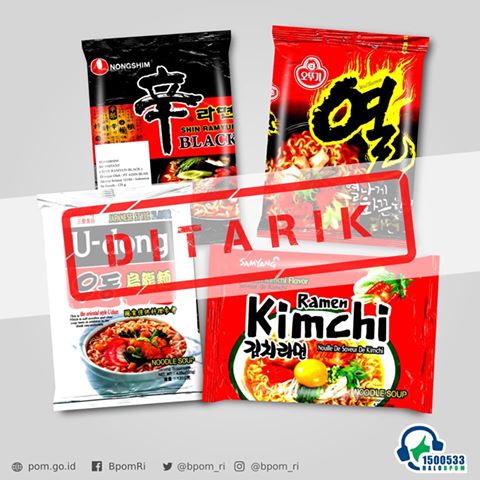
Image from BPOM

The Indonesian Food and Drug Monitoring Agency (BPOM) revoked the permit of Shin Ramyun Black by Nongshim, Yeul Ramen by Ottogi and U-Dong and Kimchi flavored instant noodles by Samyang in mid-June 2017. The four instant noodles from South Korea, imported by PT Koin Bumi, were found to contain traces of porcine DNA. The discovery was made when the importer tried to license them with the BPOM.

The food safety watchdog said the affected products did not have a clear label notifying consumers they contain traces of pork. The company said it would obey the withdrawal order and was working to ensure all the products are taken off the shelf.

Implication for South Korean instant noodles

The latest sage highlighted an underlying problem with imported food from South Korea. Consumer’s doubt about the halal status of popular imported South Korean instant noodle has resurfaced time and again in Indonesia. We have reported in the past of the need for manufacturers to strengthen the halal assurance.

However, it has proven difficult to stem the sale of non-halal South Korean instant noodles by online sellers and third party distributors. The availability of non-halal products makes it difficult and confusing for consumers where non-permissible food is a taboo for over 90% of the population who are of the Islamic faith.

There are halal version of South Korean instant noodles certified halal by the Korean Muslim Federation (KMF) made at the dedicated factory in Wonju. The recent debacle has hurt the sale of the two halal-certified Samyang Hot Chicken Ramen and Hot Chicken Ramen Cheese, said the importer PT Korinus.

What Mini Me thinks

Consumers will become more wary of imported South Korean instant noodles following the latest scandal. Complicating the problem is the availability of non-halal version, which makes it hard for non-discerning consumers to differentiate. It remains a long road ahead for the importers of halal-certified South Korean instant noodles to win back the heart of consumers.


Why 7-Eleven failed in Indonesia

After Ministop, 7-Eleven exiting Indonesia

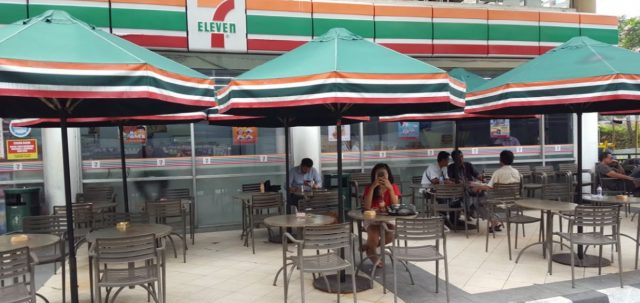
After the Japanese convenience store Ministop announced in June 2016 it was pulling out of Indonesia, it is the turn of 7-Eleven to announce it is shutting down all stores in the country. PT Modern Internasional, the franchise holder of 7-Eleven, said on 22 June 2017 that all remaining 7-Eleven outlets in Indonesia would cease operation on 30 June 2017 citing “limited resources to support operations.”

Failed to sell to CP Group

The decision to shut down was made following the failed attempt less than a month ago to sell off the 7-Eleven operation to a local unit of Charoen Pokphand Group, the operator of the hugely successful 7-Eleven franchise in Thailand.

Ban on sales of alcohol a deciding factor?

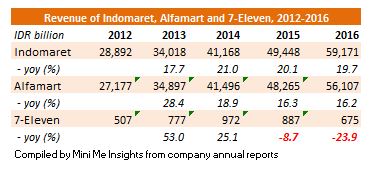
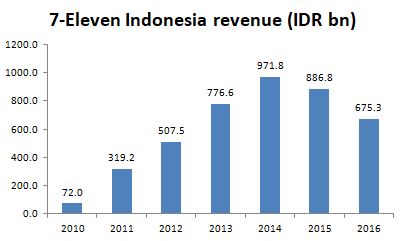
The company attributed the poor results of 7-Eleven on the government ban on the sale of alcoholic drinks, which started in April 2015. In 2015, revenue fell 8.9%. In the following year, sales declined by another 23.9% in 2016.

Compiled by Mini Me Insights from PT Modern Internasional annual reports. Excluding non-convenience store revenue. (image above)

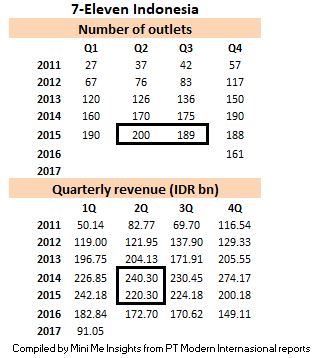
Quarterly data reveals downward trend

On a quarterly basis, we see the decline in revenue started during the second quarter of 2015 and this continues for the remaining quarters. The number of stores remains at a high level, ending 2015 with 188 outlets but revenue per store fell. Instead of adding more stores, the company started to trim the store count in 2016 and this resulted in a steep decline in sales particularly acute in Q4 2016 and Q1 2017.

H1 2015 update reveals SSSG down 4.7% following alcohol ban

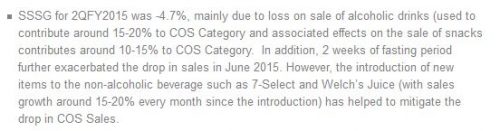
In the “Retail Initiative in Action! –Meet Everchanging Needs of Customers” first half 2015 update by Modern Internasional, we know that same store sales growth (SSSG) fell by 4.7% during the second quarter of 2015 dragged by the poor performance of centre of store (COS). The decline of COS was due to the loss on sale of alcoholic drinks and the knock on effect on the sale of snacks.

Alfamart & Indomaret escaped unscathed

The country’s two largest minimarket chains Indomaret and Alfamart were not affected by the alcohol ban as they have a broader range of products and geographical reach. In contrast to Indomaret and Alfamart, 7-Eleven stores are largely concentrated in the Jakarta (restricted by government regulation) and has less stock keeping unit (SKUs).

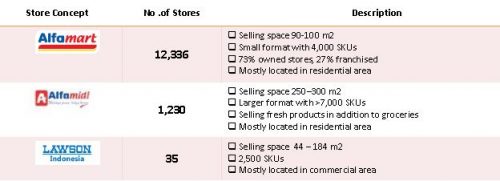
In the third quarter of 2015, an average 7-Eleven outlet carried 2,537 SKUs, according to Modern Internasional’s data. In 2016, a typical Lawson convenience store had around 2,500 SKUs, while an Alfamart minimarket had approximately 4,000 SKUs. The higher number of SKUs means the stores have more products catering to the needs of consumers including household and beauty and personal care.

Other convenience stores saw shrinking network

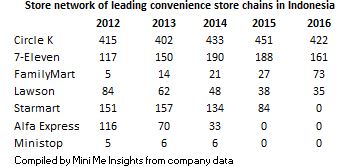
The leading minimarket chains saw continued expansion of their store network but it is a different story for convenience stores. Alfa Express and Ministop ceased operation in 2015, while Dairy Farm’s Starmart was sold to PT Fajah Mitra Indah (Wings Corp), the operator of FamilyMart, in 2016 and was rebranded under the FamilyMart banner. Lawson, run by PT Midi Utama Indonesia, the same family of Alfamart, struggled to increase its store network.

Interestingly, there is a new Alfa Express outlet at the Soekarno–Hatta International Airport bus terminal. It is not know if there are similar Alfa Express in other locations.

Indonesian nongkrong culture caused the death of 7-Eleven?

7-Eleven was celebrated by the Western media for finding a niche in satisfying Indonesian hangout culture or nongkrong. Now, experts are pointing the demise of 7-Eleven on nongkrong.

Rosan Roeslani, chairman of the Indonesian Chamber of Commerce and Industry (Kadin) was asked to comment on the recent failure of 7-Eleven Indonesia. He said 7-Eleven has chosen a wrong business model where the margin is minimal and rental is high. He added that consumers spent a lot of the time nongkrong at 7-Eleven but only made minimal transactions in store.

“A person buys one Coca-Cola but spend time there for a couple of hours, it just doesn’t fit their business model,” said Rosan Roeslani on 25 June 2017.

Financial mismanagement

The financial statement of PT Modern Internasional reveals problems with the company.

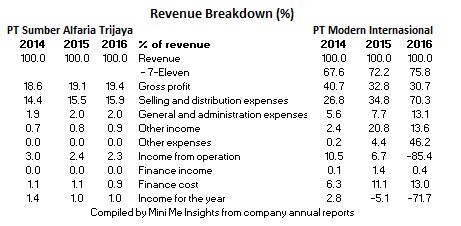
By comparing Modern Internasional’s financial statement with Sumber Alfaria Trijaya, the operator of the highly successful Alfamart minimarts, we see huge swing in expenses and an elevated finance cost in the financial statement of Modern Internasional.

The dependence on other operating income, largely from asset sale, is a red light. In 2015, Fujifilm Indonesia agreed to pay the company IDR 229 billion to take back the trade rights to Fujifilm products. The 7-Eleven operator sold the trade rights to focus on expanding the convenience store business.  In 2016, Modern Internasional made IDR 93 billion from the one-off sale of fixed assets.

In 2016, depreciation expense reached IDR 165 billion, up from IDR 107 billion in 2015 and IDR 59 billion in 2014. In 2016, other operating expenses surged with the impairment of inventories, property, plant and equipment. All these severely hurt the bottom line.

The company was forced to sell idle assets to pay off bank loans and shutting down unprofitable 7-Eleven outlets to streamline the business.

At the end, the streamlining of the business failed as sales did not pick up at 7-Eleven, which now generates most of the revenue.

Writing on the wall

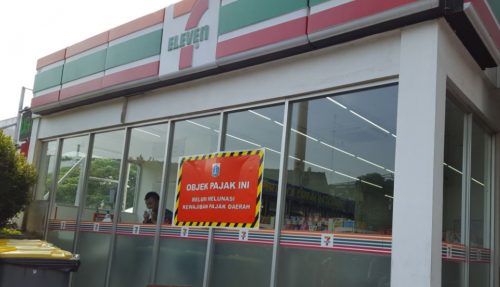
The 7-Eleven stores visited by the author in November 2016 had banners stating the store had not paid local taxes. On hindsight, this was already a clear indicator that things were not going well at 7-Eleven.

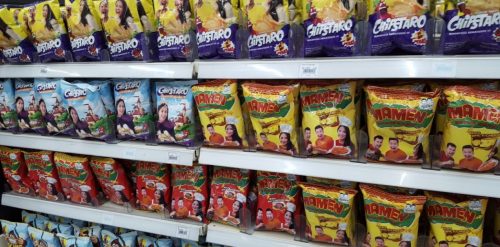
In the last visit in April 2017, the 7-Eleven at Novotel Gajah Mada was devoting a disproportionate large amount valuable shelf space to less well known brands like the snacks made by PT Universal Cipta Pangan. The ready-to-eat meal section had limited choices and was no longer exciting.

What Mini Me thinks

It is very difficult to pinpoint the exact cause of 7-Eleven Indonesia’s demise. Some blamed it on high rental cost. Indeed, rental expenses under selling and distribution expenses accounted for 9.2% of total Modern Internasional revenue (including the 7-Eleven business) in 2016. In contrast, rental expenses only represented 0.5% of Sumber Alfaria Trijaya’s sales in 2016.

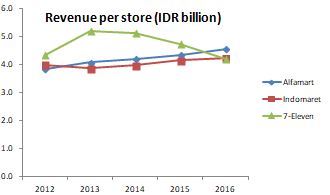
Revenue per store of 7-Eleven was higher than the two leading minimart chains, a title it eventually lost to Alfamart in 2016 as troubles mounted at 7-Eleven. As a comparison, the revenue per store of 7-Eleven Malaysia in 2016 was only IDR 3.1 billion (MYR 1 million).

Alfamart generates a much higher revenue per square metre (sqm) as the average selling space is only 90 to 100 sqm. To accommodate the nongkrong customers, 7-Eleven has to go for a much bigger outlet with a larger seating area. Some outlets even have a second floor devoted solely for sit in.

In the last flash news update (Q3 2015), we know the large store format is becoming unsustainable due to the decline in footfall. The company said it was focusing on opening small stores (100-120sqm) to improve store/sqm productivity. At the end of the third quarter of 2015, 121 stores were over 100 sqm, while 68 outlets were under 100 sqm.

We also know the company was striving for financial prudence by using “existing cash flow instead of increasing borrowing” for new store opening. This explains the debt-fueled expansion in the past and the high finance cost.

Since closing a net 27 outlets in 2016 and further 46 since the end of 2016, there are now approximately 120 outlets in operation, according to Jakarta Globes. The store closure meant the company will not be able to survive with the extra burden of servicing existing loans.

The government alcohol ban is a trigger but it all comes down to the actions taken by the management to mitigate the impact of the sales ban by optimising the product mix. Ultimately, the company failed to arrest the decline and paid the price.

The plight of 7-Eleven serves as a reminder to FamilyMart, Lawson and other convenience store players to shape up and to make full use of the space to boost revenue/sqm and to keep focus on what makes convenience store different from their minimart peers – 24/7 and plenty of excitement.

HOT NEWS

Win a trip to catch an EPL match with 7-Eleven...

0
Kuala Lumpur, 16 October 2018 – Are you a fan of The Coolest Drink on Earth™, the evergreen Slurpee? Are you a die-hard football...

MUST READ

Kawan Food has new range of plant-based snacks

0
Malaysia's Kawan Food has launched three new plant-based snacks comprising Vadai, Falafel and Purple Sweet Potato Fingers. Vada is a category of savoury fried...