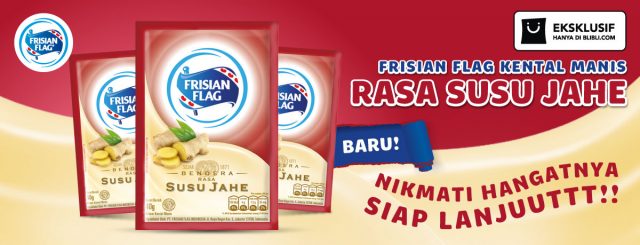
Indonesia’s Frisian Flag has innovated with yet another breakthrough sweetened condensed milk product. Following the introduction of the pinkish cocopandan in mid-2018, the nation’s top sweetened condensed milk brand has unveiled ginger flavoured sweetened condensed milk (kental manis rasa susu jahe).
Marketing Director PT Frisian Flag Indonesia Felicia Julian said the new product is designed as a drink or to be added into food. Ginger is traditionally used to warm up the body and is the ideal drink with the onset of the rainy season, which normally starts in October/November.
The Indonesian government has recently cracked down on the marketing of sweetened condensed milk as a substitute for regular milk aiming at children. The new product from Frisian Flag appears to circumvent this directive by tapping into the familiar ginger milk drink.
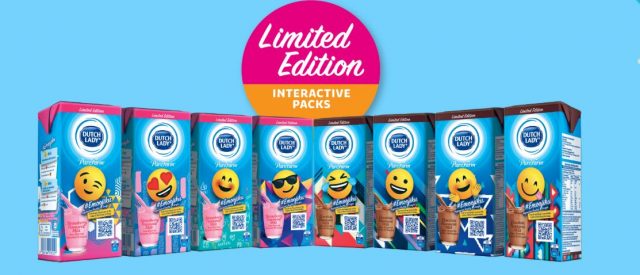
Dutch Lady Malaysia’s limited-edition emoji packaging taps into the Connected Consumer theme in Tetra Pak 2017 Index, which highlights why augmented reality, digital technology and online “super leaders” are so important to the future of packaging.
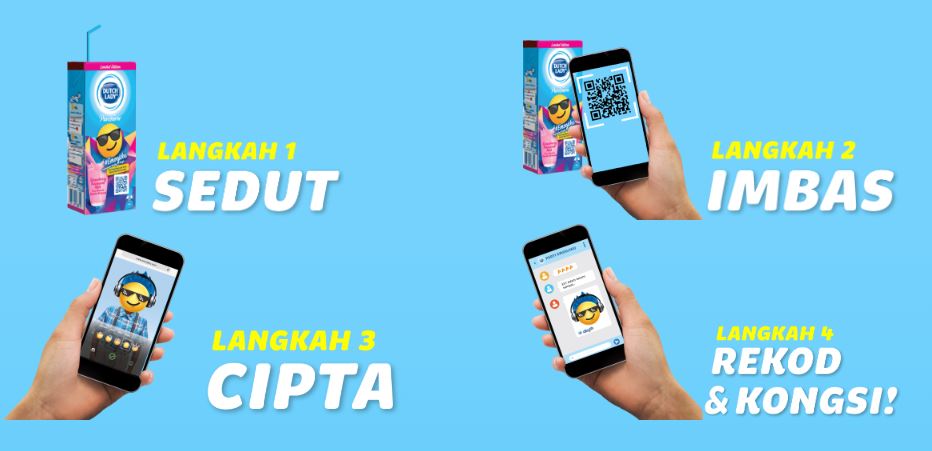
The #Emoojiku interactive pack comes with eight emoji designs. By scanning the QR code, consumer can create their own emoji and then share on social media.
We have seen Indomilk, Frisian Flag and Dutch Lady innovate with augmented reality and gammification on their packaging to improve consumer interaction. We expect to see more examples of consumer engagement activities driven by technology-enabled packaging in the near future, not just in the dairy sector but in other beverage sectors as well.
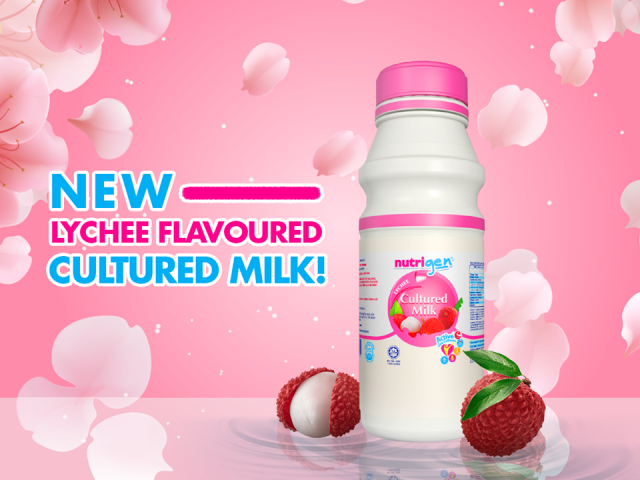
From mulberry, Nutrigen now has lychee flavour cultured milk and is available at Giant, Mydin, AEON Big, Econsave, and The Store outlets in Malaysia.
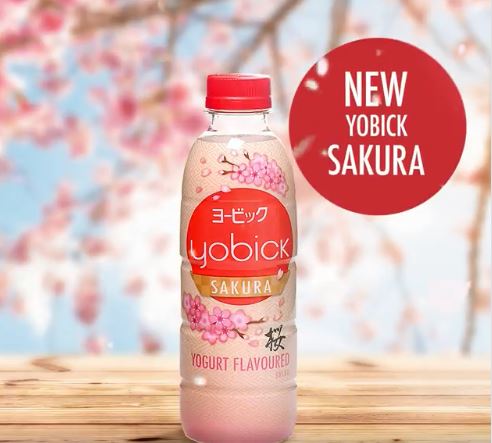
DydoMamee Distribution, the joint venture between Japanese DyDo and local Mamee, has also unveiled Yobick Sakura, a new variant to its Yobick yogurt-flavoured drink first launched in Malaysia in May 2018. This sakura flavoured Yobick is available only at Giant.
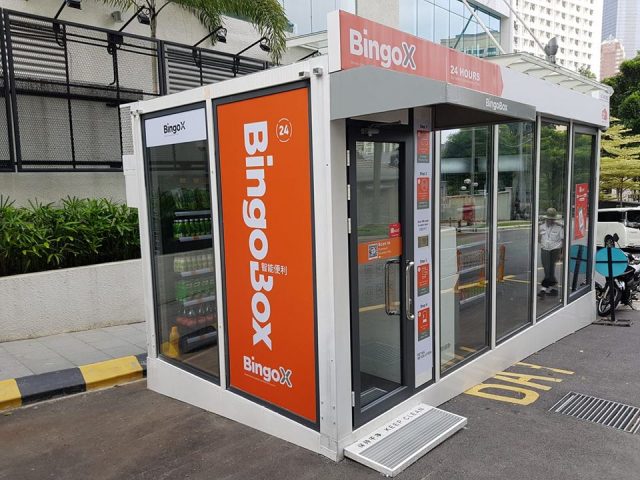
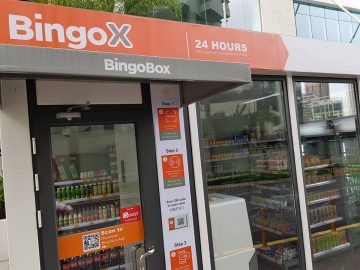
BingoBox outlet in Bukit Ceylon. Image by Minimeinsights.com
The wind of change is blowing into Southeast Asia with unmanned store popping up in the region starting with JD.id‘s first unmanned outlet in Indonesia and China’s BingoBox opening in Kuala Lumpur. Even though BingoBox is not the first cashierless store in Malaysia, that title goes to Irispay, BingoBox stands out as it is backed by China’s top player in this field.
First made popular in China, the unmanned store operator BingoBox has installed BingoBox in more than 400 locations throughout China and has set up a local joint venture in Malaysia – Scientific Retail Sdn Bhd to popularise this concept in Malaysia.
Serving Shell customers
BingoBox has set up a humanless retail outlet at Shell on Jalan Tun Razak, Kuala Lumpur to better serve motorists who want to make purchases 24 hours a day as not all petrol station marts in Malaysia opens round-the-clock. BingoBox’s role is to fill this service gap.
Located in Bukit Ceylon
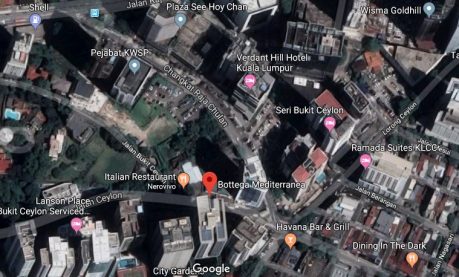
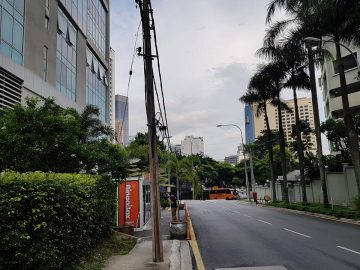
Another BingoBox is located in Bukit Ceylon and is next to Bottega Mediterranea, an Italian food products supplier cum deli. The surrounding area has a lot of service apartments catering to short stayers and expats.
BingoBox in Bukit Ceylon. Image by Minimeinsights.comBingoBox entrance. Image by Minimeinsights.com
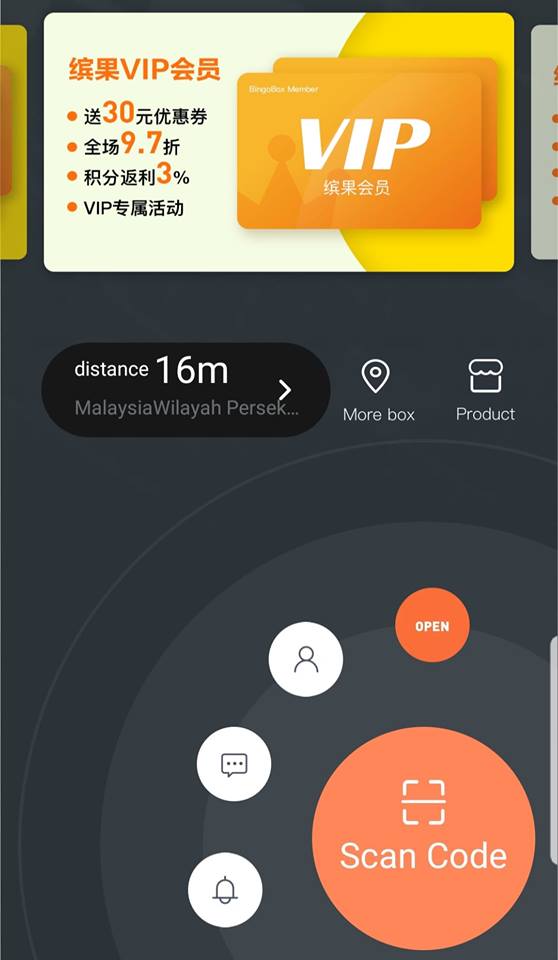
To enter, you first need to download the BingoBox software, which at the moment is not yet fully localised for the Malaysian market as some of the promotions are clearly meant for use in China.
BingoBox app
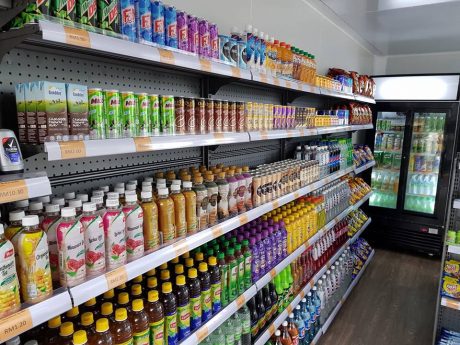
The products comprise mainly food and beverages with affordable prices, lower than convenience stores because of the savings from not having any human staff. For example, a Yeo’s soya bean drink in PET costs only RM 1.30, a price that is comparable with hypermarket.
Inside BingoBox. Image by Minimeinsights.com
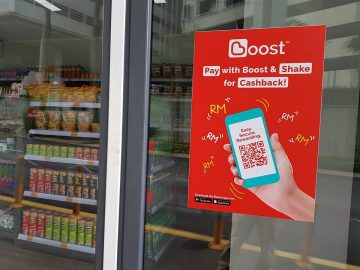
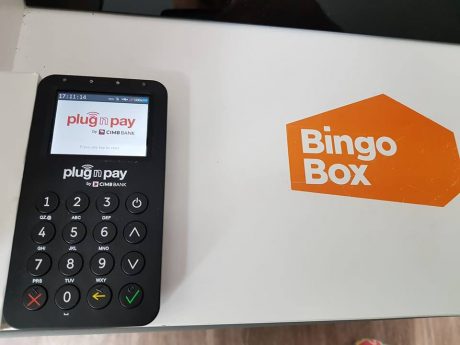
Payment choices include Boost, an app-based mobile wallet, from Axiata Digital Ecode Sdn Bhd or you can pay with credit card.
Pay with Boost. Image by Minimeinsights.com
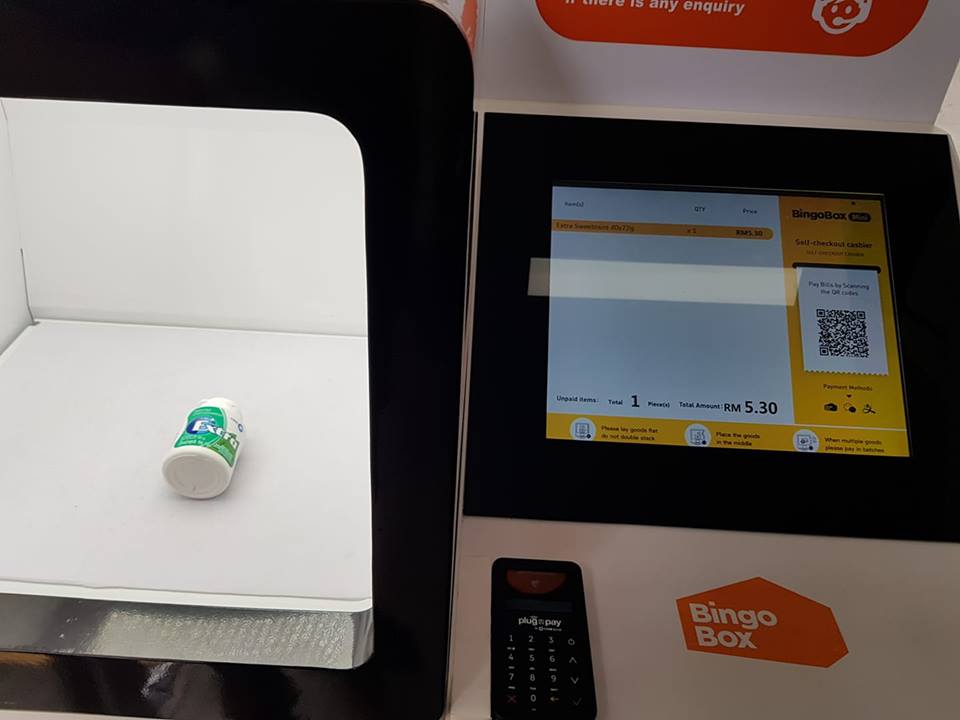
To pay, just place the product in the box and the price will appear. You can choose to pay with Boost or credit card. It is that simple.
Scanning the product at BingoBox at check out. Image by Minimeinsights.com
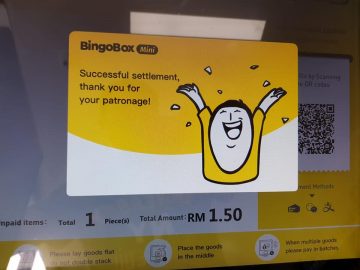
Once the payment is successful, you will receive a message on the screen.
Exiting is relatively easy. Just stand at the door and the machine will check if there are still products that have not been paid. If everything is paid, the door will open and you are free to leave.
The problem is there is only one door for entry and exit but given the lack of traffic, this will not be a major issue at the moment.
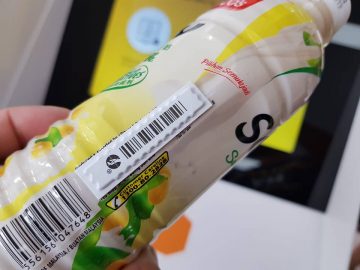
Each merchandise comes with an anti-theft barcode, which can add up on operating cost.
Image by Minimeinsights.com
Key takeaways:
BingoBox is competitive in price. However, location will be a major factor determining if this concept will become successful in the long run. Municipal laws may restrict BingoBox’s expansion.
BingBox competes not only with physical c-stores and minimarkets but also with vending machines, which have become a booming market thanks to the low entry barrier.
At the moment, you need a person at each BingoBox educating consumers how to navigate around. Partnering with Boost is a good approach as not all consumers have payment cards. Boost can do more to boost store traffic by running campaigns like what they did with KK Mart.
A survey by Picodi, Malaysia’s promotions, discount code and voucher site.
Statistics and facts about shopping behaviour of Malaysian singles
It all started with a few students from Nanjing University who decided to break away from the monotony of being single for one day. They chose 11.11 because of the solitary implications of the number 1 which symbolize being single. However, this simple celebration turned into one of the largest shopping days in the world. It turns out that this event gained great interest also in Southeast Asia. According to Google, in Malaysia the popularity of Singles’ Day has doubled in the last five years.
Who’s taking part in Singles’ Day? What are the behaviours of consumers on that day? To look further into this phenomenon, we analysed historical data and surveyed people from Malaysia. The results are presented in this report.
Shopping therapy for the young and lonely
So, who exactly takes part in Singles’ Day? The survey suggests that more than half of the participants are men—57%. In accordance with the event’s name, three out of four consumers are single. Of course, not only singles went on a shopping spree. An increase in interest, although not as significant as among singles, was also noted in the group of people in relationships.
The interest in Singles’ Day is especially apparent among young Malaysians. Compared to a regular day, the number of transactions on Singles’ Day among people aged 18-24 grew by 6638%. However, getting great discounts is not restricted to younger people—there was a noticeable interest in this shopping festival among all age groups.
The day for singles to indulge themselves
The results of the survey show that more than half of Malaysians do not prepare for the Singles’ Day shopping craze but buy impulsively on that day. 34% compare the prices in different stores and only 8% declare that they make lists before shopping. It looks like most people treat 11.11 as an occasion to meet their desires rather than an opportunity to execute a well-thought-out shopping plan.
On top of that, most of the consumers—almost 70%—declare that they buy things just for themselves. Only one-third of the respondents buy gifts for other people on that day. It appears that—as the name of the event suggests—Singles’ Day is a perfect day for getting a present for yourself.
Surprisingly, an average man buys more than an average woman—3.7 and 3 products respectively. The most desirable items among men are clothes, electronics and delivery food. Similarly, women buy mostly clothes, delivery food and footwear.
Last minute shopping fever
It’s not surprising that Malaysians buy more than usual on Singles’ Day. According to our platform’s statistics, the number of online transactions increased significantly—there were 4914% more purchases compared to a regular day. The survey indicates that an average Malaysian is willing to spend RM269 on a Singles’ Day shopping spree. The sales reached a peak right before the end of Singles’ Day, at 10 PM.
Mobile users behind
More than half of the consumers—52%—use desktops when doing their shopping on Singles’ Day. 45% of Malaysians make their purchases on mobile phones. Most of the transactions are made on Apple devices, followed by Samsung, Xiaomi, Huawei and OPPO appliances.
Singles’ Day in Figures:
The popularity of Singles’ Day has doubled in the last 5 years
More than half of the participants are men—57%
The biggest interest in Singles’ Day is noted among people aged 18-24
An average Malaysian is willing to spend RM269 on Singles’ Day
On Singles’ Day sales grow 4914% compared to a regular day in Malaysia
Methodology
This report was created based on internal data provided by Picodi.com, a global discount provider existing since 2010. 300 participants from Malaysia took part in the survey.
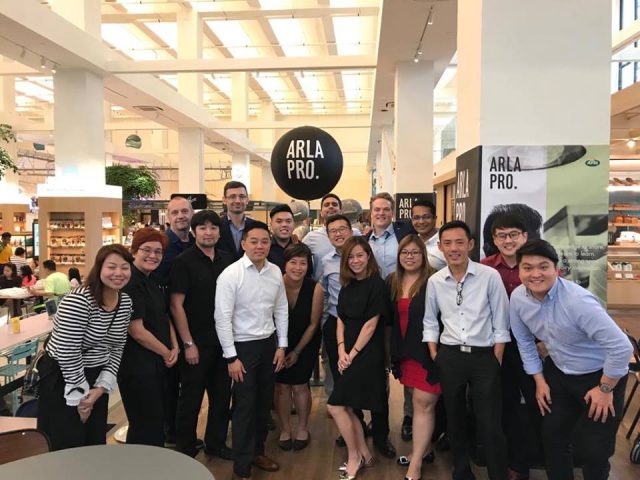
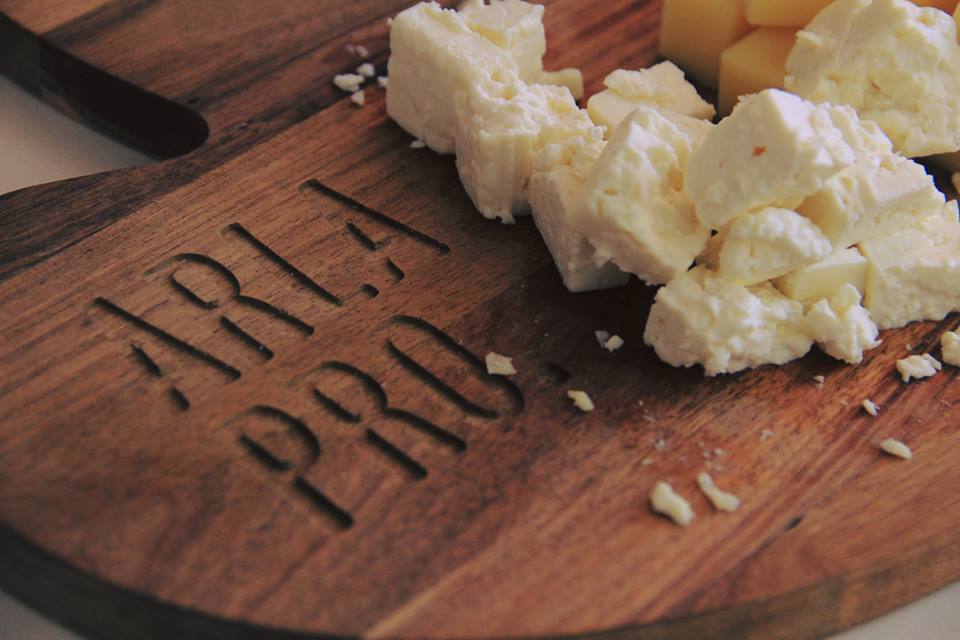
Indoguna Singapore, the official distributor of Lurpak and Arla Foods products for the food service market in Singapore, has announced the launch of Arla Pro in Singapore, the first in Southeast Asia. Arla Pro is the new foodservice business unit of Arla focusing on products and value-added services for chefs and food professionals.
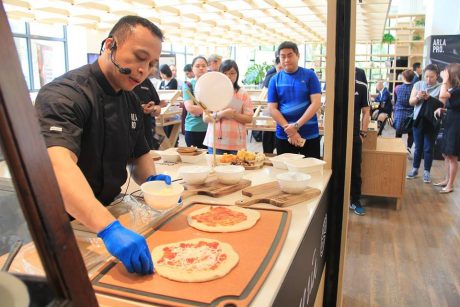
Arla Pro was launched at the new habitat by honesbee, lauded as the world’s first tech-enabled, multi-sensory grocery & dining destination. The event at the end of October 2018 saw Arla’s commercial chefs, Chef Pauline and Chef Ryan demonstrating the use of Arla Pro products in both sweet pastries and savoury hot food.
Arla Pro was launched in China in June 2018 where it was also announced that the new foodservice division has officially started production in China’s Inner Mongolia. The event saw the official debut of shredded mozzarella (Arla爱氏晨曦马苏里拉干酪丝) specially designed for Chinese consumers who like the long stretchiness of mozzarella in their pizza. The cheese ingredients come from Denmark but processed in China. The shredded mozzarella targets small local pizza outlets.
The debut of Arla Pro in Singapore is seen as a move by Arla to deepen its engagement with local foodservice clients and bring the competition to the next level in a market dominated by Fonterra.
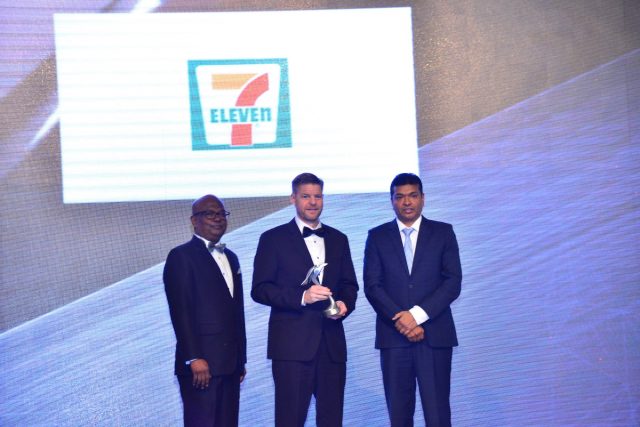
From left: 4As Council Member, Mr. Karthigesu Palanisamy; 7-Eleven Malaysia CEO, Mr. Colin Harvey; and Star Media Group Executive Editor, Mr. Brian Martin
Kuala Lumpur, 31 October 2018 – 7-Eleven Malaysia, the leading standalone convenience store chain in the country, celebrates its fourth consecutive win with a Silver recognition in the Putra Brand Awards’ Retail category during the awards dinner ceremony held in the Grand Ballroom, Majestic Hotel, Kuala Lumpur. The attainment of the award marks yet another achievement for 7-Eleven as it represents the acknowledgement for brand excellence in the country from the consumers.
Chief Executive Officer of 7-Eleven Malaysia, Colin Harvey shared, “It is indeed an honour to be recognised with this prestigious branding award for the hard work of the team here at 7-Eleven. We owe a huge thanks to our customers for being receptive to our branding efforts as well as being endlessly supportive of the business. All of us at 7-Eleven Malaysia have been further motivated by this achievement and moving forward, we plan to intensify the roll-out of more initiatives such as more e-commerce facilities, top in class fresh food and beverages range, the latest and in-demand merchandize selection and innovative loyalty programs among others as we strive to fulfil the needs of consumers better by providing true convenience.”
He added, “Brands need to make meaningful connections with consumers and indeed, successful brands are those that make meaningful connections with consumers. People want brands to improve their lives and the lives of people they care for. Brands that focus on giving back to society and making our lives more convenient receive higher levels of engagement and trust and in return are the ones that will earn a premium value.”
“We shall strive to continue making meaningful connections with consumers and play a meaningful role in people’s lives whilst enhancing the well-being of communities that we operate in as we live up to our motto of being Always There For You”, he concluded.
Organised by the Association of Accredited Advertising Agents Malaysia (4As) and launched in 2010, the Putra Brand Awards is Malaysia’s premier brand award that recognizes brand building as an integral business investment. The nation’s preferred brands are decided by Malaysian consumers and the winners are awarded a Gold, Silver and/or Bronze in various categories.
7-Eleven Malaysia is the pioneer and the largest standalone 24-hour convenience store operator in the country with over 2,250 outlets nationwide. For more information, please log on to www.7eleven.com.my or follow 7ElevenMalaysia on Facebook, Instagram and Twitter.
Globally, Danone has announced new commitments and actions to ensure its packaging will become 100% circular. All its packaging is designed to be 100% recyclable, reusable or compostable by 2025. The figure at the moment is 86%.
Currently, 14% of its beverage bottles use recycled PET and this figure is set to increase to 50% by 2025. The company has recently released its first 100% recycled PET bottle in Spain and will introduce additional 100% recycled PET bottles, reaching all major water markets by 2021.
In Indonesia, the local unit PT Tirta Investama said it has introduced the first 100% recycled PET bottle with the initial focus on the 1.1L bottle. This recycled PET bottle will start to be made available from December 2018 in Bali focusing on modern retail outlets, hotels, restaurants and cafes. The reason for choosing Bali for the trial is because Bali residents have higher awareness about plastic waste.
At the moment, PT Tirta Investama bottled water products are in glass (220ml), plastic bottles (300ml, 450ml, 600ml, 750ml and 1.5L) and gallon.
In addition to recycled PET, the Aqua brand in Indonesia will be launching a pilot program to develop alternatives to plastic straws.
Danone is moving in the right direction as plastic waste has become a major environmental hazard. As a major plastic user, the move towards recyclability of packaging will help address the issue and propel the company into the forefront as a solution and not the problem.
Cornetto Unicorn or UniCornetto is now available in Indonesia after debuting in Thailand several months ago. Unilever’s UniCornetto taps into consumer fascination with Instagrammable food with vibrant colours. The ice cream comes with marshmallow, cotton candy and topped with colourful choco rice crispy to offer consumers a magical ice cream eating moment.
CMT’s 2nd Proteins Asia will be held on 22-23 Jan 2019 in Bangkok THAILAND. Themed “Rise of Plant-Based Alternatives and its Disruption to the Global Protein Industry”, its key highlights are:-
Protein fortification in mainstream food applications & overcoming taste, texture challenges
Brand owners views on future of protein nutrition – outlook & challenges
Novel Ingredients & its innovation risks
Sustainable plant based protein
Protein technologies & capabilities
Trends in Asia’s active nutrition & new product launches
Roar United by Tiger Beer Malaysia rewards fans with exclusive merchandise, football-themed activations, and the ultimate trip to Old Trafford
KUALA LUMPUR, 22 OCTOBER 2025...
Thai President Foods has collaborated with Netflix to introduce a limited-edition Mama Oriental Kitchen Spicy Korean Sauce with Squid Ink Flavoured Instant Noodle, timed...